National Immunization Month Concludes as School Year Begins
/National Immunization Awareness Month (NIAM) is an annual observance held in August to highlight the importance of vaccination for people of all ages, and communities throughout Connecticut are responding with local initiatives aimed at increasing public awareness and understanding. NIAM was established to encourage people of all ages to make sure they are up to date on the vaccines recommended for them. Communities nationwide – including in Connecticut - have continued to use the month each year to raise awareness about the important role vaccines play in preventing serious, sometimes deadly, diseases.
NPHIC, in collaboration with CDC’s National Center for Immunization and Respiratory Diseases, developed information focusing on various age populations, including Babies and young children (July 31-August 6); Pregnant women (August 7-13); Adults (August 14-20); Preteen/Teen (August 21-27); Back to School (July/August).
Among the Connecticut communities participating through the end of the month are Bridgeport, Danbury, Hartford, Naugatuck Valley, New Britain, New Haven, Norwalk, Stamford, Torrington, Waterbury and West Haven. In West Haven on Thursday, for example, there will be an information table at the West Haven Farmer’s Market. That same day in New Haven, immunization coordinators will be on hand at the New Haven Health Department offices. Other communities have been utilizing social media, meeting with parents and students to assist with immunization information at the start of the school year, providing explanatory materials and making health department staff available for public information sessions.
The Connecticut Department of Public Health (DPH) explains that most vaccine-preventable diseases are caused by germs that are called viruses or bacteria. Vaccines to help prevent these diseases generally contain weakened or killed viruses or bacteria specific to the disease. Vaccines help your body recognize and fight these germs and protect you each time you come in contact with someone who is sick with any of these diseases.
 There are a series of steps that your body goes through to develop immunity through vaccination, the DPH website explains:
- a vaccine is given by a shot (influenza vaccine may be given by a nasal spray and rotavirus vaccine is given by mouth).
- over the next few weeks your body makes antibodies and memory cells against the weakened or dead germs in the vaccine.
- the antibodies can fight the real disease germs if you are exposed to the germs and they invade your body. The antibodies will help destroy the germs and you will not become ill.
- antibodies and memory cells stay on guard in your body for years after vaccination to safeguard you from the real disease germs.
The Connecticut Vaccine Program is Connecticut’s childhood vaccination program. It ensures all children in the state get the vaccinations they need, when they need them, to stay healthy. The state buys vaccine at the lowest possible price through a government contract, and gives the vaccines at no cost to clinics, private doctors, and other health care providers. These providers then vaccinate children without charging patients for the cost of the vaccine (health care providers may still charge an administration fee). Without this program, some insurance companies may not cover the full cost of vaccine, making it too expensive for some families. There are hundreds of health care providers enrolled in the Connecticut Vaccine Program (CVP) throughout the state, according to the department.
Most vaccines are given to babies and young children, DPH points out, but “some are needed throughout your lifetime to make sure you stay protected. This protection is called immunity. Vaccines are an important and safe way to keep you healthy.”


 In Stamford, CHDI assisted in training school social workers and psychologists to deliver

 The National Institutes of Health estimates that between six to 17 percent of school-age children have some form of dyslexia, although not all of those students have been identified by their schools.


 In May, Jepsen announced that Connecticut joined with 46 other states and the District of Columbia in an $18.5 million settlement with the Target Corporation to resolve the states' investigation into the retail company's 2013 data breach. The settlement represented the largest multistate data breach settlement achieved to date. That breach affected more than 41 million customer payment card accounts and contact information for more than 60 million customers. Connecticut will receive $1,012,936 from the settlement, which will be deposited in the state's General Fund.
 A pilot partnership between the AGP and CCSU establishes a new base of operations for the
 Márquez-Greene will also work with the School of Education & Professional Studies to establish a Center for Social & Emotional Learning to provide education, training, and research to the campus, community, and state. Other expected collaborations include the training of CCSU undergraduate and graduate students in the Marriage & Family Therapy, Psychology, and Counseling programs in the use of social-emotional curriculum in the classroom.
 Program organizers point out that “young children are naturally curious and full of life. Provided a supportive environment, they will joyfully splash, build and smash, pretend, sing, and dance.” While they are having a ton of fun, they are also making sense of the world and learning through exploration, experimentation and social interaction.

 Manchester’s Supervisor of Student Development, Karen Gray, says it became “obvious how developmentally appropriate it is for children to play, and to have fun, and to smile and to laugh.” As they did, teachers would “see them develop cognitively," although "they are not necessarily aware of the skills that they are actually developing.”
 The index publication is supported by the Anthem Blue Cross and Blue Shield Foundation. It is a scientific snapshot of the health and fitness status at a metropolitan level using data made up of personal health, community and environmental factors.
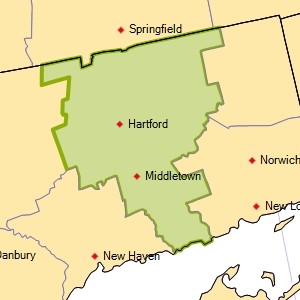 The region’s personal health rank was 13; its community/environmental indicators rank was 25, leading to an overall ranking of 13th. The analysis points to “Areas of Excellence,” in the region, including: