Report: Connecticut's Medicaid Expansion Increased Coverage, Access to Preventive Care and Behavioral Health Treatment
/A recently issued report found that emergency department visits are down; coverage seen as critical in fight against opioids has expanded, and preventative care and mental health care have become more prevalent – all resulting from a 2010 policy decision made by Connecticut’s elected officials to expand Medicaid coverage.
That decision, made collaboratively by a Republican Governor (M. Jodi Rell) and Democratic-controlled legislature – helped to reduce Connecticut’s uninsured rate from 9.1 percent in 2010 to 4.9 percent in 2016 and created a significant source of coverage for preventive health services and behavioral health care, according to the report developed by the Connecticut Health Foundation.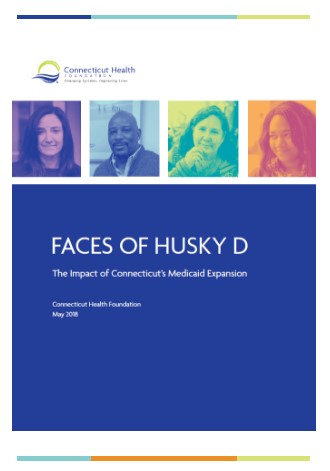
The report examines the impact of HUSKY D, as the Medicaid expansion is known, and highlights a number of key findings:
- Most people covered by HUSKY D are using their insurance to get care. Just over 80 percent of people with HUSKY D used the coverage for preventive or outpatient health services in 2016.
- Emergency department usage among HUSKY D members is down significantly. The rate of emergency department visits fell by 36 percent from 2012 to 2016.
- HUSKY D is a significant source of coverage for behavioral health care. In 2016, more than one in three HUSKY D members – 36 percent – used their coverage to get care for a mental health condition or substance use disorder.
- Outcomes have improved for diabetes patients with HUSKY D. A review of more than 500 HUSKY D members with diabetes found that the percentage whose blood glucose was under control rose from 31 percent to 50 percent from 2012 to 2016.
The report also examines the role HUSKY D plays in other policy work in the state, including addressing the opioid crisis and helping those leaving prison get medical and behavioral health treatment when they return to society. The report notes that before HUSKY D, individuals with substance use disorders were generally not eligible for Medicaid, creating a major barrier to treatment.
“Health insurance coverage is a critical first step to health, but it is also important to ensure that people are able to use that coverage to get care, and for that care to make a difference in people’s health,” said Patricia Baker, president and CEO of the Connecticut Health Foundation. “This research underscores the importance of HUSKY D in giving low-income state residents the tools to take care of their health.”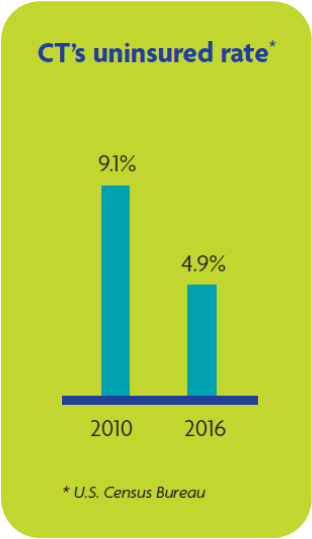
HUSKY D covers adults ages 19 to 64 who do not have minor children and whose income falls below 138 percent of the poverty level – the equivalent of $16,643 for an individual. (For comparison purposes, a person working 30 hours per week at Connecticut’s minimum wage – $10.10 per hour – would earn $15,756 in a year, the report indicates.)
The report concluded that “nearly eight years after Connecticut expanded HUSKY to cover more low-income adults, HUSKY D has made a significant impact on the state’s uninsured rate and the lives of thousands of people. The majority of those covered are using this insurance to get preventive care, and the rate of emergency department usage has declined, a promising trend.”
The report also notes that the federal government has “financed more t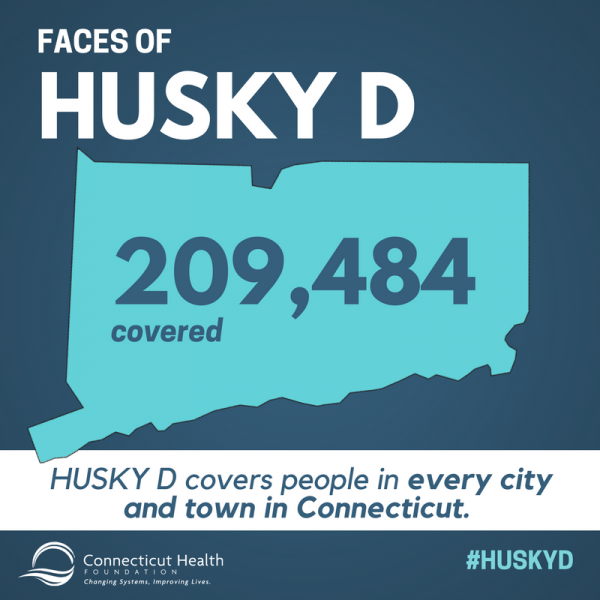 han 90 percent of the cost of the program, allowing Connecticut to cover more than 200,000 people with a relatively small budgetary impact.” Currently, the federal government pays 94 percent of the cost of coverage and the state pays 6 percent. The report also identifies challenges associated with HUSKY D, including concerns raised by health care providers about Medicaid payment rates and uncertainty in federal funding.
The report’s analysis indicates that HUSKY D enrollees live in every city and town in Connecticut. The largest number of covered individuals live in Hartford (18,404), Bridgeport (16,330), New Haven (15,583), Waterbury (13,989), New Britain (8,439) and Stamford (6,110).
The Connecticut Health Foundation is the state’s largest independent health philanthropy dedicated to improving lives by changing health systems. Since it was established in 1999, the foundation has supported innovative grantmaking, public policy research, technical assistance, and convening stakeholders to achieve its mission – to improve the health of the people of Connecticut. Since its creation, the Connecticut Health Foundation has awarded grants totaling more than $60 million in 45 cities and towns throughout the state.

 The survey found that 38 percent of students whose grades were mostly A’s texted or e-mailed while driving a car on at least one occasion in the 30 days prior to the survey. The percentage was slightly less among students with lower grades: 31% of students with mostly B’s, 30% of students with mostly C’s and 23% of students with mostly D’s and F’s.
 The ranking does not capture the full extent of deprivations or hardships affecting children. Instead, it focuses on some key rights, or “guarantees” of childhood: life, healthy growth and development, education and protection from harm. If a child experiences all of these, his/her childhood is considered to be “intact.”
 The report notes that “While children are only 20 percent of the population, they are 100 percent of America’s future.” Save the Children’s ranking reveals children in New Jersey, Massachusetts, Vermont and New Hampshire are far more likely to experience safe, secure and healthy childhoods than children in Louisiana, Mississippi, Oklahoma and New Mexico.
 “This is an exciting opportunity for all of us at Foodshare. More produce and healthier options: that’s the future of food banking,” said Jason Jakubowski, President and CEO of Foodshare.
 by the Common Core Standards and provides a pathway for 21st Century Skills.
 Globally-Focused Coursework would require at least 7.0 credits or demonstration of mastery and Globally-focused Student Activities would require competency in global citizenship through active participation in “at least one or more co-curricular and other school-sponsored or endorsed activities over at least 3 years of their high school experience with suggested involvement of a total of at least 15 hours.”



 The top five female names in Connecticut in 2017 were Olivia (230), Emma (219), Ava (169), Mia (162) and Sophia (159). The leading names selected for boys were Noah (222), Liam (208), Logan (189) Jacob (187), and Michael (175).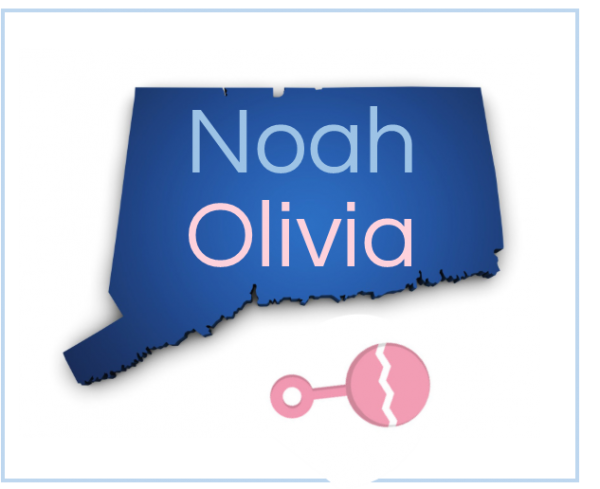


 “We understand, by all accounts, many of them may be using products that closely resemble a USB flash drive, have high levels of nicotine and emissions that are hard to see. These characteristics may facilitate youth use, by making the products more attractive to children and teens. These products are also more difficult for parents and teachers to recognize or detect. Several of these products fall under the JUUL brand, but other brands, such as myblu and KandyPens, that have similar characteristics are emerging.”
 Fran Rabinowitz has been a dedicated and respected Connecticut educational leader for over 30 years. Prior to her appointment at CAPSS, she served as Associate Commissioner of Education for the State of Connecticut, Superintendent of Hamden Public Schools, and Interim Superintendent of Bridgeport Public Schools.