Struggles Continue for Thousands Who Relocated from Puerto Rico to Connecticut in Storm Aftermath
/About 13,000 residents of Puerto Rico and the U.S. Virgin Islands who arrived in Connecticut in the aftermath of the hurricanes Maria and Irma continue to struggle with obtaining basic needs including adequate housing, food, medical care and jobs, according to a survey commissioned by the Hartford Foundation for Public Giving.
The vast majority of those who have come to Connecticut, over 70 percent, have extremely low incomes (under $30,000), adding a heavy responsibility on an already over-extended and resource-limited Puerto Rican community in Connecticut, given the extreme levels of need that are present in the community, even before the storms, the Foundation pointed out.
Approximately 1,300 people participated in the survey, which utilized online and in-person questionnaires in English and Spanish and field research. It was conducted by the University of Connecticut’s El Instituto: Institute for Latina/o Caribbean and Latin American Studies and the Center for Puerto Rican Studies at Hunter College. The objective was to understand the long-term impact of displacement on Puerto Rican households in the Greater Hartford region.
“The Hartford region has one of the highest concentrations of people of Puerto Rican origin outside Puerto Rico and last year’s hurricanes brought thousands more to the region, many of whom will likely stay,” said Scott Gaul, the Hartford Foundation’s director of Research and Evaluation. “The hurricanes were an unprecedented event, but we can anticipate similar crises will happen again. The survey is one tool to help the Hartford region understand the needs of evacuees and the potential long-term impacts of displacement.”
The survey found that while some households surveyed had initially relied on the Federal Emergency Management Agency (FEMA) for funding basic needs, the majority of those affected relied on Greater Hartford’s nonprofit organizations, school districts and family members for support.
During the 2018 Legislative Session, the Connecticut General Assembly approved $4.4 million in education and housing assistance for displace residents, including $1.5 million in aid to the departments of education, housing and social services.

More than half of respondents (56%) mentioned that it was very likely (36%) or somewhat likely (22%) that kin would relocate from the Caribbean to Connecticut, with most of those relatives and friends staying with respondents. Those living in Hartford’s outer ring suburbs were relatively less likely (72%) to have kin in the Caribbean than those living in Hartford or its immediate suburbs. And they expect nearly 1,500 additional people to arrive from Puerto Rico in the wake of the hurricane.
In addition, those responding to the survey indicated that they expected displaced kin to remain in Connecticut into the medium and long terms. Nearly a third of respondents (32%) reported that kin would stay in Connecticut for a few months, and a quarter (26%) would remain for a few years.
The survey also found:
- The most pressing need for respondents hosting displaced Puerto Ricans is lodging, with fully one-third indicating that housing was one the biggest needs they face.
- Nearly three-fifths of respondents indicated housing was displaced person’s first order need, followed by 16 percent who mentioned it in second order.
- Food was a first order need for one-fifth of survey respondents’ displaced friends and relatives and second order need for 35 percent.
Survey respondents identified housing issues and insufficient food as the most critical needs they are facing in Connecticut, along with healthcare, in the after aftermath of the crisis. These are needs not only of those who are in the state already, but of those who are very likely to arrive in the short term,” wrote Professors Charles R. Venator-Santiago, Associate Professor, Department of Political Science and El Instituto and Carlos Vargas Ramos, Center for Puerto Rican Studies.
"These needs are adding a heavy responsibility on an already over-extended and resource-limited Puerto Rican community in Connecticut, given the extreme levels of need that are present in the community and pre-dated the crisis created by hurricanes Irma and Maria," the report stated.
Results from the survey are aimed at helping to inform long-term planning and action by funders, nonprofits, municipalities and schools. The Foundation intends to work with community organizations and leaders in the region to disseminate and act on survey results.
The report indicated that preliminary estimates by the government of Puerto Rico indicate that approximately 70,000 residential properties were totally destroyed, with an additional 300,000 partially damaged residences. As of February 2018, 1.1 million households had applied for disaster aid from the Federal Emergency Management Agency (FEMA).
 Atop the rankings in the pediatric specialty were Children’s National Medical Center (Washington, DC), Children’s Hospital of Philadelphia, Boston Children’s Hospital, Children’s Hospital Colorado, Cincinnati Children’s Hospital Medical Center, Rainbow Babies and Children’s Hospital (Cleveland), UCSF Benioff Children’s Hospital of San Francisco and Oakland, New York-Presbyterian Morgan Stanley-Komansky Children’s Hospital, St. Louis Children’s Hospital-Washington University, and C.S. Mott Children’s Hospital – Michigan Medicine (Ann Arbor).
 e, infection rates in the NICU and other data collected from a detailed U.S. News clinical survey of children's hospitals, produced 85 percent of each hospital's score. The other 15 percent reflects nominations from pediatric specialists and subspecialists who responded to surveys in 2016, 2017 and 2018 and recommended the hospital for serious cases in their specialty.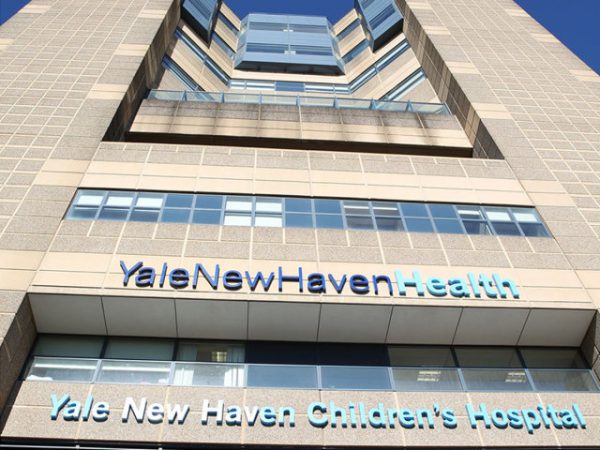


 The review of the research, conducted by Connecticut-based Rodriguez Data Solutions, points out that policymakers often promote K-12 regionalization as a way to achieve cost savings, but often fail to consider the consequences for student educational achievement. The report reviewed initiatives to promote K-12 regionalization in several states including Connecticut, Maine, New York and Vermont. Among the findings:
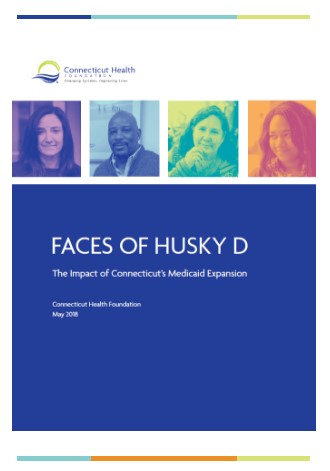
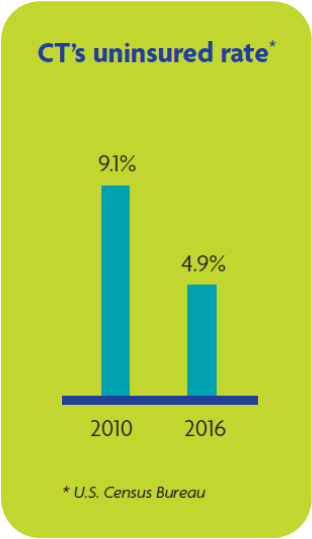
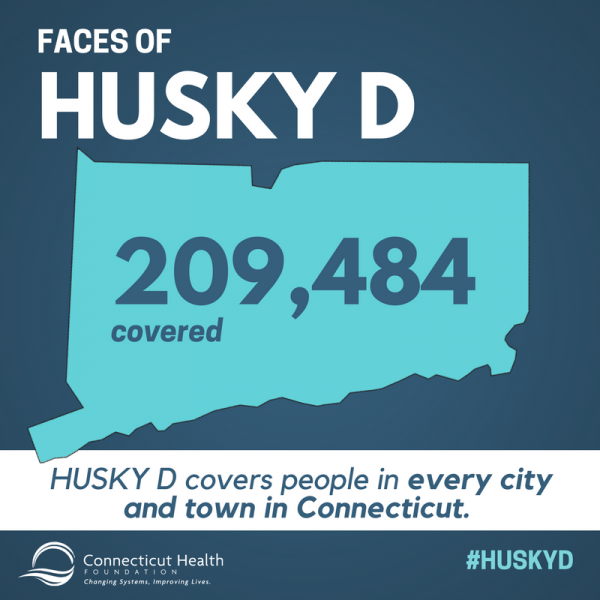 han 90 percent of the cost of the program, allowing Connecticut to cover more than 200,000 people with a relatively small budgetary impact.” Currently, the federal government pays 94 percent of the cost of coverage and the state pays 6 percent. The report also identifies challenges associated with HUSKY D, including concerns raised by health care providers about Medicaid payment rates and uncertainty in federal funding.
 The survey found that 38 percent of students whose grades were mostly A’s texted or e-mailed while driving a car on at least one occasion in the 30 days prior to the survey. The percentage was slightly less among students with lower grades: 31% of students with mostly B’s, 30% of students with mostly C’s and 23% of students with mostly D’s and F’s.
 The ranking does not capture the full extent of deprivations or hardships affecting children. Instead, it focuses on some key rights, or “guarantees” of childhood: life, healthy growth and development, education and protection from harm. If a child experiences all of these, his/her childhood is considered to be “intact.”
 The report notes that “While children are only 20 percent of the population, they are 100 percent of America’s future.” Save the Children’s ranking reveals children in New Jersey, Massachusetts, Vermont and New Hampshire are far more likely to experience safe, secure and healthy childhoods than children in Louisiana, Mississippi, Oklahoma and New Mexico.
 “This is an exciting opportunity for all of us at Foodshare. More produce and healthier options: that’s the future of food banking,” said Jason Jakubowski, President and CEO of Foodshare.
 by the Common Core Standards and provides a pathway for 21st Century Skills.
 Globally-Focused Coursework would require at least 7.0 credits or demonstration of mastery and Globally-focused Student Activities would require competency in global citizenship through active participation in “at least one or more co-curricular and other school-sponsored or endorsed activities over at least 3 years of their high school experience with suggested involvement of a total of at least 15 hours.”