Wesleyan Grad, Former Colorado Governor John Hickenlooper to Seek Presidency
/John Hickenlooper, a former two-term Governor of Colorado, Mayor of Denver and 1974 graduate of Wesleyan University in Middletown, is the latest Democrat to announce he will be seeking the party’s presidential nomination in the 2020 election cycle.
Hickenlooper, 67, is expected to point to his eight years governing Colorado, a modern-day political swing state with an electorate nearly evenly divided among registered Democrats, Republicans and unaffiliated voters, the Denver Post reported this week.
In addition to leading the state during an explosive economic expansion following the Great Recession, Hickenlooper nudged the state to the left, the Post reported. By the time his second term ended in January, he had expanded the state’s Medicaid program, signed comprehensive gun-control legislation and helped establish civil unions for same-sex couples prior to the U.S. Supreme Court legalizing marriage equality.
“I’m running for president because we’re facing a crisis that threatens everything we stand for,” Hickenlooper says in a taped announcement, promising to “repair the damage done to our country and be stronger than ever.” He will kick-off his campaign at a rally Thursday in Denver.
Hickenlooper graduated from Wesleyan University with a bachelor’s degree in English and a master’s degree in geology. He began his career as a geologist and later opened a series of restaurants and brewpubs across the country, including the Wynkoop Brewing Co. in downtown Denver, which helped spark the revitalization of the city’s now-thriving Lower Downtown (“LoDo”) district. He served as the mayor of Denver from 2003 to 2011.
Hickenlooper delivered the commencement address at Wesleyan in 2010, where he said “Frankness impels me to say that my Wesleyan undergraduate career was notable, which is not to say distinguished. I came to Wesleyan as a slightly dyslexic extrovert with attention deficit disorders. And don’t you think that’s a particularly cruel irony – that the slowest readers could also have the short attention spans?”
On a more serious note, he explained that “in spite of the fact that my degrees are in English and geology – what I learned at Wesleyan was how to be an entrepreneur. The essence of entrepreneurship is not just the economic bottom-line so much as it is an exploration of innovation and creativity.
It’s the creative spark that has always interested me most, because there is such joy and satisfaction in the process of creating something that works, that fills a need, building something where nothing existed before, adding value to people’s lives so that their creative energies can also flourish.”
Reflecting on his time as Mayor, he said “I like to refer to myself, because the word ‘politician’ is still somewhat tainted despite our efforts, as an entrepreneur on loan to Public Service.”
Hickenlooper described a start-up as “the single best learning process in American enterprise. When you build something from scratch, you acquire a depth of understanding that no ‘professional,’ no management expert can match. There are few better ways to learn about yourself, your strengths and your weaknesses, than in beginning and building something, an enterprise. It is a wonderful mirror.”
“Entrepreneurship,’ he added, “is all about innovation, re-invention, adaptation and perseverance.”
A past chair of the National Governor’s Association, he was guest on the weekly podcast hosted by the leaders of Middletown-based Community Health Center a year ago, discussing how expanded coverage under the Affordable Care Act has improved access to health care in his state, how embedding behavioral health in primary care is improving outcomes, lessons learned from the state’s marijuana legalization, and how the opioid crisis was being combated in Colorado.
His Wesleyan commencement address at the start of this decade included this description of his years as Mayor: “We challenged the status quo that government can’t work. We were transparent and accountable. We sought talent, without regard to politics, whether someone was Republican or Democrat. We weren’t bi-partisan, we were non-partisan. Every good restaurateur learns early that there’s no margin, there’s no profit in having enemies. You need everyone. We were always about solving problems, and you can’t solve problems with only half the people.”
https://youtu.be/QwIk0hUmzk8

 ications of many nominees and refers their selection to the Legislative Leaders for approval. An awards ceremony, ‘Connecticut Hall of Fame Day,’ is held to honor those inducted.” Not lately.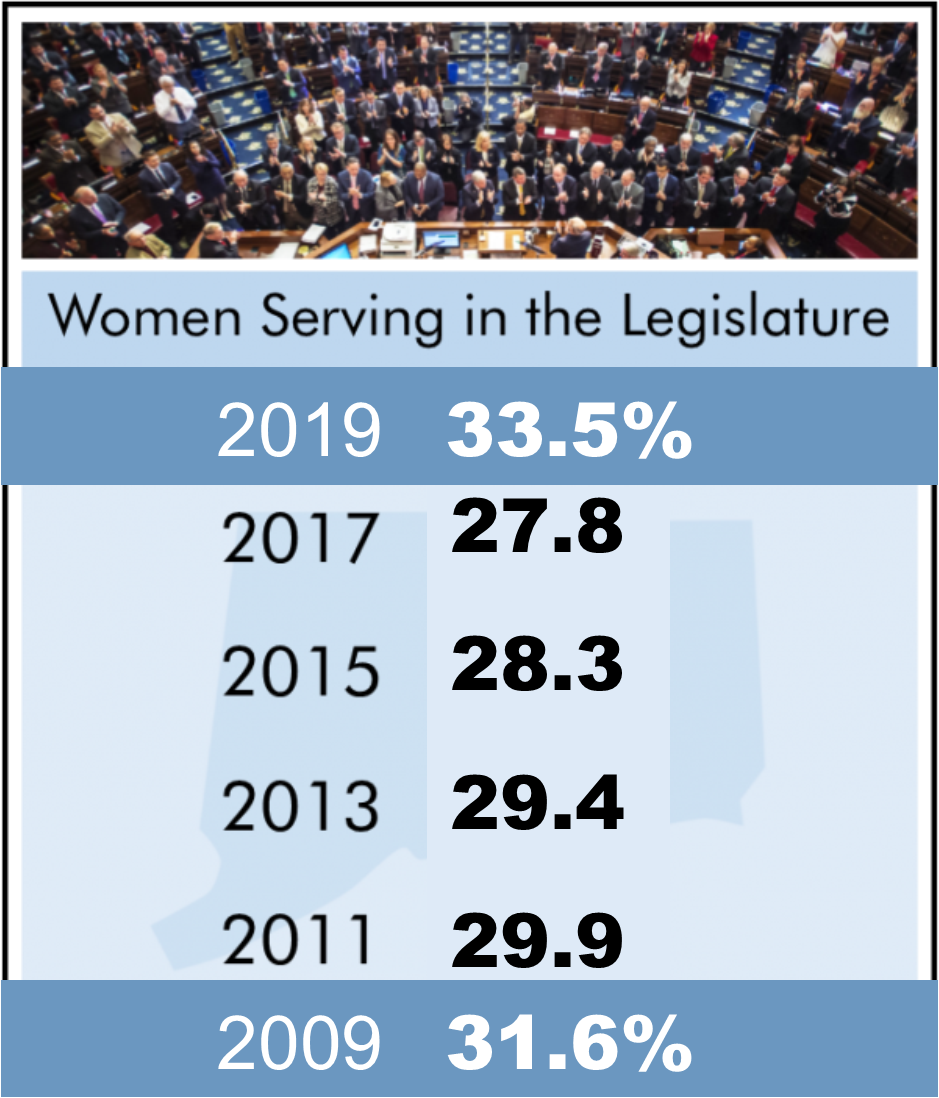
 The strong turnout percentage this year is underscored by the fact that the number of registered voters is considerably larger. As of Nov. 2 – not including those individuals who registered and voted on Election Day – the number of registered voters in Connecticut was 2,165,045, according to the Office of Secretary of the State. Back in the ‘90’s, the list of registered voters hovered between 1.7 million and 1.8 million. This year’s election brought a higher percentage of voters to the polls from a larger list of individuals registered to vote.
 More than 250 attendees are anticipated, to include consultants, coaches, funders, academics, and executives from across the country. The conference intends to “convene the diverse perspectives that shape and advance our field.”

 Just over a decade later, her business acumen and history of public service put her on a ticket for statewide office. In 1990, New Haven-area Congressman Bruce Morrison won a primary to be the Democrats choice for Governor, former U.S. Senator Lowell Weicker started his own political party to launch is comeback with a candidacy for Governor, and Republicans nominated another Congressman, John Rowland of Waterbury.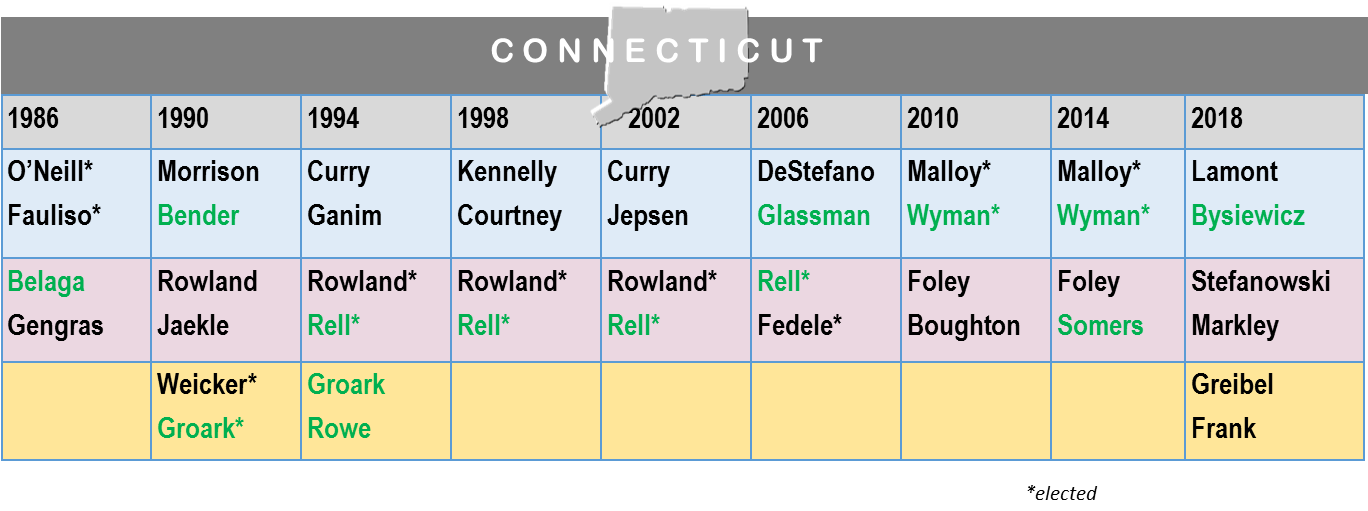
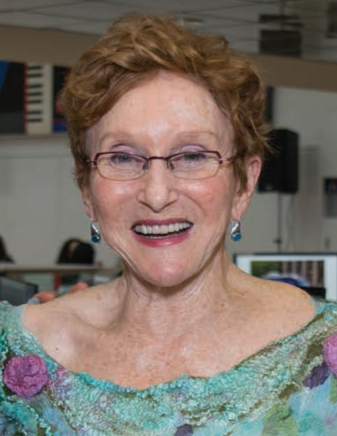 She is also remembered as the Democratic candidate the first time two women were on the November ballot for Lieutenant Governor of Connecticut. That occurred again in 1994 and 2014. At least one woman has been a candidate for Lieutenant Governor or Governor - or both - in every election cycle since 1986, and Connecticut's voters elected Nancy Wyman to serve as Lieutenant Governor in 2010 and 2014, following one term of a man in that role, the only such term since 1990. This year, Susan Bysiewicz is on the ballot for that office. A woman has been elected either Governor or Lieutenant Governor in Connecticut in every election since 1990.
 NEFAC
NEFAC Stephanie McCrummen of The Washington Post, who won a Pulitzer Prize this year for investigative reporting, will deliver the keynote address. Joining McCrummen as featured speakers are Terence Smith, a contributing columnist for the Capital Gazette in Annapolis, Md., and David Cuillier, an associate professor at the University of Arizona School of Journalism.
 Anti-media rhetoric from President Trump, which was a constant during his campaign and since, has spurred interest in the topic. The discussions in Avon, which are free, will be led by local educators and historians and continue into the fall.
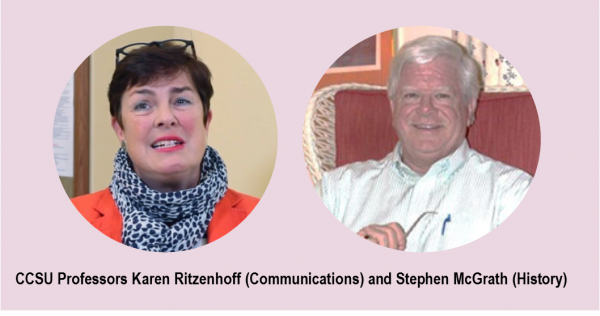 The Popularity of Alexander Hamilton - Thursday, September 13, 2018, 3:00 pm: An illustrated talk about the inspiring story of the Alexander Hamilton, and his contributions, struggles, and tragic death. After years of being perceived as having only a supporting role, Hamilton’s star has risen, confirming his belief that “Those who stand for nothing fall for anything.” The discussion will be led by Bev York, Education Director for the Windham Textile and History Museum.