Nine in Ten CT Residents Have a Usual Source of Care, But 3 in 10 Haven’t Seen Doctor in Past Year
/A new federal report finds that all but 10.1 percent of Connecticut residents had a usual source of medical care during 2014 – tied for the sixth lowest percentage among the states. The same report found great variation among states but, on average, 17.3 percent of Americans lacked a usual source of care.
Vermont led the country with only 2.8 percent of residents reporting they do not have a regular care site, according to data compiled by the Centers for Disease Control and Prevention’s National Center for Health Statistics, followed by Delaware at 6.8 percent.
Even in Connecticut there remains room for improvement as nearly 3 in 10 – 29.6 percent - of Connecticut residents had not seen or talked to a general doctor during the last year, slightly better than the national average. Vermont also led the country in that statistic, with 84 percent having seen or spoken with a physician during the previous year.
The percentage of adults without a usual place of medical care ranged from 2.8 percent in Vermont to 26.7 percent in Nevada. The percentage of adults who did not have a general doctor visit in the past 12 months ranged from 15.9 percent in Vermont to nearly have the state’s population - 48.1 percent - in Montana.
The federal data indicated that nine states (Nevada, Idaho, Texas, Oregon, Wyoming, Kentucky, Arizona, Alaska, and Florida) had a higher percentage of adults without a usual place of medical care compared with the national average (17.3%).
Conversely, Vermont, Delaware (6.8%), Massachusetts (7.5%), Wisconsin (9.5%), Hawaii (10%), Connecticut (10.1%), Rhode Island (10.1%), New Hampshire (11.6%), North Dakota (11.9%), South Dakota, New York, Alabama, Iowa, Maine, and Pennsylvania had a lower percentage of adults without a usual place of medical care compared with the national average.
Eleven states (Montana, South Dakota, Alaska, Nevada, New Mexico, South Carolina, Idaho, Nebraska, Texas, Florida, and California) had a higher percentage of adults who had not seen or talked to a general doctor in the past 12 months compared with the national average (34.0%). Vermont, Delaware, Virginia, Pennsylvania, Michigan, Wisconsin, New Hampshire, Oklahoma, and Ohio had a lower percentage of adults who had not seen or talked to a general doctor in the past 12 months compared with the national average.
Connecticut, at 29.6 percent, ranked just outside the top 10 states in the second quartile, but just below the national average.
Also of note, the study found little impact on these metrics of states’ decisions to expand Medicaid or create a state-based health insurance exchange. The federal analysis concluded that “continued state-specific monitoring will be helpful in identifying and tracking state and regional disparities in health care utilization over time.”
The National Health Interview Survey is a multipurpose health survey conducted continuously throughout the year by the National Center for Health Statistics (NCHS). Interviews are conducted in person in respondents’ homes, but follow-ups to complete interviews may be conducted over the telephone. The federal report was authored by Lindsey I. Black and Jeannine S. Schiller, with the National Center for Health Statistics, Division of Health Interview Statistics.


 Why does USA Gymnastics keep coming back? “Everything runs smoothly,” suggests Mikulak, expressing a competitor’s viewpoint. “They trust us,” adds Murdock, noting that when Connecticut bids to attract future national caliber sporting events, the first question asked is “what else have you hosted.”





 The highest rates were in New Mexico (31.5), D.C. (28.25), Oklahoma (24.52), Arizona (23.31), Nevada (21.85) and Wyoming (21.29).
 Looking at the rate at which Blacks were killed by police during the period January 2013 – April 2016, Connecticut was among the lowest, at 8.3, which reflects three deaths. In New Hampshire, Vermont, North Dakota, Maine, Idaho and South Dakota, largely reflecting the population in those states, there were no deaths of African Americans, according to the data.


 The quarterly survey is released by

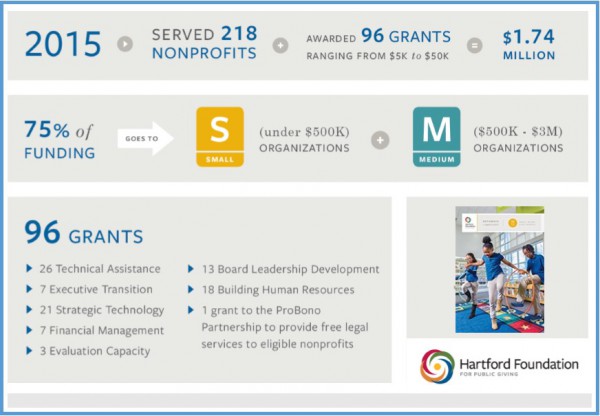
 The Foundation invested 30 percent of its grants in education from birth through high school, and new and renewed college scholarship, according to the report. Grants for family and social services received 20 percent; health – 11 percent; arts and culture – 11 percent; community and economic development – 19 percent, general – 5 percent and summer programs – 4 percent.





 Overall in Connecticut, the chronic absenteeism rate dropped from 11.1 percent in 2011-12 to 10.6 percent in 2014-15. The State Department of Education website explains that “improving and sustaining good attendance requires the active engagement of district and school-based leaders and administrators along with a clear articulation of roles and responsibilities.”


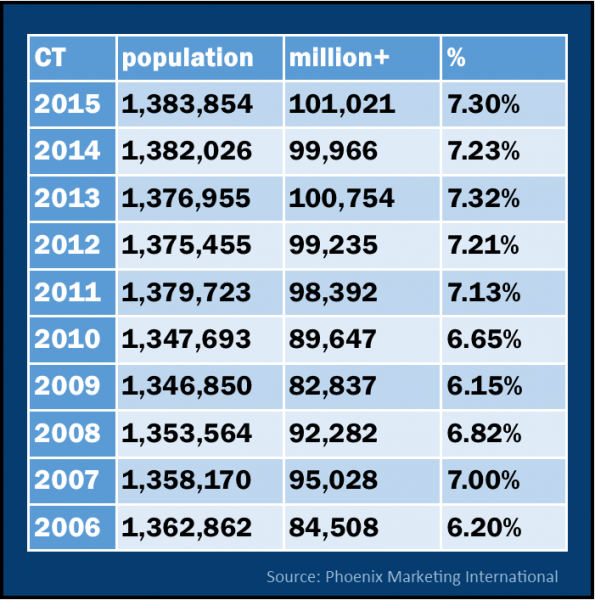 He added, “We advised him that there are ways to be close to family and friends in Connecticut on occasion that are perfectly legal. We're trying to send a more welcoming message to the high earners as a group." Homeowners who spend more than 183 days in the state are considered residents for tax purposes.
 wealthiest individuals, had relocated from Greenwich to Florida, the second individual in that tax bracket to do so recently. The exits, the Courant reported, “leave Connecticut with 13 billionaires, including Ray Dalio ($15.6 billion) and Steven Cohen ($12.7 billion), both hedge fund owners who live in Greenwich.” Eight of those 13 state residents list Greenwich as their home address, according to