New Documentary, Travelers Championship Heighten Attention to ALS, Sports is Once Again Common Theme

Public awareness of ALS - amyotrophic lateral sclerosis – has been intertwined with sports since Lou Gehrig played with the New York Yankees, and saw his career and his life, tragically shortened by the neurodegenerative disease eight decades ago.  Gehrig’s Yankee Stadium speech in 1939 has endured as one of the century’s most memorable. Earlier this month, the Travelers Championship on the PGA Tour raised more money for charity than in any previous year, when $2.8 million was raised with ALS as the primary charity.  Travelers Executive Chairman of the Board Jay Fishman announced in August 2015 that he had been diagnosed with ALS.jay fishman

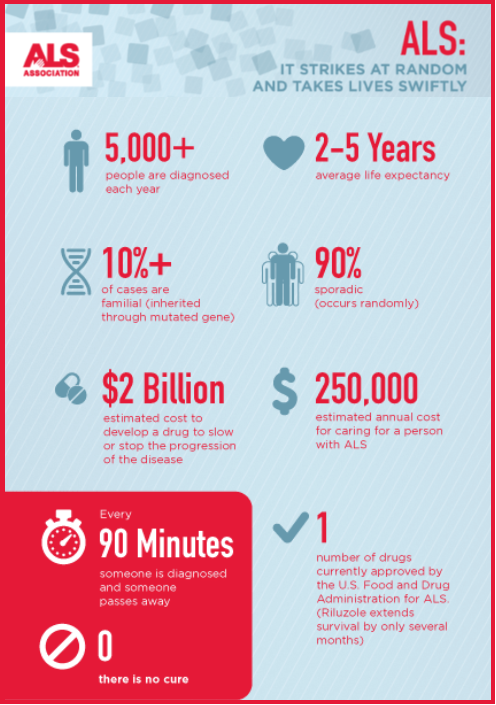
And now, a new motion picture documentary telling the story of a former NFL player afflicted with ALS is reaching theaters across the country, including Connecticut.  The film, Gleason, goes inside the life of Steve Gleason, the former New Orleans Saints defensive back who, at the age of 34, was diagnosed with ALS and given a life expectancy of two to five years. Gleason played for the Saints from 2000-2008.

The primary beneficiary for the 2016 Travelers tournament was the ALS Clinic at the Hospital for Special Care (HSC) in New Britain. Each year, HSC cares for more than 250 Connecticut residents with amyotrophic lateral sclerosis (ALS). HSC is the only facility in Connecticut that is part of the ALS Association’s national network of Certified Treatment Centers of Excellence and is certified by the Muscular Dystrophy Association for ALS care.

Copyright Michael C. Hebert

According to the ALS Association, amyotrophic lateral sclerosis is a progressive neurodegenerative disease that affects nerve cells in the brain and the spinal cord. When a muscle has no nourishment, it "atrophies" or wastes away. "Lateral" identifies the areas in a person's spinal cord where portions of the nerve cells that signal and control the muscles are located. As this area degenerates it leads to scarring or hardening ("sclerosis") in the region.  Motor neurons reach from the brain to the spinal cord and from the spinal cord to the muscles throughout the body. The progressive degeneration of the motor neurons in ALS eventually leads to their demise.

ALS burst back into the public conversation during the 2014 ALS Ice Bucket Challenge, as millions of people started talking about ALS. Recently, there have been some indications that the money raised during that social media explosion may have helped to advance research into ALS.ALS

As the movie tells it, just weeks after his diagnosis, Gleason found out his wife, Michel, was expecting their first child. A video journal that began as a gift for his unborn son expands to chronicle Steve’s determination to get his relationships in order, build a foundation to provide other ALS patients with purpose, and adapt to his declining physical condition—utilizing medical technologies that offer the means to live as fully as possible, according to the movie synopsis appearing on the film’s website. The documentary was highly regarded at the 2016 Sundance Film Festival, and is making its Connecticut debut at Cinema City at the Palace 17 in Hartford.

ALS usually strikes people between the ages of 40 and 70, and approximately 20,000 Americans can have the disease at any given time (although this number fluctuates), the ALS Association reports. For unknown reasons, military veterans are approximately twice as likely to be diagnosed with the disease than the general public.

The Greater Hartford Walk to Defeat ALS will take place on September 25 in East Hartford.  The New Haven Walk will be held on October 2 in New Haven.

https://youtu.be/WgkQU32XSFQ

CCMC Study Brings Attention to Dramatic Increase in Trampoline Injuries Nationwide

As trampoline parks are becoming more common in Connecticut and across the United States, so are emergency department visits for injuries that occur at these facilities, a new national study led by physician researchers at Connecticut Children’s Medical Center (CCMC), has found. The study published this month in the journal Pediatrics, co-authored by CCMC emergency physicians Steven Rogers, MD, and Jesse Sturm, MD, and pediatric emergency medicine fellow Kathryn Kasmire, MD, came about after the physicians began noticing a sharp increase in trampoline injuries, including some that were serious.trampoline

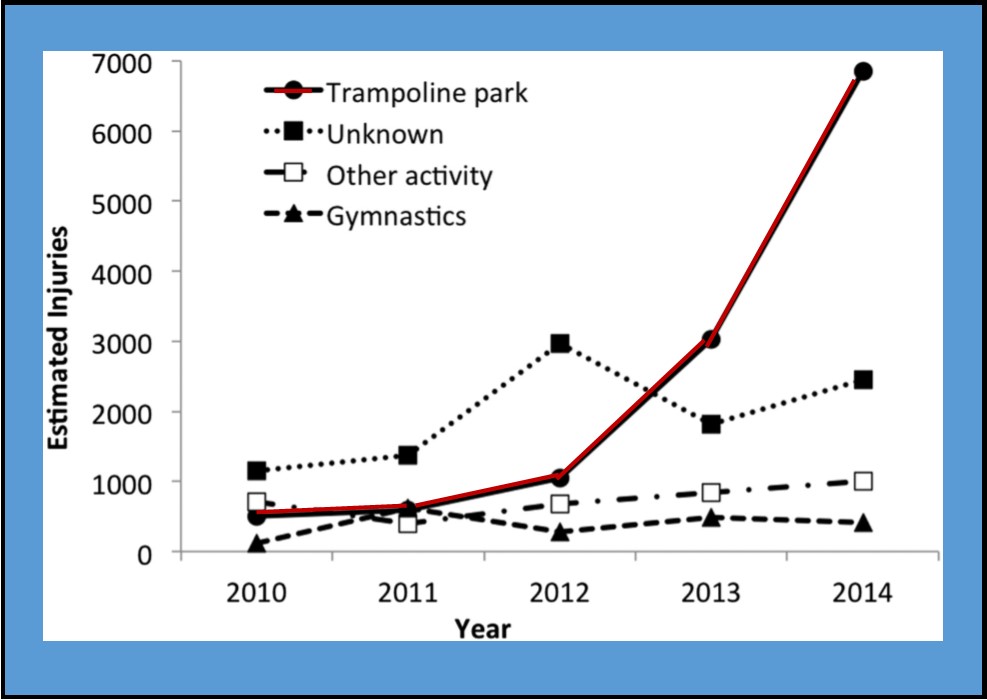
For the study, the CCMC physicians analyzed emergency room reports from a national database to estimate the total number of trampoline-related injuries both from parks and trampolines at home. From 2010 to 2014, the average annual number of Emergency Department visits for trampoline injuries was close to 92,000.

The vast majority happened at home - but injuries at trampoline parks surged more than 10-fold during the study period. The study found that emergency room visits related to injuries at trampoline parks grew from 581 in 2010 to 6,932 in 2014, which was the latest year represented in the study. Patients injured at trampoline parks were more likely to be males, with an average age of 13.

The study concluded that “trampoline park injury patterns differed significantly from home trampoline injuries. Trampoline park injuries are an emerging concern; additional investigation and strategies are needed to prevent injury at trampoline parks.”

The number of trampoline parks in the United States also increased during that time frame from around 40 in 2011 to 280 in 2014. It is now estimated that nationwide, five to six new parks open each month. Over the last year alone, it is estimated that more than 50 million people visited trampoline parks in North America, according to the International Association of Trampoline Parks.

In Connecticut, trampoline parks are up and trampoline chartrunning in communities including Hartford, New Britain, Trumbull, Bethel, Stamford, Norwalk, Manchester, Milford, Danbury, New Milford, Ridgefield, Brookfield, Wallingford.  Another is expected soon in East Haven.

The state’s official tourism website, www.ctvisit.com, includes six trampoline parks among the places highlighted for “safe, family-friendly indoor recreation.”  The “Connecticut – Still Revolutionary” site features information about, and links to, Launch Trampoline Park in Hartford, Sky Zone in Bethel and Norwalk, Chelsea Piers in Stamford, Rockin’ Jump Trampoline Park in Trumbull and Flight Trampoline Park in New Britain.

The study found that the majority of trampoline-related accidents occur at home — rather than at a park — and these accidents did not increase significantly from 2010 to 2014, nor did overall trampoline injuries.

The International Association of Trampoline Parks (IATP) said the rise in injuries should be expected because of more parks in recent years. "We believe that the positives of youth recreational sports far outweigh the negatives, and we are actively engaged in programs aimed at promoting the safety and well-being of jumpers who visit our member parkarticles," the organization said following publication of the study.

"I don't think trampoline park injuries are increasing because they are especially dangerous compared to home trampolines, but rather because of their growing popularity and the increasing number/availability of these facilities," said Kasmire, indicating that 1 in 11 children or young adults who went to the emergency room for park injuries was admitted to the hospital.

Most of the injuries were leg injuries, including strains and fractures. Children injured at trampoline parks were less likely to have head injuries than those injured on trampolines at home, but the severity of park-related injuries was concerning, the authors said.

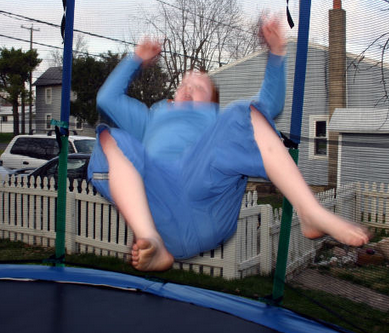
In a published report, Kasmire said that parks generally have done a good job of ensuring that youngsters do not fall off trampolines, reducing the likelihood of head injuries, because the floors are covered with a bouncy surface. This floor, though, can increase the risk of other injuries if a person lands between two trampolines, she said.blue

The American Academy of Pediatrics advises against trampoline use for all children but says if children do use them, they should not do flips or have more than one jumper at a time on a trampoline. The academy said adult supervision is needed and that trampolines should also have proper padding.

The IATP indicated that the organization “welcomes studies like the one published” because they “provide a deeper understanding of safety issues and provide data on our sport allowing us to better educate parents, jumpers and parks so all can fully enjoy indoor trampoline park facilities.”

The trade organization also noted that “if the study reported Trampoline Park Injuries (TPIs) as a percentage, rather than a total, a more accurate industry picture would develop. As a point of reference, high school football players experience injuries at a rate of 3.87 per 1,000 exposures. The rate of reportable injury at a typical trampoline park is less than one per 10,000 jumpers.  Therefore, the rate at which injuries occur is a much more meaningful statistic than total number of injuries.”

The study in Pediatrics notes “adult supervision has been proposed to reduce trampoline injuries in children, although trampoline injuries often occur despite adult supervision.”  The study also states that “although only a fraction of trampoline-related injuries occurred at trampoline parks (11% in 2014), the trend is alarming.”

Metro Hartford Progress Points Report Looks at Promise in Communities Amidst Considerable Challenges

First, the bad news.  The Metro Hartford region “has not produced meaningful job growth in the past 25 years, despite having advanced industries that offer a family-sustaining wage and having residents eager to work.”  The region’s spending on local schools continues to increase, even as enrollment declines, and the region “retains the fewest four-year graduates of any metro region in the country – with 60 percent of recent graduates citing jobs as their primary reason for leaving.”  Even in the region’s traditional strength in advanced industries, such as aerospace manufacturing and computer systems designs, “our competitive advantage may be eroding.” If the goal of the latest edition of the Metro Hartford Progress Points report, driven by the Hartford Foundation for Public Giving, is to push a region-wide conversation that spurs progress, the data highlighting five key issues impacting the region’s 38 communities may have just enough unsettling news and rays of hope to do just that.  “The need for systemic change,” the report indicates, “requires leadership and more regional coordination and integration.”progresspointslogo

The third annual edition of the report is the result of collaboration between nine stakeholders representing local government, businesses, nonprofits, academic and philanthropic institutions and organizations committed to making long-term progress in the region.

The 2016 report focuses on five related themes: attracting and retaining a skilled workforce; better connecting people to opportunity; aligning workforce and economic development strategies; ensuring a quality education for all despite scarce resources and building collaborative leadership and civic engagement to create long-term progress.

The data suggests that the region may be poised for greater success, but not without accelerated efforts, noting flatly that “more is needed.”

The report notes that the beginnings of “meaningful change” is evident, with towns creating walkable areas near transportation through transit-oriented development along the CT Fasttrak corridor and the New Haven-Hartford-Springfield rail line, expanding transportation options to meet the needs of today’s population and employers, an expanding presence of colleges in downtown Hartford, and regional collaboratives creating career pathways and bridging the divide among differing aspects of the education system from middle school through the workforce.

c1Local and regional organizations and associations, such as the MetroHartford Alliance’s HYPE, reSET, United Way’s Emerging Leaders and the Urban League’s Young Professionals “engage and connect millennials” and offer “business advisory services and other supports to help small businesses thrive,” the report explains, providing “a great start” on what needs to be done.

The report notes that “regional thinking is not new to Metro Hartford, even if successes have been intermittent. Without regional government, we must rely on informal, voluntary collaboration among leaders to address regional challenges.”

Among the findings:

  • Most job openings in the future will be in either high-wage jobs that require advanced degrees (27 percent) or low-skill jobs with wages that cannot sustain a family (72 percent).
  • While school enrollment in our region has declined by 7 percent since 2001, amounting to 29,000 additional empty seats in our region’s classrooms, education expenditures have increased 25 percent.
  • Millennials are projected to be the largest workforce segment by 2025, but who are they? Nearly half (43%) of the region’s 18- to 34-year-olds live in households that don’t earn family-sustaining wages.
  • Millennials and those aged 45-64 are moving out of our state in large numbers, along with those with post-secondary education, and are taking $912 million of their income with them. Overall, college graduates, individuals with advanced degrees and older residents are moving out of state, while younger and less educated people are moving in.

Regarding economic growth – or the lack thereof – the Hartford region ranks at the bottom of the list among Cleveland, Buffalo and New Orleans over the past quarter-century.  Topping the list are Austin, Las Vegas, Orlando and Raleigh.

c2The report includes a timeline of past efforts aimed at addressing the region’s long-standing challenges, “not to be disheartening, but instead to highlight where positive changes have been made” and how collaborative efforts can “create opportunities for all Greater Hartford residents.” The report also indicates that:

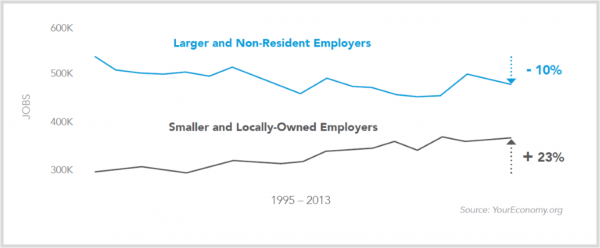
  • While net job growth in our region has been flat, the region’s smaller and locally-owned businesses have increased employment by 23 percent between 1995 and 2013. Unfortunately, larger and employers headquartered out of state have decreased employment by 10 percent during this same time period.
  • New and proposed rail, bus and highway projects offer the promise of access to jobs, housing and amenities that can spur economic growth.
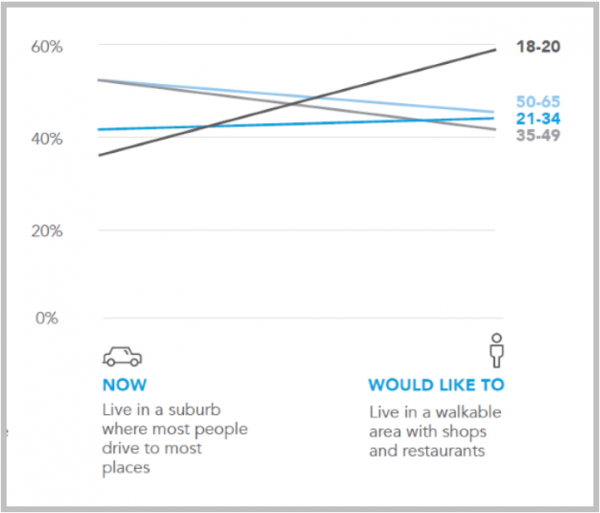
  • Many of the region’s residents – of all ages – would like to live where they can walk to shops, restaurants and other amenities, compared to where they lie today. That is true of 60 percent of those ages 18-20, and more than 40 percent of other age demographics.

The Metro Hartford region consists of 1 million people living in Hartford, New Britain and the 36 surrounding communities.  The partners in the initiative expressed the hope that the latest edition of the Progress Points report creates the “sense of urgency necessary to address shared regional challenges.”

The Metro Hartford Progress Points Partners are: Capitol Region Council of Governments, Capital Workforce Partners, City of Hartford, Hartford Foundation for Public Giving, Hispanic Health Council, MetroHartford Alliance, Trinity College Center for Urban and Global Studies, United Way of Central and Northeastern Connecticut, and Urban League of Greater Hartford.

https://youtu.be/0zTQjsbNlw0

CT Has 3rd Lowest Teen Birth Rate in U.S.

Connecticut has the third lowest teen birth rate in the nation, and ranks among the states with the lowest incidence of low birthweight babies, preterm birth rate and percent of births to unmarried mothers, according to data from the National Center for Health Statistics of the Centers for Disease Control and Prevention. The data, reflecting statistics from calendar year 2014, indicate that Connecticut ranked  32nd in Percent of Births to Unmarried Mothers, 30th among the states in Low Birthweight Rate, and 28th in Preterm Birth Rate.  The state ranked 48th in Teen Birth Rate, third lowest in the U.S.

teen birth rateThe NCHS data also ranked Connecticut 12th in the Cesarean Delivery Rate.

The Teen Birth Rate, determined by the number of births per 1,000 females age 15-19, was 24.2 nationally.  In Connecticut, it was 11.5.  The only states with a lower rate were Massachusetts at 10.6 and New Hampshire at 11.0.  Among the other states with low teen birth rates, well below the national average, were New Jersey, Vermont, Minnesota, Rhode Island, New York, Maine and Maryland.

The highest rates were in Arkansas (39.5), Oklahoma (38.5), Mississippi (38.), Texas (37.8) and New Mexico (37.8).

birthsRegarding the percentage of babies born to unmarried mothers, a statistic long tracked by federal health officials, three states saw more than half the children born in that category.  The highest percentages were in Mississippi (54.0%), Louisiana (52.7) and New Mexico (51.3%).

Connecticut ranked 32nd, at 37.1 percent, slightly lower than the national average of 40.2 percent.  The state with the lowest rate was Utah, at 18.6 percent, followed by Colorado (22.4%), Idaho (27.8%), Washington (32.1%) and Minnesota (32.3%).

Policies Vary on Who Pays for Public Sidewalk Repairs; 38 Towns Report No Sidewalks At All

A survey of Connecticut’s 169 municipalities identified the party that is financially responsible for repairing public sidewalks, and discovered that policies vary from town to town - and there are 38 municipalities that indicate they don’t have any sidewalks. As for financial responsibility for repairs among those that do, it varies, according to a report by the Office of Legislative Research (OLR).  The survey found that 127 municipalities had sidewalk repair policies that were spelled out in ordinances or based on informal practices. Four municipalities, Burlington, Ledyard, Sterling, and Woodbridge, reported that they do not have a sidewalk repair policy.circle chart

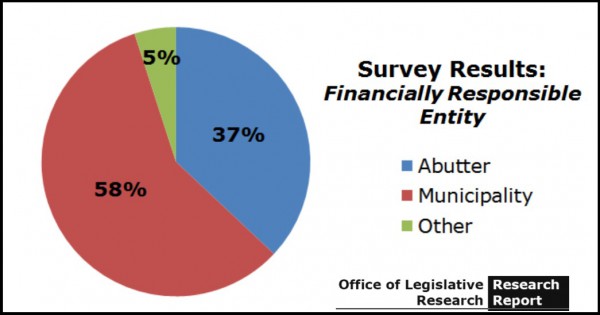
Of the 127 municipalities with sidewalk repair policies, 74 (58%) are responsible for repairing sidewalks and 47 (37%) require abutting property owners to pay for sidewalk repairs, subject to certain exceptions, OLR reported. For example, many municipalities that require abutters to pay for sidewalk repairs exempt them from doing so if the damage was caused by the roots of municipally owned trees. Other municipalities exempt abutters in downtown areas or those whose sidewalks are used by children walking to school.

sidewalk

In other municipalities, abutters may be relieved of responsibility for sidewalks within the downtown area or used by children walking to school. And in municipalities where abutters are generally not responsible for sidewalk repairs, they may be responsible if they cause the damage, for example when doing construction work on their property, the OLR report explained.

Communities indicating they do not have sidewalks include Andover, Barkhamsted, Bethany, Bethlehem, Bolton, Bozrah, Bridgewater, Brookfield, Brooklyn, Canterbury, Chaplin, Colebrook, Columbia, Cornwall, Durham, Easton, Franklin, Goshen, Hampton, Hartland, Killingworth, Lebanon, Lyme, Middlefield and Morris.  Additionally, the towns of New Fairfield, North Stonington, Orange, Oxford, Pomfret, Preston, Prospect, Roxbury, Scotland, Union, Warren, Weston and Wolcott report no sidewalks in town.

Five municipalities have policies shifting the burden depending on whether the sidewalk is (1) state- or municipally-owned or (2) within the state or municipal right of way. One municipality reported that repairs are the state’s responsibility. In many municipalities, sidewalk repair policies are informal and based on past practice, the survey found.

The OLR Report, 2015-R-0213, was issued in December 2015 and highlighted by OLR last month.  Data was compiled through an email survey of municipal planning offices and chief elected officials. According to the report, nine municipalities shift the burden from abutters to themselves when damage is caused by tree roots, a snow plow, or other activities conducted by the municipality. And 14 municipalities make abutters responsible for repair costs if their actions gave rise to the needed repairs.  The sidewalk version of “you break it, you pay for it.”

Connecticut Among 11 States Upgrading to Next Generation 911

Connecticut is one of 11 states that have upgraded, or are in the process of upgrading, their Emergency 911 system to what’s called Next Generation 911, to allow the emergency notification system to respond to text messages and utilize a range of new technologies.  Connecticut’s upgrade began last year, and is expected to be fully operational later this year. The National Emergency Number Association (NENA), which represents government agencies and private firms involved in the emergency system, and the National 911 Program, housed in the U.S. Department of Transportation, are pushing states and localities to adopt what they call Next Generation 911, according to a published report in Governing magazine. NG911CT

The urgency driving the upgrade effort was highlighted in recent weeks. Like most 911 systems in the U.S., Orlando’s emergency communication center cannot receive text messages, photos or videos. Nor can most 911 systems tap into other mobile device features, like detailed location services, Governing points out.

The magazine, which focuses on state and local government operations, notes that texting 911 could be valuable in emergencies like the Orlando shooting or a domestic violence incident, where it is unsafe to make any noise let alone talk out loud about the danger at hand. And sending text messages to 911 could allow people who are deaf or have speech impairments to communicate without other special devices.

One day last month, a computer glitch knocked out portions of the statewide 911 system briefly in Connecticut.  The Hartford Courant is reporting today that state officials have determined the partially installed high-tech 911 emergency dispatch system  became overwhelmed by duplicate messages July 15, leading to a breakdown that failed to connect callers at about half the call centers.  The state has temporarily halted a $13.2 million upgrade of the system, William Youell, director of the Division of Statewide Emergency Telecommunications, told the Courant.

Connecticut’s Department of Emergency Services and Public Protection (formerly Emergency Management and Homeland Security) reports that The Next Generation 9-1-1 system is Internet Protocol based and will utilize the new Connecticut Public Safety Data Network to deliver 911 calls to Public Safety Answering Points (PSAPs) in Connecticut.

The new system, according to the agency’s website, will provide the infrastructure to allow “Text to 9-1-1”, the ability to send images or video with a 9-1-1 call to a PSAP, and to call 9-1-1 directly via the Internet when telecommunication service providers make these features available to the public.cell

It has been estimated that full implementation of the system, which began in the spring of 2015, would take 18 months. Initial installation of the system call answering components first got underway at ten pilot PSAPs around the state in May 2015, in New Britain, Wilton, Enfield, Newington, Valley Shore (12 towns), Fairfield, Middletown, Mashantucket, Shelton, and Wolcott.  Training sessions for PSAP personnel have been held in New Haven, in collaboration with AT&T.

Four states — Indiana, Iowa, Maine and Vermont — already have moved to Next Generation 911, according to NENA. Another seven — Connecticut, Hawaii, Massachusetts, North Dakota, South Dakota, Tennessee and Virginia — are doing so, Governing points out. The goal is for there to be a nationwide changeover completed by 2020, as utility companies abandon old copper phone lines for fiber optic cables.

In at least five additional states — Florida, Illinois, Michigan, Ohio and Texas — city, county and local governments either have upgraded their systems or are in the process of doing so.  But in at least six states — Georgia, Missouri, Nevada, New Mexico, Oklahoma and West Virginia — it is unclear if any preparations for the switch have been made at the state or local level, according to the Governing update.

CT ESPPThe entire statewide system in Connecticut, purchased through A&T, cost $13.26 million with annual maintenance costs of about $3.2 million, Stephen Verbil, a telecommunications manager with the Division of the Statewide Emergency Communications, told the Day of New London last year.  The system uses Dell servers connected through a fiber optic network and is paid for through a surcharge on land lines and cellphones.

Finding callers who aren’t using landlines, which are registered to a physical address, has been a problem since cellphones became popular in the 1990s, Governing reported. Calls to 911 from cellphones are not routed based on the exact location of the caller, but on the location of the tower transmitting that call. This can lead to emergency calls getting answered by faraway call centers and make it hard for responders to locate the caller.  Next Generation 911 will be able to use technology like Wi-Fi, Bluetooth signals and geographic information systems to find mobile callers, Trey Forgety, government affairs director for NENA, told Governing.


Public Health National, Statewide Conferences Reflect Greater Attention to Field

With concerns about the Zika virus reaching the United States as reflected in the recent report of four cases in Florida and state public health monitoring now reaching Connecticut, public awareness of the role of public health officials, here and across the country, is likely to increase in the coming weeks and months. That coincides with the National Conference of the National Association of Local Boards of Health next week in St. Louis, and the Annual Meeting of the Connecticut Public Health Association slated for November in New Haven.  The statewide organization is marking its hundredth anniversary this year, and the theme of the conference will be "Back to the Future- 100 years of Public Health in CT and Beyond."

For the past century, the Connecticut Public Health Association has been “committed to improving the quality of the public health profession and advocating for policies and programs that promote health and prevent disease.” The association’s members, representing a wide variety of disciplines, “are united in the goal of protecting and promoting the public's health.”logo

The CPHA has invested its advocacy and education resources in key areas of public health such as public health infrastructure, racial and ethnic health disparities, health literacy, universal health care, environmental health, and disease prevention. The organization’s president is Brittany Allen, staff attorney with the state Department of Public Health.

Among those from Connecticut expected to attend the National Association of Local Boards of Health session in Missouri will be the Secretary on the national organization’s Board of Directors, Judith Sartucci of Rocky Hill and the Central Connecticut Health District which serves the towns of Berlin, Newington, Rocky Hill and Wethersfield.   The National Conference is scheduled to focus on ways to improve community heath, the Flint (MI) financial and water crisis “through a board of health lens,” and collaborative governance in an era of population health management.  The public health threats identified by the national Centers for Disease Control and Prevention will also be highlighted, as will Zika, according to Association Director Jamie Michael.state circle

The mission of the Connecticut Public Health Association is to “represent and unite the diverse expertise of Connecticut's public health professionals, to ameliorate the most pressing public health issues in the state, and to promote health and safe living for the people of Connecticut.” CPHA works to promote and protect the public's health through advocacy; education; program, professional and workforce development; and networking among the public health community.

The CPHA website points out that “today, more than ever, the value of public health in saving lives and reducing health care costs is at the forefront of public policy. Being a part of this movement is exciting for practitioners and organizations alike.”

Among the learning objectives anticipated at the state conference in November, where 300 public health officials from across the state are expected, “attendees will be able to:

  • Describe how policies, systems, and environmental changes can be applied to improve the public’s health.
  • Identify evidence-based strategies that engage communities to improve health outcomes and explain how they work and are applied effectively.
  • Explain how collaboration with nontraditional partners supports the improvement of population health and wellness.
  • Promote the formation of collegial professional networks and the exchange of ideas among members of the public health community.

CPHA-logo_2The keynote address will be provided by Camara P. Jones, MD, MPH, PhD, research director on social determinants of health and equity in the Division of Adult and Community Health, National Center for Chronic Disease Prevention and Health Promotion and President of the American Public Health Association (APHA).

Dr. Jones is a family physician and epidemiologist whose work focuses on the impact of racism on the health and well-being of the nation. She seeks to broaden the national health debate to include not only universal access to high quality health care but also attention to the social determinants of health (including poverty) and the social determinants of equity (including racism).

Her biography points out that:

  • As a methodologist, she has developed new ways for comparing full distributions of data (rather than means or proportions) in order to investigate population-level risk factors and propose population-level interventions.
  • As a social epidemiologist, her work on race-associated differences in health outcomes goes beyond documenting those differences to vigorously investigating the structural causes of the differences.
  • As a teacher, her allegories on race and racism illuminate topics that are otherwise difficult for many Americans to understand or discuss.

Dr. Jones was an assistant professor at the Harvard School of Public Health from 1994 to 2000, is a member of the World Health Organization’s Scientific Resource Group on Equity and Health.


Project Undertakes Mapping CT With Precision From the Air

Unbeknownst to most of us, there is a world of difference between an aerial photograph and an orthophotography.  In fact, enough of a difference for the State of Connecticut to get behind an initiative to photograph the entire state. The results are to be made publicly available through the state’s Open Data Initiative.  The orthoimaging of Connecticut, now complete, was undertaken by the Sanborn Map Company, under a contract with the Capitol Region Council of Governments made possible by a grant from the state's Office of Policy and Management. It will provide Connecticut with its first statewide acquisition of datasets at this high level of accuracy, according to those involved with the project.PR_Mystic_Seaport_Connecticut_06142016

The Sanborn flight team overcame challenging spring weather conditions to successfully collect high-resolution imagery of the entire state of Connecticut and its coastline in just five weeks, according to the company.  Altogether, the firm collected more than 42,500 4-band, 3-inch resolution images during March and April, including more than 6,000 coastline images during low-tide conditions.

The Sanborn team, which included subcontractors, also collected more than 5,200 square miles of high-density light detection and ranging (LiDAR) data covering the entire state during the same time period. All of the data were collected during snow-free, cloud-free and leaf-off conditions, which makes them ideal for a host of products and applications.

A conventional perspective aerial photograph contains image displacements caused by the tilting of the camera and terrain relief, or topography. It does not have a uniform scale and one cannot measure distances on an aerial photograph as if it were a map.orthophotography

In orthophotography, the effects of tilt and relief are removed from the aerial photograph by a computer rectification process to create an orthophoto, which then becomes a uniform-scale photograph. Since an orthophoto has a uniform scale, it is possible to measure directly on it, as with traditional maps.

The product combines the image characteristics of a photograph with the geometric qualities of a map; thus, it is possible to get direct measurements of distances, areas, angles, and positions.

That distinction can make a big difference for governments and businesses seeking such images. Brad Arshat, Sanborn director of strategic accounts in the Northeastern United States, estimates that statewide collaboration on the project will result in several million dollars in tax dollar savings, as opposed to each of the state's 169 municipalities acquiring its own data.

Sanborn is now creating mapping products from the data, which will be delivered later this year. These include 3-inch ground sample distance (GSD) orthoimagery; U.S. Geological Survey (USGS) QL2 LiDAR data; bare Earth digital elevation models (DEMs); and 1-foot contour maps.

223284LOGOIndividual municipalities and state agencies also have options to purchase additional products as needed, such as 3-D building footprints, planimetrics, landcover maps, impervious surface maps and more, according to company officials.

"We need to support our communities by giving them the tools to do their jobs in a modern, efficient and effective way," Gov. Dannel Malloy pointed out in a Sanborn news release. "As a former mayor, I know how valuable this information is to municipalities. In addition, this information is critical to our state agencies."crcog-logo

Sanborn is a preeminent innovator in the geospatial industry, the company website indicates, delivering state-of-the-art mapping, visualization, Web GIS™ and 3-D solutions to customers worldwide. The firm, which marked its 150th anniversary in 2016, operates a fleet of 14 aircraft located strategically across the United States.

connecticut"Our flight team did an exceptional job of outmaneuvering the unusual weather present during the collection period (in Connecticut)," says Shawn Benham, Sanborn project manager. "The savings truly are astronomical when you merge many smaller project areas into a single large project because of the fixed costs associated with each mobilization," added Arshat in statement released by the company.

Pay to Play Worsens Widening Economic Gap Evident in America's Schools, Putnam Says in Hartford

The growing number of public schools that require students to pay a fee to participate in after school activities, such as sports or music, is exacerbating the economic class disparities in America’s schools, and diminishing opportunities for students from families of limited financial means. “Play to play must end,” said social scientist Robert Putnam, a professor of public policy at Harvard University, and author of the best-selling book Our Kids: The American Dream in Crisis, appearing in Hartford in a special event sponsored by the Hartford Foundation for Public Giving.

Putnam, who rose to cultural prominence in 2000 with his book “Bowling Alone: The Collapse and Revival of the American Community,” mixed riveting stories of the vastly different life experiences of the nation’s children, depending upon the financial wherewithal of their parents, and the dangers to every aspect of society - rich and poor - of permitting the growing disparities to continue unchecked.putnam_our-kids-9781476769899_lg

According to his data, 86 percent of students from the highest-income families participate in extracurricular activities — slightly higher than during the 1970s — but participation among the lowest-income families is down about 15 percentage points, to 65 percent.

“No one talked (50 years ago) about soft skills, but voters and school administrators understood that football, chorus, and the debate club taught valuable lessons that should be open to all kids, regardless of their family background,” Putnam writes in the book.

Pay to play policies have been evident in Connecticut, as elsewhere across the country, for some time, as reflected in data compiled by the state Office of Legislative Research (OLR) in 2012.  The OLR report included information from 116 school districts. Of these, “44 charged a participation fee for high school athletics. The fees range from $25 per sport to $1,450 for ice hockey. Twenty nine school districts include a maximum amount that a student, family, or both can be charged during a single school year. Schools without a cap are generally those that charge the lowest fees.”

Following that report, legislation that would have prohibited local and regional boards of education from charging any student activity fees to students who are unable to pay such fees was considered in 2013 but not approved by the state legislature.HartfordFoundation

Last month, education officials in Norwalk proposed requiring student athletes to pay $100 each to participate athletic programs. Published reports indicated that students who participate in high school musicals in the city pay about $200 as a participation fee.

Putnam noted that although many school districts that charge such fees provide for waivers for financial need, those tend not to be used because students would rather drop a sport than be stigmatized as  poor and needy.  And he emphasized that dropping out of participation in after school activities worsens development and lessens chances to break away from a life of diminished opportunities.  The absence of such extra-curricular participation adversely impacts both future circumstances and physiological developmental, Putnam said.

The OLR data indicated that in Trumbull, for example, a family could pay as much as $750 (or $900 including hockey) for students’ participation in sports; in South Windsor the payment was capped at $500 per family, or $800 including hockey.  In Region 10, which includes the towns of Burlington and Harwinton, there was a maximum of $450 per family for participation in sports.
CIACThe Connecticut Interscholastic Athletic Conference Handbook for 2016-17 includes reference to the organization’s “strong opposition to the local board of education policies which establish a fee system for students who wish to participate in co-curricular or extra-curricular activities, athletic and/or non-athletic.”

Among the organizational policy positions included in the handbook, the Administrators of Health and Physical Education “feel a direct assessment on the individual families of athletes is contrary to the educational philosophy so deeply rooted in our nation, and is wrong because it places an undue tax on selected members of the community.”

“Athletics as an extra-curricular activity is unique in that it provides a possible predictor of student success in later life; and affords adolescent boys and girls an opportunity to establish a physical and social identity along with the intellectual identity they develop while in the classroom,” the Administrators of Health and Physical Education policy statement says.

The handbook section on “pay to play” continues, indicating that “In support of that notion is a pair of studies conducted by the American Testing Service and College Entrance Examining Board. The former completed a study comparing four factors thought to be possible predictors of student success: achievement in extracurricular activities, high grades in high school, and high grades in college as well as high scores on the SAT. It was found that the only factor which could be validly used to predict success in later life was achievement in extra-curricular activities.”

Adds the Connecticut Association of Public School Superintendents: “Free public education includes the student’s right to participate in activities offered by a school district. The student should not be denied participation because of lack of funds or the refusal to pay a fee.”

Putnam, speaking at the Bushnell Center for the Performing Arts to a nearly filled Belding Theater audience, recalled attending Yale University in Connecticut, and speaking in Hartford 16 years ago, when Bowling Alone was published.  He stressed that there are fewer mixed-income neighborhoods than there were 50 years ago, and as a result children are less likely to go to school with people of a different social class.  Putnam

The top third of US society – whether defined by education or income – are investing more in family life, community networks and civic activities than their parents, while the bottom third are in retreat, as families fracture and both adults and children disengage from mainstream society, he pointed out. That is evident in a range of statistics,  he said, proceeding to share a series of graphs and charts that underscored his thesis.

Putnam identified causes of the widening opportunity gap for the current generation of young people as the collapse of the working class family, a substantial increase in single-parent homes among the poor, economic insecurity among growing cadre of working class people, and a cultural change of people no longer looking out for other people’s kids in a way that happened in the past.  The definition of “our kids,” he said, has narrowed for a community’s children, to the biological children of individual families.

This gap amounts, Putnam emphasizes, is a “crisis” for the American dream of equal opportunity. Advantages pile up for the kids born to the right parents, all but guaranteeing their own success in life – in stark contrast to the fates of those struggling at the bottom.

Among the statistics of concern raised by Putnam: affluent children with low high-school test scores are as likely to get a college degree (30%) as high-scoring kids from poor families (29%).  And he called for a focus less on the costs of community college and more on helping students unfamiliar with the bureaucracy and processes of college work their way through it.  “We need navigators to help these students navigate the process,” he said, making a comparison to health care, where newly diagnosed cancer patients, unfamiliar with the world they have just entered, increasingly have “health care navigators” assigned to them as guides to deal with the uncertainty they face.

Despite the preponderance of evidence showing stark disparities, Putnam says he is optimistic that the trends can be reversed.  “American did it once before, after the turn of the last century,” he explains, and can do so again.  He suggests that the remedy will more likely be driven from the grassroots, in individual communities, than from policies adopted by the federal government.

“We Are Danbury” Media Campaign Launches Drive for Businesses, Residents

Labelled “confidential and proprietary,” the city of Danbury’s “Playbook” for becoming a “City of the Future” is posted on the official website for all to see. That playbook came to mind with the announcement earlier this month that CityCenter Danbury would be launching a media campaign this month to promote the city’s downtown.

The campaign will initially include two 15-second videos and photos posted to various well-travelled websites. Among those featured in the video are Mayor Mark Boughton, the Danbury Titans hockey team, the Palace Danbury, Connecticut Institute for Community and Western Connecticut State University, according to published reports.    Additional videos featuring other businesses are to be featured later, as the campaign continues.livingdowntown480x360

CityCenter Danbury is a partnership promoting Downtown Danbury, bringing together property owners, sponsors, businesses, non-profits, cultural arts, and volunteers.

“This campaign is to proactively go out and approach businesses to let them know downtown Danbury is the place to be,” P.J. Prunty, executive director of CityCenter Danbury, told the News-Times. “It’s the first time we’ve embarked on a specific campaign like this. We want to get businesses to plant their flag in downtown.”

According to Business Insider earlier this year, population estimates released by the U.S. Census Bureau indicate that Danbury grew more than any city in Connecticut from July 1, 2014 through July 1, 2015 going from 83,891 to 84,657, is a .9% population increase. That outpaced Stamford, Milford, Norwalk and New Haven, Connecticut’s five fastest growing cities.

Prunty said the campaign will specifically target lower Fairfield County and Westchester County, N.Y., to try to lure companies from those areas to downtown Danbury where the rents, city services, cost of living and taxes are lower, the News-Times reported. A targeted campaign on social media will emphasize the housing as well as business options downtown. 13653124_1050826071621521_2233611742681555940_o

The campaign initiative will include brochures targeting young professionals and entrepreneurs, in an effort to increase their presence – living and working – in the city.  “We’re trying to convey that now is the time to strike while the iron is hot. We’re focusing on business recruitment,” Prunty said.

Some would suggest the effort is an outgrowth from the city’s Playbook, which states its intent to “help the City get started with practical and tangible strategic moves, or “plays,” that the City can begin implementing. Six themes were highlighted in the 17-page guide, completed last year:  governance, transformation of education, innovative service delivery, transparency, sustainability, and re-imagined quality of life.

The playbook, which focuses on changes to the way in which city government does business, also notes that “to be the City of the Future, we must become rich in spirit and culture, everready to overcome all challenges and realize all opportunities facing the 21st century city.”  The report, prepared by the Connecticut-based consulting firm BlumShapiro, goes on to state that “by going above and beyond, Danbury is the creative and cultural center in the region.”

logo.footerThe playbook is included on the website of the city’s Office of Project Excellence, formed a year ago and led by Stephen Nocera, who previously was chief administrative officer in Stratford. The Office’s most recent Steering Committee meeting, in February (according to minutes posted on the city’s website) included items such as a new communications website, restaurant week and streetlight purchases.

As a member of the National Historic Preservation and the Connecticut Main Street Center, CityCenter follows the four principles of design, organization, promotion and economic restructuring. “We strive to accelerate the renewal of the city’s urban core, with quality of life as the underlying theme: building a lasting constituency for downtown; supporting investors, retailers and tenants while retaining those already downtown and making downtown clean, safe and attractive,” the organization’s website points out.

Danbury is certainly not alone among Connecticut communities – large and small – that are stepping up efforts to attract residents and businesses.

Neighboring New Milford announced plans last year to fund a branding and marketing effort with grant funds, spurred by local businesses seeking to draw more people to their downtown area. Local officials stressed that New Milford has the longest green of any town in Connecticut, along with historic architecture and an eclectic mix of shops and artistic offerings.  The grant was issued through the Connecticut Main Street Center.

norwalkIn lower Fairfield County, the city of Norwalk launched a rebranding initiative earlier this year.  Using the new slogan “The Sound of Connecticut,” the campaign, according to Mayor Harry Rilling “was necessary to help reposition Norwalk. Our visual brand and identity system will become a recognized symbol of Norwalk’s progressive and connected vibe. We understand and live the brand’s values, goals and promises on a daily basis.” The Mayor added that “our brand strategy will influence and shape the way the community and others think, feel and respond to the City of Norwalk.”