Connecticut Public Accounting Firms Reach National Rankings

The largest Connecticut-based public accounting firm, BlumShapiro, earned the #54 position in the nation’s top 100, according to the publication Inside Public Accounting.  It is one of a handful of Connecticut firms to make the annual top 300 list, in addition to regional firms with offices in Connecticut. BlumShapiro is the largest regional business advisory firm based in New England providing accounting, tax and business consulting services. The firm serves clients from six offices offices in Connecticut (West Hartford and Shelton), Massachusetts and Rhode Island. BlumShapiro ranked #53 last year. 2016_ipa-300_web-147x150

Noted among the nation’s top 200 public accounting firms is Hartford headquartered Whittlesey & Hadley.  The firm, ranked at #155 this year, up from #178 a year ago, and #192 in 2014, has two additional offices, located in Hamden, CT and Holyoke, MA. The firm provides a comprehensive array of accounting, auditing, tax, and advisory services to a broad range of businesses and individuals.

Ranked #285 is Reynolds & Rowella LLP, which maintains offices in Ridgefield and New Canaan.  “We are proud to be counted among the top-ranked accounting firms nationwide on a list that includes Deloitte, PwC, Ernst & Young and KPMG,” Frank Rowella, Reynolds & Rowella’s managing partner, told the Fairfield County Business Journal. “The IPA list is known as one of the most thorough and accurate sets of rankings in the accounting profession. Our inclusion reflects our determination to provide the very best quality compliance and financial services solutions to our valued clients.”
blum At #296 is Glastonbury-based Fiondella Milone & LaSaracina.  FML was founded in 2002 “for the purpose of providing professional auditing, tax and business consulting services to a wide range of clients and industries throughout the Northeast,” the company’s website indicates.  After working together at Ernst & Young, the firm’s founding partners, Jeff Fiondella, Frank Milone and Lisa LaSaracina launched FML.

Inside Public Accounting (IPA), founded in 1987, is published by The Platt Group. The Platt Group publishes both the award-winning Inside Public Acwhcounting newsletter and the award-winning National Benchmarking Report.

Beginning in 1994, INSIDE Public Accounting’s Survey and Analysis of Firms and the resulting national benchmarking report on the nation’s largest accounting firms has served as a barometer of the overall health, challenges and opportunities of the profession, according to the publication.

Annually more than 500 accounting firms across the North America complete the in-depth financial and operational survey. The data is then used to compile the annual ranking of the nation’s largest accounting firms, which is unveiled in August of each year. The annual IPA rankings are considered to be among the longest-running, most accurate and up-to-date for the nation’s largest accounting firms.

Leading the list nationally were Deloitte, PricewaterhouseCopers, Ernst & Young, KPMG, RSM, and Grant Thornton.  Ranked at #11 is New York based CohnReznick, which has offices in Hartford.  Marcum LLP ranked #16, Citrin Cooperman & Company, also based in New York and ranked #21, has offices in Fairfield County.

Opioid Epidemic Leads Conference Marking 100 Years of Public Health in CT

Tackling the opioid epidemic at the federal, state, and local levels will be the focus of the featured panel when the Connecticut Public Health Association (CPHA) celebrates 100 years of public health in Connecticut at the 2016 CPHA annual conference in November. photoIn addition to the expert panel on opioid abuse, there will be more than 30 presenters on public health topics, a presentation on the history of CPHA and public health in thelogo state, and a look forward to the future and innovations on the horizon in health research, policy, and community programs.
“Today, more than ever, the value of public health in saving lives and reducing health care costs is at the forefront of public policy,” the organization’s website points out.  Members represent a wide variety of disciplines, and “are united in the goal of protecting and promoting the public's health.”

Keynote speaker will be Camara P. Jones, MD, MPH, PhD, President of the American Public Health Association (APHA).  Dr. Jones is a research director on social determinants of health and equity in the Division of Adult and Community Health, National Center for Chronic Disease Prevention and Health Promotion and President of the American Public Health Association (APHA).

cpha-logo_2She seeks to broaden the national health debate to include not only universal access to high quality health care but also attention to the social determinants of health (including poverty) and the social determinants of equity (including racism). As a methodologist, she has developed new ways for comparing full distributions of data (rather than means or proportions) in order to investigate population-level risk factors and propose population-level interventions.
Opioid abuse has hit record levels in the United States, with drug overdose deaths quadrupling over the last 15 years, the CPHA points out. According to the Centers for Disease Control, Connecticut is experiencing a death rate for drug and opioid overdoses that surpasses the national rate and has reached epidemic proportions.

The conference is being held at Anthony’s Ocean View in New Haven on November 10.  The theme is “Back to the Future – 100 Years of Public Health in Connecticut and Beyond.” The annual meeting is the oldest and largest gathering of public health professionals in Connecticut, attracting hundreds of attendees each year.

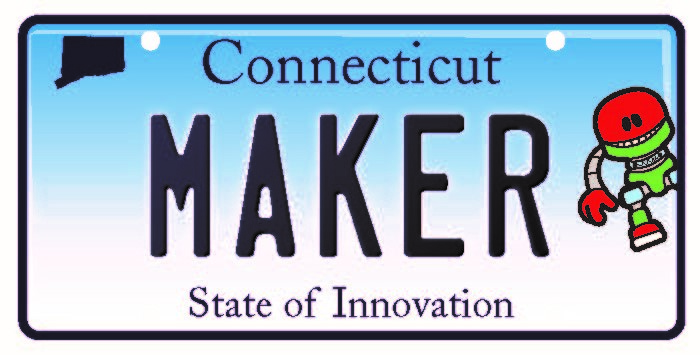
“State of Innovation” Specialty License Plate Is Latest to Join List of Choices

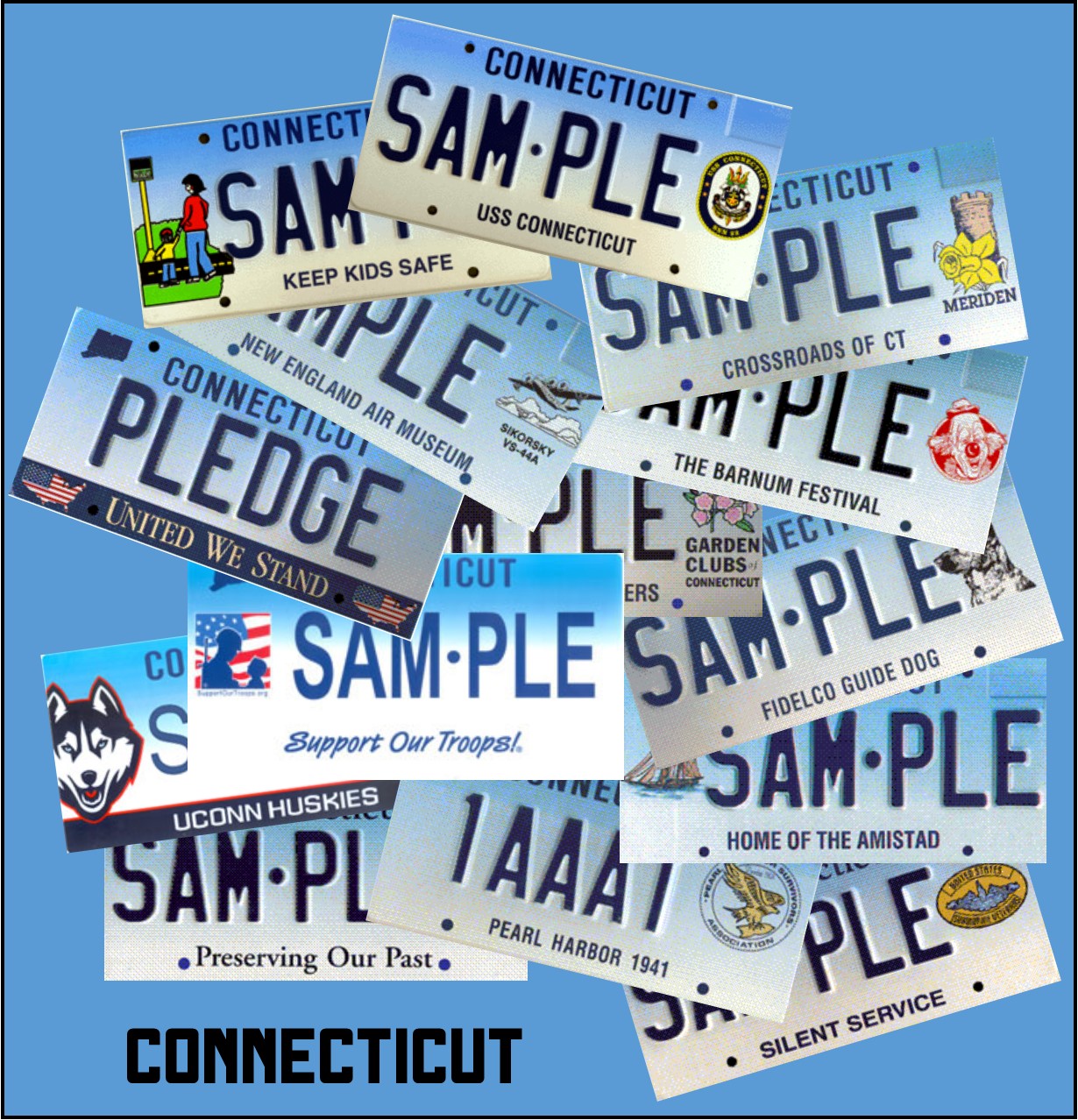
Connecticut, with more than 50 special license plates featuring everything from animals to war survivors, now has one more available for purchase by state residents. At the fifth annual Westport Mini Maker Faire earlier this year, it was announced that a new “State of Innovation” license plate was being developed by a non-profit organization, Remarkable STEAM.   The organization has now announced that their design has been approved, and sales of the new plate are underway.

Individuals can transfer an existing plate or obtain a vanity plate.  A portion of the proceeds goes to Remarkable STEAM, Inc, a 501(c)(3) not for profit corporation, best known for the Westport Mini Maker Faire.  Remarkable STEAM initiatives support job creation and educational programs.license-plates-ct

State law allows the Department of Motor Vehicles to issue of special background plates on behalf of non-profit organizations. The organization must be non-profit, must submit a copy of the organization's charter or by-laws, provide a letter of good standing from the State of Connecticut Secretary of State’s Office (if required) and supply any Internal Revenue Service ruling on their non-profit tax exemption status.

The logo production and cost incurred will be the responsibility of the organization. The logo prototype design, preferred in PDF format, must be submitted to the DMV. The logo can be no larger than 2 inches wide and 3.5 inches high. DMV has final approval on all the plate and logo designs.

A liaison for the organization must be appointed. This individual will be responsible for all communications with the DMV as well as certifying and authenticating (by signature) each member’s application, submitting the logo design to DMV for approval, submitting 400 applications with the required fee prior to the manufacturing of the special background plates, and submitting a Special Interest Plate disclaimer.

Many organizations in Connecticut offer license plates to their members and the general public.  General categories include animals, colleges, environment, organizations, police and fire, cities and towns, and recreation.

Organization vanity plates include Amistad, Benevolent & Protective Order of the Elks, IUOE Local 478, Grand Lodge of Connecticut, Knights of Columbus, Olympic Spirit, P.T. Barnum Foundation Inc., Preserving Our Past CT Trust for Historic Preservation, Red Sox Foundation, Lions Eye Research Foundation, Special Olympics, Federated Garden Clubs, Fidelco Guide Dog Foundation, Keep Kids Safe, New England Air Museum and the U.S.S. Connecticut Commissioning Committee.

All fees established and collected pursuant to the United We Stand plate (except moneys designated for the administrative costs of the DMV) shall be deposited in the United We Stand commemorative account.  Funds are directed to the United States Department of State Rewards for Justice program and is used solely to apprehend terrorists and bring them to justice. The account will also be distributed to the Secretary of the Office of Policy and Management for the purpose of providing financial support and assistance to the former spouses and dependents of persons killed as a result of the acts of terrorism committed on September 11, 2001.

innovation-license-plateWhen individuals purchase a Keep Kids Safe plate, a portion of the fee goes to the Keep Kids Safe Fund, which “makes many worthy projects happen for youngsters.”  The fund awards grants to schools, hospitals, municipalities and other non-profit organizations working to make all Connecticut children safer from severe and preventable injuries, according to the DMV website.
In most cases, remake of a current plate is $70; a new vanity plate is $139, a new series plate is $50.  For others, including the UConn Huskies plate, the price tag is somewhat different.  Off-the-shelf license plates cost $55, remake of a current plate is $75, a new vanity plate costs $144, according to the DMV website.

The Support Our Troops plate sends a portion of the fee to provide funding for programs to assist Connecticut troops, their families and veterans. When you buy a Red Sox plate, a portion of the fees support and help fund academic scholarship programs in Connecticut.

Also included are 17 varieties of military specialty plates, including Disabled American Veteran, Gold Star Family, Iwo Jima Survivor, Korean War Veterans Association, Marine Corps League, Laos Veterans of America, Military Order of the Purple Heart, Pearl Harbor 1941, U.S. Submarine Veteran, National Guard Association of Connecticut, First Company Governor’s Foot Guard, First Company Governor’s Horse Guard,

Colleges with designated plates include Central Connecticut State University, Penn State Alumni, University of Hartford, University of Connecticut, and University of New Haven.  Cities with available plates include Meriden, Norwich, and Stafford.

Organizations interested in launching a new special plate, should contact the DMV Special Plate Unit at (860) 263-5154 for further information.

CT Residents Concerns About Health Care Affordability, Job Prospects Increase; More Expect to Leave, Even as Optimism Grows

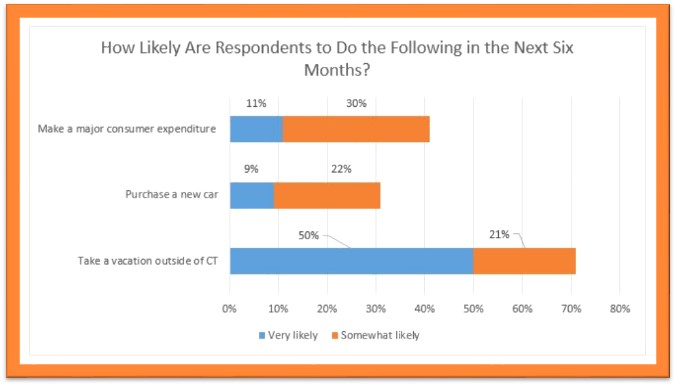
Nearly two-thirds of Connecticut residents are concerned about the affordability of health insurance, a jump of 12 percentage points in just the past year, and the highest level since the quarterly Inform CT Consumer Confidence Survey began 18 months ago. And slightly more than 4 in 10 Connecticut residents now say it is likely that they will move out of the state within the next five years, reflecting concerns about a lack of jobs, declining business conditions and health insurance costs. Yet, many residents continue to say that Connecticut is a good place to live and raise a family, and some optimism is evident in consumer spending expectations.  The survey found that:CTConsumConfSurveyLOGO

  • 41% say it is likely they will make a major consumer expenditure (for furniture or other products) during the next six months.
  • 31% say it is likely they will purchase a car in the next six months.
  • 71% indicated they expected to take a vacation outside of Connecticut in the next six months.

All are the highest percentages since the quarterly survey began in 2015.

The quarterly survey is released by InformCT, a public-private partnership that provides independent, non-partisan research, analysis, and public outreach to help create fact-based dialogue and action in Connecticut.  Administered by researchers from the Connecticut Economic Resource Center, Inc. (CERC) and Smith & Company, the analysis is based on the responses of residents across Connecticut and addresses key economic issues, providing a glimpse of the public’s views.

Despite qualms about the state’s economy, residents are increasingly optimistic about their own financial circumstances.  One-third (32%) say they are better off now than six months ago, and 42 percent believe they will be better off six months from now than they are today.  Both numbers are 5 percentage points higher than they were a year ago.  The overall view of the state’s fiscal picture differs:

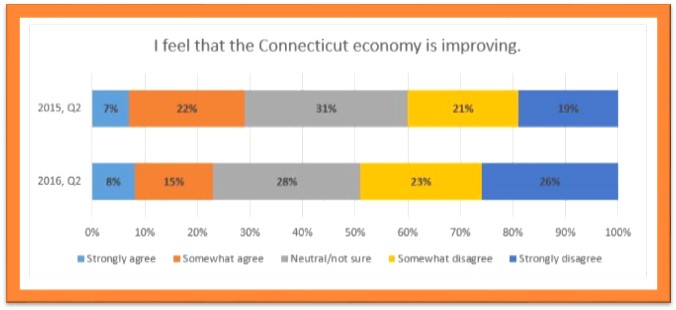
  • A year ago, 40 percent of those surveyed disagreed with the statement that the Connecticut economy is improving. That percentage has now climbed – one year later – to 49 percent, nearly half the state.
  • The percentage who believe that the state’s economy is improving has dropped from 29% a year ago to 23% during the second quarter of this year.
  • Residents of New London and Fairfield County most strongly believed that business conditions had improved over the previous six months, with Middlesex, Windham and Litchfield more likely to say that business conditions had worsened.

c1Increasingly, residents believe that jobs are “very hard to get” in Connecticut compared with six months ago (from about one-quarter to one-third of those surveyed in Q2 2016 versus Q2 2015), and are, in growing numbers, saying they would rather leave than stay.
  • A year ago, 32 percent of those surveyed said it was very likely or somewhat likely that they would move out of Connecticut within the next five years.
  • A year later, that percentage has climbed by 10 points to 42 percent.

At the same time, about half of those surveyed say that “Connecticut is a good place to live and raise a family” – a number that has remained consistent for the past year and a half.  Only 1 in 4 disagree.  More than half of 18-21 year-olds and 22-25 year olds say they are likely to leave in the next five years; in all other age categories it is less than half, with those age 56-65 the least likely.

Concerns about having “enough money to retire comfortably” have remained steady for six consecutive quarters, with about less than 1 in 4 expressing the opinion that they anticipate having sufficient funds. And 1 in 4 now say it is likely that they will refinance their home or purchase a new home in the next six months, the highest percentage since the quarterly survey began.

With increasing calls for regional support of Hartford and regional approaches to tackling budget challenges, the survey found that an increasing number of residents in Connecticut believe that a range of services “could be effectively delivered regionally.”

c2Forty-three percent, an increase from 40 percent in the year’s first quarter, answered “all of the above” when asked if education, libraries, public health, public safety and animal control could be provided regionally.  Among those services individually, there was slightly greater support for a regional approach to public safety, slightly less for each of the others.  The largest increase was for “all” of the services.

The question of what residents in the region consider to be the “best way to grow the economy” saw a preference for investing in schools and community features over recruiting companies, by an increasing margin.  In this year’s first quarter, the margin was 52% to 48%. In the most recent quarter that margin had grown by 9 percentage points to 61%-39%, from just over half to more than 6 in 10.

Veteran-Owned Small Businesses Will See Expanded Price Preference for State Work, Beginning Oct. 1

Applications are available for a new Connecticut initiative designed to “spur veterans to start a business and to help small veteran-owned businesses to flourish.”  The law, which takes effect on October 1, is the most generous of it’s kind in the nation, and provides veteran-owned businesses with a price preference of up to 15% for certain state Department of Administrative Services open-market orders or contracts. These businesses must have a gross revenue of up to $3 million in the most recently completed fiscal year, and at least 51% of the ownership must be held by one or more veterans. Under existing law, a “veteran” is anyone honorably discharged or released from active service in the U. S. Armed Forces or their reserve components, including the Connecticut National Guard performing duty under Title 32 (such as certain Homeland Security missions).branches

The legislation, which began as Senate Bill 2 in the 2016 session of the state legislature, was unanimously approved by the Veterans Affairs Committee and Government Administration and Elections Committee, before gaining unanimous approval in the Senate and House and the Governor’s signature.

The National Veteran-Owned Business Association, in testimony before the state legislature in March, said passage of the new law would “make Connecticut the most ‘Vetrepreneur-Friendly”state” in the U.S.  The organization noted that 27 states have programs in place “to create opportunities for veteran-owned businesses, and that New Mexico had recently increased its preference to 10 percent.  At the time, Connecticut’s veterans preference also stood at 10 percent.

Senate leaders Martin Looney (New Haven) and Bob Duff (Norwalk) said the move to 15% was part of a multi-year effort by the legislature to “improve the lives of our vets, and help them earn a living.” State Comptroller Kevin Lembo, testifying in support of the proposal, told the legislature it would “decrease a bit of the burden on those veterans who are doing much more than just getting by.  These veterans have not only re-entered their communities as productive taxpayers, but have taken the risk of starting up their own business to realize their piece of the American dream.”form

“We applaud your leadership of the important piece of legislation that will enhance and expand opportunities for the small businesses” owned by veterans, said Matthew Pavelek, Vice President of the national organization, NaVOBA, based in Pittsburgh.

To receive the fifteen per cent price preference, a bidding business must first obtain a Veteran-owned Micro Business certification from the Connecticut Department of Veterans Affairs. The Certification is valid for six months or until such time as the business is no longer in compliance with the statutory requirements, whichever occurs first.  Applications for the certification are now available from the state Department of Veterans Affairs.


Childcare Costs Continue to Outpace Inflation, Low Income Families Hit Hardest; CT 6th Most Expensive

One of the more notable aspects of the latest data on consumer prices provided this month by the U.S. Bureau of Labor Statistics is the striking increase in childcare and nursery school prices.  That data, along with statistics that reflect the impact of those increasing costs on families ability to afford such care, highlight the struggles and disparities that continue to exist, in Connecticut and nationwide. Over the past 25 years, childcare and nursery school costs have risen 177 percent, while prices more generally have risen just 77 percent.  Childcare and nursery school costs have been outpacing general inflation for at least 25 years (the data do not go back any further than 1991);  this is putting a significant strain on the budgets of low-income families.

child care costsThe Center for Economic and Policy Research points to an August 2014 study by the U.S. Department of Agriculture that found a two-parent, middle-income family (those making between $62,000 and $107,000 per year) will spend an average of $245,000 (in 2013 dollars) on their kids between the ages of zero and 17.

Significantly, due to rising income inequality, poor families are finding it harder to give their children the same opportunities afforded to rich children, the study points out. At present, families in the top fifth of the income distribution spend seven times as much on their children as families in the bottom fifth.

“This inequality can also be observed for paid leave: about 23 percent of workers in the top tenth of the wage distribution have access to paid family leave, compared to just four percent of workers in the bottom tenth,” the findings show.

Child care in Connecticut, the Economic Policy Institute points out, “is expensive.” Connecticut is ranked 6th out of 50 states and the District of Columbia for most expensive infant care.

  • The average annual cost of infant care in Connecticut is $13,880—that’s $1,157 per month.
  • Child care for a 4-year-old costs $11,502, or $959 each month.

Childcare is also “unaffordable” for a large percentage of Connecticut famiies.  The Economic Policy Institute indicates that infant care for one child would take up 16 percent of a typical family’s income in Connecticut, noting that according to the U.S. Department of Health and Human Services (HHS), child care is affordable if it costs no more than 10% of a family’s income. By this standard, only 28.1% of Connecticut families can afford infant care.

costsA minimum-wage worker in Connecticut would need to work full time for 36 weeks, or from January to September, just to pay for child care for one infant. And a typical child care worker in Connecticut would have to spend 63.6% of her earnings to put her own child in infant care, according to the data.

CEPR points out that other costs for raising children have increased as well, also outpacing the inflation rate. For instance, elementary and high school tuition and fees have risen 3.2 percent over the past year (four times the overall inflation rate of 0.8 percent); college tuition and fees are up 2.7 percent. At the same time, infant care in Connecticut costs $3,752 (37.1%) more per year than in-state tuition for 4-year public college, according to the Economic Policy Institute.

According to the Organisation for Economic Cooperation and Development (OECD), public expenditure on pre-primary education and childcare is just 0.4 percent of GDP in the United States; this is far lower than the rates of spending in Denmark (2.0 percent of GDP) or Iceland and Sweden (1.6 percent). By this measure, the U.S. comes in 33rd out of the 36 countries surveyed by the OECD, according to the CEPR report.up

Public expenditure on pre-primary education spending is 0.3 percent of GDP in the U.S. but averages 0.5 percent in the other OECD countries; even more shockingly, public expenditure on childcare is just 0.06 percent of GDP, well short of the 0.4 percent average from the rest of the OECD. Nor do differences in GDP make up for the latter gap.  In 2011, public expenditure on childcare was $794 per child in the U.S., less than one-third of the OECD average. By contrast, public spending on childcare is $7,100 per child in Finland, $6,400 in Norway and Denmark, $5,900 in Sweden, and $5,700 in Iceland — despite the fact that the U.S. is substantially richer than all those countries except Norway.

In a separate survey, the OECD found that just 14 percent of all public spending on children in the U.S. went to children age five and under — dead last among the 32 OECD countries in the sample. In the United States, 14 percent of all public spending on children goes to children ages zero to five; 41 percent goes to children ages six to 11; and 45 percent goes to children ages 12 to 17. For the other 31 countries (data were not available for Canada and Turkey), 26 percent of all public spending on children went to children ages zero to five; 35 percent went to children ages six to 11; and 39 percent went to children ages 12 to 17, the Center for Economic and Policy Research explained.

Prompted by Economy, Only Half of Nation's Millennials Plan to Work for Same Company Next Year, Gallup Survey Says

Millennials are entering the workforce in increasing numbers, and are the intense focus both of governments – including Connecticut – and businesses seeking to attract and retain them.  As Connecticut’s economic ranking among the states continues to hover near the bottom, the job choices of millennials become increasingly important to future economic vitality. Even amidst less than favorable comparisons in recent rankings, Connecticut has managed to achieve recent employment figures that show improvement. Last month, the state added some 3,000 jobs in the private sector and wages have also risen slightly in recent reports after a period of stagnation, WNPR reported recently.

Heather Ziegler, managing partner for Deloitte in Stamford, told WNPR that in her view the state is doing some things right, like encouraging high technology industries and fostering entrepreneurship. "But what I think is most effective, and one of the challenges at the same time," she told WNPR, "is getting individuals with the right skill sets interested in staying in the area and staying in Connecticut, versus moving on to the larger metropolitan areas that we are right between."66nbc

Millennials are already in a tough situation – they’re better educated, yet earning less than their counterparts in 1990, points out Christine Schilke of Young Energetic Solutions (YES CT), a statewide initiative seeking to empower young people to create a vibrant Connecticut.  She indicates that “while 28% of millennials hold bachelor’s degrees compared to 24% in 1990, only 67% are employed, compared to 74% two decades ago.  Those who are working earn an average $40,849, versus $46,569 by their predecessors.”

Today’s millennials,” Schilke adds, “are also burdened with college debt, and are less likely to be married, live alone or drive. Adding to these challenges is the fact that Connecticut has some of the highest homeownership and rental costs in the nation (6th and 8th most expensive, respectively), creating a tough living environment for today’s young adults.”

Nationwide, according to a recent Gallup poll, six in 10 millennials say they're open to different job opportunities, and only 50% plan to be with their company one year from now. Millennials are cracking under the weight of too much debt, according to Merrill Lynch's 2016 Workplace Benefits Report, which points out that only 24% of millennials surveyed say that they are in control of their finances.

Technology is the primary facilitator of millennials' job research: 81% of millennials indicate that they view the websites of organizations they're interested in, and a majority (62%) report that they conduct a general web search to learn about job opportunities, Gallup reports.millennials

Not surprisingly, “millennials are extremely digitally connected, and smartphones have become a ubiquitous accessory for them.” Gallup found that 91% of millennials owned smartphones in 2013, compared with 83% of those in older generations. And compared with other generations, millennials are:

  • almost 40% more likely to say they sent or read email messages "a lot" within the past day
  • 2.5 times more likely to say they posted or read messages on Facebook, Instagram or another social media site "a lot" within the past day
  • 11 times more likely to say they used Twitter, including posting or reading tweets, "a lot" within the past day
  • more than 2.5 times more likely to say they sent or read text messages "a lot" within the past day

To attract the best workers, Gallup suggests, “organizations need brand strategies that account for millennials' motivation and ability to find the best employers -- especially considering that millennials currently make up 38% of the U.S. workforce, and some estimate that they will make up as much as 75% of it by 2025.”

https://www.youtube.com/watch?v=OkOmyg5lJbQ

Nonprofits, Local Companies See Benefit From Business Arrival in Capital City

The arrival of Blue State Coffee in downtown Hartford has been more than a convenient place to grab a cup of coffee for supporters of a number of nonprofit organizations in the Capitol City.  It has also meant the introduction of a new revenue stream for organizations they care about, at a time when budgets have been particularly tight. Most recently for Our Piece of the Pie, Journey Home, Unified Theater, The iQuilt Plan, Partnership for Strong Communities, Dream Camp at Trinity College, CT ALIVE and Hartford Food Systemblue state, Blue State Coffee’s policy of sharing two percent of their profits with local organizations suggested by their customers has been most welcome.

Turns out it can make a difference with a retail business with a commitment to social benefit comes to town.

Blue State Coffee, founded in Rhode Island in 2007, provides their customers at each of their store locations to choose four local non-profit organizations twice a year for a six-month period. Each time a customer makes a purchase he or she may vote for one of the four non-profits being supported at that time. They then allocate 2 percent of sales based on the number of votes each organization receives during the six month donation period.

IMG_0522Since their first store opened in July of 2007, the company reports they have donated over $635,000 to more than 250 non-profit organizations. In total, the company operates eight cafes: four cafes in Connecticut, two in Rhode Island, and two in Massachusetts.

Hartford, which opened just under a year ago at 777 Main Street, was the fourth location in Connecticut, following three in New Haven (84 Wall Street opened in January 2009, 276 York Street opened in May 2010, and 320 Congress Avenue opened in September 2012).  There are also two locations in Boston and two in Providence.   In New Haven, nearly 100 nonprofit organizations have received support since the first coffee shop opened in the Elm City.

Blue State is also very much a part of the trend to use local farms, local goods and local vendors.  The Hartford location, for example, features eggs from Bloomfield, milk from Lebanon, bread from Deep River, Bagels from Cheshire, produce from Simsbury and maple syrup from North Grosvenordale. IMG_0523

As the company website points out, “We will continue to grow, creating community within our stores and demonstrating that business can be a positive force for good.”

Connecticut’s Anxiety Above National Average, Analysis of Google Searches Shows

High anxiety.  It is apparently as American as apple pie.  At least that is what an analysis of Google searches is showing.  And Connecticut is above average, although less anxious than the rest of New England. In a state-by-state comparison of anxiety levels based on Google searches, topping the list was Maine, 21 percent above the national average.  At the other end of the spectrum was Oregon, 26 percent below the U.S. average. anxiety

The states with the highest percentages of Google searches for “anxious” and related terms include Maine, New Hampshire, Vermont, Massachusetts, Rhode Island, Pennsylvania, West Virginia and North Dakota.  The least anxious:  Oregon, Nevada, Virginia, Kansas, Alaska and Hawaii.

The New York Times reports that Google’s measure of anxiety includes a broad range of searches, including “anxiety help,” “anxious” and “anxiety symptoms.”

“While Google searches may not be a perfect measure of anxiety,” a Times columnist reports, “there is increasing evidence that searches on a health condition highly correlate with the number of people suffering from that condition.” The rates of Google searches for anxiety in a state also correlate with survey measures of anxiety, explained Seth Stephens-Davidowitz, an economist and a contributing opinion writer for the Times.

Nationwide over the past eight years, Google search rates for anxiety have more than doubled. They are higher this year than they have been in any year since Google searches were first tracked in 2004, according to Stephens-Davidowitz.  Anxiety, however, is not uniquely American.  A review of online searches in the United Kingdom in 2014 found that 'What is anxiety?' was one of the top 10 most searched for questions.

us mapAmong the leading searches this year in the U.S. are driving anxiety, travel anxiety, separation anxiety, anxiety at work, anxiety at school and anxiety at home. Connecticut is the only New England state where the rate of Google searches for anxiety is not more than 10 percent above the national average.  The analysis indicates that “Americans anxieties are up 150 percent compared with 2004, based on internet searches.”  And still climbing.

The two leading drivers, according to the analysis:

  • Poverty, and/or a major recession. States that were more deeply affected by the Great Recession saw bigger increases in anxiety during and after the recession. The estimate is that each percentage point increase in unemployment is associated with a 1.4 percent increase in anxiety. Google searches for anxiety tend to be higher in places with lower levels of education, lower median incomes and a larger part of the population living in rural areas, the analysis discovered.
  • High opiate prescription rates — and high search rates for opiate withdrawal — are among the places with the highest search rates for panic attacks. These areas include Appalachia and the South. During years in which many people complained of opiate withdrawal, many people also complained about panic attacks. Searches for opiate withdrawal consistently start high at the beginning of the year. They mostly drop through the year, although they rise in the summer and then surge around Christmas.

Some have raised questions about the inferences in the analysis, wondering if opiate usage, for example, is a cause or effect reflected in the Google searches.  Others have suggested that merely the act of using Google to investigate real or perceived symptoms can make an individual more anxious, and more likely to search Google again, and the pattern could then repeat, leading to more frequent searches.

Americans Moving Less Often, Changing Jobs Less Frequently - Divorce May Be Among Reasons Why, UConn Researcher Says

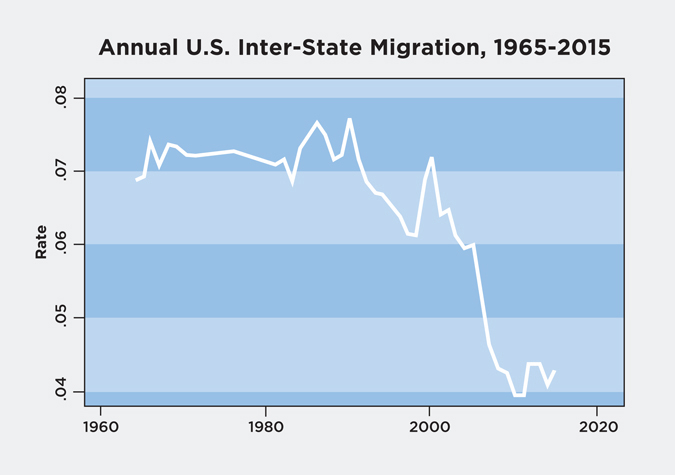
Surprisingly, Americans are moving far less than they used to, only about half as much as they moved 50 years ago.  And Americans aren’t moving or changing jobs with the frequency of decades past.  Counter-intuitive, but true, according to the mounting data. In the early 1980s, about 17 percent of Americans changed their address each year. Now it’s less than 12 percent. Bigger moves, between different states, have dropped even faster, the Boston Globe reported this month.

“When Ronald Reagan took office in 1981, about one in 10 Americans changed occupations in a given year. As of 2012, it’s more like one in 24,” the Globe reported, citing data from a team of researchers at the Federal Reserve and the University of Notre Dame.cook-inter-state-migration

A researcher at the University of Connecticut has developed a theory regarding a key contributing factor to the diminishing moves and job changes.

“I’ve been banging my head against a wall for almost a decade, trying to figure out why migration rates are declining like this,” says Thomas Cooke, professor of geography in the College of Liberal Arts and Sciences.

Cooke spent the spring of 2015 in the Department of Demography at the University of Groningen in the Netherlands on a Fulbright fellowship, where he worked on just this problem, UConn Today reported. His research findings give the first direct evidence for one major factor contributing to this trend: divorce and child custody.

“Changes in family complexity, like divorce and child custody, make a big difference for migration,” he told UConn Today.  Cooke’s current work stemmed from the idea that in the 21st century, families are becoming increasingly complex. More women are working, people often live with elderly parents or grandparents, and step-children and cousins often live under the same roof.

Less moving is not good news for the economy, published reports have indicated.

Economists worry that the lower turnover is an indication of stagnation, not stability, the Los Angeles Times reported earlier this year. “Workers are staying put because there are fewer better jobs to move to, or they face other barriers that are keeping them locked in their current positions. And with declining job movement may come slower gains in overall employment, wages, productivity and, ultimately, economic growth,” the LA Times reported.moving

The Globe report suggests that “one big reason people jump between states and careers is because they’re lured away by the promise of higher pay and grander opportunities. The fact that fewer people are moving suggests fewer are getting those life-altering chances.”

The Times reports that experts also blame government policies for suppressing job creation and labor market mobility, whether through taxes or burdensome regulations.  Government restrictions on who can work in which jobs have expanded greatly over time, academic economists Steven Davis and John Haltiwanger, who have written extensively on labor market flows, told the Times. Citing other research, they note that the share of workers required to have a government-issued license to do their jobs rose from less than 5 percent in the 1950s to 29 percent in 2008.

A New York Times report in May, citing data highlighted by the Brookings Institution, indicated that “Fluidity rates varied widely throughout the country, but the Brookings paper found that they declined in every state. Most of the largest drops occurred in the West: Oregon, Wyoming, Washington, Oregon, South Dakota, Montana, Idaho and Alaska were all in the bottom 10.

States with the most activity included North Carolina, South Carolina, Connecticut, New York, New Jersey and Illinois – but even these were not as fluid as they used to be, the paper reported.sign

There are broad adverse economic consequences to the lack of mobility, the Globe reports.  “A recent study authored by two Harvard professors found that poor states are barely gaining any ground. Between 1880 and 1980, income differences among the states tended to shrink about 2 percent a year. This catch-up growth was only half as fast from 1990 and 2010. And if you focus on the few years just before the recession that began in 2008, there was virtually no convergence at all.  Should this trend continue, the gap between rich and poor America may become a permanent feature of economic life,” the newspaper reported.

Cooke focused on child custody following divorce. His analysis confirmed that divorced people with children were even less likely to move than those without children. The findings support the idea that people’s lives are still linked, even if they divorce, Cooke explained.  At the University of Connecticut Cooke has directed both the Urban Studies program and the Center for Population Research. His research focuses on the family dimension of internal migration, and the shifting concentration of poverty. In 2013 he earned the Research Excellence Award from the Population Specialty Group of the Association of American Geographers.

Cooke noted that the findings are the first direct evidence of divorce and child custody affecting migration in the U.S. Unlike the ’60s and ’70s, when state divorce proceedings usually awarded custody of children to the mother, joint custody is the norm today, he pointed out.

Combined with other factors affecting migration, such as the ease of telecommuting and the use of technology to communicate with loved ones far away, these divorce factors could spell a new era of rootedness, Cooke predicted.