World’s Most Ethical Business: Three Headquartered in CT

Three Connecticut-based companies are among the world’s most ethical businesses. Norwalk-based Xerox Corp, Danbury’s Praxair Inc., and The Hartford, located in the Capital City are on the 2017 list developed by Ethisphere Institute, a Scottsdale, Arizona organization that measures corporate ethical standards.  The annual list has been published since 2007.

The Ethisphere Institute announced 124 companies spanning five continents, 19 countries and 52 industry sectors as the 2017 World’s Most Ethical Companies® honorees.

Ethisphere honors companies that “recognize their role in society to influence and drive positive change in the business community and societies around the world,” a news release announced the list stated. “These companies also consider the impact of their actions on their employees, investors, customers and other key stakeholders and leverage values and a culture of integrity as the underpinnings to the decisions they make each day.”

Xerox is one of only 13 honorees that have been named to the list for all 11 years, underscoring the company’s commitment to leading ethical business standards and practices.  The Hartford earned a spot on the list for the ninth time.

“At Xerox, we take great pride in our name being synonymous with innovation, quality and integrity,” said Jeff Jacobson, chief executive officer of Xerox. “We are committed to doing business the right way, with the highest degree of ethics and in compliance with laws worldwide.”

Among the 2017 list of companies are 13 eleven-time honorees and 8 first-time honorees. 2017 also marks the first-time appearance of a Mexico-based company.

The methodology is weighted into five key categories: ethics and compliance program (35%), corporate citizenship and responsibility (20%), culture of ethics (20%), governance (15%) and leadership, innovation and reputation (10%).  Non-profit colleges and universities, governments, governmental agencies, and NGOs are not considered for inclusion on the list.

“At Praxair, ensuring a culture of ethics and compliance is paramount to doing business the right way and is top of mind for all of our global employees,” said Steve Angel, Praxair chairman and chief executive officer. “It is a great honor to be recognized as a World’s Most Ethical Company and I thank all of our employees for their dedication to our core values and making this accomplishment possible.”

“Over the last eleven years we have seen an impressive shift in societal expectations, aggressive emergence of new laws and regulation and geopolitical swings that can further disrupt the balance. We have also seen how companies honored as the World’s Most Ethical respond to these challenges. They invest in their local communities around the world, embrace strategies of diversity and inclusion and focus on long term-ism as a sustainable business advantage. In short, these companies are transformative, not just out of need, but because they recognize that integrity is the key to their advancement,” explained Ethisphere CEO, Timothy Erblich.

Xeorx is one of 13 companies have made the list every year, including: Aflac, Deere & Company, Ecolab, Fluor, GE, International Paper, Kao Corporation, Milliken and Company, PepsiCo, Starbucks, Texas Instruments, and UPS.

The World’s Most Ethical Company assessment is based upon the Ethisphere Institute’s Ethics Quotient® (EQ) framework which offers a quantitative way to assess a company’s performance in an objective, consistent and standardized way, according to the Institute. The information collected provides a comprehensive sampling of definitive criteria of core competencies, rather than all aspects of corporate governance, risk, sustainability, compliance and ethics.
Municipal Finance to be Focus of Conference, State Leaders

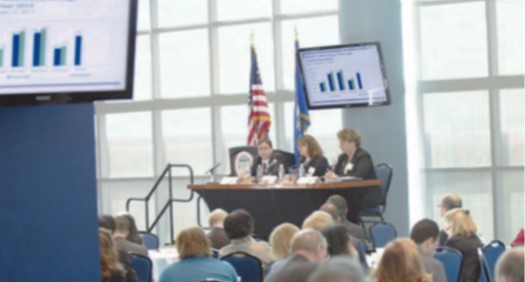
State aid to municipalities will be the focus of attention Wednesday at the State Treasury’s Public Finance Outlook Conference, when Office of Policy and Management Secretary Ben Barnes is joined on a panel by House Minority Leader Themis Klarides and House Speaker Joe Aresimowicz before an audience of finance officials and municipal leaders from communities across the state. Proposed reductions and revisions to municipal aid, a by-product of the state’s anticipated deficit, have been the source of much conversation and contention in recent weeks, with leaders of the state’s cities and towns raising concerns about plans that would have them pay more for resident state troopers, teacher retirements, K-12 education and other programs.

The Connecticut Conference of Municipalities (CCM) recently pointed out that while the state economy grew by 17 percent between 2006 and 2015, state expenditures grew by 48.9 percent during the same period. The organization also reported that excluding K-12 education, local general government expenditures in Connecticut rank 50th out of all states and the District of Columbia as a percentage of the U.S. Treasury’s measure of total taxable resources.

In a report recommending changes in the state’s fiscal relationship with cities and towns, CCM observed that “for over a decade prior to the Great Recession, governments in the state benefited from a strong economy and stable revenue. But this stability depended on reliable, adequate state aid and the local property tax. The lack of diversity in revenue sources and uncertainty at the state level are now eroding the capacity of local governments to meet their obligations to the public.”

State Rep. J.P. Sredzinski (R-112) wrote last month that “Monroe ranks among the top ten ‘biggest losers’ in terms of how much municipal aid was cut compared to their town budgets. For Monroe, the costs that the governor’s budget proposal will shift onto taxpayers clock in at a whopping $6.5 million for this year alone – nearly 10% of our revenue. This unprecedented transfer of costs is neither predictable, nor sustainable.”

The day-long conference on March 29 will also include a panel discussion with the U.S. Head of Government Regulations and Regulatory Policy, Bret Hester, and a review of methods to protect municipal governments from cyber hacking and theft, featuring David Geick, Director, IT Security Services, Bureau of Enterprise Systems and Technology, State Department of Administrative Services; Christopher Hauser, 2nd Vice President, Cyber Risk, The Travelers Companies, Inc.; Jack McCoy, Chief Information Officer, Town of Manchester.

An economic update, highlighting current and anticipated trends, will be provided by the state Department of Labor’s Patrick Flaherty, Assistant Director of Research and Information, and the Treasury’s Short-Term Investment fund and Municipal Employees Retirement Fund will provide updates.

The Treasurer’s Short-Term Investment Fund (STIF) is a Standard & Poor’s AAAm rated investment pool of “high-quality, short term money market instruments,” the Treasury website explains. STIF serves as an investment vehicle for the operating cash of the State Treasury, state agencies and authorities, municipalities, and other political subdivisions of the State. As of June 30, 2015, the fund administered 939 active accounts for 67 state agencies and authorities and 222 municipalities and local entities in Connecticut.

The conference will be held at Rentschler Field in East Hartford.

Achieve Hartford Aims to Push for Progress in Hartford Schools, From Top Down and Bottom Up

In the aftermath of Hartford Mayor Luke Bronin’s State of the City address and a comprehensive three-part investigative series published by the Hartford Courant examining the city’s decades-long response to the Sheff decision on integration and quality education, Achieve Hartford! is preparing for its second annual fundraising event and intensifying efforts to encourage sustainable education progress in the city. “Compare the mayor’s role in addressing the fiscal crisis, promoting regionalization, union renegotiations, the fight against blight, or key quality of life issues like resolving a flawed 311 system,” the organization said this month. “In each of these areas as well as several others, Mayor Bronin and his leadership team came together publicly and with a clear mandate directed from the top across departments to solve problems, making the combined whole greater than the individual roles and parts.  Now is a time where city leaders are called to step up as education leaders.”

In promoting their second annual “Inspire Hartford” event slated for May 11, organizers are urging attendees to “see innovation in action” and hear “uplifting stories of success.” They add: “learn how innovative ideas and new technology are training the next generation of bright dreamers and big thinkers. Get educated—and be inspired.”

The keynote speaker will be Charles Best, who leads DonorsChoose.org, the pioneering crowdfunding nonprofit where anyone can help a classroom in need. At DonorsChoose.org, public school teachers create classroom project requests and donors can choose the projects they want to support. Best launched the platform in 2000 out of a Bronx public high school where he taught history. Today, more than two thirds of U.S. public schools have at least one teacher who has created a project request on DonorsChoose.org, and 1.8 million people have donated $360 million to classroom projects reaching 16 million students.

Achieve Hartford!, which was formed in 2008, is an independent nonprofit organization founded by business and community leaders “with the belief that strong schools lead to a strong city,” noting that  “Mayors, Boards of Education and Superintendents change over time.”

“We are doing everything we can to lay out a blueprint for systemic change in Hartford that can help guide collective efforts to improve schools, and we look forward to working with the mayor, the next superintendent, and so many others critical to putting education reform in Hartford back on track,” the organization said earlier this month, while noting that Bronin indicated “strengthening our neighborhood schools must be the single most important priority for our new Superintendent, and I pledge to be a full partner.”

Last week, the search for a new Superintendent for the city was narrowed to two candidates: Acting Superintendent Leslie Torres-Rodriguez and Capital Region Education Council (CREC) Assistant Superintendent for Operations Tim Sullivan.

Achieve Hartford warned that “If Hartford leaders, stakeholders, and families put the responsibility for fixing Hartford schools solely on the new superintendent, we should not expect either finalist to be successful.  The responsibility must be shared amongst the Board of Education, City Hall, the corporate community, philanthropy, nonprofit partners, and even our robust institutions of higher education.”

The organizations stresses that it works “toward improving education in our city by innovating ways to address some of our toughest issues, activating the community to take ownership of problem solving, and holding our leaders and educators accountable for advancing student achievement.”

Summarizing recent activities, the organization’s website says succinctly, “there is a lot of conversation but, ultimately, not much action.”

“Developing great schools require not only that the school system operate with excellence, but also our entire community,” the organization’s website points out. “It takes a village to educate a child, and it is our job to help stakeholders play their unique set of roles for school improvement now, and long into the future.”

The May 11 fundraising event will take place at the Hartford Hilton.

Local College Students Selected by US State Department for Intensive Foreign Language Training

Four University of Bridgeport students have been awarded U.S. Department of State Critical Language Scholarships, among the most competitive in the field, to spend the summer abroad at intensive language programs. The Critical Language Scholarship (CLS) program is part of a U.S. government effort to dramatically expand the number of Americans studying and mastering foreign languages deemed to be of particular importance. They include but are not limited to: Arabic, Azerbaijani, Chinese, Persian, Russian, and Urdu.

Students Ana Rena, Justin Sabo and Fernando Gonzalez have been accepted into the Arabic language study program at a site still yet to be determined in the Middle East.  According to the State Department’s website, Arabic is taught in Amman, Jordan; Meknes, Morocco; Tanfier, Morocco; and Ibri, Oman.

UB student Sung Soon Gavel won a CLS to study Korean at Chonnam National University in Gwangju, South Korea.  The CLS Korean Program in Gwangju, Korea provides students opportunities to learn Korean both inside the classroom and in an immersive cultural setting during an intensive 8-week language program set in Korea’s sixth-largest city located just south of Seoul. Students receive a minimum of 20 hours per week of classroom instruction where they learn the four major skills of speaking, listening, reading and writing in Korean.


CLS Program institutes at 24 locations around the world cover approximately one academic year of university-level language coursework during an eight- to ten-week program and are designed to meet the needs of students from a variety of language levels and backgrounds.

The scholarships are highly competitive; just 10 percent of students who apply to the program are awarded one. But since 2011, eight University of Bridgeport students, including the four 2017 winners, have won them.

“As an application evaluator for the Critical Language Scholarships, I can confirm that the pool of applicants to the program include some of the nation’s brightest students at leading universities across the country. So having one CLS winner, or even having students make it to the final rounds, would be worthy of celebration. The fact that four were granted awards is a phenomenal testament to our students’ hard work.  They make us very proud,” said Brandon LaFavor, director of UB Education Abroad Resource Center.

Formal classroom language instruction is provided for a minimum of 20 hours per week. Extracurricular activities are designed to supplement the formal curriculum, including regular one-on-one meetings with native speaker language partners for conversational practice, as well as cultural activities and excursions designed to expand students’ understanding of the history, politics, culture and daily life of their host country.

In past years, students from institutions including University of Connecticut, Connecticut College, Trinity College, Wesleyan University, Quinnipiac University and Central Connecticut State University have also been selected to participate.  Most recently, a UConn student was selected to learn Hindi in India in 2016, and two Wesleyan students were selected last year to learn Russian and Hindi.

The Critical Language Scholarship Program is a program of the United States Department of State, Bureau of Educational and Cultural Affairs. CLS is administered by American Councils for International Education.

This year’s group of Critical Language Scholars from UB are all enrolled at the College of Public and International Affairs (CPIA) at the University. The school’s six undergraduate and four graduate programs groom students in fields related to diplomacy, including international security and global development. CPIA alumni have gone on to work for the FBI, the Department of State, Defense Department, United Nations, Council of Europe, as well as global NGO’s (non-governmental organizations) and private industry.

https://youtu.be/WUhZlih7hls

Connecticut Main Street Center Award Winners Reflect Excellence, Community Involvement

A downtown management organization engaging the community in envisioning two underutilized parks as places that downtown residents, visitors, workers and families can mingle with artists and creatives, and a regional planning organization that created a program focused on supporting local businesses, creating jobs and filling vacant spaces in eight village centers are just two of this year's Awards of Excellence winners being recognized by the Connecticut Main Street Center (CMSC). In total, eight recipients have been selected to receive the prestigious awards, including organizations and initiatives from Bridgeport, Unionville Village in Farmington, Hartford, Meriden, New Britain, New Haven, and the Northwest Corner.  The awards will be presented at CMSC's Vibrant Main Streets event in the atrium of the Legislative Office Building on May 18 in Hartford.

The other winning entries include:

  • a 14-acre flood control project that created a public park and mixed-use economic development in downtown Meriden;
  • a comprehensive and complete overhaul of the City of Hartford's zoning language and process;
  • an interpretive wayfinding/signage program that connects Walnut Hill Park, Little Poland and Downtown New Britain;
  • the restoration of a historic ball bearing mill on the banks of the Farmington River into a mixed-use campus in the heart of Unionville Village;
  • a Twilight Bike Race & Street Festival that celebrates biking, food, culture and entertainment in Downtown New Haven; and
  • the redevelopment of a 1903 factory building into 72 units of market rate housing within easy walking distance of jobs and transit in downtown Hartford.

"This year's winners represent both catalytic and keystone initiatives that ignite and support significant positive change in Main Street communities," said CMSC Associate Director Kimberley Parsons-Whitaker. "From engaging the community in playing a proactive role in local economic development and envisioning new life for their historic public places, to the complex redevelopment of historic mills and factories for modern residential and commercial uses, our 2017 award recipients are leaders in re-imagining Main Streets."

In addition to its Awards of Excellence, CMSC also named the recipient of its 2017 Founder's Award, presented by Eversource Energy. CMSC founding President & CEO John Simone, who will retire in August, was selected to receive the Founder's Award for his more than 17 years of leading the organization's evolution as the voice of downtown, and for championing the tools, resources and political will needed for Connecticut's Main Streets to thrive.

Connecticut Main Street Center's mission is to be "the catalyst that ignites Connecticut’s Main Streets as the cornerstone of thriving communities."  CMSC works at both the local and State level to create and implement successful downtowns that meet the needs of residents and visitors. The organization describes a successful downtown as "one that incorporates housing, retail, social and business opportunities with transportation options for all users – walkers, cyclists, motorists and more."   Created in 2003 to recognize outstanding projects, individuals and community efforts to bring traditional downtowns and neighborhood commercial districts back to life, socially and economically, the Awards of Excellence are presented annually.


2017 Connecticut Main Street Center Awards of Excellence

CT Main Street Catalyst Awards

  •  Meriden Green - Recipient: City of Meriden. Partners: State of CT (DECD, DEEP, DOT); U.S. EPA; FEMA; Army Corps of Engineers; Meriden Flood Control Implementation Agency; Milone and MacBroom; AECOM; and La Rosa Construction.
  • Downtown Bridgeport Placemaking Program & Downtown Farmers Market at McLevy Green - Recipient: Bridgeport Downtown Special Services District. Partners: Project for Public Spaces; New Venture Advisors LLC.
  • ZoneHartford: Form-Based Code Zoning Regulations - Recipient: City of Hartford. Partners: Fitzgerald & Halliday, Inc.

CT Main Street Keystone Awards

  • Collaborative Shared Economic Development Services Project - Recipient: NW Hills Council of Governments. Partners: Goman+York; One Eleven Group; State of CT (OPM); Towns of Canaan/ Falls Village, Cornwall, Goshen, Kent, North Canaan, Norfolk, Salisbury/Lakeville and Sharon
  • New Britain Historic Trails & Signage Program - Recipients: City of New Britain; TO Design LLC. Partners: National Parks Service
  • Upson Market Place, Unionville - Recipient: Brian Lyman of Parker Benjamin Real Estate Services LLC. Partners: Town of Farmington.
  • New Haven Grand Prix: a Twilight Bicycle Race & Street Festival - Recipients: CT Cycling Advancement Program; Town Green District (New Haven). Partners: City of New Haven; Taste of New Haven.
  • Capewell Lofts, Hartford - Recipient: CIL. Partners: Capital Regional Development Authority; State of CT (DECD); InsurBanc; Guilford Savings Bank; Crosskey Architects; TO Design

Disparities Evident As Fairfield County Considers Its Community Wellbeing

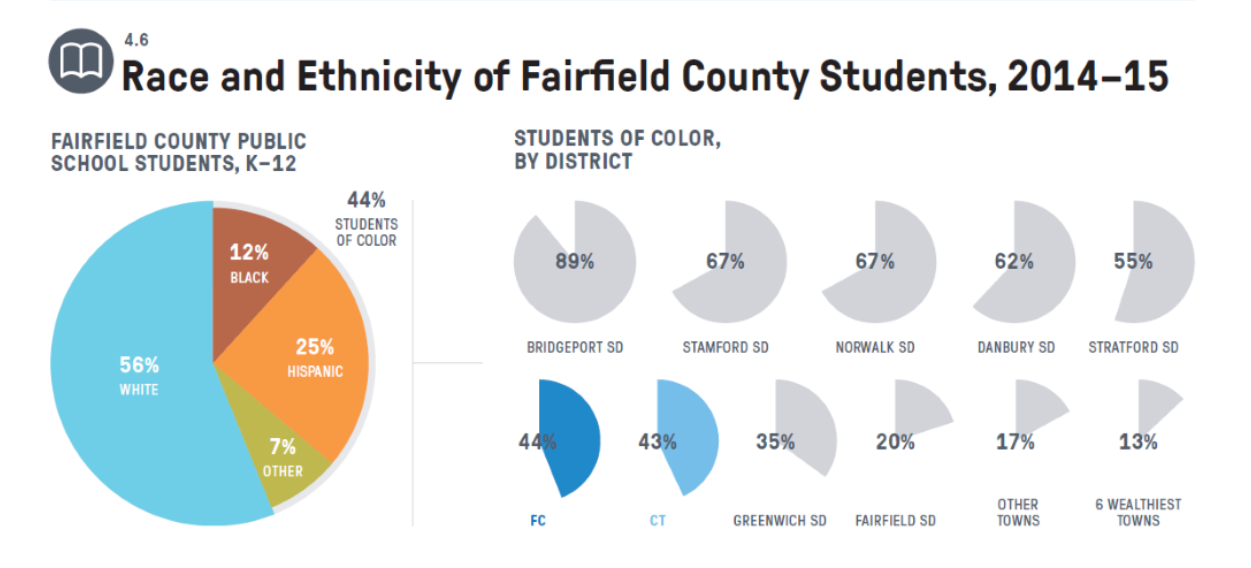
Fairfield County’s sizeable immigrant population - twenty percent of Connecticut’s most populous county - grew 89 percent from 1990 to 2014. In some municipalities, foreign-born residents make up as much as a third of the population. That is among the findings in the Fairfield County Community Wellbeing Index 2016, which examined regional demographics, economic opportunity, education, health, quality of life, and happiness.  The report includes analysis of the communities, populations, and neighborhoods of Fairfield County, as well as opportunities available and issues facing the area.

Since 1980, the size of the population living in neighborhoods that are considered most affluent – defined as those with an average family income more than 2.5 times higher than the state level - has tripled within Fairfield County. Meanwhile, the number of people living in poor neighborhoods is 3.5 times its 1980 size. The number of people in middle-income neighborhoods has decreased by sixteen percent.

Fairfield County’s Community Foundation, a major funder of the report, partnered with DataHaven, area hospitals, and government agencies to help launch a more robust and comprehensive resource that could serve as a part of the hospitals’ and health departments’ Community Health Needs Assessments as well as a broader county-wide indicators program.

“Fairfield County’s Community Foundation is committed to addressing the most pressing issues facing Fairfield County, but to do that we first need to be able to identify and understand those issues,” stated Nancy M. von Euler, Vice President, Programs, Fairfield County’s Community Foundation. “The data in the Fairfield County Community Wellbeing Index 2016 will help us to develop priorities for collective action to build a stronger, healthier Fairfield County where everyone has the opportunity to thrive, regardless of their zip code.”

The report states that "Despite its overall affluence, Fairfield County is among the nation’s most unequal metropolitan areas. Inequities in well-being appear when evidence is stratified by income, age, race, gender, and zip code. These differences are often most apparent after considering data that were collected specifically for the age groups and neighborhoods that are most impacted."

Among the findings, between 2014 and 2025, adults ages 65 and over are Fairfield County’s only age group projected to grow significantly, with a thirty-seven percent increase. Disparities in the County were also evident:

  • High and rising childcare costs are often prohibitively expensive for low and middle-income families. While Fairfield County has nearly enough spaces for all 3- to 4-year-olds to attend preschool, there are only enough regulated childcare slots for fifteen percent of the county’s children ages 0 to 2, and enough subsidized slots to cover only twenty-two percent of these youngest children in low-income households.
  • The issue of dental care arose as an indicator of well-being, particularly among younger adults and families. The Index shows that for every 10,000 residents living in Fairfield County, 12 residents visit an emergency room to receive treatment for preventable dental conditions in any given year, whereas on the East Side of Bridgeport, 178 residents do.
  • Fairfield County residents are healthy when compared to national benchmarks. However, many conditions and risk factors—such as asthma, food insecurity, exposure to community violence, and the early onset of diabetes—are disproportionately prevalent in lower-income neighborhoods and communities of color. Sections of Bridgeport in particular fall very far behind the surrounding area in many of these measures.
  • Disparities in access to reliable transportation persist between racial and income groups. A majority of Fairfield County workers, regardless of income, commute to another town for work. Many low-income (annual wages under $40,000) workers leave Bridgeport for work, while large shares of high-income workers commute to New York City.

“The process of developing this report allowed local partners and community members to identify links between the well-being of residents and the places where they live. Looking beyond typical measures like income levels or unemployment rates, the Community Wellbeing Index reveals a much more uneven distribution of opportunities in areas such as neighborhood walkability, economic development, public health, and education,” said Mark Abraham, Executive Director of DataHaven and a lead author of the report. “The impact that these barriers to opportunity have on overall well-being and happiness will serve as a call to action for many groups working to improve Fairfield County’s diverse neighborhoods and towns.”

The Fairfield County Community Wellbeing Index 2016 was based on a variety of federal and statewide data sources. Partners of DataHaven’s Fairfield County Community Wellbeing Index 2016 include Fairfield County’s Community Foundation; Bridgeport Hospital; Danbury Hospital; Greenwich Hospital; Norwalk Hospital; St. Vincent’s Medical Center; and Stamford Hospital.

CT Ranks 5th in U.S. in Dental Health, Best in New England

The neighboring states of Minnesota, Wisconsin, Illinois and North Dakota have the best dental health in the nation, but Connecticut and Massachusetts break the mid-west logjam, ranking fifth and sixth in a new survey of nearly two dozen dental-health related categories by the financial website WalletHub. Connecticut ranked second in a series of oral health categories and 17th in a group of dental habits and care categories, according to the survey, resulting in the 5th place finish overall.  Connecticut and Massachusetts ranked one-two in the highest percentage of adults who visited a dentist in the past year, and Connecticut placed third, after New Hampshire and Pennsylvania, in the highest percentage of adolescents who visited a dentist in the past year.

Connecticut also topped the list in two additional categories:  Lowest Percentage of Adults Who Experienced Pain in the Past Year Due to Oral Condition and Lowest Sugar-Sweetened Beverage Consumption Among Adolescents.  The state also ranked in a tie for third for having the lowest percentage of elderly population with no natural teeth.

Data used to create the ranking were collected from U.S. Census Bureau, Bureau of Labor Statistics, Centers for Disease Control and Prevention, Healthy Grid, American Dental Association, Health Resources & Services Administration, Medicaid and CHIP Payment and Access Commission, American Academy of Pediatric Dentistry and Oral Health America, according to WalletHub.

With the state’s ranking in the background, the Connecticut Oral Health Initiative (COHI) will host a session on health equity during Oral Health Day at the State Capitol on Wednesday, March 8, from 10 am to 3 pm in the Legislative Office Building.

Connecticut oral health-related organizations will on hand throughout the day to raise awareness and educate decision-makers and the public about policies to improve the oral health of Connecticut residents. The organization’s focus this year is on preserving Medicaid coverage for adults and children, allowing children to remain on their parents' dental insurance until age 26, and integrating oral health into health systems.

Other legislative initiatives include a proposal to increase the number of adults aged 19 to 26 years covered by dental insurance to provide continuity of dental care into adulthood, and another to decrease the incidence of oral and other cancers by decreasing tobacco use by Connecticut residents. By raising the Legal Age For Purchase and Use of Tobacco Products.

COHI leads and collaborates in statewide oral health advocacy efforts; promotes the necessity of oral health to overall health; serves as an expert resource on oral health policy; and publicizes oral health policy analysis and recommendations.

Also at the Capitol, the Department of Public Health is proposing a mandate for dental hygienists to have at least one contact hour in cultural competency prior to the renewal of their license, as part of the commitment to health equity.

Health Reform Efforts Earn CT a C+, Survey Says

Connecticut health care thought leaders have again given the state a C+ grade for health reform, as the state’s GPA dropped slightly  from 2.4 to 2.2. Connecticut’s grade for effort didn’t change from last year – holding steady at a B-/C+ (GPA 2.5) in the annual survey by the Connecticut Health Policy Project, as part of their efforts to increase public awareness of health care issues among state residents. Connecticut continues to earn higher marks for Medicaid and the health insurance exchange, according to the survey. Grades for patient-centered medical homes were down from recent years. Lowest marks went to efforts to address the health care workforce, the only area that received a D grade overall.

Unlike past years, thought leaders gave more C’s across the majority of issue areas, mirroring the overall grade for the first time. A new question assessing the level of trust between stakeholders in Connecticut health policymaking elicited low responses, averaging only 26 out of 100 possible points, with zero to ten being the most common response. Low trust scores were found in every stakeholder group.

The Connecticut Health Policy Project is a non-profit, non-partisan research and educational organization dedicated to improving access to affordable, quality health care for all Connecticut residents.

Sixty-one thought leaders across Connecticut’s health fields and sectors were surveyed online between December 20, 2016 and February 9, 2017. Forty-one (67%) responded. The invitation list was collected from membership of health-related state councils, board and committees, and leadership of health-related organizations.

Respondents represented community organizations, foundations, providers, payers, consumer advocates, labor, media, business people, insurance brokers, and academics. To ensure independent responses, state officials responsible for reform were not surveyed, officials said.

Bridgeport, Stamford, New Haven, Hartford, New Britain Among Most Culturally Diverse Cities in USA

Five Connecticut cities are among the nation’s most culturally diverse, according to a new analysis.  Bridgeport is the 15th most culturally diverse city in the U.S., according to the analysis by the financial website WalletHub, which also ranked Stamford at number 22.   New Haven, Hartford and New Britain were back-to-back-to-back, ranking  at number 30, 31 and 32 on the list of more than 500 cities across the country. Bridgeport’s cultural diversity score was 86.34, and the city ranked 28th in ethno-racial diversity, 17th in linguistic diversity and at number 150 in birthplace diversity.  Stamford’s cultural diversity score was 84.29, and the city ranked 63th in ethno-racial diversity, 20th in linguistic diversity and at number 103 in birthplace diversity.

New Haven’s scores and rankings were similar, with a 83.02 cultural diversity score, and ranking at number 76 in linguistic diversity and number 132 in birthplace diversity.  New Haven was the only Connecticut city to rank in the top 10 in any category, finishing ranked at number 10 in ethno-racial diversity.

When the analysis broke metropolitan areas down by size, among medium sized cities Bridgeport, Stamford, New Haven and Hartford all ranked in the top 15 most culturally diverse.  Waterbury ranked at number 19.  Among small cities, New Britain ranked 8th, Danbury 10th, Norwalk 15th and West Hartford 76th.  Large cities in the analysis were those with more than 300,000 people; midsize cities with 100,000 to 300,000 people, and small cities with fewer than 100,000 people.

The most culturally diverse city in the U.S. is Jersey City, New Jersey, with a score of 95.88.  New York City ranked sixth; Providence was at number 12.

“The country as a whole is becoming increasingly ethnically diverse, and living in an ethically diverse city today is good exposure to the opportunities and challenges all cities will be facing sooner or later,” said Mario Luis Small, Grafstein Family Professor of Sociology at Harvard University.  “Ethnic diversity in neighborhoods is associated with a strong preponderance of businesses and local organizations that generate economic activity and sustain community.  Children exposed to ethnic and language diversity early on, develop a broader and more sophisticated understanding of the diversity of the world.”

In determining the cultural diversity scores, the three categories were weighted, with racial and ethnic diversity making up 50 percent of the score, language diversity 33 percent and U.S. region of birth diversity consisting of 17 percent of the score.  The regions were in-state, Northeast, Midwest, South, West, U.S. territories, and foreign-born.

Survey Says: Hartford Is Among Nation’s Top Up-and-Coming Cities

What do Milwaukee, Syracuse and Hartford have in common? They are all – believe it or not – the nation’s most notable “up-can-coming place to live,” according to a new national analysis of the top places to live in the U.S.

In calculating the second-annual ranking of the Best Places to Live in the U.S., which evaluates the 100 most populous metro areas in the country based on qualities that Americans care about most, U.S. News looked at affordability, employment opportunities and the overall quality of life in each place.  Hartford’s ranking jumped from number 59 a year ago to number 31 this year, among the largest leaps of any city in the nation.

The leading reason cited by the publication is the increase in jobs.

"The Hartford region has seen some strong employment growth in a number of high-productivity sectors, including professional, technical services, education and health services," said Alissa DeJonge, vice president of research at the Connecticut Economic Resource Center.

The types of job opportunities that are available in the Hartford area tend to pay well, the publication points out, “with residents earning nearly $57,000 per year on average, which is significantly more than the average American's salary of $48,320 per year. United Technologies Corp. provides employment to residents in the manufacturing and engineering sectors, and the region is home to some of the country's largest financial institutions, including Aetna Inc. and the Hartford Financial Services Group.”

"Hartford is known as the 'insurance capital' of the U.S., a title substantiated with Connecticut ranking No. 1 in the U.S. for insurance employment per capita, with many of those employers located in the Hartford region," added Susan Winkler, executive director of Connecticut Insurance and Financial Services. "Connecticut is also home to the highest concentration of actuaries – many located in the Hartford region."

The U.S. News review also notes that the region features a diverse selection of restaurants and cultural attractions. Paul Pita, CEO and executive creative director of Hartford-based digital marketing firm The Pita Group, told U.S. News "Hartford is a great place to live because residents have access to what they need: great options for housing, great educational options and a wide variety of lifestyle options for food, arts, culture, entertainment and outdoor activities."

Syracuse moved from #53 to #28, and Milwaukee climbed from #72 to #47.  The top 10 places to live in the U.S., according to the rankings, are Austin, Denver, San Jose, Washington D.C., Fayetteville, Seattle, Raleigh/Durham, Boston, Des Moines, Salt Lake City and Colorado Springs.  Portland, Maine ranked #26 and Albany ranked #30, just ahead of Hartford.  New Haven ranked #81 in the top 100.

The metro areas included in the rankings were evaluated by U.S. News using data from sources including the United States Census Bureau, the Federal Bureau of Investigation, the Department of Labor and U.S. News' own internal resources. This data was categorized into five indexes – Job Market (including salary and unemployment rates), Value Index (including cost of living), Quality of Life Index (including education, crime, commuting, and health care), Desirability Index, and Net Migration - and then evaluated using a methodology determined by Americans' preferences. The percent weighting for each index was determined by the answers to a public survey in which people from across the country voted for what they believed was the most important thing to consider when thinking about moving, according to U.S. News.