CT Ranked #4 in US in Education, Economic, Civic Opportunity

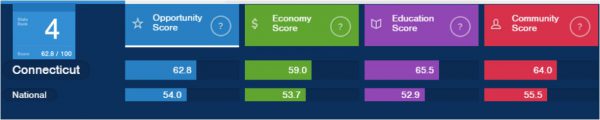
Including Connecticut, ranked #4 nationally, the New England states grabbed five of the top 10 slots in the Opportunity Index, an analysis of “how opportunities measure up” in communities across the country.  The Opportunity Index is an annual composite measure at the state and county levels of economic, educational and civic factors that expand opportunity. Leading the opportunity rankings are Vermont, Massachusetts, New Hampshire, Connecticut, New Jersey, Maryland, North Dakota, Nebraska, Maine and Minnesota.  Connecticut exceeded the national average in all three components – Jobs and Local Economy, Education, and Community Health and Civic Life.

In the Education component of the Opportunity Index, Connecticut ranked second.  The state ranked sixth in the Community aspect of the index, but 20th in the Economy scorecard.  The Economy rankings included data on jobs, wages, poverty, inequality, access to banking, affordable housing and internet access.

Connecticut’s overall score was 62.8, compared with the national average of 54.0.  Among Connecticut’s eight counties, the best overall opportunities are in Middlesex County, which earned a 63.1 score.  Next were Tolland County, 62.3; Fairfield County,62.1; Litchfield County, 60.6; Hartford County 59.5; New Haven County, 56.8; New London County, 54.3; and Windham County 51.2.

The index was jointly developed by Measure of America and Opportunity Nation.

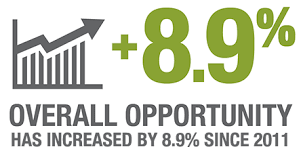
Nationally, overall opportunity has increased by 8.9 percent since 2011, as unemployment has dropped and violent crime has been reduced, the data indicated.  In addition, the rate of young adults from age 16 to 24 who are neither working nor in school has fallen 9.1% since 2011, but remains above pre-recession levels. This number has decreased slightly since 2015.

Opportunity Nation is a bipartisan, national coalition of more than 350 businesses, nonprofits, educational institutions and community leaders working to expand economic opportunity. Opportunity Nation seeks to close the opportunity gap by amplifying the work of its coalition members, advocating policy and private sector actions and releasing the annual Opportunity Index.  Measure of America provides easy-to-use yet methodologically sound tools for understanding well-being and opportunity in America.

The data, according to survey sponsors, comes from the U.S. Census Bureau, the Bureau of Labor and Statistics, the Federal Communications Commission, the National Center for Education Statistics, the Center for Disease Control and Prevention and the U.S. Department of Justice.

Waterbury, Hartford, Simsbury Receive National Recognition for Main Street Initiatives; Eight Local Efforts to Receive Awards

Three Connecticut communities in the Connecticut Main Street network have achieved accreditation for meeting the commercial district revitalization performance standards set by Main Street America, a subsidiary of the National Trust for Historic Preservation. The Connecticut Main Street programs that earned accreditation for their 2016 performance are Simsbury Main Street Partnership, Upper Albany Main Street (Hartford), and Main Street Waterbury.

The accreditation was announced at the 2017 Main Street Now Conference in Pittsburgh. Each year, Main Street America and its partners announce the list of accredited Main Street programs, which have demonstrated exemplary commitment to historic preservation and community revitalization through the Main Street Four Point Approach.

"Connecticut's Main Street America Accredited programs, Simsbury Main Street Partnership, Upper Albany Main Street (Hartford), and Main Street Waterbury, are well-established Main Street management organizations with histories of strong and dynamic leadership. Each has developed and maintained outstanding programs that increase the economic value of their districts while improving the quality of life for area residents," said Kimberley Parsons-Whitaker, Associate Director of Connecticut Main Street Center.

"Main Street revitalization is sustainable when the professional management organization is committed to engaging local stakeholders (business and property owners, anchor institutions, local government, and local residents) in envisioning a vibrant Main Street, and developing strong partnerships that result in action-oriented steps that bring the Main Street neighborhood back to life."

Working in partnership with Main Street America, Connecticut Main Street Center evaluates each of the state's Designated Main Street Programs annually to identify those programs that meet ten performance standards. Evaluation criteria determine the communities that are building comprehensive and sustainable revitalization efforts and include standards such as fostering strong public-private partnerships, securing an operating budget, tracking programmatic progress and actively preserving historic buildings.

The recognition doesn’t stop there.  Connecticut Main Street Center will be presenting its annual Awards of Excellence on Thursday, May 18 at the Legislative Office Building in Hartford.

Among the recipients: a downtown management organization engaging the community in envisioning two underutilized parks as places that downtown residents, visitors, workers and families can mingle with artists and creatives, and a regional planning organization that created a program focused on supporting local businesses, creating jobs and filling vacant spaces in eight village.

In total, eight recipients have been selected to receive the prestigious awards, including organizations and initiatives from Bridgeport, Unionville Village in Farmington, Hartford, Meriden, New Britain, New Haven, and the Northwest Corner.

Among the winning entries: a 14-acre flood control project that created a public park and mixed-use economic development in downtown Meriden; a comprehensive and complete overhaul of the City of Hartford’s zoning language and process; an interpretive wayfinding/signage program that connects Walnut Hill Park, Little Poland and Downtown New Britain; the restoration of a historic ball bearing mill on the banks of the Farmington River into a mixed-use campus in the heart of Unionville Village; a Twilight Bike Race & Street Festival that celebrates biking, food, culture and entertainment in Downtown New Haven; and the redevelopment of a 1903 factory building into 72 units of market rate housing within easy walking distance of jobs and transit in downtown Hartford.

Created in 2003 to recognize outstanding projects, individuals and community efforts to bring traditional downtowns and neighborhood commercial districts back to life, socially and economically, the Awards of Excellence are presented annually. CMSC’s mission is to be the catalyst that ignites Connecticut’s Main Streets as the cornerstone of thriving communities. CMSC is dedicated to community and economic development within the context of historic preservation, and is committed to bringing Connecticut’s commercial districts back to life socially and economically. CMSC is supported by its Founding Sponsors, the CT Department of Economic & Community Development (DECD) and Eversource Energy. CMSC is also supported by its Growth Sponsors, UIL Holdings Corp. and the State Historic Preservation Office.


In New England, Most Believe At Least Half of High School Grads Not Ready for College, Career

New Englanders overwhelmingly believe that at least half of high school students across the region graduate unprepared for college and a career, and that student-centered learning environments are part of the solution to this readiness problem. That’s according to the results of a poll that reflects growing concerns that children are not fully equipped for life after high school.  It is seen by some as a tipping point in public opinion that positions student-centered learning—which tailors education to the interests and needs of each student—as an answer to providing young people with the skills and knowledge they need to succeed upon entering post-secondary education and the workforce.

That’s according to the Nellie Mae Education Foundation (Nellie Mae) which released the poll that was conducted by the Rennie Center for Education Research & Policy, which surveyed 2,400 individuals across the region from August 5-31, 2016.

“Although graduation rates are at an all-time high, New Englanders are well aware that a diploma alone is no longer sufficient to ensure success for our students after high school,” said Nick Donohue, president & CEO of the Nellie Mae Education Foundation.

Among Connecticut residents, 33% said most graduates are prepared for college and a career, 48% said about half of graduates are ready, and 18% believe that “few graduates” are prepared for college and career.  Connecticut and New Hampshire had the highest percentage indicating that “most graduates” are prepared, with one-third of respondents (33%) expressing that view.

“Too frequently students arrive at college requiring developmental or remedial classes to strengthen basic skills just to move on to college-level material, or they begin careers without the tools and skills necessary to help them early on in their professional lives. The situation is more severe for people in traditionally marginalized communities – places that we need to prosper so our society can advance. The good news is that student-centered approaches to learning represent a path forward in which all students can succeed.”

There were some differences among the states.  In Connecticut, 48 percent said “some changes are needed, but basically schools should be kept the same.”  Only 14 percent said “public schools work well as they are now,” while 30 percent said “major changes are needed” and 8 percent said “a complete overhaul is needed” (the smallest percentage among the New England states).

A significantly greater proportion in Rhode Island believe “a complete overhaul is needed” than in Connecticut, Massachusetts, New Hampshire and Vermont.   A significantly greater proportion in Maine believe “a complete overhaul is needed” than in Connecticut.

Nearly two-thirds of those surveyed in Connecticut (64%) called for “using technology to enhance the way students learn in the classroom” – the highest percentage among the six New England states.  A majority called for “more significant efforts to close achievement gaps” (59%), more effective teachers (62%) and changes to the ways schools are funded (57%).  The state legislature in Connecticut is currently considering changes in the school funding formula proposed by Gov. Malloy in the wake of a state court decision.

According to Nellie Mae, across New England, only 50 percent of high school students are graduating with the skills and knowledge necessary to succeed after high school. These poll results show that New Englanders not only agree this is unacceptable, but that 90 percent believe that student-centered learning environments are part of the solution toward ensuring high school graduates are college and career ready.

Nellie Mae defines student-centered learning as personalized and happening anywhere, anytime. In student-centered environments, students move ahead based on mastery of content rather than class-seat time and they exert ownership over their own learning.

New Englanders found teachers to be among the most trusted group when it comes to educational decision-making and showed confidence in their ability to improve public education. Respondents also reported having confidence in parents and school and district leaders for improving education.

The poll comes amidst efforts by Nellie Mae to reshape public education in New England to reach an aggressive benchmark of 80 percent college and career readiness among our high school graduates by 2030. The Foundation is investing $200 million in grantmaking efforts toward advancing student-centered learning in schools and districts across the region in order to achieve this goal.

The Nellie Mae Education Foundation is the largest philanthropic organization in New England that focuses exclusively on education.

To read the poll report in its entirety, please visit http://bit.ly/2k4Dvv5

Carolina Attendance Plummets; Proposal for Hartford Region to Buy Back Whalers, Bring 'Em Home

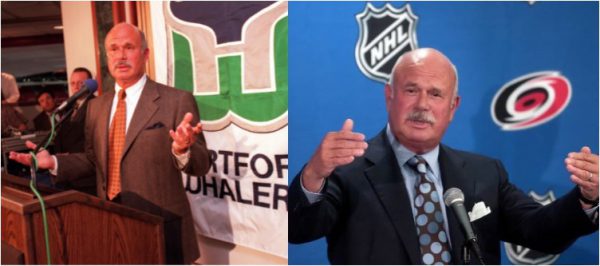
In a press conference on May 6, 1997, team owner Peter Karmanos Jr. said he was moving his hockey team, the Hartford Whalers, to Raleigh and renaming it the Carolina Hurricanes. It has been 20 years, and now there is an effort – voiced by Hartford City Councilman John Gale – to go back to the future, and bring the franchise to Hartford's XL Center.  It is a long-shot, wistful effort that has yet to capture the public imagination in Connecticut, or any apparent interest from Karmanos, despite near constant rumors, and some intimation, that the franchise could be bought, for the right price.  There has been consistent resistance from the NHL to moving the franchise from Raleigh, but no new comment since the latest idea became public.
“This is a market where the people have a good feeling about themselves, have a good feeling about the future,” Karmanos said two decades ago of the Carolina market to which he was redirecting the soon-to-be former Whalers. “I think they want a sports team here as a quality-of-life issue, something they can identify with.”

Now, Gale suggests in an op-ed published by the Hartford Courant, the team ought to return for much the same reason. “What if we could provide the region with an identity, a rallying point; what if there were a way to bring back the Whale and give it a built-in metro area base of support; and we did it all by regionally cooperating,” Gale wrote.

It has been two decades of highs and lows as the Carolina Hurricanes – two Stanley Cup appearances, and one win of the Cup in the early years, and the worst attendance in the National Hockey League, or near the bottom, more recently.  In Hartford, the Whalers remain very much a part of the city's consciousness.

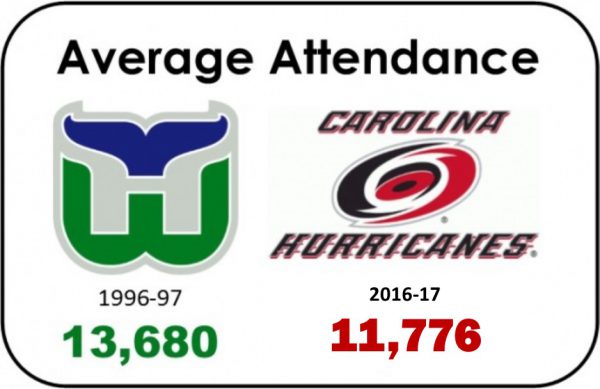
The Hurricanes have had the NHL’s worst home attendance in each of the past two years, and attendance at home games has dropped for five consecutive years, averaging 11,776 this season for 41 home games.

In January, NBC Sports reported that team President Don Waddell said Karmanos was not actively looking to sell the team, but that “If someone came along and wanted to buy it, I’m sure we’d talk about it but we’re not actively out there trying to find investors. If someone calls and says, ‘Hey, I want to buy the team,’ we’re taking that call.”  A year ago, there were rumors of a sale and move to Quebec City.

Today, the Hurricanes Executive Vice President and General Manager is Hall of Famer Ron Francis.  The former standout – in Hartford and Carolina – was the first player to have his number retired by the Hurricanes, on Jan. 28, 2006. Francis, captain dubbed “Ronnie Franchise,” saw his No. 10 – the jersey number in Connecticut and Carolina – raised high above the arena.

Earlier this year, NHL Commissioner Gary Bettman was quoted by USA Today as saying "Peter may sell, he may not sell.  He may sell all of it. He may sell some of it. He may sell none of it. There's no formal sale process going on. There's no imperative for the franchise to be sold on any immediate basis, and the franchise is not moving.”
Within weeks of those comments, Gov. Malloy and Hartford Mayor Luke Bronin made a play for the Brooklyn-based New York Islanders, rumored to be seeking a new home due to spotty attendance at the home they share with the Brooklyn Nets.  Those hopes were dashed last month when the team announced they planned to stay in New York, and are considering plans for a new hockey arena on Long Island or in Queens near Shea Stadium.

That effort caught the interest of data-guru Nate Silver, founder and editor of FiveThirtyEight.com, who revived his 2013 study that noted the Hartford-New Haven media market is the largest in the U.S. without a “big four” sports franchise.  He estimated that about 175,000 avid NHL fans live in the Hartford-New Haven metro area. “That sounds bad, though it’s comparable to or slightly better than some of the lower-tier American NHL markets, including Columbus, Raleigh-Durham, Miami and Nashville (and better than Las Vegas, where the NHL is expanding). Furthermore, there’s potentially room for growth. According to our estimates, 7 percent of adults in the Hartford metro area were avid NHL fans in 2013. But the percentage is 13 percent in the New York metro area and 17 percent in the Boston metro area.”  Sliver added that “If the Islanders or another team were to relocate to Hartford, the numbers would probably improve.”

Gale’s proposal: “What if all 38 towns in the Capitol Region Council of Governments banded together to buy the franchise and brought it back to Hartford? Grand lists are representative of the respective wealth of each town. So, the 38 towns would each pay a portion of the purchase price of the Whalers hockey team based on their percentage of the total grand list of all 38 towns. The average per capita cost for all 38 towns is $274 per person.”
In the Whalers’ final season in Hartford, 1996-97, attendance at the Hartford Civic Center had grown to 87 percent of capacity, with an average attendance of 13,680 per game.  Published reports suggest that the average attendance was, in reality, higher than 14,000 per game by 1996-97, but Whalers ownership did not count the skyboxes and coliseum club seating because the revenue streams went to the state, rather than the team.  Attendance increased for four consecutive years before management moved the team from Hartford. (To 10,407 in 1993-94, 11,835 in 1994-95, 11,983 in 1995-96 and 13,680 in 1996-97.)

Carolina’s average home attendance during the just-concluded 2016-17 season was 11,776– the worst in the 30 team league. That was a drop from the 2015-16 average of 12,203, which was lowest in the NHL that year as well.

ESPN reported last year that the Whalers Booster Club remains visible, and Whalers gear continues to sell briskly, in and beyond the Hartford region.

"We always march in Hartford's St. Patrick's Day parade," said Joanne Cortesa, the club's president.  "And every time we hear people chanting, 'Bring 'em back, bring 'em back!' Every place we go, it's 'Bring 'em back!'"

"It's probably not going to happen next week or next month," Bronin told ESPN. "But we'd certainly welcome having the NHL return to Hartford."

CT Communities Among Safest Places to Live; Weston and Madison Lead the Way

Two Connecticut communities – Weston and Madison – are among the top 15 safest cities in America, according to a newly released analysis. SafeWise has compiled their 4th annual 100 Safest Cities in America Report, which also ranked three other Connecticut towns in the top 100 - Wilton, Ridgefield, and Canton.

To compile this report, SafeWise analysts considered the most recent complete FBI crime data from 2015 to rank these communities, which all have a minimum population of 10,000 people. SafeWise is a home security and safety brand committed to increasing safety education, awareness, and preparedness in American communities.

Weston was ranked at #6, Madison at #14, Wilton at #49, Ridgefield at #57, and Canton at #85.

“There is a lot that the nation can learn about community policing, the walkability of safe streets and collaboration between police and neighborhood watch programs to help improve the safety of our cities,” SafeWise Security Analyst Olga Papadimitriou said.

Last year, the top five in Connecticut were Ridgefield, Wilton, Weston, Easton and Redding. 

Based on the most recent FBI Crime Report, according to SafeWise, the violent crime rate in Connecticut is nearly 40 percent lower than the national average and the property crime rate is over 25 percent lower. Among the state’s 20 safest cities, however, only about three crimes were reported for every 1,000 citizens.

Weston, with a population of 10,150 residents, according to the town’s website, features “two acre zoning, a lack of commercial development, a focus on open space, and an outstanding educational system.”  Twenty percent of town residents commute to jobs in Manhattan daily. 

Last month, the Commission on Accreditation for Law Enforcement Agencies, Inc. (CALEA®) awarded the Madison Police Department their second Advanced Law Enforcement Accreditation. This award was presented to the Madison Police Department at the organization’s annual conference.


Fun in CT? Ranked 37th in the US, But Among Leaders in Marinas, Fitness Centers, Money Spent on Recreation

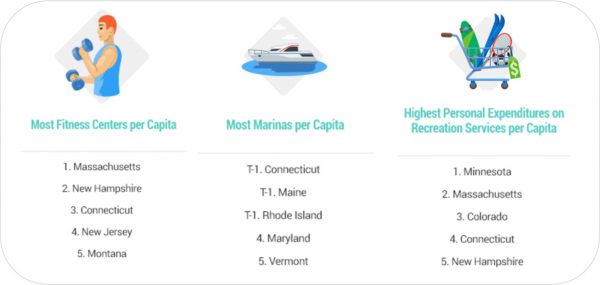
While Connecticut ranked 37th overall among the nation’s 50 states analyzed for their “fun” quotient, the state did have some standout rankings in specific categories – including the amount of money individual residents spend on recreation.  Despite ranking 35th overall in “entertainment & recreation” categories and 40th in “nightlife,” the state reached the top five in three sub-categories. In the analysis by the financial website WalletHub, Connecticut ranked third in the number of fitness centers per capita, at 15.7. New England neighbor Massachusetts ranked #1 with 17, and New Hampshire, New Jersey and Montana rounded out the top five in that category.

Connecticut ranked #1 in number of marinas per capita, tied with Maine and Rhode Island. Connecticut has 3.48 marinas per 100,000 residents, the data indicated. Maryland and Vermont ranked fourth and fifth, respectively.

In another top five finish, Connecticut ranked fourth in Personal Expenditures on Recreation per capita, at just over $1,900. Minnesota ranked first at $2,058. The Top 5 states, in order, were Minnesota, Massachusetts, Colorado, Connecticut and New Hampshire.

Overall, the “most fun states” were Nevada, South Dakota, Colorado, North Dakota, New York, Wyoming, Oregon, Louisiana, Montana, Hawaii, Maine, Minnesota, Florida, Vermont and California.  At the bottom of the list were Arkansas, Kentucky, Alabama, West Virginia and Mississippi.

The overall rankings were weighted 80-20 between Entertainment & Recreation and Nightlife.  The Entertainment & Recreation categories included restaurants, beaches, movie theaters,  national parks, arts venues, and state spending on parks and recreation. The nightlife category included average beer & wine prices, movie costs, music festivals and access to bars.
Data used to create the ranking, which included 22 separate sub-categories, were collected from U.S. Census Bureau, Bureau of Economic Analysis, National Park Service, Council for Community and Economic Research, TripAdvisor, Beachapedia, Stadium and Arena Visits, Graphiq, American Gaming Association and WalletHub research.


16 CT School Districts Named Among Nation's Best Communities for Music Education

Sixteen Connecticut school districts are among 527 districts across the being recognized as being among the Best Communities for Music Education (BCME). The annual listing of outstanding music education programs, now in its 18th year, is developed by The National Association of Music Merchants (NAMM) Foundation in cooperation with researchers at The Music Research Institute at the University of Kansas.

The awards program recognizes outstanding efforts by teachers, administrators, parents, students and community leaders who have made music education part of the curriculum. Designations are made to districts that demonstrate an exceptionally high commitment and access to music education. These districts "set the bar in offering students access to comprehensive music education," according to officials at the NAMM Foundation.

The Connecticut school districts earning a slot on the Best Communities list:  Avon Public Schools, Bethel Public Schools, Bristol Public Schools, Canton Public Schools, Cheshire Public Schools, Fairfield Public Schools, Glastonbury Public Schools, Newington Public Schools, Newtown Public Schools, Plainville Community Schools, Regional School District No. 8, Simsbury Public School District, Southington Public Schools, Torrington Public Schools, West Hartford Public Schools, and Westport Public Schools.

To qualify for the Best Communities designation, local school districts answered detailed questions about funding, graduation requirements, music class participation, instruction time, facilities, support for the music program, and community music-making programs. Responses were verified with school officials and reviewed by The Music Research Institute at the University of Kansas.

Last year, 13 Connecticut school districts were named, among 476 districts nationwide.  New to the list this year are Avon, Fairfield, Plainville, and Regional School District No. 8.  Falling from the list is Wilton.   

The designation takes on added significance this year, officials point out, with new research showing strong ties between K-12 school students who actively participate in school music education programs and overall student success. A recent study of students in the Chicago Public Schools by brain researchers at Northwestern University, detailed in Neuroscientist and Education Week, builds on previous findings that participation in music education programs helps improves brain function, discipline and language development, according to officials.

“Studying music has intrinsic benefits and, on its own, is core to learning.  Also, the links between student success and music education have now been demonstrated by brain researchers in multiple studies,” said Mary Luehrsen, Executive Director of The NAMM Foundation. “The schools and districts our foundation recognizes are building on that connection between music and academics. These schools and districts are models for other educators who see music as a key ingredient in a well-rounded curriculum that makes music available to all children, regardless of zip code.”

The NAMM Foundation is a nonprofit supported in part by The National Association of Music Merchants and its approximately 10,300 members around the world. Its mission is to advance active participation in music making across the lifespan by supporting scientific research, philanthropic giving, and public service programs.

Cigna Recognized for Cultural Competency Efforts

Health disparities directly and indirectly cost the U.S. economy $309 billion annually, and it is estimated that approximately 30% of direct medical costs for Blacks, Hispanics, and Asians are unnecessary costs resulting from health disparities, according to a paper prepared by Connecticut-based Cigna. Indirect costs, the paper points out, include lost work productivity and premature death. The paper, focusing on Cultural Competency in Health Care, is part of an initiative by Cigna that has been recognized with an "Innovation in Advancing Health Equity Award" by the National Business Group on Health, which honored the insurer for its ongoing commitment to promoting health equity and reducing health care disparities in the workplace and community.

"Health equity exists when all people, regardless of race, gender, socio-economic status, geographic location, or other societal constructs have the same access, opportunity, and resources to achieve their highest potential for health. It is our hope that these companies provide an example and encourage other employers to advance health equity," said Brian Marcotte, president and CEO of the National Business Group on Health.

Cigna was recognized for its nationwide program, America Says Ahh, to improve preventive care and encourage regular check-ups. A key feature of the campaign is the TV Doctors of America preventive care advocacy campaign featuring five famous TV doctors.  Among them is Alan Alda, best known for his role on M*A*S*H.  Alda will be on Hartford on Saturday evening at The Connecticut Forum.

“For Cigna's network doctors and clinicians, we created and delivered an in-depth cultural competency training with an emphasis on engaging Hispanic patients, and produced an external white paper on Cultural Competency in Health Care,” said Peggy Payne, a leader within Cigna's Health Equity Strategy area.

“The U.S. population is increasingly diverse. Cultural competency is essential to deliver health care services that meet the needs of each individual and improves overall health,” said Christina Stasiuk, D.O., National Medical Director for Health Equity at Cigna.

Racial and ethnic minorities currently make up about a third of the U.S. population, and are expected to become a majority by 2055, the paper points out, noting that:

  • Hispanics will continue to make up the largest portion of the minority population
  • The Asian population is expected to grow at the fastest rate between 2015 and 2055
  • The foreign-born population will increase at a higher rate than the native born population, accounting for approximately 20% of the U.S. population by 2060

As the U.S. becomes more diverse, it is likely that more individuals will have limited English proficiency or will not adhere to Western cultural norms, which may contribute to greater health disparities, the Cigna paper points out.

“Reducing health disparities is a business and social imperative. Minority populations will likely become an increasing share of providers’ patient panels, employers’ workforces, and health plans’ customers, requiring that all stakeholders seek ways to promote health equity to improve health and access, reduce costs, and improve experience,” the Cigna paper emphasizes, suggesting employers can take to build cultural competency and improve health outcomes for all their employees by:

  • Expanding their human resources leadership team to include experts in cultural competency and diversity
  • Instituting multicultural staff representatives to support onsite health services, such as health fairs and open enrollment
  • Seeking feedback from diverse groups of employees about their experiences as health care customers
  • Providing materials and benefits information that are culturally competent, e.g., culturally adapted or language-specific
  • Proactively gathering the demographic data of their workforce to measure and take action on health trends
  • Collaborating with their health plan to better engage employees in their health

Cigna indicates that the company has “ongoing efforts to help ensure that Cigna staff is culturally and linguistically competent.”

The National Business Group on Health is the nation's only non-profit organization devoted exclusively to representing large employers' perspective on national health policy issues and helping companies optimize business performance through health improvement, innovation and health care management.

https://youtu.be/foL9gfbfweY

Disconnected Youth: Fewer in Connecticut Than Nationally; Disparities Reduced But Continue

Fewer young people across the country are disconnected from school and work today than were before the Great Recession, according to new national data. The 2015 youth disconnection rate, 12.3 percent, is below the 2008 rate of 12.6 and well below the 2010 youth disconnection peak, 14.7 percent. All of Connecticut’s five Congressional Districts show lower rates of disconnected youth than the national average.

That’s a 16 percent drop over five years translates to roughly 900,000 fewer young people cut off from pathways that lead to independent, rewarding adulthoods, according to data compiled by the Social Science Research Council.

The report, “Promising Gains, Persistent Gaps,” compares the degree of youth disconnectedness in Congressional Districts across the country.

Disconnected youth are teenagers and young adults between the ages of 16 and 24 who are neither in school nor working. Being detached from both the educational system and the labor market during the pivotal years of emerging adulthood can be dispiriting and damaging to a young person, and the effects of youth disconnection have been shown to follow individuals for the rest of their lives, resulting in lower incomes, higher unemployment rates, and negative physical and mental health outcomes. The harms accrue not only to young people themselves, but reverberate across time and place, making youth disconnection a national concern that must be addressed by society at large.

Youth disconnection rates vary enormously by congressional district—from an impressively low rate of 4.4 percent in Wisconsin District 2, the mostly urban Madison area, to an alarmingly high rate of 23.1 percent—or nearly one in every four young people—in Kentucky District 5 in rural Appalachia.

Connecticut fares relatively well.  Northeastern and Midwestern congressional districts have lowest rates of youth disconnection, 11.1 percent on average.

Connecticut’s best ranked Congressional district is the 2nd, in Eastern Connecticut, with an 8.7 percent of youth ages 16-24 disconnected, ranking 60th among the nation’s 435 Congressional districts.  Next best if Connecticut’s 5th district, in Western Connecticut, ranked 116th with 9.9 percent disconnected youth.  The 3rd C.D. ranks 134th, at 10.1 percent; the 4th C.D ranks 104th with 10.3 percent; and the 1st C.D. ranks 167th at 10.9 percent.

On average, a gap of 7.4 percentage points separates the best and worst districts within a state. Connecticut’s gap is only 2.2 percentage points.

The greatest disparity is found in New York State; a worrisome 15.2 percentage points separate New York’s District 20 in the Albany area (7.1 percent) and District 15 in New York City’s South Bronx (22.3 percent).

The most equitable state in terms of youth disconnection is also found in the Northeast; a nearly negligible 0.1 point separates Maine’s District 1, which hugs the southern coast and includes the capital, Augusta (9.8 percent), and District 2, a more rural district that encompasses most of the state (9.7 percent).

The analysis found that nationally, young women are slightly less likely to be disconnected than young men. And there is “astonishing variation in disconnection rates by race and ethnicity.” The share of young people cut off from workforce and educational opportunities, the report found, ranges from only one in fourteen Asian American youth to more than one in four Native American youth. The Asian American youth disconnection rate is 7.2 percent; the white rate is 10.1 percent; the Latino rate is 14.3 percent; the black rate is 18.9 percent; and the Native American rate is 25.4 percent.

The report concludes that “at-risk youth need the kind of support from communities and institutions that other young people take for granted: safe places to live and food on the table; caring adults to help them navigate the often-bewildering transition from child to adult; opportunities to try new things, to fail, and to try again; and experiences that build not just hard and soft skills for the marketplace, but also self-knowledge, agency, and confidence.”

Safest States for Driving? CT Ranks #8 in USA

Connecticut is the eighth safest state in the nation for drivers, according to a new analysis of driving safety across the country. The report was derived from analyzing fatality data from the National Highway Traffic Safety Administration (NHTSA) and correlating the data with speeding, distracted driving and drunk driving statistics. Analysts for Safewise, a home security company that studies a variety of public safety issues, compiled the report, which found:

  • The majority of Connecticut's road fatalities come from drunk driving, however, Connecticut is among the top 10 states for fewest speeding fatalities.
  • Connecticut is among the nation's slowest average speed limits. SafeWise analysts found that slower speed limits lead to fewer fatalities, which explains why Connecticut is among the safest states.
  • Connecticut bans all forms of cell phone use, however, the state is among the worst for distracted drivers.

The safest states, according to the survey, are Delaware, Illinois, Kentucky, New York, Ohio, Louisiana, Massachusetts, Connecticut, Utah and West Virginia.

The report revealed that the safest states for driving typically have lower speed limits and less restrictions on phone use. The states that have longer commute times and slower speed limits have less fatalities. More dangerous roadways tend to be long interstates with speed limits in the 70’s and 80’s. States with younger median ages and higher birth rates correlated with higher fatality rates.  Inexperienced drivers and large families alike seem to be more distracted when on the road.

“Over the past few years, fatal crash statistics have increased substantially,” said Robert Dillman, owner and lead instructor of the Georgia-based NEVO Driving Academy. “According to data released by the National Safety Council, in 2016, the United States reached a 10 year peak in crash related fatalities. With regards to traffic and driver safety, from 2013 to present, we are trending in the wrong direction.”