Connecticut Ranked #2 Among States for Fitness Centers/Gyms

The United States has more fitness centers than any other country in the world, and Connecticut is one of the reasons why.  The state is ranked #2 in the nation, just behind Minnesota, among states with the most gyms/fitness centers, according to data compiled by the website exercise.com.  Rounding out the top 10 are Wisconsin, Iowa, New Hampshire, Louisiana, Rhode Island, Colorado, Nebraska and South Dakota. The states were ranked based on the most gyms using these four categories: total number of gyms, state population in 2016, people per gym, and gyms per capita (100,000 people).  Totals were based on the 14 largest gym chains in America. There were more than 36,000 health clubs in the U.S. last year, up from 29,000 a decade ago.

As of 2017, the average yearly number of U.S. gym members is around 58 million, the website points out, with an average gym membership fee of $58 a month. Interestingly, two-thirds of gym members say they don’t actually go to their gym.

According to a Gallup survey of 335,050 adults, only 51.6 percent of Americans report exercising three or more days a week for at least 30 minutes.  Connecticut has nearly 300 gyms/fitness centers.

According to the International Health, Racquet and Sportsclub Association (IHRSA), total health club/gym/studio visits surpassed 5 billion a year ago.

UConn Study: When State Pays for ACT Exam, More Poor Youth Reach College

New research finds a simple strategy can modestly boost the share of students with limited financial resources who go on to college: requiring, and paying for, all students to take the ACT or SAT.  A University of Connecticut researcher examined the effects of requiring and paying for all public high school students to take a college entrance exam – which 11 states have done since 2001- and found that while the impact isn’t enormous, the policy is relatively inexpensive, and does move the needle on college enrollment. At just $34 per student, increases in four-year college attendance reach about 1 percentage point for low-income students, the higher education website Chalkbeat reports.  Ohio was the latest state to require all members of the junior class to take the exam, as of this past spring.

“Although these increases in the four-year college enrollment rate might not appear to be dramatically large, relative to other educational interventions this policy is inexpensive and currently being implemented on a large scale,” writes Joshua Hyman, an assistant professor at the University of Connecticut.

Hyman cautions, however, that paying for every student, regardless of income, to take the exam only goes so far.

“The results suggest that requiring all students to take a college entrance exam increases the supply of poor students scoring at a college-ready level by nearly 50 percent. Yet the policy increases the number of poor students enrolling at a four-year institution by only 6 percent. In spite of the policy, there remains a large supply of disadvantaged students who are high achieving and not on the path to enrolling at a four-year college.”

The research and 30-page journal entry “validates recent efforts … to expand access to these tests,” Chalkbeat points out, “which are required to enroll at most colleges and universities.”   In order of adoption, according to the paper, the states are Colorado, Illinois, Maine, Michigan, Kentucky, Tennessee, Delaware, North Carolina, Louisiana, Wyoming, and Alabama.

In Connecticut, April 5, 2017, was the Connecticut SAT School Day administration.  SAT scores are used by the Connecticut State Department of Education (CSDE) for school and district accountability purposes, state Education Commissioner Diana Wentzell explained in a letter to parents earlier this year.

The research, published this summer in the peer-reviewed journal Education Finance and Policy, examined Michigan’s policy to require — and, importantly, pay for — high school juniors to take the ACT. Unsurprisingly, the number of students taking the exam jumped from 56 percent statewide to 91 percent after the policy was implemented in 2007. College attendance in the state then increased by nearly 2 percentage points (though the study can’t show how much of the increase was because of the mandatory ACT).

“The mandatory college entrance exam policy is more cost-effective than traditional [college financial] aid at boosting postsecondary attainment,” the study states.

Hyman found that, prior to the policy, a substantial number of Michigan’s low-income students didn’t take the ACT even though they would have scored at or above the standard for college readiness. That might been due to financial or logistical barriers, like the cost of the test (between $30 and $50) or difficulties traveling to an exam center on a Saturday. (Both the SAT and ACT offer fee waivers to low-income students, but the study notes that the waivers are underused.)

“I show that for every ten poor students taking a college entrance exam and scoring college-ready, there are an additional five poor students who do not take the test but who would score college-ready if they did,” Hyman explains.  “In spite of the policy, there remains a large supply of disadvantaged students who are high-achieving and not on the path to enrolling at a four-year college.”

Hyman, an Assistant Professor in the Department of Public Policy at the University of Connecticut, has a joint appointment in the Department of Economics and Neag School of Education. His research focuses broadly on labor economics, public finance, and the economics of education. As for the interest in Michigan, Hyman earned a Ph.D. in Economics and Public Policy from the University of Michigan in 2013.

Hartford Region Ranks 13th in National Fitness Ratings

The Hartford region ranks as the 13th “fittest” metropolitan area in the nation, according to a nationwide fitness index developed by the American College of Sports Medicine.  Hartford ranked 9th a year ago and 11th in 2015 in the ACSM American Fitness Index, now in its tenth year. The top 10 “fittest” metropolitan areas are Minneapolis, Washington DC, San Francisco, Seattle, San Jose, Boston, Denver, Portland, Salt Lake City and San Diego. The top seven cities in the 2017 AFI are between 4-13 percentage points ahead of the rest of the pack, principally related to lower rates of smoking and cardiovascular disease deaths and higher reported physical activity, consumption of fruits and vegetables, and per capita park expenditures in their communities.

The index publication is supported by the Anthem Blue Cross and Blue Shield Foundation.  It is a scientific snapshot of the health and fitness status at a metropolitan level using data made up of personal health, community and environmental factors.

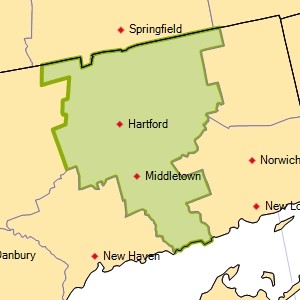
The United States Census Bureau defines the Hartford-West Hartford-East Hartford, CT Metropolitan Statistical Area (MSA) as containing 54 towns of Hartford County, Tolland County, and Middlesex County. The 2015 population estimate for the MSA is 1,211,324 and is ranked as the 47th largest metropolitan area by population in the United States

Fifty regions were rated, with the Hartford MSA the only region in Connecticut.  Boston-Cambridge-Newton ranked 6th and Providence-Warwick ranked 31st, among the New England states.

The Hartford region’s total score has ranked among the top 12 metropolitan areas since 2009, until this year. Strengths include a high number of farmers’ markets per resident, a high percent of parkland as city land area, as well as a high number of recreational facilities per resident, including ball diamonds, golf courses, park units and recreation centers.

The region’s personal health rank was 13; its community/environmental indicators rank was 25, leading to an overall ranking of 13th.  The analysis points to “Areas of Excellence,” in the region, including:

  • Lower death rate for diabetes
  • Higher percentage of parkland as city land area
  • More farmers’ markets per capita
  • Higher Walk Score® (75% report engaging in physical activity or exercise in the last 30 days)
  • More ball diamonds and basketball hoops per capita
  • More recreation centers per capita
  • More swimming pools per capita

Nationally, there were numerous positive shifts during the last year:

  • 0% increase in the percent who met the recommendations for aerobic and strength in the last 30 days
  • 5% drop in the percent with diagnosed angina or coronary heart disease
  • 9% increase in walkability scores
  • 9% increase in the percent who live within a 10-minute walk to a park
  • 7% increase in the total park expenditures per capita
  • 0% increase in the number of recreation centers per 20,000 residents

“Our ultimate goal is to offer individuals, families and communities trusted resources that can help them assess, plan and implement policies that promote positive health outcomes,” said Walter R. Thompson, Ph.D., FASCM, who chairs the AFI Advisory Board and is president-elect of ACSM.

The 2017 AFI report also revealed some shortcomings over the past year:

  • 7% increase in the rate of diabetes deaths
  • 3% reduction in the percent of residents biking or walking to work
  • 2% decrease in the percent of individuals eating the recommended number of servings of fruit
  • 6% reduction in the number of tennis courts per 10,000 residents

The American College of Sports Medicine is the largest sports medicine and exercise science organization in the world. More than 50,000 international, national and regional members are dedicated to advancing and integrating scientific research to provide educational and practical applications of exercise science and sports medicine. The Anthem Foundation is the philanthropic arm of Anthem, Inc. and through charitable contributions and programs, the Foundation promotes the inherent commitment of Anthem, Inc. to enhance the health and well-being of individuals and families in communities that Anthem, Inc. and its affiliated health plans serve, including Connecticut.

Safest Places to Raise a Child? Connecticut Communities Dominate A National Ranking

If you’re in the market for a safe community to raise children, and you are wondering about Connecticut, there is a new ranking that will be of particular interest. Developed by the SafeWise, a home security and safety brand, the ranking considered reported sex offender concentration, state graduation rates, overall school quality ranking, and FBI violent crime data in communities nationwide.  Parks and recreational opportunities as well as special programs focused on providing services for kids and families, were also in the mix.  And when the top 30 communities were ranked, Connecticut dominated the list, with nine towns.

Number one in the rankings was Greenwich, with Fairfield placing third.  Ridgefield, Southington and Westport earned a spot in the top 20, and Simsbury, Cheshire, Milford and Glastonbury also reached the top 30.

SafeWise said “these communities do exceptional jobs of protecting not only adults but also their smallest, most vulnerable residents.  The safest cities for raising families tend to skew towards coastal New England towns, where quiet, suburban neighborhoods have less crime, promote healthy and active lifestyles, and enjoy well-funded school systems.”  Communities across the country with populations exceeding 10,000 were considered.

Connecticut’s “exceptionally low rates of violent crime” contributed to the state’s strong presence – nearly one-third of the top 30 – on the rankings.

“While parents always strive to closely supervise their kids, it helps to have a community that’s willing to focus on family-friendly initiatives that make the difference. These are the cities across America that make one of the toughest and most rewarding jobs you’ll ever undertake a little less stressful,” commented Kaz Weida of SafeWise.

Among the Connecticut communities receiving honorable mention were Farmington, New Canaan, West Hartford, Newtown, Madison and Darien.

  1. Greenwich
  2. Essex, Vermont
  3. Fairfield
  4. Carmel, Indiana
  5. Merrimack, New Hampshire
  6. Fishers, Indiana
  7. Monroe Township, New Jersey
  8. Irvine, California
  9. Middletown, New Jersey
  10. Cary, North Carolina
  11. Wayne, New Jersey
  12. Franklin, Massachusetts
  13. Toms River, New Jersey
  14. Warwick, Rhode Island
  15. Ridgefield
  16. Gilbert, Arizona
  17. Bridgewater, New Jersey
  18. Southington
  19. Orem, Utah
  20. Westport
  21. Cumberland, Rhode Island
  22. Hillsborough, New Jersey
  23. Milton, Vermont
  24. Simsbury
  25. Cheshire
  26. Milford
  27. Glastonbury
  28. Narragansett, Rhode Island
  29. Lakeville, Minnesota
  30. Newton, Massachusetts

New Initiative Aims to Provide Vision Impaired Patients Access to Print News

The Connecticut Radio Information System (CRIS) continues to innovate and expand in Connecticut.  Connecticut’s only radio-reading service, which provides audio access to news and information for people who are blind or unable to read due to a print disability or medical condition, has announced a ground-breaking new service in partnership with Hartford’s Saint Francis Hospital and Medical Center that will bring patients audio of the latest news, in English and Spanish. Saint Francis will be the first acute care hospital in the nation to provide an alternative to printed Spanish-language magazines and newspapers through an in-house system streamed to each patient TV with audio recordings for patients unable to read or turn pages of a magazine due to their medical condition or treatment.

It will also be the first acute care hospital in Connecticut to offer an alternative to more than 50 English-language magazines and newspapers streamed to each patient room.

Patients will be able to listen to human-narrated audio versions of newspaper and magazine articles featuring human narration – in both English and Spanish – through the hospital’s in-house television system.

CRIS is a 39-year-old nonprofit providing audio access to news and information for people who are blind or unable to read due to a print disability or medical condition / treatment, including those with physical, learning, intellectual or emotional disabilities.

 “The Connecticut Hospital Association applauds Saint Francis Hospital and CRIS Radio for its innovative collaboration, serving as another example of hospitals partnering with key service providers to enhance patient satisfaction and improve the quality of a patient’s experience while being treated at the hospital,” said Carl Schiessl, director of regulatory advocacy for the Connecticut Hospital Association.

CRIS operates with 300 volunteers at its main broadcast center in Windsor and satellite studios located in Danbury, Norwich, Trumbull and West Haven.  CRIS radio recently announced it will open its fifth regional studio in Norwalk next month, to be located inside the gatehouse at the Lockwood-Mathew’s Mansion Museum.  CRIS will share the gatehouse with the Fairfield County Cultural Alliance, which has been in that location for nearly four years.

“Saint Francis Hospital and Medical Center is extremely grateful for the generosity of those who made this service possible for our patients,” said Dr. John F. Rodis, president of Saint Francis Hospital. “At Saint Francis we believe in caring for our patients in ways that help them on their journey to wellness. Whether it’s through surgical innovations or enhancements to their healing environment like the CRIS service, we are committed to providing the best patient experience possible.

Saint Francis Hospital and Medical Center has been an anchor institution in north central Connecticut since 1897. In 2015, Saint Francis became part of Trinity Health of New England, an integrated health care delivery system that is a member of Trinity Health, Livonia, MI, one of the largest multi-institutional Catholic health care delivery systems in the nation.

“Streaming audio versions of newspapers and magazines to each patient room at Saint Francis Hospital is an important milestone for CRIS Radio,” said Paul A. Young, chairman of the CRIS Radio Board of Directors. “It enables our nonprofit to expand access to print information for people unable to read due to their medical treatment or other print disabilities.”

Young also said he is very thankful for the generous funding that brought this project to life. Key funders of CRIS Radio’s hospital streaming project include the John G. Martin Foundation and Maximilian E. & Marion O. Hoffman Foundation. The Hartford Foundation for Public Giving supports the nonprofit radio station’s Spanish-language programming, CRIS en Español.

In addition to broadcasting newspaper and magazine articles, CRIS also records classroom materials for teachers, and the CRISKids Audio Library offers more than 800 classroom titles, including 17 children’s magazines, also recorded by CRIS volunteers.  CRIS also streams audio versions of children’s magazines to patient rooms at Connecticut Children’s Medical Center.

Other CRIS programs include CRIS en Español and CRISAccess, featuring Spanish-language newspapers and magazines and audible tours for museums, respectively. An initiative with the Mystic Aquarium, providing audio information about museum exhibits, was launched two years ago. Earlier this year, CRIS Radio's Voice's of World War I project was announced, coinciding with the 100th anniversary of the U.S. entry into the war.

CRIS Radio broadcasts can be heard with a special CRIS radio distributed free of charge, toll-free through the CRIS Telephone Reader, online streaming live or on-demand at the CRIS Radio website, www.crisradio.org, or with a free mobile app on any mobile device, including tablets or smartphones.


7,000 Refugees Settle in CT Since 2001; Burma, Congo, Iran, Somalia Most Frequent Origin

The United States has long been the global leader in resettling refugees, defined as people forced to flee their home country to escape war, persecution or violence, explains Smithsonian magazine in a state-by-state comparison. Since 2001, the magazine reports, more than 895,000 refugees have settled in the U.S., typically after being referred by the United Nations and vetted by the State Department in a process that takes at least 18 months. By comparison, a million or so legal immigrants arrive annually. From October 2001 through 2016, Burma, Iraq, Somalia, Bhutan, and Iran are the top five nations that send refugees to the U.S.

Refugees to the United States have come mostly from the Middle East, Asia and Africa. While many immigrants, legal and undocumented, come from Latin America, U.S. regulations make it difficult for Central and South Americans to qualify as refugees, according to Smithsonian.

The magazine developed a series of charts that compare refugee populations resettled in 41 states since October 2001. In depicting the refugees’ nation or origin, the breakdown in each state is limited to nationalities with at least 500 people, and no more than the top 5 nationalities are shown.

The number of refugees from those five nations, as well the total number of refugees is indicated.

For Connecticut, the total number of refugees is 7,144. The largest percentage of refugees come from Burma, Democratic Republic of the Congo, Iran and Somalia.  Those four nations were the home country for 3,824 of the refugees who settled in Connecticut since 2001.

Massachusetts' total is three times Connecticut - 21,441 refugees moving to the Bay State since 2001.

States with the largest number of refugees include California (102,614), Texas (81,765), New York (53,790), Florida (46,553), Minnesota (40,762), Washington (40,111), Arizona (39,031), Michigan (38,175), and Georgia (35,328).

There were nine states that had less than 500 refugees from a single country since October 2001:  Alabama, Alaska, Arkansas, Delaware, Hawaii, Mississippi, Montana West Virginia and Wyoming.


Public Transit Commutes Double, Triple Driving Time in CT Cities

People who take public transportation to get to work in the Bridgeport-Stamford-Norwalk area will have a commute nearly three times longer than those who drive to work.  In New Haven, the commute via public transportation is twice as long. Data compiled by Governing magazine indicate that across the nation’s largest metropolitan areas, public transportation riders spend significantly longer traveling to work than those who drive.  Data was compiled for the 25 largest metro areas, including New Haven-Milford and Bridgeport-Stamford-Norwalk.

Bridgeport-Stamford-Norwalk area public transportation commuters spend an average of 69.2 minutes traveling to work. By comparison, it takes those who drive 24.9 minutes.  The 44,742 estimated public transportation commuters account for 10 percent of commuters, according to the data.

New Haven-Milford area public transportation commuters spend an average of 48.4 minutes traveling to work. By comparison, it takes those who drive alone 23.9 minutes.  The 17,504 estimated public transportation commuters account for 4 percent of all commuters.

In nearly every metro area, driving to work remains far quicker than using a bus or train, taking less than half as long in some places.  Across the country, Governing reports, transit systems are seeking to attract new customers as the latest national statistics show stagnant ridership. Cutting down on commute times represents an opportunity to serve more riders who otherwise have a choice in how to get to work.

“Operating speed is going to be important for customers, so if they want to compete in that market, they need to be more competitive,” says Steven Polzin of the Center for Urban Transportation Research. “Time is important to folks across the full economic spectrum.”

Governing compiled the most recent Census survey data measuring total commute times, including travel to stations and the time spent waiting for buses or trains. In the 25 metro areas where public transportation accounts for the largest share of all commuting, riders reported commute times an average of 1.9 times greater than those who drove alone. Similar gaps exist in regions where public transportation isn’t as prevalent.

A metro area’s overall commute times partly reflect its different types of transit. Commuter rail passengers spend an average of 69 minutes traveling to work, far longer than those taking bus or light rail. Accordingly, areas relying more on heavy rail, like Bridgeport-Stamford-Norwalk, report lengthier commutes overall, Governing points out.

On average, the latest Census suggest Americans who drive alone spend an average of nearly 25 minutes traveling to work. The national average for bus commuters is 45 minutes, while those who ride subways or streetcars spend an average of 47 minutes traveling to work. For those who primarily walk to work, commute times average only 12 minutes.

College towns are about the only areas where public transportation commute times mirror those for auto commuters, according to the data compiled by Governing.

UConn Researcher: E-Cigarettes as Harmful as Tobacco

Researchers at the University of Connecticut have revealed evidence that electronic cigarettes, or e-cigarettes, may be as harmful as tobacco cigarettes. Since e-cigarettes came on the market in 2004, there has been considerable debate on their safety, as well as the potential adverse health effects on users. E-cigarettes have risen in popularity in recent years as many consider them a "safer" alternative to traditional tobacco cigarettes.

Now, a just-published study by chemists at the University of Connecticut offers new evidence that electronic cigarettes, or e-cigarettes, are potentially as harmful as tobacco cigarettes.  The contents of e-cigarettes -- known as e-liquid or e-juice -- contain propylene glycol, glycerine, nicotine and flavorings.

Using a low-cost, 3-D printed testing device, UConn researchers found that e-cigarettes loaded with a nicotine-based liquid are potentially as harmful as unfiltered cigarettes when it comes to causing DNA damage.

“Some people use e-cigarettes heavily because they think there is no harm,” said Karteek Kadimisetty, a postdoctoral researcher in UConn’s chemistry department and the study’s lead author. “We wanted to see exactly what might be happening to DNA, and we had the resources in our lab to do that.”

The researchers found that vapor from non-nicotine e-cigarettes caused as much DNA damage as filtered cigarettes, possibly due to the many chemical additives present in e-cigarette vapors. Cellular mutations caused by DNA damage can lead to cancer.

The findings appear in the journal ACS Sensors, a publication of the American Chemical Society.  ACS Sensors is a peer-reviewed research journal that is devoted to the dissemination of new and original knowledge on all aspects of sensor science that selectively sense chemical or biological species or processes.  Since publication, the research has been widely featured in the news media across the country.

How much DNA damage e-cigarettes cause depends on the amount of vapor the user inhales, the other additives present, whether nicotine or non-nicotine liquid is used, and other factors, according to Kadimisetty.

“From the results of our study, we can conclude that e-cigarettes have as much potential to cause DNA damage as unfiltered regular cigarettes,” Kadimisetty told UConn Today.

How much e-cigarettes contribute to serious health problems and whether they serve as a gateway for future tobacco smokers remains the subject of debate among scientists, legislators and the public. A year ago, the U.S. Food and Drug Administration tightened some regulations on e-cigarettes due to concerns that were raised.

Electronic cigarettes are battery-powered devices that heat up liquid and turn it into an aerosol vapor that can be inhaled. Using e-cigarettes is also called ‘vaping.’ The contents of e-cigarettes, called e-liquid or e-juice, are usually made up of propylene glycol, glycerine, nicotine, and flavorings such as menthol, cherry, vanilla, or mint. Non-nicotine e-cigarettes are also available.

Joining Kadimisetty and Rusling on the study, UConn Today reported, was former UConn Ph.D. student Spundana Malla, now a scientist at Alliance Pharma in Pennsylvania. The study was supported by funding from the National Institute of Environmental Health Sciences of the National Institutes of Health.

Photo: UConn postdoctoral researcher Karteek Kadimisetty. (Peter Morenus/UConn Photo)

Student News Stories Showcase Next Generation of Journalists

With journalism and journalists under increasing criticism and new technology making old models of financing investigative journalism tougher, Hartford’s FOX 61 is showcasing young journalists as they learn the profession and develop stories that reach local newscasts. FOX 61 Student News was relaunched in February after a multi-year absence, and last week honored students at a special year-end awards ceremony held at Goodwin College in East Hartford. During the school year, FOX61 Student News empowered Connecticut middle and high school students to explore the world of multi-media journalism by giving them the opportunity to capture, edit and publish original content under the guidance of industry professionals.

Each student produced and hosted a news segment that showcased a local story or event that aligns with the station’s weekly HOPE segment. The student stories were featured on-air during Friday's Good Day Connecticut at 6:20 a.m. 7:30 a.m., and during the 5 and 10 p.m. news.

Among the winning stories:

  • Best in Student News Reporting and Writing was awarded to Manchester High School’s Kailey Feshler for her story on the CT Humane Society.
  • Best in Student News Pre and Post Production and Editing was awarded to three students from Daniel Hand High School in Madison: Liam Bennett, Delvantae Hutton and Ashleigh Violette for their story on Saferides.
  • Best in Student News Photography and Lighting was awarded to two students from Norwich Free Academy: Alyssa Friedrich and Maggie Peter for their story on Local Manufacturing.

The winners in each of these categories received a scholarship, donated by Fox 61.

  • Most Compelling Student News Story was awarded to three students from South Windsor High School: Lauren Adamo, Madison Donahue and Hannah Mitchell for their story on Josie the Therapy Dog. They shared the $3,500 scholarship provided by local sponsor, Big Y World Class Market.

Through the years, many students have participated in the Fox 61 Student News, reporting on different issues in their communities.

FOX 61 is one of the nation's most highly rated FOX Network affiliates, producing more news and winning more awards than any station in Connecticut. FOX 61 now airs more than 61 hours of local news and public affairs programming each week, more than any other market station. FOX 61 is owned and operated by Tribune Media, one of the country’s leading multimedia companies.


Migration Patterns Show Some Pluses as Population Numbers Decline

Connecticut's total population has declined over the past 3 years.  In fact, in 2016 Connecticut's total population fell below 2010 levels. New England and our neighboring states have also experienced an increase in people leaving. However, Connecticut has fallen the most post-recession, according to an analysis by the Connecticut Data Collaborative. International migration has helped, the data shows, but not enough to offset domestic out-migration.  Average international in-migration has grown 29% post-recession compared to pre-recession, but in terms of overall net migration, the state has seen an increased loss starting from 2012.

The state gains prime working age adults and children and also attracts well-educated international migrants, according to the analysis, and Connecticut loses the smallest percent of graduate degree holders. By income, the largest flows are at the lowest income levels (though largely due to age of earners), though the state is experiencing a slight loss of its highest income earners (incomes of $5 million or more).

Among the factors contribution to the population decline:

  • Post-recession, Connecticut has about 14% fewer births each year compared to pre-recession averages. Increased deaths are also slightly contributing to Connecticut's overall population decline.
  • Average domestic out-migration has increased by 55% post-recession compared to pre-recession, a difference of about 9,200 people.

Young adults move at a higher rate than the rest of the population (larger flows both in and out of Connecticut), and the state is losing young adults on net (18-29 year olds), but gaining working age adults (30-49 year olds), the Data Collaborative analysis shows.

Historically, Connecticut experienced population losses to other regions of the U.S. This is also true of New England in general. However, the recent declines in Connecticut's total population are primarily driven by increasing rates of net domestic out-migration and to a smaller degree a declining birth rate. But there are positive trends.

The state gains prime working age adults and children. Connecticut also attracts well-educated international migrants, and loses the smallest percent of graduate degree holders.  By income, the largest flows are at the lowest income levels (though largely due to age of earners), though the state is experiencing a slight loss of its highest income earners (incomes of $5 million or more).

Connecticut's domestic migration trends are now more like New York and New Jersey.  However domestic out-migration has more than doubled in Connecticut while New York and New Jersey are better than pre-recession, the researchers found.