Bridgeport, New Haven Among Nation's 50 Most Stressful Cities, Analysis Says

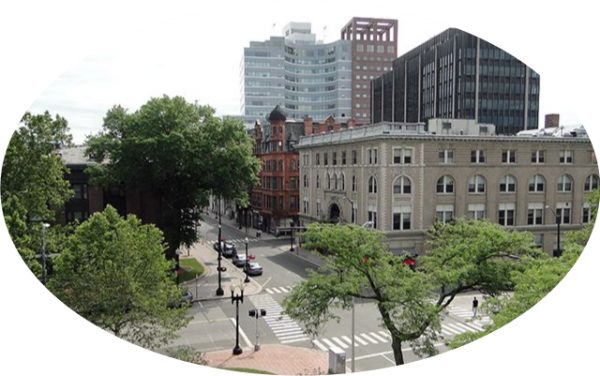
Stress?  Look no further than Bridgeport and New Haven.  Both cities were ranked in the top 50 Most Stressed Cities in America, a new ranking produced by the financial website WalletHub. Bridgeport ranked 33rd and New Haven 41st, based on analysis that considered stress in four areas:  the workplace, finances, family, and health and safety as contributing factors.

The most stressed cities in America, according to the analysis, were Detroit, Newark, Cleveland, Birmingham, Toledo, Baltimore, Wilmington, Milwaukee Gulfport and St. Louis.  Among New England cities, Bridgeport led the list, followed by Worcester (37), New Haven, Boston (52), and Providence (57). 

Bridgeport ranked 17th in the workplace stress category and 23rd in financial stress; 103rd in family-related stress. Bridgeport also had among the lowest average weekly work hours, tied for 176th among the 182 cities included in the rankings.  New Haven ranked 168th in that category.

New Haven was 37th in health and safety related stress; in the mid-50’s in the other categories.

WalletHub evaluated the 150 most populated U.S. cities, plus at least two of the most populated cities in each state, using the four dimensions including 37 relevant metrics.  Those metrics included job security, traffic congestion, unemployment rate, average commute time and income growth in the work stress category.  Financial stress included evaluation of annual household income, foreclosure rate, food insecurity, housing affordability and debt per median earnings.

The family stress category included the separation and divorce rate, number of single parent households, child care costs and other factors.  The ten factors considered as part of the Health & Safety stress category included mental health, smoking, obesity, inadequate sleep, crime rate and hate-crime incidents.

Greensboro, North Carolina, residents spend the fewest annual hours in traffic congestion per auto commuter, 4, which is 25.5 times fewer than in Los Angeles, the city where residents spend the most at 102, according to the data.  Bridgeport and New Haven tied for 36th in the traffic congestion rankings.

Data used to create this ranking were collected from the U.S. Census Bureau, Bureau of Labor Statistics, INRIX, Chmura Economics & Analytics, Indeed, Federal Deposit Insurance Corporation, Renwood RealtyTrac, County Health Ranking, Zillow, Administrative Office of the United States Courts, TransUnion, Department of Housing and Urban Development, Council for Community and Economic Research, Gallup-Healthways, Numbeo, Centers for Disease Control and Prevention, Federal Bureau of Investigation and Sharecare.

Will CT Legislature Reverse Representation Trend in "Year of the Woman"?

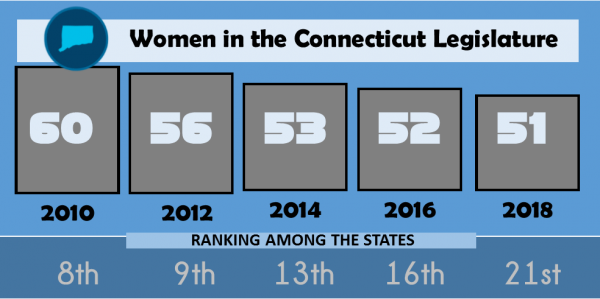
The number of women in the Connecticut legislature has dropped with each legislative election throughout this decade, dropping the state from 8th to 21st in the nation in the percentage of women in the legislature. The 2018 election year has been widely declared the year of the woman in politics, a reaction to the MeToo movement and related issues that have risen to the top of many political agendas.  It appears that Connecticut ballots may have a record number of women candidates in November, depending upon the outcome of the August 14 primaries in some legislative districts.

If it turns out that a record number of women are elected to the state’s 187 General Assembly seats (36 in the Senate, 151 in the House) in November, it would reverse a trend a decade in the making.

This year, the state legislature saw 42 women serving in the House (21 Democrats and 21 Republicans) and 9 women in the Senate (7 Democrats and 2 Republicans).  The total of 51 seats held by women, 27.3 percent of the 187 seats, placed Connecticut as one of 19 states between 25 and 34 percent.

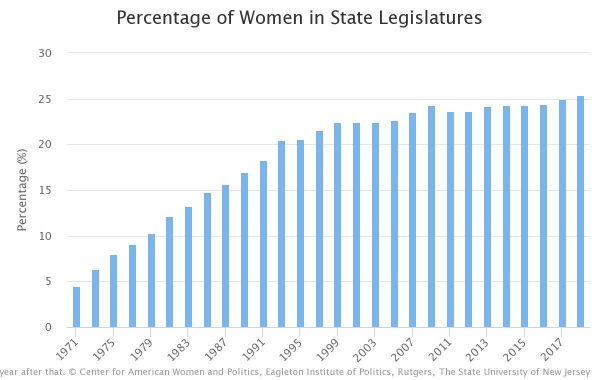
Leading the nation were Arizona (40%), Vermont (40%), Nevada (38.1%), Colorado (38%), Washington (37.4%), and Illinois (35.6%).   Women make up 25.4 percent of all state legislators nationwide.

In 2010, there were 60 women in the Connecticut legislature, 52 in the House and 8 in the Senate.  Connecticut ranked 8th among state legislatures in the percentage of women, at 32.1 percent.

Connecticut’s place among the states continued to drop through the decade, from 8th in 2010 to 9th in 2012, 13th in 2014, 16th in 2016 and 21st in 2018.

Power of Nature to Help Cities and Local Residents Being Revealed in Bridgeport

What would happen if ways to integrate nature into a major urban community were pursued?  In Connecticut, the largest city is Bridgeport, and the Connecticut chapter of The Nature Conservancy (TNC) has been undertaking an effort to find out. Nature offers a lot of benefits to communities, TNC points out. “Trees provide shade and help clean the air. Gardens absorb and filter water, which reduces flooding and runoff into nearby rivers. Healthy dunes and wetlands protect coastlines from storms.”  In addition, the organization points out, “nature can also transform the way people experience their neighborhood.”

With 70 percent of the world’s population predicted to live in cities by 2050, heat and air pollution constitute a major public health concern, TNC points out, underscoring the importance of the organization’s initiatives to plant trees in urban areas across the country, among a series of related undertakings.

“People are at the core of our efforts to identify how neighborhoods are addressing daunting challenges in this formerly industrialized city,” said Drew Goldsman, Urban Conservation Program Manager. “We want to partner with communities to implement natural solutions in Bridgeport that help both people and nature.”

Their Eco-Urban Assessment looked at areas in Bridgeport that have poor air quality, high risk of flooding, and limited access to nearby green spaces and layered it with data on income level, impervious surfaces and asthma rates. The team was able to pinpoint neighborhoods where trees, green stormwater systems and open spaces will make the biggest difference for people and nature.  Air quality and flood risk topped the list of most acute needs.

In collaboration with local partners, the Conservancy is supporting a neighborhood-led greening effort known as ‘Green Connections’ in Bridgeport’s East Side neighborhood. Creating a plan for ways natural resources can shape the future of the community while making immediate changes to the landscape —through tree plantings and green stormwater infrastructure projects— is one of the initiative’s main goals, along with empowering volunteer stewards living in the community to take ownership of these natural areas. All of this helps create safe spaces for the community to gather, provides cooler and cleaner air, and improves wildlife habitat in the city.

According to the Nature Conservancy, Bridgeport currently has a 19% tree canopy cover, for example.  If all open spaces, vacant lots and parking lots could be planted, the city would have a 62% tree canopy cover.  The ramifications would be substantial, impacting various health and quality of life factors.

“Healthier people, cooler temperatures in the summer, cleaner air, reduced flooding, more urban habitat, parks and forests, less sewage overflow, a clean Pequannock River a more resilient coastline and green jobs” are cited as potential benefits.

The national publication Governing pointed out last year that “Streets cover about a third of the land in cities, and they account for half of the impervious surfaces in cities. Impervious surfaces don’t allow water to soak through them, which means they can alter the natural flow of rainwater. City streets collect, channel, pollute and sometimes even speed along water as it heads to the sewers.”

Goldsman indicates that currently efforts are focusing on the city of Bridgeport, but the Eco-Urban Assessment model is available to urban communities that want a deeper understanding of where nature can bring solutions to some of the most pressing urban issues.

“With the Eco-Urban Assessment model, we’re able to help municipalities identify the places and ways we can work together to use nature to improve residents’ quality of life and build more sustainable communities,” said Dr. Frogard Ryan, Connecticut state director for The Nature Conservancy. “From the beginning, we wanted this to be a community-led and TNC-supported program. Residents help us identify areas of other focus that aren’t highlighted by the model and be sure our study reflects what people experience day-to-day.”

New Haven is Among Safest Cities in U.S. for Cycling, Analysis Shows

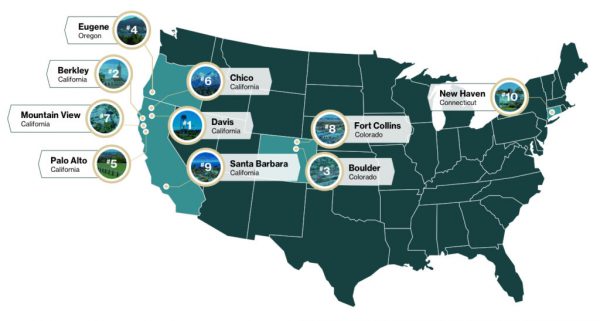
New Haven is one of the nation’s ten safest cities for cyclists, according to a new analysis.  In a ranking dominated by communities in California, with six of the top ten, New Haven was not only the lone Connecticut city to earn a spot among the top ten, it was the only city in the Northeast to do so.  The ranking saw Davis and Berkeley California named the safest cities for bicyclists, followed by Boulder, Colorado; Eugene, Oregon; Palo Alto, Chico, and Mountain View, California; Fort Collins, Colorado; Santa Barbara, California, and New Haven.  Minneapolis ranked number 12.

Five other Connecticut cities made their way into the top 100 nationally:  Hartford at number 55; Norwalk at number 82; Bridgeport at number 85; New Britain at number 91 and Waterbury, which was ranked at number 92.  Lower down the list were Stamford, ranked number 221 and Danbury,  which came in at number 229.

New Haven debuted Connecticut’s first protected bike lanes a year ago, according to published reports, from City Hall to Long Wharf, and city officials have said  “New Haven encourages alternative transportation options in the city so there is a variety of existing supported infrastructure available, including off-street shared use paths, on-street bicycle lanes, a contra-flow bike lane, bike boxes at intersections, on-street bike corrals, bike racks on sidewalks, bike racks on parking meters and bike racks on buses.”

"New Haven likely fared well due to their bike laws, a high percentage of spending per capita on bike lanes and their low percentage of fatal crashes," said Laura Schmitz, Safety Writer with Your Local Security. "The city of New Haven should be proud of their efforts to make their city safer for cyclists!"

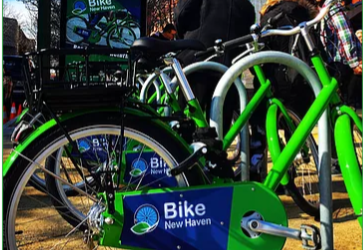
The city also launched a bike sharing program this year, in February, and celebrated National Bike to Work Day in May with a program encouraging bike riding.  In addition, Yale University is a Gold-level Bicycle Friendly University, as awarded by the League of American Bicyclists, and the city has developed on-line bike route maps.

The safest city in Massachusetts, Somerville, ranked number 58.  Providence was the safest in Rhode Island, but ranked number 482 on the national list.  Syracuse was determined to be the safest in New York State, ranking number 537.

The rankings were issued by yourlocalsecurity.com, an ADT Authorized Premier Provider.  To determine the safest and least safe US cities for bikers, metrics and data were used from Census.gov, the National Highway Traffic Safety Administration, People for Bikes, and The League of American Bicyclists to find the percentage of bike commuters, number of fatal crashes, amount of bike lanes, and what bike laws are in place or in the works in each city.

At the bottom of the list, the ten most dangerous cities included Los Angeles, New York, Houston, and five cities in Iowa.  Cities were included if these sources had data for them. Cities included had populations of 20,000 or more.

State Funds Continue to Support Transit-Oriented Development; $8.5 Million in New Grants to 5 Municipalities

Five Connecticut communities – Danbury, Hartford, Stamford, Torrington and West Hartford - will share approximately $8.5 million in funding under the second phase of the state’s 2017 Responsible Growth and Transit-Oriented Development (TOD) Grants. They are the latest in a series of competitive state grants to be awarded in recent years to support the development and implementation of TOD initiatives around the state. The competitive grant program “supports transit-oriented development and responsible growth in the state and is targeted at boosting economic activity and creating jobs,” according to state officials. Administered by the Office of Policy and Management (OPM) the grants rely on a combination of funding from the Responsible Growth Incentive Fund and the Transit-Oriented Development and Pre-development Fund.

A year ago, OPM released a request for applications for the current grant program, and the State Bond Commission approved a total of $15 million to be used – comprised of $5 million from the Responsible Growth Incentive Fund and $10 million from the Transit-Oriented Development and Pre-development Fund. Following that, OPM – with input from other state agencies – reviewed, rated, and ranked each of the proposals.

In this round of funding, Danbury’s Downtown Streetscape Project is receiving $2 million to prepare design drawings and construct sidewalk and streetscape infrastructure improvements along key downtown pedestrian routes within the vicinity of the Danbury train station. Improvements include the new construction or replacement of sidewalks, intersection improvements, landscaping, removal and installation of street trees, ornamental lighting, and pedestrian access improvements as detailed in the city’s Downtown TOD Planning Study.

Stamford’s Springdale TOD Implementation project is receiving $1,994,188 to prepare design and engineering drawings and construct improvements around the Springdale train station consistent with the recommendations of the Glenbrook/Springdale TOD Feasibility Study. Improvements include safer bicycle and pedestrian access to the village center and rail station, realignment and modification of the station’s main entrance at Clearview Avenue, and other improvements to landscaping, lighting, and general accessibility in and around the station area.

In Torrington, the East Main Street (Route 202) Sidewalk Implementation will receive $1,997,700 to construct new sidewalks, and repair/replace existing sidewalks along portions of East Main St (Route 202) between Torrington Heights Road and the Big Lots Plaza. The city will use a portion of the funding to evaluate existing conditions at nine signalized intersections within the project boundary, and at more complex sections of roadway which lack sidewalks, to determine if additional pedestrian improvements are feasible.

Hartford’s Main Street Complete Streets Vision Plan and Innovation District Activation will receive $450,000 to develop a Complete Streets Vision Plan for a section of Main Street from State House Square to the vicinity of South Green in order to identify improvements to bike and pedestrian amenities, and prepare complete construction documents for future buildout. In addition to bike and pedestrian amenities, the final plan is to identify potential improvements to transit services, new streetscaping, a new cycle track, and other linkages to improve bike and pedestrian connections within the project area.

A portion of Hartford’s funding will also be used to implement the Innovation District Activation Program, to provide grants to new and existing businesses within the project area to support capital and other investments such as façade improvements, building infrastructure, marketing, business planning, public events, and other business/community support services with the objective of creating vibrant employment and residential hubs.

West Hartford’s New Park Avenue Complete Streets Implementation will receive a grant of $2,000,000 to construct complete streets infrastructure improvements along New Park Avenue from New Britain Avenue to Oakwood Avenue, consistent with the recommendations of the 2017 New Park Avenue Transit Area Complete Streets Study. Improvements include a road diet with center turn lane, landscaped medians and protected bike lanes, new street trees, lighting, wayfinding signage and other amenities, and a pocket park at the gateway to the Trout Brook Trail.

“Transportation isn’t just about cars, trains, and buses – it’s about building vibrant communities and continuing to make Connecticut a more attractive place to live, visit and do business,” Gov. Malloy said in announcing the grants. The awards “will build upon the smart, targeted investments we have made in recent years, which have already led to significant growth in transit-oriented development across the state.”

The first round of grants under the current initiative were released in December 2017, with eleven projects to receive $15 million.  Communities selected to receive funds were Berlin, Clinton, East Windsor, Madison, New Britain, Norwalk, Stratford, Wallingford, Winchester, Windsor Locks, and the Southeastern Connecticut Council of Governments.

In 2016, state officials announced that twenty projects in towns and cities across Connecticut would receive a total of nearly $11 million to transit-oriented development and responsible growth, targeted at boosting economic activity and creating jobs. At the time, Gov. Malloy said “Our focus is on not only improving overall quality of life for residents in these areas, but also encouraging economic development by making our towns and cities more accessible."

Communities selected were Berlin, Branford, Canton, Clinton, Danbury, Hartford, Madison, New Canaan, New Haven, Old Saybrook, Torrington/Winsted, Waterbury, Westport, Windsor, and Windsor Locks.  Also receiving funds were the Capitol Region Council of Governments, Naugatuck Valley Council of Governments, and Northwest Hills Council of Governments.

Previously, 11 state grants between $75,000 and $150,000 were provided in 2015 to “prospective planning projects that best support transit oriented development.”  Receiving the state grants were Berlin, Bethel, Bridgeport, Enfield, Meriden, Milford, New Britain, New Haven, Stratford, Wallingford and West Hartford.

Aetna, CVS Health Earn Place Among 50 Civic-Minded Companies

Hartford-based Aetna and Rhode Island-based CVS Health, with their merger plans currently under review at the state and federal levels, have both been named to The Civic 50 for 2018, reflecting their community-minded programs and policies.  They are among the public and private companies with U.S. operations and revenues of $1 billion or more, selected based on four dimensions of their U.S. community engagement program.  Both companies also reached the list of 50 in 2017. The Civic 50 survey, produced annually since 2011 for Points of Light, has provided “a national standard for superior corporate citizenship and showcased how companies can use their time, skills and other resources to improve the quality of life in the communities where they do business,” according to Points of Light.

The survey analysis is administered for the Points of Light Foundation by True Impact, a company specializing in helping organizations maximize and measure their social and business value, and analyzed by VeraWorks. The survey instrument consists of quantitative and multiple-choice questions that inform the Civic 50 scoring process. It is the only survey and ranking system that exclusively measures corporate involvement in communities.

Among findings highlighted in the latest annual report:

  • Civic 50 companies are evolving from being supporters to engaging as stewards of social causes. Instead of confining themselves to writing checks or piggybacking off of nonprofit work, Civic 50 companies are involving themselves in all aspects of social causes which they champion. In 2018, 70 percent of Civic 50 companies took national leadership positions on four or more public education or policy efforts, an increase from 62 percent in 2017.
  • Civic 50 honorees continue to exemplify one of the core tenets of corporate citizenship: "doing well by doing good". The 2018 honorees demonstrate that integrating community engagement initiatives into business strategy can support business interests. The 2018 honorees are using community engagement to drive key business functions, including employee engagement (86 percent), marketing/PR (78 percent), diversity and inclusion (74 percent), skill development (74 percent) and stakeholder relations (56 percent)
  • Leading innovations for purpose at work, Civic 50 honorees have found community engagement as a meaningful and valuable investment to inspire employee changemakers and create a strong culture of giving back. 68 percent of Civic 50 companies include community engagement as a formal component of employees' performance reviews, an increase from 62 percent in 2017.
  • Civic 50 companies understand the importance of impact: to ensure the sustainability and success of their community engagement initiatives, Civic 50 companies are using measurement practices to not only measure quantifiable outputs, but social outcomes. Civic 50 companies are making sure to measure social outcomes as part of regularly implemented data collection. In 2018, 68 percent of Civic 50 companies collected and analyzed data on organizational grants and 42 percent did so for volunteerism.

Among the other companies included in the Civic 50 are KeyBank, Marriott International, Wells Fargo, UPS, Prudential Financial, and Comcast NBC Universal.

In its Corporate Social Responsibility Report, Aetna noted that as the company “pursues its goal of building healthier communities, we view social responsibility as a critical driver of success and an integral part of how we conduct our business.”

The report notes that “three quarters of Aetna employees are women, a third are people of color, 11 percent self-identify as LGBT and nearly 5 percent self-identify as having a disability.  Additionally, millennials comprise 31 percent of Aetna’s employees, which was a key driver of our new program to provide up to $10,000 to qualified recent college graduates to help them repay education loans.”
CVS Health, in the company’s social responsibility report, shares that their work “is rooted in our company’s values:  innovation, collaboration, caring, integrity and accountability.”  Three pillars – Health in Action, Planet in Balance and Leader in Growth – make up the company’s Prescription for a Better World, which provide the framework for the CVS Health strategy in corporate responsibility.

The four-dimension criteria used in assessing companies include:

  • Investment: How extensively and strategically does the company apply its resources to community engagement in the United States, including employee time and skills, cash, in-kind giving and leadership?
  • IntegrationHow does the company integrate their U.S. community engagement programs into key business functions, including employee engagement, marketing/PR, diversity and inclusion, recruiting, stakeholder relations and skill-development?
  • InstitutionalizationHow does the company support community engagement in the United States through organizational policies, systems and incentives?
  • ImpactHow does the company measure the social and business impact of their U.S. community engagement program?

Points of Light is the world’s largest organization dedicated to volunteer service.  It grew from the vision of 1,000 points of light shared by founder President George H. W. Bush in his 1989 inaugural address. The Points of Light Corporate Institute is a leading resource for community-minded companies looking to build and expand effective employee volunteer programs.

Report: Connecticut's Medicaid Expansion Increased Coverage, Access to Preventive Care and Behavioral Health Treatment

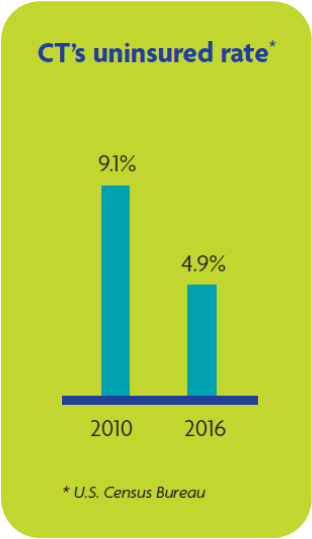
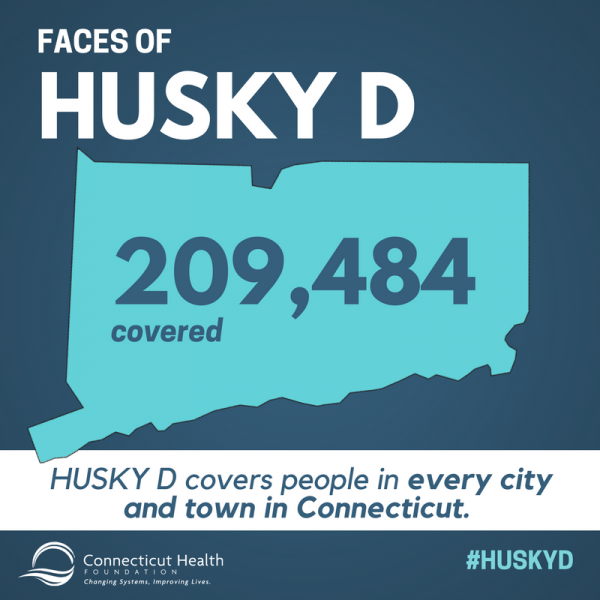
A recently issued report found that emergency department visits are down; coverage seen as critical in fight against opioids has expanded, and preventative care and mental health care have become more prevalent – all resulting from a 2010 policy decision made by Connecticut’s elected officials to expand Medicaid coverage. That decision, made collaboratively by a Republican Governor (M. Jodi Rell) and Democratic-controlled legislature – helped to reduce Connecticut’s uninsured rate from 9.1 percent in 2010 to 4.9 percent in 2016 and created a significant source of coverage for preventive health services and behavioral health care, according to the report developed by the Connecticut Health Foundation.

The report examines the impact of HUSKY D, as the Medicaid expansion is known, and highlights a number of key findings:

  • Most people covered by HUSKY D are using their insurance to get care. Just over 80 percent of people with HUSKY D used the coverage for preventive or outpatient health services in 2016.
  • Emergency department usage among HUSKY D members is down significantly. The rate of emergency department visits fell by 36 percent from 2012 to 2016.
  • HUSKY D is a significant source of coverage for behavioral health care. In 2016, more than one in three HUSKY D members – 36 percent – used their coverage to get care for a mental health condition or substance use disorder.
  • Outcomes have improved for diabetes patients with HUSKY D. A review of more than 500 HUSKY D members with diabetes found that the percentage whose blood glucose was under control rose from 31 percent to 50 percent from 2012 to 2016.

The report also examines the role HUSKY D plays in other policy work in the state, including addressing the opioid crisis and helping those leaving prison get medical and behavioral health treatment when they return to society. The report notes that before HUSKY D, individuals with substance use disorders were generally not eligible for Medicaid, creating a major barrier to treatment.

“Health insurance coverage is a critical first step to health, but it is also important to ensure that people are able to use that coverage to get care, and for that care to make a difference in people’s health,” said Patricia Baker, president and CEO of the Connecticut Health Foundation. “This research underscores the importance of HUSKY D in giving low-income state residents the tools to take care of their health.”

HUSKY D covers adults ages 19 to 64 who do not have minor children and whose income falls below 138 percent of the poverty level – the equivalent of $16,643 for an individual. (For comparison purposes, a person working 30 hours per week at Connecticut’s minimum wage – $10.10 per hour – would earn $15,756 in a year, the report indicates.)

The report concluded that “nearly eight years after Connecticut expanded HUSKY to cover more low-income adults, HUSKY D has made a significant impact on the state’s uninsured rate and the lives of thousands of people. The majority of those covered are using this insurance to get preventive care, and the rate of emergency department usage has declined, a promising trend.”

The report also notes that the federal government has “financed more than 90 percent of the cost of the program, allowing Connecticut to cover more than 200,000 people with a relatively small budgetary impact.” Currently, the federal government pays 94 percent of the cost of coverage and the state pays 6 percent. The report also identifies challenges associated with HUSKY D, including concerns raised by health care providers about Medicaid payment rates and uncertainty in federal funding.

The report’s analysis indicates that HUSKY D enrollees live in every city and town in Connecticut.  The largest number of covered individuals live in Hartford (18,404), Bridgeport (16,330), New Haven (15,583), Waterbury (13,989), New Britain (8,439) and Stamford (6,110).

The Connecticut Health Foundation is the state’s largest independent health philanthropy dedicated to improving lives by changing health systems. Since it was established in 1999, the foundation has supported innovative grantmaking, public policy research, technical assistance, and convening stakeholders to achieve its mission – to improve the health of the people of Connecticut. Since its creation, the Connecticut Health Foundation has awarded grants totaling more than $60 million in 45 cities and towns throughout the state.


CT Pilot Program Testing Fully Autonomous Vehicles Begins Accepting Municipal Applications

Driverless cars may be coming to a Connecticut town near you. The state Office of Policy and Management, pursuant to Public Act 17-69, has begun accepting applications from municipalities to participate in a Fully Autonomous Vehicle Testing Pilot Program (FAVTPP). The state agency can select up to four municipalities to participate in the pilot program.

The purpose of the pilot program, according to OPM, is to encourage and allow for the testing of fully autonomous vehicles (FAV) on local highways in Connecticut. The goal for the pilot program is to allow a variety of FAV testing to occur in four municipalities throughout the state, bringing Connecticut to the forefront of the innovative and burgeoning autonomous vehicle industry.
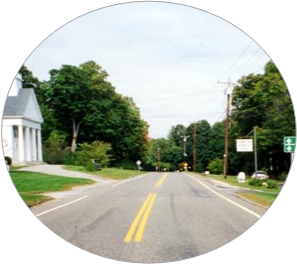
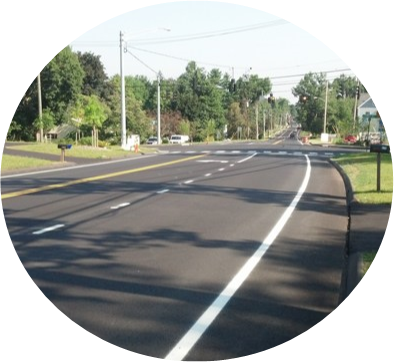
Thus far, state and local officials indicate that two municipal application have been filed, from Stamford and Windsor Locks, three additional communities have expressed interest (Bridgeport, Manchester, and New Haven) and at least one additional application is anticipated.  A handful of other communities have expressed some degree of interest, but are uncertain if they will be applying to participate in the pilot program.  OPM expects to begin its review process of the filed applications shortly.

In order to apply, interested municipalities must complete and submit the formal application now on the agency’s website, along with a copy of the City/Town Council’s resolution approving the application.The law stipulates that OPM consult with the Department of Motor Vehicles (DMV), Department of Transportation (DOT), Department of Emergency Services and Public Protection (DESPP) and the Connecticut Insurance Department (CID).

Connecticut municipalities provide a wide range of challenges and opportunities for testing the limits of FAV technologies and services, according to the program description. Examples cited include operation in communities with varying climate and weather conditions, urban and rural geographies, access or lack thereof to adequate transportation and/or workforce opportunities, new and aging infrastructure, varying levels of traffic volumes and congestion and users of multiple modes of transportation including car, pedestrian, bicycle, bus, rail, freight, etc.

Prior to completing an application, interested municipalities are encouraged to search for and partner with interested autonomous vehicle testers.  The application must include “Specific Location(s) and Route Where FAV Testing is Expected to Occur.”  Municipalities are asked to attach a map “with the anticipated location(s) and route highlighted” and to “identify all public roads, all private roads, and any important entities or buildings (i.e. critical infrastructure, schools, hospitals, fire stations, etc.) within/near the testing area.”

OPM also is asking the applying municipalities to describe what it hopes to achieve by participating in the pilot program, why specific locations were selected, and “the municipality’s ability to safely oversee fully autonomous vehicle testing.”

The program requirements include that while operating a FAV, the autonomous vehicle operator shall at all times:

  1. Obey all traffic laws, provisions of the general statutes and ordinances of the applicable municipality concerning the operation of motor vehicles.
  2. Be seated in the driver's seat of the FAV.
  3. Be monitoring the operation of the FAV.
  4. Be capable of taking immediate manual control of the FAV.

In addition, municipalities are required to conduct a public outreach campaign to notify local officials, first responders, the general public and local media outlets about their participation in the FAVTPP prior to testing.  At a minimum, as part of the public outreach campaign, the municipality must outline an education program for police and residents regarding FAVs and the municipality’s participation in the FAVTPP; and share the finalized specifications on where and when such FAV(s) will be tested within the municipality as part of the FAVTPP.

The posting of electronic or printed signs at various testing area entry and exit points may be required by the municipality to inform the public and emergency responders when and where testing of FAVs is taking place. The signage must be approved by the municipality’s Traffic Authority, and that with respect to State highways and bridges and State railroad rights-of-way, the planned signage must be approved by the state DOT.

The state law outlines a framework of the minimum requirements to be included in agreements between municipalities and autonomous vehicle testers approved for participating in the Fully Autonomous Vehicle Testing Pilot Program (FAVTPP). The Connecticut law, according to the National Conference of State Legislatures (NCSL), specifies the requirements for testing, including having an operator seated in the driver’s seat and providing proof of insurance of at least $5 million. It also establishes a task force to study fully autonomous vehicles. The study must include an evaluation of NHTSA’s standards regarding state responsibility for regulating FAVs, an evaluation of laws, legislation and regulations in other states, recommendations on how Connecticut should legislate and regulate AVs, and an evaluation of the pilot program.

In the event that a FAV experiences a crash during the FAVTPP in which a death, physical injury or property damage occurs the autonomous vehicle tester and applicable municipality must comply with specific notification and investigation procedures outlined by OPM.  A recent testing death in Arizona continues to receive scrutiny.

According to NCSL, 29 states including Connecticut have enacted legislation related to autonomous vehicles, and the Governors of seven additional states have issued executive orders on the subject.

High School A Risky Time for CT Students, Survey Finds

The Youth Risk Behavior Surveillance System was designed to focus the nation on behaviors among youth related to the leading causes of mortality and morbidity among both youth and adults and to assess how these risk behaviors change over time. In Connecticut, the times they are a changin’.  Data released this week by the state Department of Public Health highlights changes over the past decade, and disparities among current students depending upon their grades in school.

The Youth Risk Behavior Surveillance System measures behaviors that fall into six categories:

  • Behaviors that contribute to unintentional injuries and violence;
  • Sexual behaviors that contribute to unintended pregnancy and sexually transmitted diseases, including HIV infection;
  • Alcohol and other drug use;
  • Tobacco use;
  • Unhealthy dietary behaviors; and
  • Inadequate physical activity.

The 2017 Youth Risk Behavior Survey (YRBS) includes randomly chosen classrooms within selected schools, and is anonymous and confidential.  It was completed by 2,425 students in 38 public, charter, and vocational high schools in Connecticut during the spring of 2017. The school response rate was 76%, the student response rate was 81%, and the overall response rate was 61%. The results are representative of all students in grades 9-12, according to the state Health Department.

The survey found that during the past decade, the percentage of students who rarely or never wore a seat belt has declined by one-third, as has the percentage who drove a car at least once in the previous month after they had been drinking.  That drop was between 2013 and 2017.

The percentage of students who “felt sad or hopeless” almost every day for a two week period “so that they stopped doing some usual activities” during the previous year climbed from 228% in 2007 to 26.9% in 2017 – more than one-quarter of students.  The survey found that in 2017, 13.5% of students seriously considered attempting suicide and 8.1% attempted suicide during the past year.

More than one-third of students (34.6%) of students did not eat breakfast every day in the week preceding the survey, and 14.1% did not eat breakfast on any of those days.  The percentage of students who got 8 or more hours of sleep on an average school night dropped from 26% in 2007 to 20% in 2017,

The survey also found that 25.8% of students with mostly A’s and 48.6% of those with the lowest grades (D or F) have used marijuana at least once in their lifetime.  More than one-quarter of students, across all academic grades (A-F) responded that they drank alcohol at least once in the month prior to the survey.

The survey found that 38 percent of students whose grades were mostly A’s texted or e-mailed while driving a car on at least one occasion in the 30 days prior to the survey.  The percentage was slightly less among students with lower grades:  31% of students with mostly B’s, 30% of students with mostly C’s and 23% of students with mostly D’s and F’s.

When it came to the percentage of students who rode with a driver who had been drinking alcohol (one or more times during the 30 days prior to the survey), students with better grades did so less often, ranging from 12% of students with mostly A’s to 26% of students with mostly D’s and F’s.

The survey also found that 1 out of 5 students (20.1%) whose grades were mostly D’s and F’s did not go to school because they felt unsafe at school or on their way to or from school, on at least one day during the 30 days prior to the survey.  Among those with mostly A’s, that percentage was just under 4 percent.

Among those with the lowest grades, 38.9% were in a physical fight at least once during the previous 12 months, and 19.7% were threatened or injured with a weapon on school property, such as a gun, knife, or club, at least once during the past year.  Among those with mostly A’s, the percentages were 10.2% and 3.6%.

https://youtu.be/d63xyYs9s94

Where is Childhood Least Threatened? CT Ranks 5th Among States

The child poverty rate in Connecticut’s rural areas, 7.8 percent, is the lowest in the nation.  It is considerably higher in urban areas, 13.1 percent, which ranks 12th among the states.  Overall, in an assessment of where childhood is most and least threatened, Connecticut ranks 5th, according to Save the Children, the Fairfield-based organization that annually assesses the threats to childhood in the U.S. and internationally.  The state ranked sixth a year ago. The ranking does not capture the full extent of deprivations or hardships affecting children. Instead, it focuses on some key rights, or “guarantees” of childhood: life, healthy growth and development, education and protection from harm. If a child experiences all of these, his/her childhood is considered to be “intact.”

The ranking tracks a series of events that, should any one of them occur, mark the end of an intact childhood. These events are called “childhood enders” and include: child dies, child is malnourished, child drops out of school, child is a victim of violence, child has a child.

States were ranked according to performance across this set of enders, revealing where childhood is most and least threatened.  Connecticut’s average ranking across all categories was 8.2.

Connecticut had the 15th lowest percentage of students dropping out of high school, ninth lowest infant mortality rate and 11th lowest malnutrition levels.

The report indicates that “Save the Children hopes this report will stimulate discussion and action to ensure that every last child fully experiences childhood.”  The data reviewed includes the infant mortality rate, food insecurity rate, high school graduation rate, child homicide and suicide rate, and teen birth rate.

The report notes that “While children are only 20 percent of the population, they are 100 percent of America’s future.” Save the Children’s ranking reveals children in New Jersey, Massachusetts, Vermont and New Hampshire are far more likely to experience safe, secure and healthy childhoods than children in Louisiana, Mississippi, Oklahoma and New Mexico.


Connecticut is the only state in the nation where fewer than 1 in 10 rural children live in poverty. It is followed by New Hampshire, Massachusetts, North Dakota and Wyoming, all of which have rural child poverty rates below 12 percent.

Rural child poverty rates exceed urban poverty rates in 40 of 47 states with available data. Only Connecticut, Indiana, Massachusetts, Nevada, North Dakota, Ohio and Wisconsin have more urban child poverty than rural child poverty. However, in most of these states, the urban and rural child poverty rates are similar. The difference is less than two percentage points, with the exception of Connecticut and Massachusetts.