

Record-Setting Travelers Championship Nets $2 Million for Charity
/The 2018 Travelers Championship generated $2 million for more than 150 local charities throughout the region, the largest amount for charity generated in the history of Connecticut’s premier sporting event. The record-setting total includes a $200,000 contribution from three-time Travelers Championship winner and 2018 champion Bubba Watson. Charity representatives joined officials from Travelers and the tournament in Hartford this week for the annual Travelers Championship Charity Celebration, where funds were distributed to each organization.
“This is always a special day because it signifies the hard work everyone puts into the tournament,” said Travelers Championship Tournament Director Nathan Grube. “Through the support we receive from volunteers, fans, players and businesses, we’re able to help charitable groups across the region mak e the community a better place.”
This year’s effort brings the total amount generated for charity by the tournament to more than $16.7 million since Travelers became title sponsor in 2007. The tournament donates 100 percent of its net proceeds to charity.
“Reaching the $2 million mark is an important milestone, and it will have such a meaningful impact on so many local organizations,” said Andy Bessette, Executive Vice President and Chief Administrative Officer at Travelers. “Bubba’s generosity mirrors our charity-first approach, and follows a similar sentiment that runs through the PGA TOUR and many of its players.”
Watson, who became just the second player to win the Travelers Championship more than twice – he also won in 2010 and 2015 – is representing the United States this week at the Ryder Cup in France. He recorded a video message that was played during the Charity Celebration.
“Wish I could be there. I just want to say thank you to Travelers for their hard work and their dedication to the community and all the charity dollars they’ve raised over the years,” Watson said. “Especially this year; $2 million dollars, what an achievement.”
The Hole in the Wall Gang Camp was the primary beneficiary of this year’s tournament, with three campers also serving as honorary co-chairs. Watson directed his $200,000 donation to Camp, which is naming the trading post at the Travelers Mini Golf Course on its campus in Ashford, Connecticut, as “Bubba Watson’s Trading Post,” in recognition of the 12-time PGA TOUR winner.
Back in December, the 2017 Travelers Championship was honored by the PGA TOUR winning the prestigious “Tournament of the Year” award, along with recognition as the “Most Fan-Friendly Event,” “Best Sales” and the inaugural “Players Choice.” Award. With approximately 4,000 volunteers working over 80,000 hours, the 2017 event generated more than $1.7 million for 165 deserving charities – totals that were exceeded this summer at the 2018 tournament. 
An economic impact study last year found that The Travelers Championship has an annual economic impact on the state of Connecticut of $68.2 million. The study, conducted by the Connecticut Economic Resource Center, Inc. (CERC), found that the economic impact had more than doubled between 2011 and 2017, due to two primary factors; a much larger total number of spectators, especially the increased number of individuals from outside the state, and increased spending by the tournament in preparing for and administering the increased number of events that occur during the tournament week.
At least 750 charities have benefited over that time. Since the tournament’s debut in 1952, more than $40 million has been distributed to local charities.
Never an effort to reset on its laurels, preparation has already started for the 2019 Travelers Championship, which will be held June 17-23 at TPC River Highlands.

 “This aging population has contributed to diminished economic growth, with Connecticut being one of only four states in the country with contracting output. This occurred while its population growth was nearly at the bottom for all states, along with having one of the largest contractions of prime working-age adults,” S&P noted in their analysis. “The outlook is equally dim. We expect the state's higher concentration of middle-aged and elderly residents compared with young adults and children to worsen.”
 It went on to explain that “upon further look, there is a profound distinction among the projected population shift when broken down by age. Between 2010 and 2040, Connecticut’s age 65 years and over population is on pace to increase by 57%. However, its population between the ages of 20-64 is projected to grow less than 2% and the population age 18 and under is projected to decline by 7%.”

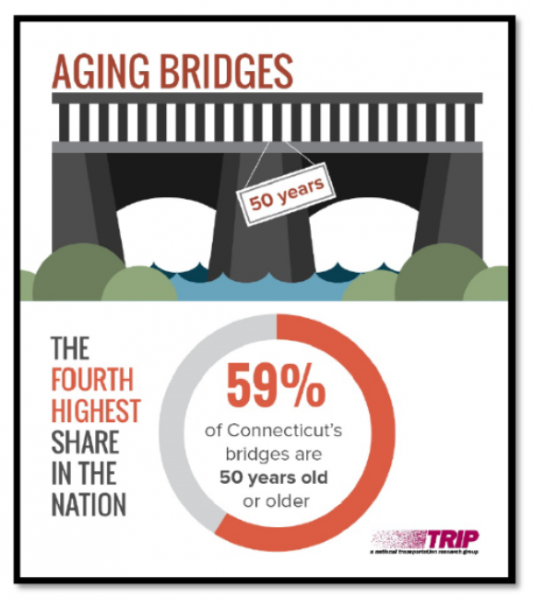 Yesterday, it was announced that 59 percent of Connecticut’s more than 4,000 bridges are 50 years or older, the fourth highest rate in the nation. The average age of all Connecticut’s bridges is 53 years, while the average age of the state’s 308 structurally deficient bridges – seven percent of the total - is 69 years. Structurally deficient bridges in Connecticut are crossed daily by 4.3 million vehicles.
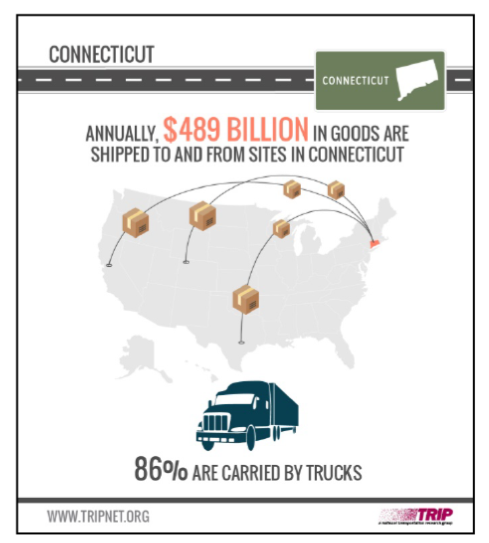 The report also noted that “annually, $489 billion in goods are shipped to and from sites in Connecticut, largely by truck,” adding that “approximately 731,000 full-time jobs in Connecticut in key industries like tourism, retail sales, agriculture and manufacturing are completely dependent on the state’s transportation network.”

 Obesity is a problem in virtually every city and town, and every income and social sector. But its impact is most serious in communities where conditions make access to healthy foods and regular physical activity more difficult, such as lower income and rural areas, including many communities of color. The national costs of obesity are enormous, officials point out. Obesity drives an estimated $149 billion annually in directly related healthcare spending, and an additional $66 billion annually in lowered economic productivity. Also, one in three young adults is ineligible for military service, due to being overweight, officials noted.


 According to the magazine, full price tuition is $65,900; the estimated price with the average grant is $41,400. More than 8 in 10 students with need receive grants. Early career earnings are estimated at $57,100, and average student debt at graduation is $27,000.



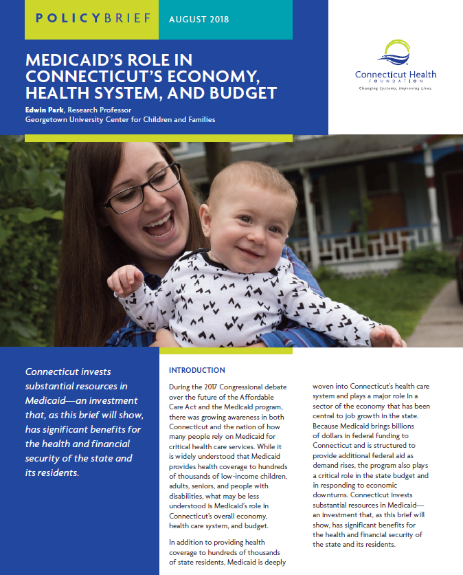
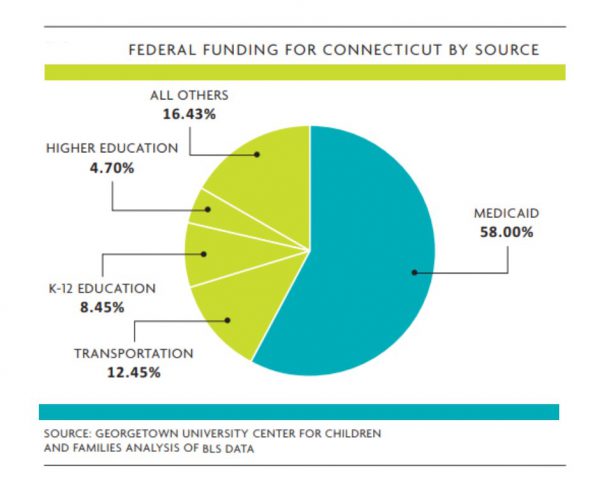 Among the report’s other key findings:




















