Blockchain Gains a Foothold on Connecticut Campuses

Blockchain is soon to arrive on Connecticut’s college campuses, with new initiatives imminent at Southern Connecticut State University, University of Saint Joseph, and the University of Connecticut’s Stamford campus. A six-week boot camp for individuals who would like to widen their computer programming skills to include Blockchain – a cutting-edge form of encryption technology – has been developed at Southern Connecticut State University in New Haven.  The SCSU Blockchain Academy launches on January 23 and runs though March 6.

Blockchain refers to the technology behind the development of secure digital databases that are accessible to the public, but cannot be altered by anyone other than the person posting the data. It is a shared, distributed ledger that improves the process of tracking and recording a transaction.  Blockchain can be used for a variety of purposes, including financial transactions, supply chain management, luxury goods or anything of value. Bitcoin and other cryptocurrencies use this technology.

“Southern intends to become a leader in educating people about the ‘Internet of Value,’ which is the fastest growing market the world has ever seen,” said Colleen Bielitz, SCSU associate vice president for strategic initiatives and outreach. A promotional video posted by Southern (below) has already been seen more than one thousand times.

“Blockchain is going to be increasingly important to businesses, and during the next decade is expected to have a major impact on the economy and the world. The goal of this academy is to grow the community of decentralized application developers and to make New Haven a hub for Blockchain technology and innovation as companies look to take advantage of this growing market.”

The University of Saint Joseph (USJ) announced last week that it has developed the Greater Hartford area’s first two-part certification program for future blockchain technologist, in collaboration with DappDevs, which is also collaborating with Southern and UConn.

President Rhona Free, Ph.D., remarked, “With this certificate program, USJ continues its commitment to providing educational programs aligned to our regional economy. The Greater Hartford community will benefit from this newly-created training program that offers skill development and career advancement in blockchain application development.”

The USJ pre-certificate program geared toward faculty, current college students, and college graduates in the Greater Hartford region, begins on Feb. 2, 2019, and runs over four weeks as one three-hour evening session per week. The full certification program is a six-week session that runs from March 5-April 11, as two three-hour sessions per week.

UConn’s Connecticut Information Technology Institute (CITI) is sponsoring the creation of a blockchain chapter in Stamford in order to facilitate the development of an education-based micro community designed to connect decentralized application developers. This community, in hand with Stamford’s established financial enterprises, will play a key role in further establishing Connecticut as a USA crypto capital, according to the university’s website.  UConn is offering a two-day Blockchain Development course, with its partners, DappDevs and the Werth Institute.

UConn’s first-ever blockchain symposium was held in Stamford in August.  The conference drew top scholars and Ph.D. students Stanford, Princeton, Virginia Tech, and from 10 nations, including England, Israel, Switzerland, China and Norway. State-run news agencies from Vietnam and China also covered the two-day event, called “Blockchain Technology & Organizations Research Symposium.”

These initiatives reflect that blockchain is increasingly taking academia by storm, not only in Connecticut but across the nation.  This past summer Columbia University and Stanford University both launched blockchain research centers, following in the footsteps of the Massachusetts Institute of Technology's Digital Currency Initiative, which launched as part of the MIT Media Lab in 2015; MIT was among the first institutions to create such a program, according to industry publication Inside Higher Ed.

The Center for Blockchain Research at Stanford University launched in June.  Miami University launches a course in blockchain technology for undergraduates in the Spring 2019 semester.  Montclair State University’s center for continuing and professional education recently spearheaded the launch of three professional blockchain certificates -- one covering the basics, one for developers and one focusing on applications of blockchain in the financial sector.

https://youtu.be/_8X_wr1tCNI

Girls With Impact, Girl Scouts Collaborate to Increase Entrepreneurship Among Teen Girls

In an effort to get girls career-ready, Connecticut-based Girls With Impact, the nation’s only tech-enabled entrepreneurship program for teen girls, is launching a partnership with Girl Scouts of Connecticut to enable girls to parlay their cookies experience into their own businesses. “Entrepreneurship is one of the four programmatic pillars that comprise the Girl Scout Leadership Experience,” said Mary Barneby, CEO for Girl Scouts of Connecticut. “We welcome the opportunity to partner with Girls With Impact to provide our older Girl Scouts with a ‘virtual MBA’ in developing their own business plans. We are creating the next generation of female leaders and programs like this give our girls a real edge and help them become more confident and career-ready.”

Girls With Impact CEO Jennifer Openshaw says her goal is to train 10,000 young women as entrepreneurs, equipping them with the skills to start businesses or serve as innovators within corporate America.

Girl Scouts members will be entitled to participate in the Girls With Impact Academy – a 12-week “mini-MBA” program, valued at $2,000, that equips girls with business skills. The program, now in its third year, has helped some past participants to earn full scholarships at top colleges. Sessions are offered throughout the year, with various schedules. The reduced fee for Girl Scouts will be just $450, and scholarships are available.

It is both a skills-builder and confidence builder, critical for teenage girls as they navigate their teens and look forward to careers.  Openshaw points out that only 6 percent of Fortune 500 CEOs are women and just 36 percent of entrepreneurs are women.  Those are statistics she hopes to change.  The after-school, extra-curricular program has seen exceptional results in confidence, empowerment, college prep and career readiness, including STEM areas.

“Girl Scouts is one of our nation’s most powerful leadership training grounds for young women,” said Openshaw. “We’re thrilled to support Girl Scouts as it seeks to modernize and remain relevant for young women in the new global economy.”
Girl Scouts of Connecticut serves over 26,000 girls and over 12,000 adults giving girls the skills they need to empower themselves for life. Through the Girl Scout Cookie Program, the largest girl-led entrepreneurial program in the world, Girl Scouts learn five essential skills that they will carry with them for a lifetime: goal setting, decision making, business skills, money management, and people skills.

Through the Digital Cookie® platform, Girl Scouts are able to take their cookie businesses online, using their own personal website to reach customers across the country, experiencing true enterprise. Barneby called on girls to bring a friend to Girls With Impact and “build your network for tomorrow.” She says the tech delivery enables girls to connect with others nationwide and build that support system so critical to career success.

Girls With Impact, a nonprofit, is the nation’s only entrepreneurship program just for teen girls, delivered live from the home or road. Applications are accepted at  www.girlswithimpact.com.

Hartford, New Haven As “Suburbs” of Boston and New York Raises Possibilities - and Pushback

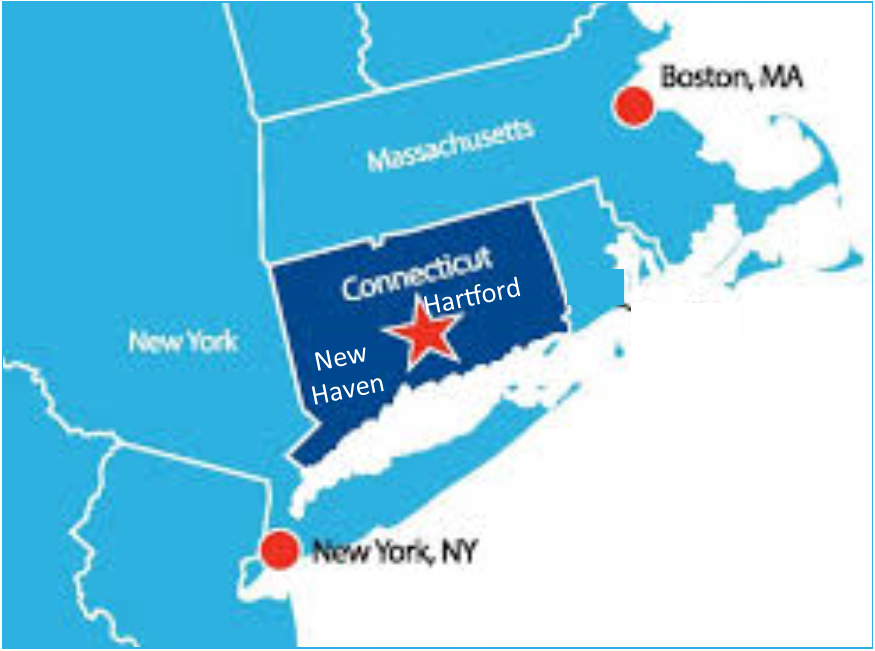
The objective was to provide evidence that Connecticut is on the cusp of a transit renaissance.  But a “thought leader” article by a prominent faculty member at the University of Connecticut School of Business – an acknowledged expert in transportation and its impact on residential property values – has drawn a range of reactions from municipal, business and transportation officials in Connecticut, including some pushback. The article, by UConn associate professor of real estate and finance Jeffrey Cohen, stated that “with high speed, inter-state transportation, it would be much easier for Greater Hartford and New Haven to thrive as suburbs of Boston and New York City.  Imagine how great it would be to hop on a fast train to Logan Airport, JFK or LaGuardia.  The world would be at our doorsteps, and our doorsteps would be there for the world to explore.”

The characterization of two of the state’s largest cities as potential “suburbs” of New York and Boston, seemingly overlooking Bradley International Airport and Tweed-New Haven in the process, has raised questions from officials.
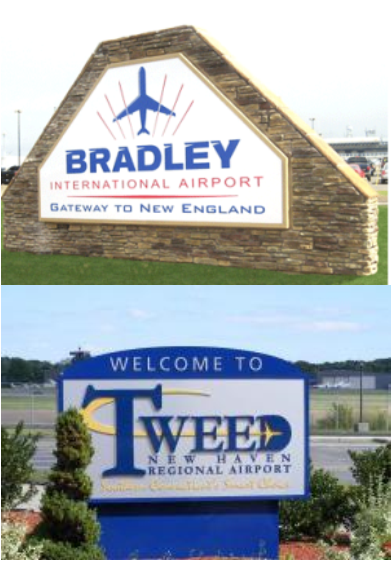

“As the second-largest airport in New England and the recently ranked third-best airport in the country, Bradley Airport offers convenience and efficiency that the airports in Boston and New York cannot match. Enhanced rail connectivity to the airport would be a major win for passengers throughout Connecticut and Western Massachusetts, and we would encourage UConn to consider maximizing the airport in its own state rather than promoting the outsourcing of Connecticut’s economy to its neighbors,” Connecticut Airport Authority Executive Director Kevin A. Dillon, A.A.E, told CT by the Numbers.

“While the Connecticut Airport Authority is supportive of high-speed rail connectivity in Connecticut, it is unfortunate that UConn would not recognize the benefit of promoting and utilizing Bradley International Airport as the primary airport for travelers in the region,” Dillon added.

“With regard to Bradley, Aer Lingus’ commitment to another four years of service between Hartford and Dublin is a huge boon to our economic development efforts and we hope other airlines will take note and pursue additional domestic and international routes,” said MetroHartford Alliance’s Brian Boyer, Vice President of Communications, Marketing, and Media and Public Relations.  “It’s time to continue showing loyalty to our hometown airport as we position ourselves as a global region attracting international companies. With the ease of use at Bradley, brief 90-minute layovers in Dublin en route to destinations throughout Europe, pre-screening on return flights to clear customs before arrival in Hartford and the prospect of attracting new airlines, this flight is a win-win for our community.”

While some officials saw possibilities, as did Cohen, in the potential impact of continued enhancements to the state’s transportation system, they also acknowledged that those changes were not immediate and current assets should be maximized.

“Fast-growing healthcare, pharmaceutical, and technology sectors of the New Haven economy would be well-served with easier access to major markets in New York and Boston, and the international transportation options in those cities as well,” pointed out New Haven Mayor Toni N. Harp. “We know one-hour train service between New Haven and New York is technologically feasible: what we need to complete the project is the collective will to make it so.”

“High speed rail offers tremendous opportunities for New Haven.  Our proximity to New York City is already a great selling point for the region, if the commute time became significantly shorter, then we are that much more attractive as a location.  We should strive for this type of transportation improvement,” said Garrett Sheehan, president of the Greater New Haven Chamber of Commerce.

Sheehan went on to emphasize that “planning for the future of transportation should not take away from the present.  This type of high speed rail is years away.  In New Haven, we have an incredible transportation asset in Tweed-New Haven airport.  It is already located within the city limits and just short drive from anywhere in this region.  The Chamber supports expanding the airport’s runway and investing in Tweed to bring back more flights and destinations.  Even a handful of more flights would be beneficial to the economic growth of our region.”

Cohen, who has received national recognition in his field, praised the CTrail Hartford line - which connects New Haven, Hartford, and Springfield, MA - and CTfasttrak bus line – which links Hartford and New Britain - noting that “we are starting to see residential and business development near the stations, and this is one of the big benefits of transit.”

He added that “Some people in New York are starting to discover the hidden treasure of relatively low-priced real estate, along with the good schools, beautiful parks, and savory restaurants in central Connecticut.”

“An ideal location with easy access to major cities in the Northeast and Mid-Atlantic, we are proud to be at a point where talent and businesses from these markets should consider Hartford as an opportunity for economic growth and development,” the MetroHartford Alliance’s Boyer noted. “Transportation plays an integral role in this growth and with the new Hartford Rail Line and the continued growth at Bradley International Airport as one of the nation’s top mid-sized airports, we look forward to working with our community and prospective businesses to ensure long-term economic growth for generations.”


CT Voter Turnout Appears Highest for a Gubernatorial Race Since 1990

In the early 1990’s, voter turnout in Connecticut’s gubernatorial elections reached 68.2 percent in 1990 and 65.1 percent in 1994.  Turnout hasn’t reached that high level in the state’s quadrennial gubernatorial elections since – until Tuesday. The Office of Secretary of the State is reporting, as of Wednesday night, that statewide voter turnout was 66.9 percent.  If that turnout percentage stands, it would be the highest turnout in a race for Governor in nearly three decades, since 1990.

The strong turnout percentage this year is underscored by the fact that the number of registered voters is considerably larger.  As of Nov. 2 – not including those individuals who registered and voted on Election Day – the number of registered voters in Connecticut was 2,165,045, according to the Office of Secretary of the State.  Back in the ‘90’s, the list of registered voters hovered between 1.7 million and 1.8 million.  This year’s election brought a higher percentage of voters to the polls from a larger list of individuals registered to vote.

Voter turnout – the percentage of registered voters who actually vote – was 56.6 in 1998, 56.5 in 2002 when there were 1.8 million registered voters, and 59.8 in 2006 when the voter rolls reached 1.9 million.

The 1990 race featured well-known, high profile candidates for Governor – former U.S. Senator Lowell Weicker, Congressman Bruce Morrison and Congressman John Rowland.  The race was won by Weicker, running as a third party candidate.  Rowland would go on to win the office four years later, when voter turnout was somewhat lower.

In 2006, when the Connecticut voters considered their choices in a gubernatorial match-up between Gov. Jodi Rell and New Haven Mayor John DeStefano, a U.S. Senate race that featured Sen. Joe Lieberman, Democratic candidate Ned Lamont and republican Alan Schlessinger was also on the ballot drawing considerable interest.  Turnout that year reached 59.8 percent.

In 2010, Democrat Dannel Malloy won his first term as Governor, defeating Republican Tom Foley by the relatively narrow margin of 6,404 votes.  A third party candidate, Tom Marsh, received 17,629 votes.   Voter turnout that year was 57.4 percent.

Voter turnout is consistently higher in presidential election years.  In 2016, for the Donald Trump – Hillary Clinton contest, the voter turnout in Connecticut was 76.9 percent.  It had been slightly higher in 2008, when Barack Obama was on the ballot here for the first time, at 78.1 percent.

The number of people registered to vote also tends to surge in presidential election years.  In 2016 in Connecticut, the voter list included 2.1 million residents.  This year’s voter registration numbers, just prior to Election Day, were closing in on that total.

This story was updated at midnight Wednesday to reflect latest turnout percentage provided by the Office of Secretary of the State, which increased slightly throughout the day as additional information was provided by municipalities.

Progress Cited on Integrating Pedestrian, Bicyclist Safety Into State Transportation Projects

What comes next at the Department of Transportation was on the minds of more than 150 advocates and enthusiasts gathered for the Annual Meeting of Bike-Walk Connecticut  at Central Connecticut State University in New Britain this past weekend.  The fast-approaching close of the Malloy administration may also mean the end of the tenure of DOT Commissioner James Redeker, who has not only walked the walked, but rode the ride in “building and delivering a comprehensive pedestrian and bicycle program.” The accelerated change in attitude at DOT since Redeker took the helm in 2011 was evident in his being warmly introduced as a friend prior to his keynote address – not the adversary that previous vehicle-centric commissioners may have been.  He went on to highlight the department’s work on state projects, and in concert with municipalities, that is steadily transforming Connecticut into a more pedestrian and bike-friendly state.
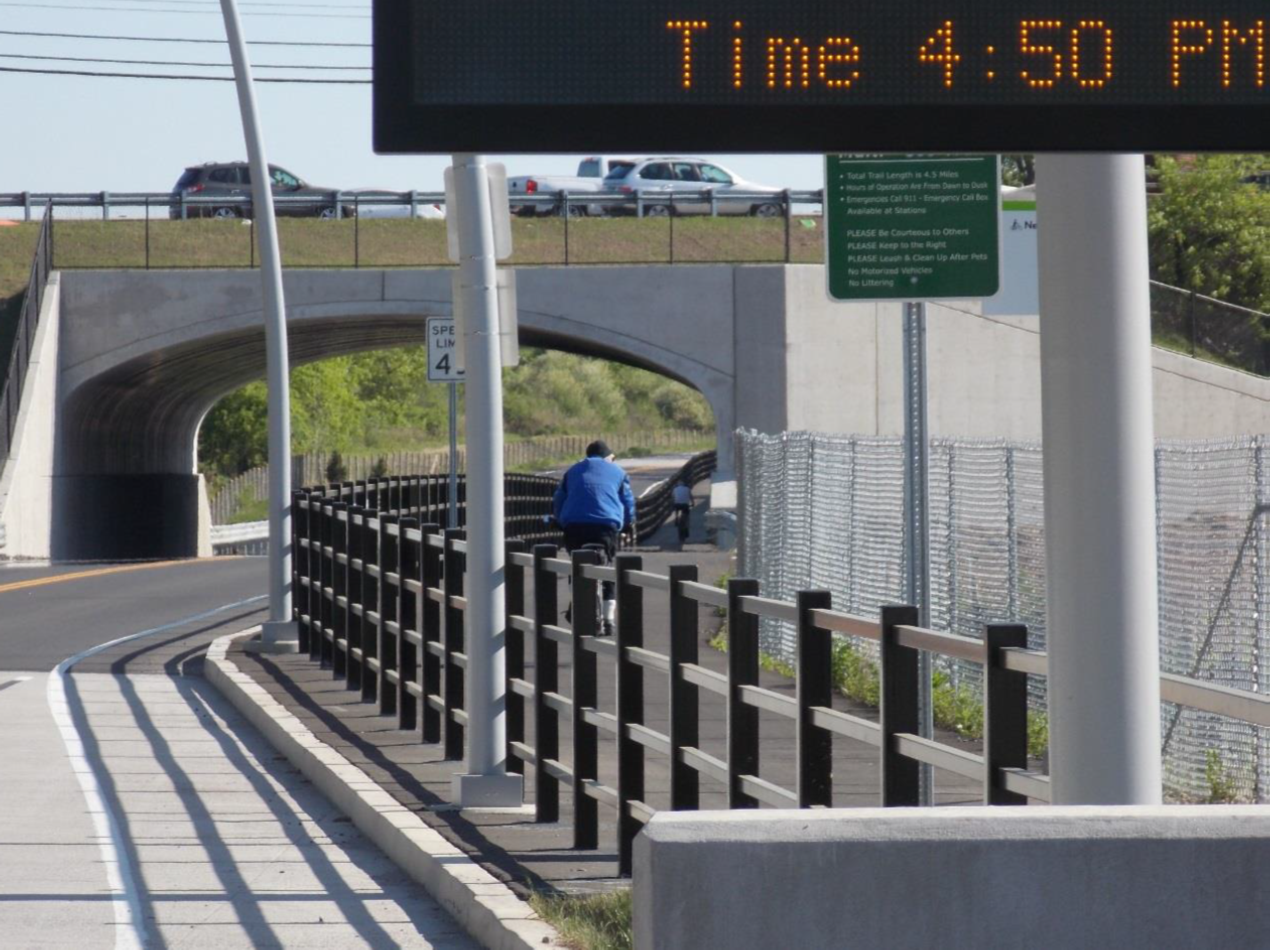

Redeker’s presentation demonstrated why.  Among the highlights:

  • Connecticut has or will be constructing 97 miles of multi-use trails along side road construction or reconstruction through 2021, and 35 miles of sidewalks accompanying road construction.
  • A vendor-in-place resurfacing program has meant that 94 percent of roadways reconstructed have been restriped with wider shoulders, and roadway safety audits have been conducted on 145 miles of roadway and at 917 intersections.
  • Enhanced pedestrian signage and pavement markets at uncontrolled crosswalks have been included in 1200 locations on state roads, with an additional 1500 locations planned for local roads in 2019. In addition 133 locations are planned for upgraded pedestrian controls at signalized intersections by 2020.
  • 125 projects have been reviewed for Complete Streets design in 2017, with an additional 97 projects reviewed thus far in 2018. More than 80 Road Safety Audits have been conducted.

Driving the “absolutely amazing statistics” is a changed policy, Redeker said.  Now, supporting “safe access for all users by providing a comprehensive, integrated, connected multi-modal network of transportation options” is ingrained at DOT.  He noted that integrating trails is occurring regularly on major projects, with the goal of building a statewide trail system.

“Complete streets is now part of the DOT DNA,” Redeker explained.  Responding to some who question the lack of such plans as part of the agency’s manual, Redeker cited the statistics, adding, “look at us for outcomes, not manuals.”  The numbers – and the accomplishments - drew solid reviews in the room.

The agency’s Complete Streets program, established in 2014, established a new unit to review every project specifically for bicyclist and pedestrian needs, and requires project designers to evaluate and prepare a written assessment of pedestrian needs on every project.  A standing committee was also formed to guide and implement policy and practices, Redeker pointed out.

He noted that the changes are evident in large cities and small towns in Connecticut, from Hartford New Haven to Waterford and Washington.  He also highlighted the introduction of roundabouts in Connecticut communities, including Monroe, Seymour and Ellington, and Community Connectivity Grants that have funded 40 small-scale local projects totaling $12 million, with another 40 to be requested for upcoming State Bond Commission agendas, with an estimated cost of $13.4 million.

Upgrades in school warning signs include the replacement of traditional yellow signage with fluorescent yellow-green to enhance visibility was completed in 2015.  Pedestrian warning signs were replaced on state routes in 2017, and are on schedule to be upgraded on local routes in 2019 and include greater use of yield bars on pavement.

Upgrades in school wanting signs include the replacement of traditional yellow signage with fluorescent yellow-green to enhance visibility, and greater use of yield bars on pavement.  Signs were replaced on state routes in 2017, and are on schedule to be upgraded on local routes in 2019. 

Traffic signals are also being replaced along state roadways, with “pedestrian safety our number one concern,” Redeker stressed.  It is an extensive task.  Connecticut has more traffic signals that exceed 30 years old, more than any other New England state and the 10th highest volume in the U.S.

Mention of the state’s “Watch For Me” campaign drew extended applause – the comprehensive initiative seeks to alert the public to the presence of pedestrians and bicyclists, to underscore the importance of assuring safety and police enforcement.


Danbury Leads CT in 5-Year Job Growth; 41st in Ranking of 50 States’ Leaders

When job growth is measured over the past five years, Danbury leads the way in Connecticut. An analysis of changes in employment figures between 2013 and 2018 from the 381 metropolitan areas defined by the U.S. Census Bureau focused on the leading city in each state, and ranked them. The analysis, by the website howmuch.net, found that Danbury - which saw job growth of 6.6 percent - outpaced Connecticut’s largest cities, but that the leading city in 40 of the 50 states had a stronger track-record.

The leading cities in five-year job growth were Lake Charles, LA: 28.3%; Bend-Redmond, OR: 26.6%; Elkhart, IN: 24.0%: St. George, UT: 23.4%; Greeley, CO: 21.1%; Gainesville, GA: 20.9%; Fayetteville, AR: 20%; Boise City, ID: 18.6%; Austin, TX: 18.4%; and Reno, NV: 18.0%.  The analysis notes that the top cities “are truly remarkable job markets at the center of the recovery, perhaps because they were hardest hit by the recession.”

The standing of Austin, Charlottesville and Nashville are noted for “a reputation as fun destinations with music and tech scenes. They are mid-sized cities with universities, hospitals, and large well-known employers. These are the ingredients for long-term economic growth and positive employment numbers.”

“In many ways, Danbury is the forgotten city in Fairfield County up north here,” P.J. Prunty, executive director of the Greater Danbury Chamber of Commerce, told the Danbury News-Times earlier this year. “These statistics show that people are attracted to a city that has opportunity and good employment. It’s growing, and that’s a good thing. People are voting with their feet by moving here.”  Back in April, the Danbury Labor Market Area had the lowest unemployment rate of the nine LMAs in the state. The Danbury LMA outpaced the state and national unemployment rates, the News-Times reported.

Leading the way in the five-year analysis, released this month, are Barnstable in Massachusetts, at 13.7 percent employment growth; in New Hampshire it is Portsmouth at 10.1 percent, in Rhode Island, Providence/Warwick at 7.7 percent; Maine the greatest job growth has been in Portland/South Portland at 7.1 percent.  Vermont is the only New England state with a leading city growing jobs at lower rate than Connecticut’s – Burlington/South Burlington at .8 percent.  Only Alaska and Wyoming are lower, rounding out the 50 states.

Also noted:  “Some places are factory towns with unsustainable growth rates. Others are truly remarkable places to live with thriving, growth-oriented economies, and still others are barely seeing any benefits from the economic recovery.”


Accelerating Efforts to Prevent Suicide in CT as Numbers Climb

The Centers for Disease Control and Prevention (CDC) released a report this year which indicated that suicide rates nationally jumped by 25 percent since 1999, a finding that “shocked” even experts who believed the rate had been flat. Each year, more than 41,000 individuals die by suicide, leaving behind their friends and family members to navigate the tragedy of loss, according to the National Alliance on Mental Illness. Connecticut's rate, 9.7 deaths per 100,000, rose 20 percent during that time, and 49 states saw an increase, according to the CDC. Connecticut’s suicide rate, is ranked number 46 in the country.

Suicide is the 10th leading cause of death in the U.S. with one occurring on average every 13.3 minutes.

For every suicide, there are 30 people who made the attempt, Dr. James F. O'Dea, vice president of the Behavior Health Network of Hartford Healthcare, recently told the Meriden Record-Journal.  The U.S. Health Resources & Services Administration reports that “approximately 45% of suicide victims had contact with primary care providers within 1 month of suicide.”

“Connecticut suicide rates may have not have increased as much in comparison to other states, but isn’t the real question, ‘Why is it increasing at all?’” Luis Perez, president and CEO of Mental Health Connecticut, told The Hartford Courant earlier this year.

“It’s been well-researched that most people who die by suicide do so because they want the pain to stop — and they don’t see any other way,” Perez said. “Prevention is critical. Knowing the safe and right way to talk to someone who may have thoughts of suicide and letting people know they are not alone, that millions of people struggle with suicide ideation is key.”

According to the state Department of Public Health, approximately 31 percent of victims had a history of treatment for mental illness and 42 percent had previously attempted or thought about suicide or disclosed their intent to commit suicide. The CDC offers 5 steps to help someone at risk: 1. Ask. 2. Keep them safe. 3. Be there. 4. Help them connect. 5. Follow up.

The U.S. government’s anti-bullying website, stopbullying.com, points out that “many issues contribute to suicide risk, including depression, problems at home, and trauma history. Additionally, specific groups have an increased risk of suicide, including American Indian and Alaskan Native, Asian American, lesbian, gay, bisexual, and transgender youth.”  The site indicates that “this risk can be increased further when these kids are not supported by parents, peers, and schools. Bullying can make an unsupportive situation worse.”

Matt Riley, Chief Operating Officer of the Connecticut-based Jordan Porco Foundation, recently told WTNH-TV that suicide is the second leading cause of death for Americans ages 15 to 24. One in ten college students and one in five high school students consider suicide. Young people considering suicide are most likely to talk to peers, so the Jordan Porco Foundation focuses on peer-to-peer outreach and awareness, with a series of successful program initiatives on college campuses in Connecticut and across the country.

In recent years, a new student-driven primary prevention program was piloted to help high school students develop positive coping skills and enhance protective factors in preparation for life beyond high school. Schools and organizations participating included Manchester High School, Immaculate High School in Danbury, Enfield Public Schools, Capital Preparatory High School in Hartford, Institute of Living in Hartford, Jewish Family Services in West Hartford, Wilton High School, Boys & Girls Club of Bristol, and Guilford Youth & Family Services.

Numerous organizations across Connecticut offer Mental Health First Aid, an 8-hour training to teach participants how to help someone who is developing a mental health problem or experiencing a mental health crisis. The evidence behind the program demonstrates that it helps trainees identify, understand and respond to signs of mental illnesses and substance use disorders.  The course is often offered to participants free of charge.

https://youtu.be/jl87bmuCTdM

https://youtu.be/TT_HLG5FkKA


UConn Analysis Has Role in Ensuring Integrity of State Elections

Little known even by University of Connecticut advocates across the state, the flagship university’s Voting Technology Research Center (VoTeR) advises the state on the use of election technology, investigates voting solutions and voting equipment, and develops and recommends safe-use procedures for electronic systems used in the electoral process. VoTeR will be at it again as a follow-up to Election Day, analyzing the technology and tabulations, as they’ve done before.

The Center’s website notes that “starting in 2008 the Center has performed technological audits and assisted in the hand-counted audit procedures in all statewide elections in Connecticut.”  Stated goals are “to ensure the integrity of the election outcomes conducted with electronic voting systems and to continuously assess the security and dependability of such systems.”

Alexader Russell, a Professor of Computer Science and Mathematics at the University of Connecticut, leads the Center. He holds a B.A. from Cornell University and both an M.S. and a Ph.D. from the Massachusetts Institute of Technology.

The mission of the VoTeR Center is to advise state agencies in the use of electronic election technologies, to investigate voting solutions and voting equipment, and to develop and recommend safe use procedures for electronic systems used in the electoral process.

“Of course, the most sensational attack against an electronic voting system is one which undetectably changes the reported outcome of an election,” Russell recently told UConn Today. “While the James Bond-appeal of these attacks elevates them to a common topic of conversation, the fact of the matter is that along the spectrum of various attacks those are comparatively difficult, expensive, and high-risk.”

A 2014 study published in the Journal of Election Technology and Systems concluded that “audits are a critical procedural component of the electoral process to guarantee the proper conduct of an election.”  The study, by Laurent D. Michel, Alexander A. Shvartsman and Nikolaj Volgushev of the Center, noted audits “can be valuable in the forensic analysis of data collected from voting terminals” used during an election. The system referenced in the study “was rigorously tested against several thousand event logs collected in real elections in the State of Connecticut.”

The statistical analysis of the post-election audit data for the November 2016 presidential election undertaken by the Center was released earlier this year, in June.  The analysis of 615 records “revealed no indication suggesting inaccuracy in the tabulator counts in the audited districts.”  The analysis, of 10 percent of the districts randomly selected by the Office of the Secretary of the State, was performed at the request of that office which oversees Connecticut elections in conjunction with municipal officials.

The analysis indicated that “445 records (72.4%) show no discrepancy, 85 records (13.8%) show discrepancy of 1 vote. There are 58 records (9.4%) showing a discrepancy of 2 or 3 votes; 14 records (2.3%) showing a discrepancy of 4 to 6 votes; 6 records (1%) showing a discrepancy of 7 to 10 votes; 3 records (0.5%) showing a discrepancy of 11 to 20 votes and 4 records (0.6%) showing a discrepancy of more than 20 votes.”

“The main cause for discrepancies between the hand and machine counts,” the review concluded, “appears to be human error in counting as reported by the auditors.”

Steps like training voting staff in best practices, and teaching them what to look out for in terms of suspicious activity, are key to safeguarding the entire voting system, UConn Today reported, indicating that Russell believes Connecticut has done a good job in these areas.

“One present difficulty is that vendors are primarily focused on functionality and ease-of-use rather than security,” Russell added. “In fact, we even lack clear standards for exactly what ‘security’ means for voting equipment.”

Connecticut makes certain that optical scan tabulators are not connected to the internet, and that each town performs logic and accuracy testing before each election or primary, to ensure that the voting equipment and ballots accurately collect the votes and tabulate the results, he noted.

More than 20 states – including Connecticut - faced cybersecurity threats in the 2016 election.


Westport Earns Top 20 Ranking Among Nation's Small Cities; Shelton Reaches Top 100

For those looking to identify the best small cities in the nation - with populations between 25,000 and 100,000 – the search may not need to go further than Connecticut, according to a new analysis. Westport was the lone Connecticut community to reach the top 20 nationally, at number 19, with Shelton also earning a place in the top 100, at number 85, and Norwalk (#146), Trumbull (#157) and West Hartford (#159) also reaching the top 200.

The analysis, by the financial services website WalletHub, was based on 40 key indicators of livability, ranging from housing costs to school-system quality to restaurants per capita.  The indicators were grouped into five categories – affordability, economic health, education & health, safety, and quality of life.


On those scales, Westport was ranked 20th in education & health, 65th in safety, 82nd in economic health, 258 in affordability and 595 in quality of life.  Other than Westport, no Connecticut community reached the top 30 in any overall category.

"Of the 22 Connecticut cities analyzed, 18 ranked in the top half. This is an indication that many Connecticut communities are able to offer high quality of life at low living costs," said WalletHub analyst Jill Gonzalez.  "Westport in particular made it to the top of our ranking due to several factors. The city has a very healthy economy, demonstrated by the fact that its residents have one of the highest median household incomes, and had absolutely no personal bankruptcies filed in the past year. It also has one of the lowest crime rates in the country."

Westport tied for fourth in the U.S. for the highest percentage of the population with a high school diploma or higher.  Trumbull had the second lowest percentage of population in poverty in the U.S., just behind Plainfield, lllinois.

Just outside the top 200 communities, were Stratford, Milford, Middletown, Danbury, Newington, Torrington, Bristol, Manchester, and Naugatuck.

Nationwide, among the 1,200 communities included in the analysis, leading the way were Leawood, KS; Carmel, IN; Princeton, NJ; Brentwood, TN; Milton, MA; Needham, MA; Los Altos, CA; Littleton, CO; Newton, MA; and West Fargo, ND.  Massachusetts placed three communities in the top 10 and a total of six in the top 20.  Also reaching the top 20 from the Bay State were Arlington, Melrose and Wellesley.

National Startup Analysis Sees Potential, Standout Efforts Underway in Hartford

A new analysis of the status of the business startup community in six American cities – including Hartford – has found that Connecticut’s Capitol City has “strong startup potential,” and in some ways is already standing out among peers and competitors. Startup Genome, with support from the Kauffman Foundation, selected six U.S. metropolitan areas that are not in the top 40 most populous and which have been faring less well economically than the country as a whole for a deeper analysis.  In addition to Hartford, the analysis includes Albuquerque, Fresno, New Orleans, Reno and Springfield, MA.

“In each of these metros, efforts are underway to support entrepreneurs, create more startups, and generate stronger economic trajectories. Like many other American cities (and elsewhere), they’ve been through economic ups and downs and now see startups as their next best hope for sustainable and broadly-shared growth,” the report, released this week, points out.  Startup Genome works to increase the success rate of startups and improve the performance of startups across more than 30 countries.

“Every startup ecosystem shows room for growth and improvement, and Hartford has key strengths to build on. The city's strong heritage in insurance is already being leveraged by many stakeholders and the ecosystem is clearly attracting experienced talent to start and join companies,” Dane Stangler, president & chief policy officer of Startup Genome told CT by the Numbers.

In Hartford, reSET, which specializes in encouraging and assisting entrepreneurship and social enterprise, was among several local partners with whom Startup Genome worked to gather data from more than 300 respondents.  Additional partners were the MetroHartford Alliance, Wesleyan University, UConn’s Connecticut Center for Entrepreneurship and Innovation, Upward Hartford,  as well as Launch EZ, the West Hartford Chamber of Commerce and others.

“More broadly, Hartford shows greater diversity than peer ecosystems and already has a few hundred startups operating. By continuing to strengthen the local culture and focusing on startup success in key areas, the Hartford economy will enjoy higher levels of job creation and growth,” Stangler added.

Hartford and the other cities were determined to be in the Early Activation phase of the Ecosystem Lifecycle, with a mix of prominent attributes and areas with potential yet to be realized.  In its analysis, the report indicates that “just in the span of a few years the startup scene has exploded,” in Hartford, noting that:

  • investors and experts in Hartford provide more hours of help to founders than in the other cities, and more than the global average. (Experts include university faculty, corporate employees, mentors, and others.)
  • nearly four in 10 founders in Hartford are women, which is twice the global average across all ecosystems in the Startup Genome database.
  • 11 percent of startup founders in Hartford are immigrants, the second-highest in the sample.

“We’re so grateful that Startup Genome was able to include Hartford in its recent analysis of early-stage ecosystems, thanks to support from the Kauffman Foundation,” said reSET Managing Director Ojala Naeem.  “Our great city is too often overlooked, and with local and state funding being what they are, national attention on all of the amazing businesses making an impact here is more important than ever. We have so many smart and motivated entrepreneurs who are worthy of investment consideration. They just need a spotlight.”

The comprehensive assessment of Hartford’s ecosystem also noted that “Hartford’s [startup] founders claim to have the right ambition to go global,” concluding that “Hartford’s startups have more potential to strengthen Global Market Reach and Global Connectedness.” In a number of areas analyzed in the assessment, Hartford is seen as having potential to strengthen the local startup community, its reach beyond Hartford, and the demographic of startup teams.

During the past seven years Startup Genome has provided a way for entrepreneurs everywhere to “tell us about their journeys and their regions - giving their local expertise a voice at the policy-making table.” The organization’s primary research with founders, supplemented with secondary research and data from global and local partners, helps create the world’s most comprehensive research on startups. Approximately 10,000 startup founders fill out global survey providing direct input each year.

“Hartford has some record of successes – generating more will help ecosystem size and performance,” Startup Genome observed in its assessment of Hartford.