Connecticut Ranks Third in U.S. in Preventing Youth Homelessness; Grant to Support Efforts

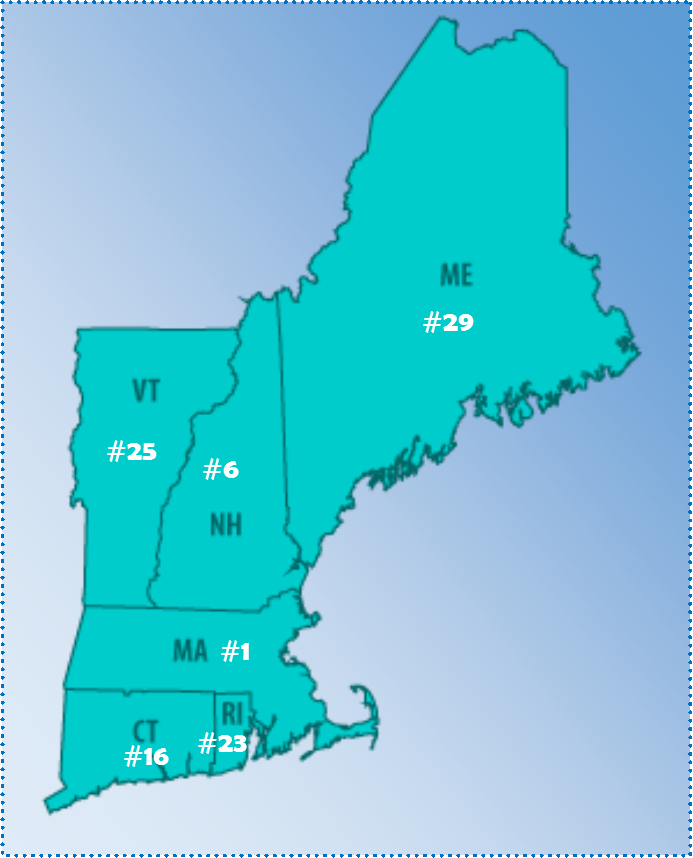
Washington, Massachusetts, and Connecticut are the most successful states at preventing youth homelessness, with Connecticut ranking third in the nation, according to the 2018 State Index on Youth Homelessness.  The report, by the True Colors Fund in partnership with the National Law Center on Homelessness & Poverty, analyzed 61 metrics in the 50 states and the District of Columbia. Homelessness is defined as experiences of sleeping in places not meant for living, staying in shelters, or temporarily staying with others while lacking a safe and stable alternative living arrangement. Alabama, South Carolina, Wyoming, and Arkansas were the least successful states at preventing youth homelessness.
In recent weeks, it was announced that Connecticut will use $6.5 million in federal grants to provide housing opportunities for homeless youth, building on its successful track-record. The grants will fund new, innovative housing assistance programs for young adults as part of a coordinated housing continuum that assures those in need can quickly obtain permanent housing and necessary supports, according to state officials.

The grants were allocated as part of a competitive process through the U.S. Department of Housing and Urban Development’s (HUD) new Youth Homelessness Demonstration Program (YHDP). To date, Connecticut has been awarded the largest grant of any jurisdiction in the country.

Building off the state’s nationally recognized progress in ending homelessness under the Malloy administration – which includes being the first state in the nation certified for ending chronic veteran homelessness, being one of only three states certified for ending general veteran homelessness, and matching all chronically homelessness individuals to housing – the state has set a goal of ending both youth and family homelessness by the end of 2020.

Speaking last week before a legislative working group, Gov. Malloy said “Nothing I suspect is more shattering as a child than to find oneself homeless – or even as a young adult – so I’m particularly happy over this past year that we’ve been able to fund a number of units designed specifically to meet the needs of younger homeless individuals.”

Overall, at the start of the year, homelessness in Connecticut was at a record low, according to a report from The Connecticut Coalition to End Homelessness.  It found that homelessness in the state has decreased for a fifth consecutive year and was at its lowest level to date. The report found that, as of Jan. 2018, roughly 3,300 people were homeless in Connecticut.  The Connecticut Coalition to End Homelessness states that overall homelessness in the state is down 25 percent from 2007.

Since 2011, the state Department of Housing and the Connecticut Housing Finance Authority have created, rehabilitated, or committed funding for nearly 25,000 units of housing – approximately 22,000 of which are affordable to low and moderate income individuals and families, officials point out. This represents a state investment of more than $1.42 billion, which has been matched by over $2.45 billion from other financial sources, including the private sector.


Hartford Ranked 3rd in U.S. for Women in Business

If you’re a woman in business, Hartford is among the best places in the nation to be.  That’s according to a new analysis by the website ShareFile, which ranked Hartford as the third best place in the U.S. for businesswomen.  Hartford ranked seventh a year ago. The “Businesswomen Power City Index” was developed by evaluating the 50 largest cities in the U.S. to determine where the best locations are for women to achieve business success, according to ShareFile.  The index ranks cities based on the percentage of women-owned businesses, executive jobs held by women, women vs. men wage gaps and the buying power of women, which is based on the cost of living and the average wages earned by women.

Hartford has jumped four places from 2017, as a result of a higher percentage of women-owned businesses (up 1.4%), according to the analysis.  Hartford’s ranking in the individual categories was:

  • 3rd (down from 2nd) in women’s buying power: 119
  • 6th (same as last year) in the percentage of women business executives: 31.9%
  • 16th (up from 22nd) in the wage gap between women and men: 18.1%
  • 31st (up from 42nd) in the percentage of women-owned businesses: 20.4%

The website points out that Hartford is home to the Women’s Business Center, located at the University of Hartford, which supports female entrepreneurs across the city and the state, offering advice, training, and events for women looking to expand their business.

Hartford is the only New England city in the top 20.  Providence, in the top 10 a year ago, fell out of the top 20.

Just ahead of Hartford, and retaining the top two positions in the ranking, were Baltimore and Tampa.  Rounding out the top 15 were Washington DC, Jacksonville, Raleigh, Denver, Orlando, Miami, Austin, Virginia Beach, Las Vegas, Sacramento, Los Angeles and Atlanta. Aside from the top two, no other city in the top 20 has remained in the same position as a year ago.

The analysis relies on data from four main sources, including the U.S. Census 2016 Annual Survey of Entrepreneurs, U.S Census Bureau 2015 American Community Survey 1-Year Estimates, Sperling’s Best Places and the Equal Employment Opportunities Commission. ShareFile is a cloud-based file sharing service, a Citrix Systems company, based in Raleigh.


Organizations Focused on Progress for Women and Girls Form Statewide Collective

It began as a casual conversation between Kate Farrar, Executive Director of the Connecticut Women's Education and Legal Fund (CWEALF) and Sharon Cappetta, Director of Development at The Community Foundation for Women and Girls, during the 2016 United State of Women Summit.  Now, it is a full-fledged and far-reaching network aimed at providing support and collaboration for organizations serving women and girls across Connecticut. The Connecticut Collective for Women and Girls (CCWG), launched last month with more than 20 members and six funders, gathered at Fairfield County’s Community Foundation to celebrate the beginning of the Collective. Members range from Girl Scouts to Planned Parenthood and the Commission on Women, Children and Seniors; the YWCA to The Alliance to End Sexual Violence and Connecticut Women’s Hall of Fame.

The Collective is a supportive network that unifies organizational members, facilitates collaboration, and bolsters their collective power to advance rights and opportunities for women and girls in Connecticut. CWEALF is the initiative's organizer.

“Now is the moment to come together to make progress for women and girls,” said Kate Farrar, Executive Director of CWEALF. “As the state’s leading champion for women and girls, CWEALF is thrilled to convene organizations across the state to increase our impact.”

Organizers say that while many organizations are doing critical work to transform the lives of women and girls in the state, too often, these organizations operate separately, leading to silos. The CCWG aims to “expand our strength as a collective force. It builds on participants’ individual assets with a community network of organizations that uplift and amplify each other’s work. The very act of coming together in this way increases each organization’s impact to advance rights and opportunities for women and girls in Connecticut.”

"Fairfield County’s Community Foundation’s Fund for Women & Girls is pleased to support the newly launched Collective. Collaboration, Diversity and Inclusion are core values of the Community Foundation’s. Through the Collaborative, partner organizations will develop a common language and requisite understanding of what is needed to advance gender equity," said Tricia Hyacinth, Director, Fund for Women & Girls. "Moreover, members, from all regions of the state, currently working independently, will achieve greater impact through their collective efforts."   

“The Community Fund for Women & Girls and The Community Foundation for Greater New Haven are delighted to support the Connecticut Collective for Women and Girls,” said Sharon Cappetta, Director of Development. “This emerging network of committed program providers are already doing great work with women and girls in the state. Together, working collectively, they strengthen their individual organizations and connect to potential partners, as well as bring attention and audiences to the gender implications of public policy in Connecticut. Our communities and our state benefit from targeted investments in nonprofit organizations, especially those who are working directly to advance women and girls.”

Other funders of the Collective are the Aurora Foundation for Women and Girls; The Community Foundation of Eastern Connecticut's Women and Girls’ Fund; the Women’s Fund at Connecticut Community Foundation; and the Main Street Community Foundation's Women & Girls’ Fund.  The Connecticut Collective for Women and Girls is guided by the following principles of gender equity, racial justice, LGBTQIA rights, civil rights, disability rights, ending and preventing violence, economic justice, reproductive rights, and immigrants’ rights.

Millennials Make the Most Money in Massachusetts; Connecticut Ranks 16th

If you were born between 1982 and 2000, and you live in Massachusetts, you’re making more money, on average, then people of your generation living elsewhere in the United States.  If you live in Connecticut, there are 15 states where the average salary for millennials is higher. Based on U.S. Census data analyzed by the website howmuch.com, the average salary for millennials in Connecticut is $69,600, compared with $80,307 in Massachusetts.  The states in between, reaching the top 10, are Minnesota ($77,090), North Dakota ($76,836), Washington, DC ($75,220), Maryland ($74,737), New Hampshire ($73,941), Wyoming ($73,345), Alaska ($72,374), New Jersey ($72,150), and Virginia ($71,397).

Also ahead of Connecticut are Utah ($71,284), South Dakota ($70,989), Nebraska ($70,870), Washington ($70,441), and Iowa ($69,739).

The analysis points out that millennials “are the most diverse generation in American history, more of them went to college than previous generations, and they are now the largest contingent in the workforce. Many of them also graduated in the middle of the Great Recession, which economists believe might have a lifelong impact on their wages.”

Geography also plays a role, according to the data.  The South, for example, “clearly stands out as a lackluster region for millennials in the labor market.”  In the Upper Midwest, salaries tend to be higher, and the same is true for much of the Northeast.

With the exception of Washington State, much of the west coast does not stand out.  “This highlights the fact that big tech companies are creating great jobs for a select group of skilled workers,” the analysis points out.

Millennials are making the least amount of money in Florida ($54,889), Mississippi ($53,269) and New Mexico ($51,893).

The data used is 2016 median household income for 25 to 44 year olds, taken from Census data and adjusted by Bureau of Economic Analysis regional price parity data, the most recent and comprehensive available.


CT Ranks 5th in Charitable Giving, Analysis Says

The residents of Connecticut are the fifth most generous in the nation, according to a new analysis.  The review of charitable giving by the financial website WalletHub, across the nation’s 50 states, found that Connecticut ranked:

  • 3rd – Percentage of Population Who Donated Money
  • 8th – Charities per Capita
  • 18th – Percentage of Donated Income
  • 19th – Volunteer Rate
  • 25th – Volunteer Hours per Capita

Overall, only Minnesota, Utah, New York and Maryland placed higher than Connecticut in the ranking of Most Charitable States.  Rounding out the top ten were Virginia, Georgia, Washington, New Hampshire and Wisconsin.

A year ago, Utah topped the list and Connecticut was just outside the top 10 at number 11.

The 18 key metrics used in the analysis were grouped in two categories weighed equally, Volunteering & Service and Charitable Giving.  Connecticut ranked 7th in the former and 14th in the latter.  The Volunteering & Service category included share of the population collecting or distributing food or clothes for people in need, volunteer hours per capita, and fundraising or selling items to raise money.  The Charitable Giving section included donating money and time, as well as the number of public charities, and share of the population donating time.

The least charitable states, according to the analysis, were Arizona, Rhode Island and Nevada.

Americans are among the world’s most generous people, WalletHub points out, ranking fourth out of 140 countries. U.S. donors in 2017 gave more than $410 billion to charity, with 70 percent of the funds coming directly from individuals, according to the National Philanthropic Trust.  In addition, nearly 63 million people volunteer in the U.S., serving a combined total of 7.9 billion hours per year, the equivalent of $184 billion of service.


https://youtu.be/t5lI9urlYkM


Impact of One Black Teacher Can Be Life-Changing, UConn Research Reveals

The influence of having a black teacher can significantly impact a black student’s life, and the effect begins early in an education.  Having just one black teacher in elementary school not only makes children more like to graduate high school – it also makes them significantly more likely to enroll in college, according to a new study co-authored by a University of Connecticut researcher. Black students who’d had just one black teacher by third grade were 13 percent more likely to enroll in college – and those who’d had two were 32 percent more likely.

The research paper, published this month by the National Bureau of Economic Research, observed that “Black teachers provide a crucial signal that leads black students to update their beliefs about the returns to effort and what educational outcomes are possible.”  In addition, “role model effects help to explain why black teachers increase the educational attainment of black students.”

The findings, from researchers at UConn, Johns Hopkins University, American University, and the University of California-Davis, were published recently in a working paper titled “The Long-Run Impacts of Same-Race Teachers.”  Another, related working paper by the same team titled “Teacher Expectations Matter,” also published by NBER, found teachers’ beliefs about a student’s college potential can become self-fulfilling prophecies.

In that research, every 20 percent increase in a teacher’s expectations raised the actual chance of finishing college for white students by about 6 percent and 10 percent for black students. However, because black students had the strongest endorsements from black teachers, and black teachers are scarce, they have less chance to reap the benefit of high expectations than their white peers, UConn Today reported.

“Black student students often don’t have parents or other black adults in their lives who have gone to college and gotten professional jobs,” Joshua Hyman told UConn Today.  Hyman, an assistant professor of public policy at UConn, who has a joint appointment in the Department of Educational Leadership in the Neag School of Education, co-authored the papers along with researchers from the three other universities.

“All it takes is one black teacher to influence a student,” he adds. “They see someone like them in their classroom and start to believe they can go to college too, and get a good job.”

The paper appears to be the first to document the long-term reach of the role model effect, UConn Today reported.  The researchers previously found that having at least one black teacher in elementary school reduced their probability of dropping out by 29 percent for low-income black students – and 39 percent for very low-income black boys.


In a New York Times op-ed last year, a ninth-grade teacher who has worked for 10 years in high schools and middle schools in the New York City area, and is Black, wrote this: “Black students need teachers who understand that they’re capable of the full range of anxieties and insecurities, greatness and success, hilarious moments and generous surprises. The amount of melanin in my skin is neither necessary nor sufficient for this: It’s not a magic formula. But I can remember a time when I looked and sounded like my students. That helps me see myself in them, and all they’re capable of. I hope they can see themselves in me.”

The latest findings are based on data from the Tennessee STAR class size reduction experiment that started in 1986 and randomly assigned disadvantaged kindergarten students to various sizes of classroom.  The researchers replicated the findings with similar data for North Carolina students.

The study found that black students who’d had a black teacher in kindergarten were as much as 18 percent more likely than their peers to enroll in college. Getting a black teacher in their first STAR year, any year up to third grade, increased a black student’s likelihood of enrolling in college by 13 percent.  Black children who had two black teachers during the program were 32 percent more likely to go to college than their peers who didn’t have black teachers at all.

“What’s very interesting about this paper is that it looks later in a student’s life,” says Hyman. “It’s impressive that the impression of having a black elementary school teacher last that long. It helps reduce the race gap.”

Additionally, students who had at least one black teacher in grades K-3 were about 10 percent more likely to be described by their 4th grade teachers as “persistent” or kids who “made an effort” and “tried to finish difficult work,” the researchers found. These students were also marginally more likely to ask questions and talk about school subjects out of class.

“One of the lingering issues of this paper is that we have to entice black people to enter the teaching areas,” Hyman points out. “In schools where there is a large black population, that has to be addressed.”


Failures in Federal Housing Policy Focus of Media Investigation, Hartford Concerns Highlighted

An NBC News investigation of the federal Department of Housing and Urban Development has found that more than 1,000 out of HUD’s nearly 28,000 federally subsidized multifamily properties failed their most recent inspection — a failure rate that is more than 30 percent higher than in 2016, according to an analysis of HUD records. When NBC broke the story last week of the agency’s dismal record of responding to conditions that at times have been described a “life-threatening,” the example cited most prominently was in Hartford.

The news report stated that “A federal housing inspection in February confirmed living conditions were abysmal … throughout the 52-unit Section 8 development known as the Infill apartments. The property scored only 27 points out of 100, far below the 60 points needed to pass the mandatory health and safety inspection.”  Infill is located in Hartford’s North End. 

“More than nine months after the inspection, federally mandated deadlines for action have come and gone, and residents say little has changed,” NBC’s Stephanie Gosk reported, despite “citations for exposed wiring, missing smoke detectors and bug infestations,” noted that “the Infill units racked up 113 health and safety violations — including 24 that HUD deemed ‘life-threatening.’”

“In one of Hartford’s poorest neighborhoods, a three-month investigation by NBC News found that HUD failed to comply with federal laws requiring prompt action against the owner of a property that authorities knew was unsafe, unhealthy and in disrepair, according to documents released through the Freedom of Information Act,” Gosk reported.

While the agency pointed out that 96 percent nationwide passed inspections, NBC reported that “HUD’s enforcement office, tasked with going after the worst landlords, now has the lowest staff levels since 1999, according to a federal watchdog.”

“In the case of Infill, though, HUD acknowledged that the landlord failed to deliver,” NBC News reported. “The owner provided certain assurances to our field folks that, in the end, did not happen,” HUD spokesman Brian Sullivan said in an email to NBC News. “That hasn't stopped the federal subsidies,” NBC News reported.

"It's a flow of money that continues to come," AJ Johnson, a local pastor who has helped the tenants organize, told NBC News.  “Whether it’s indifference or incompetence, the Trump administration’s failures in Connecticut and around the country cannot be excused. Someone must be held accountable,” said U.S. Sen. Chris Murphy, who led previous efforts to strengthen the HUD inspection process, NBC News reported. “Secretary [Ben] Carson owes it to these families to present a concrete plan for how he will make this better, and how he’ll make sure nothing like this ever happens again.”

Infill’s owner, meanwhile, is “set for years to come,” the NBC News report concluded.  “In July 2017, just seven months before the failed inspection, HUD renewed its contract with Isaacson for 20 years — a deal worth over $14 million.”

The NBC News investigation was reported, in addition to Gosk, by Suzy Khimm, Laura Strickler and Hanna Rappleye, and included interviews with numerous tenants of the property and other individuals in Hartford and Washington.

Blockchain Gains a Foothold on Connecticut Campuses

Blockchain is soon to arrive on Connecticut’s college campuses, with new initiatives imminent at Southern Connecticut State University, University of Saint Joseph, and the University of Connecticut’s Stamford campus. A six-week boot camp for individuals who would like to widen their computer programming skills to include Blockchain – a cutting-edge form of encryption technology – has been developed at Southern Connecticut State University in New Haven.  The SCSU Blockchain Academy launches on January 23 and runs though March 6.

Blockchain refers to the technology behind the development of secure digital databases that are accessible to the public, but cannot be altered by anyone other than the person posting the data. It is a shared, distributed ledger that improves the process of tracking and recording a transaction.  Blockchain can be used for a variety of purposes, including financial transactions, supply chain management, luxury goods or anything of value. Bitcoin and other cryptocurrencies use this technology.

“Southern intends to become a leader in educating people about the ‘Internet of Value,’ which is the fastest growing market the world has ever seen,” said Colleen Bielitz, SCSU associate vice president for strategic initiatives and outreach. A promotional video posted by Southern (below) has already been seen more than one thousand times.

“Blockchain is going to be increasingly important to businesses, and during the next decade is expected to have a major impact on the economy and the world. The goal of this academy is to grow the community of decentralized application developers and to make New Haven a hub for Blockchain technology and innovation as companies look to take advantage of this growing market.”

The University of Saint Joseph (USJ) announced last week that it has developed the Greater Hartford area’s first two-part certification program for future blockchain technologist, in collaboration with DappDevs, which is also collaborating with Southern and UConn.

President Rhona Free, Ph.D., remarked, “With this certificate program, USJ continues its commitment to providing educational programs aligned to our regional economy. The Greater Hartford community will benefit from this newly-created training program that offers skill development and career advancement in blockchain application development.”

The USJ pre-certificate program geared toward faculty, current college students, and college graduates in the Greater Hartford region, begins on Feb. 2, 2019, and runs over four weeks as one three-hour evening session per week. The full certification program is a six-week session that runs from March 5-April 11, as two three-hour sessions per week.

UConn’s Connecticut Information Technology Institute (CITI) is sponsoring the creation of a blockchain chapter in Stamford in order to facilitate the development of an education-based micro community designed to connect decentralized application developers. This community, in hand with Stamford’s established financial enterprises, will play a key role in further establishing Connecticut as a USA crypto capital, according to the university’s website.  UConn is offering a two-day Blockchain Development course, with its partners, DappDevs and the Werth Institute.

UConn’s first-ever blockchain symposium was held in Stamford in August.  The conference drew top scholars and Ph.D. students Stanford, Princeton, Virginia Tech, and from 10 nations, including England, Israel, Switzerland, China and Norway. State-run news agencies from Vietnam and China also covered the two-day event, called “Blockchain Technology & Organizations Research Symposium.”

These initiatives reflect that blockchain is increasingly taking academia by storm, not only in Connecticut but across the nation.  This past summer Columbia University and Stanford University both launched blockchain research centers, following in the footsteps of the Massachusetts Institute of Technology's Digital Currency Initiative, which launched as part of the MIT Media Lab in 2015; MIT was among the first institutions to create such a program, according to industry publication Inside Higher Ed.

The Center for Blockchain Research at Stanford University launched in June.  Miami University launches a course in blockchain technology for undergraduates in the Spring 2019 semester.  Montclair State University’s center for continuing and professional education recently spearheaded the launch of three professional blockchain certificates -- one covering the basics, one for developers and one focusing on applications of blockchain in the financial sector.

https://youtu.be/_8X_wr1tCNI

Girls With Impact, Girl Scouts Collaborate to Increase Entrepreneurship Among Teen Girls

In an effort to get girls career-ready, Connecticut-based Girls With Impact, the nation’s only tech-enabled entrepreneurship program for teen girls, is launching a partnership with Girl Scouts of Connecticut to enable girls to parlay their cookies experience into their own businesses. “Entrepreneurship is one of the four programmatic pillars that comprise the Girl Scout Leadership Experience,” said Mary Barneby, CEO for Girl Scouts of Connecticut. “We welcome the opportunity to partner with Girls With Impact to provide our older Girl Scouts with a ‘virtual MBA’ in developing their own business plans. We are creating the next generation of female leaders and programs like this give our girls a real edge and help them become more confident and career-ready.”

Girls With Impact CEO Jennifer Openshaw says her goal is to train 10,000 young women as entrepreneurs, equipping them with the skills to start businesses or serve as innovators within corporate America.

Girl Scouts members will be entitled to participate in the Girls With Impact Academy – a 12-week “mini-MBA” program, valued at $2,000, that equips girls with business skills. The program, now in its third year, has helped some past participants to earn full scholarships at top colleges. Sessions are offered throughout the year, with various schedules. The reduced fee for Girl Scouts will be just $450, and scholarships are available.

It is both a skills-builder and confidence builder, critical for teenage girls as they navigate their teens and look forward to careers.  Openshaw points out that only 6 percent of Fortune 500 CEOs are women and just 36 percent of entrepreneurs are women.  Those are statistics she hopes to change.  The after-school, extra-curricular program has seen exceptional results in confidence, empowerment, college prep and career readiness, including STEM areas.

“Girl Scouts is one of our nation’s most powerful leadership training grounds for young women,” said Openshaw. “We’re thrilled to support Girl Scouts as it seeks to modernize and remain relevant for young women in the new global economy.”
Girl Scouts of Connecticut serves over 26,000 girls and over 12,000 adults giving girls the skills they need to empower themselves for life. Through the Girl Scout Cookie Program, the largest girl-led entrepreneurial program in the world, Girl Scouts learn five essential skills that they will carry with them for a lifetime: goal setting, decision making, business skills, money management, and people skills.

Through the Digital Cookie® platform, Girl Scouts are able to take their cookie businesses online, using their own personal website to reach customers across the country, experiencing true enterprise. Barneby called on girls to bring a friend to Girls With Impact and “build your network for tomorrow.” She says the tech delivery enables girls to connect with others nationwide and build that support system so critical to career success.

Girls With Impact, a nonprofit, is the nation’s only entrepreneurship program just for teen girls, delivered live from the home or road. Applications are accepted at  www.girlswithimpact.com.

Hartford, New Haven As “Suburbs” of Boston and New York Raises Possibilities - and Pushback

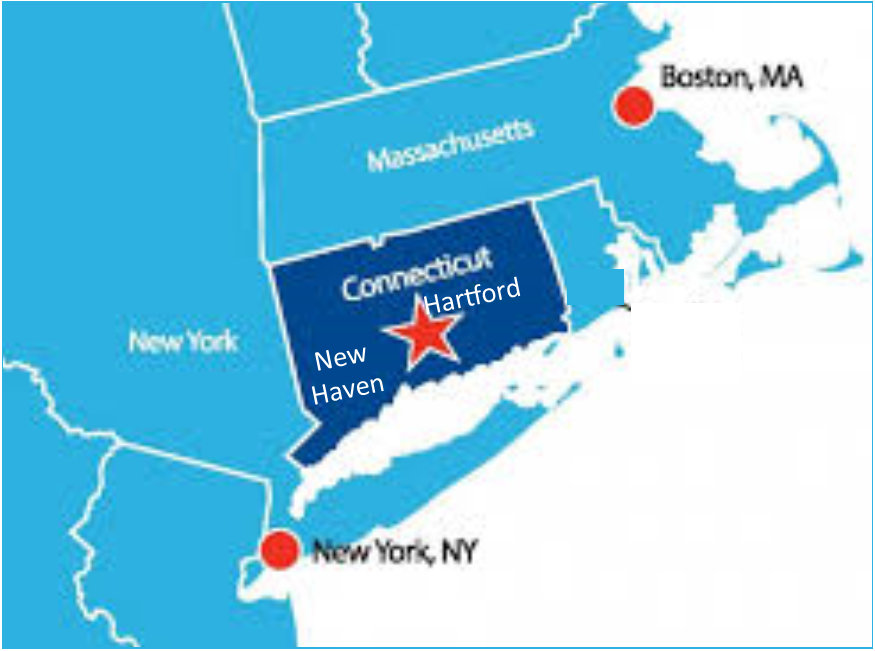
The objective was to provide evidence that Connecticut is on the cusp of a transit renaissance.  But a “thought leader” article by a prominent faculty member at the University of Connecticut School of Business – an acknowledged expert in transportation and its impact on residential property values – has drawn a range of reactions from municipal, business and transportation officials in Connecticut, including some pushback. The article, by UConn associate professor of real estate and finance Jeffrey Cohen, stated that “with high speed, inter-state transportation, it would be much easier for Greater Hartford and New Haven to thrive as suburbs of Boston and New York City.  Imagine how great it would be to hop on a fast train to Logan Airport, JFK or LaGuardia.  The world would be at our doorsteps, and our doorsteps would be there for the world to explore.”

The characterization of two of the state’s largest cities as potential “suburbs” of New York and Boston, seemingly overlooking Bradley International Airport and Tweed-New Haven in the process, has raised questions from officials.
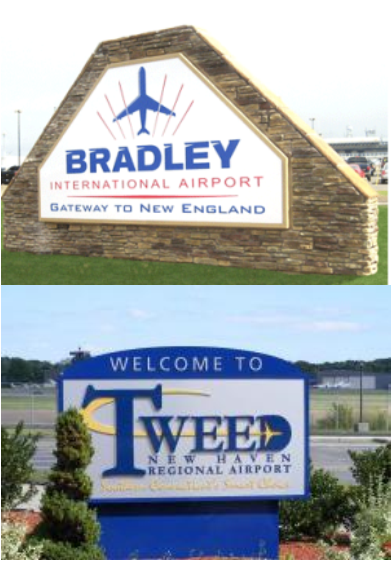

“As the second-largest airport in New England and the recently ranked third-best airport in the country, Bradley Airport offers convenience and efficiency that the airports in Boston and New York cannot match. Enhanced rail connectivity to the airport would be a major win for passengers throughout Connecticut and Western Massachusetts, and we would encourage UConn to consider maximizing the airport in its own state rather than promoting the outsourcing of Connecticut’s economy to its neighbors,” Connecticut Airport Authority Executive Director Kevin A. Dillon, A.A.E, told CT by the Numbers.

“While the Connecticut Airport Authority is supportive of high-speed rail connectivity in Connecticut, it is unfortunate that UConn would not recognize the benefit of promoting and utilizing Bradley International Airport as the primary airport for travelers in the region,” Dillon added.

“With regard to Bradley, Aer Lingus’ commitment to another four years of service between Hartford and Dublin is a huge boon to our economic development efforts and we hope other airlines will take note and pursue additional domestic and international routes,” said MetroHartford Alliance’s Brian Boyer, Vice President of Communications, Marketing, and Media and Public Relations.  “It’s time to continue showing loyalty to our hometown airport as we position ourselves as a global region attracting international companies. With the ease of use at Bradley, brief 90-minute layovers in Dublin en route to destinations throughout Europe, pre-screening on return flights to clear customs before arrival in Hartford and the prospect of attracting new airlines, this flight is a win-win for our community.”

While some officials saw possibilities, as did Cohen, in the potential impact of continued enhancements to the state’s transportation system, they also acknowledged that those changes were not immediate and current assets should be maximized.

“Fast-growing healthcare, pharmaceutical, and technology sectors of the New Haven economy would be well-served with easier access to major markets in New York and Boston, and the international transportation options in those cities as well,” pointed out New Haven Mayor Toni N. Harp. “We know one-hour train service between New Haven and New York is technologically feasible: what we need to complete the project is the collective will to make it so.”

“High speed rail offers tremendous opportunities for New Haven.  Our proximity to New York City is already a great selling point for the region, if the commute time became significantly shorter, then we are that much more attractive as a location.  We should strive for this type of transportation improvement,” said Garrett Sheehan, president of the Greater New Haven Chamber of Commerce.

Sheehan went on to emphasize that “planning for the future of transportation should not take away from the present.  This type of high speed rail is years away.  In New Haven, we have an incredible transportation asset in Tweed-New Haven airport.  It is already located within the city limits and just short drive from anywhere in this region.  The Chamber supports expanding the airport’s runway and investing in Tweed to bring back more flights and destinations.  Even a handful of more flights would be beneficial to the economic growth of our region.”

Cohen, who has received national recognition in his field, praised the CTrail Hartford line - which connects New Haven, Hartford, and Springfield, MA - and CTfasttrak bus line – which links Hartford and New Britain - noting that “we are starting to see residential and business development near the stations, and this is one of the big benefits of transit.”


He added that “Some people in New York are starting to discover the hidden treasure of relatively low-priced real estate, along with the good schools, beautiful parks, and savory restaurants in central Connecticut.”

“An ideal location with easy access to major cities in the Northeast and Mid-Atlantic, we are proud to be at a point where talent and businesses from these markets should consider Hartford as an opportunity for economic growth and development,” the MetroHartford Alliance’s Boyer noted. “Transportation plays an integral role in this growth and with the new Hartford Rail Line and the continued growth at Bradley International Airport as one of the nation’s top mid-sized airports, we look forward to working with our community and prospective businesses to ensure long-term economic growth for generations.”