CT is 24th in U.S., 2nd in New England in International Students; Numbers Rising

There were 15,278 international students enrolled at Connecticut collegiate institutions during the 2017-18 academic year, which represents an increase of 4 percent over the previous year and a 63 percent increase since 2012. In academic year 2017-18, Connecticut ranked second in New England and 24th in the U.S. in international student enrollment, according to the 2018 Open Doors report released by the nonprofit Institute of International Education (IIE) and the U.S. Department of State’s Bureau of Educational and Cultural Affairs (ECA).

Between AY 2012-13 and AY 2017-18, Yale University and the University of Connecticut took the top spots as the universities with the largest share of international students in Connecticut.

International students represent a big economic injection for New England, the report points out. In academic year 2017-18, international students contributed $39.4 billion to the overall U.S. economy, with $4.2 billion added to the New England economy alone. Between 2012 and 2018, international students contributed a total of $21.3 billion to the New England economy. Foreign students contributed an estimated $584 million to Connecticut’s economy in the past year, according to the report, which was highlighted recently by the New England Board of Higher Education.

The number of international students in New England has increased every year since 2012 and the region’s growth on this measure now outpaces the nation. In the 2017-18 academic year, the region enrolled 6.3 percent more international students than the previous academic year (AY).  This figure compares to a national increase of only 1.5 percent during the same period.

Both public and private nonprofit institutions in New England saw a 61 percent rise in the number of foreign students over a five-year period from AY 2012-13 to AY 2017-18, which is comparable to the national growth in the international student population over the same period.

International students have helped forestall a nationwide enrollment crisis. The total higher education population in the U.S. topped out in 2010 at about 21 million students and has been slowly declining since then. The decline in New England is especially acute. This has been countered to some extent by growth of the foreign student population, coupled with a rise in online enrollment, which together comprise almost a quarter of the nation’s students.

The data indicates that there were 9,350 international students enrolled in Connecticut colleges and universities in 2012; 14,711 in 2017 and 15,278 in 2018.  The number of international students increased from 2017 to 2018 in every New England state with the exception of New Hampshire, which saw a slight decrease.  Only Massachusetts has more international students than Connecticut, among the six New England states.
Craft Brewers Look to Continue CT Growth with Legislative Support

After two ill-fated legislative proposals that would have been detrimental to the state’s burgeoning craft brewery industry disintegrated within days amidst a public outcry, the Connecticut Brewers Guild is conveying its eagerness to work closely with state lawmakers.  Their aim: to help the booming industry create even more good-paying jobs, bolster local craft beer production, and to increase direct-to-consumer sales. “In 2012, when the Connecticut Brewers Guild was founded, there were around 12 craft breweries statewide,” said Phil Pappas, the executive director of the Connecticut Brewers Guild. “Now, our state’s booming craft brewery scene has more than 85 operational breweries with many more in the planning stages. These craft breweries -- all of which are independently owned -- employ over 4,600 people statewide, produce more than 166,000 barrels of locally brewed craft beer, and contribute to an overall economic impact of $746 million annually.”

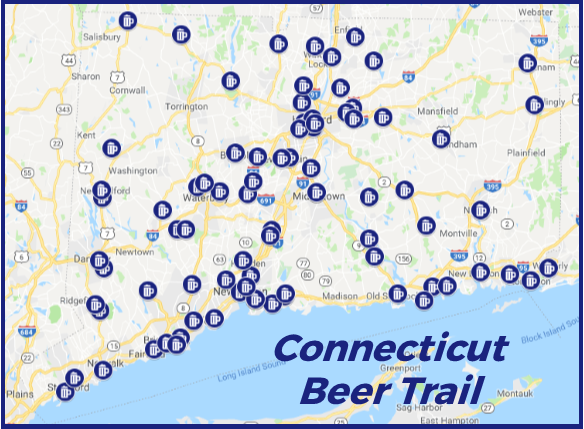
It is those numbers, and the degree of progress in recent years, that drive the conversation, although Pappas points out that although a lot of progress has been made, there is more work to be done to ensure the industry continues to grow and thrive statewide.  On doesn't need to look further than the map of the COnnecicut Beer Trail to see the impact of the industry all across the sate.

“Connecticut’s growing craft beer industry has been helped by state lawmakers providing a relatively healthy regulatory environment,” Pappas said.  “We thank state lawmakers for their support to date, and now more than ever -- in an increasingly competitive state-by-state landscape -- we need a renewed commitment to strengthen our industry, which is a bright spot in Connecticut’s economy.

“Moving forward,” he added, “we hope to work with state lawmakers and others to create even more local jobs, increase local craft beer production, and drive additional direct-to-consumer sales.”

In 2015, MarketWatch—a financial information website—ranked Hartford/New Haven as one of 10 cities that love craft beer the most. Other cities included Portland (Oregon), Cleveland and Washington, D.C. A year ago, Innovation Hartford reported that 2016 data indicated the craft beer industry in Connecticut contributed $718 million to the economy. That year there were 49 breweries that produced a combined 129,825 barrels of craft beer per year.  A year ago, there were 65 breweries operating throughout the state and another 49 breweries are either in the planning and construction phases or set to open shortly.

“We also look forward to working with representatives from the wholesaler, distributor, retailer, brewpub, and restaurant communities, to positively impact our state’s small businesses and economy both today and tomorrow,” Pappas said. “Our Connecticut Brewers Guild members strive every single day to produce the highest quality, best-tasting craft beer in the market. We consistently seek out ways to improve our product, utilize locally sourced ingredients, generate jobs, support local businesses while cultivating fun experiences for customers on-premise and off-premise.”

Rebranding of Connecticut's Cities Continues: Waterbury Up Next

The latest Connecticut community to go down the re-branding road is Waterbury.  The Prospect-based marketing firm WORX Group presented its marketing concepts this week to the city’s Board of Aldermen, according to reports in the Waterbury Republican-American. In December, the firm proposed two logos and sought public input, including at a series of focus groups last spring.  The underwhelming choices: The proposals were either a stylized “W” or a version of the city’s “brass horse.”  The horse is modeled after the statute atop the Carrie Welton Fountain by the city’s downtown Green. The proposed logo adds two leaves as wings, symbolizing the city’s rebirth. The “W” has an upward-tracking center, representing the city’s rising trajectory.

The lack of enthusiasm – and some outright criticism – for the initial options prompted a new approach, which led to the latest proposal, a stylized multi-colored W with the city’s name underneath, unveiled this week for the city leadership’s approval.

In recent years, Stamford, Norwalk and New Britain are among the Connecticut communities that have undertaken re-branding efforts, including rolling out new logos for the municipalities.   New Britain took steps to redesign the city’s Main Street bridge over Route 72 with architectural features promoting a beehive theme, as highlighted in the logo launched in 2017, and New Britain began to use the new logo and tagline on signs, letterhead, brochures and its website.

In Waterbury, the local marketing firm has been paid to $81,500 to develop marketing concepts and is proposing a $180,000, one-year, contract that would include a new website, social media, email marketing and other related initiatives. The website and social media campaign would include job openings, available properties, recreation opportunities, local eateries, upcoming events, health care resources, stories on city infrastructure projects and features stories on key city figures and business success stories, the newspaper reported.

The U.K.-based creative agency Canny, which chronicled city rebranding efforts around the world, has pointed out that “Creating a single brand for a city helps highlight its offerings and interactions, allowing it to appeal to both tourists and residents alike.”  The site also notes that “good city branding can make a place seem desirable, but bad city branding can have the opposite effect.”

CT is One of 8 States Launching Pilot Projects to Retain Workers with Disabilities

Eight states - including Connecticut - have launched projects aiming to provide opportunities for people who experience occupational or non-occupational injuries or illnesses to remain in and return to the workforce. After a competitive selection process, the U.S. Department of Labor’s Office of Disability Employment Policy in partnership with DOL’s Employment and Training Administration and the Social Security Administration awarded eight states with funding for RETAIN Demonstration Projects.

Connecticut’s request was $2.1 million. Phase one of the project will be in the Capitol Region; the intention is to then expand to other regions of the state in phase two.  Each state created a leadership team comprised of representatives from state health services, state workforce development, and other public and private stakeholders. The team will work to foster collaboration between health care providers and employers to assist injured or ill workers in remaining in the workforce.

Health care partner on the Connecticut pilot initiative is the University of Connecticut Health Center and the insurer is The Hartford.  The state Department of Labor’s Office of Workforce Competitiveness is leading the team, along with representatives of Capital Workforce Partners, The Hartford, UConn Health, the state Department of Rehabilitation Services, and the CT Business Leadership network.

In addition to Connecticut, the states of California, Kansas, Kentucky, Minnesota, Ohio, Vermont and Washington received awards. While each has the same mission, the projects are adaptable to specific state needs. The goal of RETAIN, or Retaining Employment and Talent after Injury/Illness Network, Demonstration Projects is to test the impact of early intervention strategies that improve stay-at-work/return-to-work outcomes, according to the U.S. Department of Labor, as reported by the Council of State Governments (CSG).

Stay-at-work/return-to-work initiatives provide timely and effective supports and services that allow employees to remain in the workforce and avoid long-term unemployment. Keeping people engaged in the workplace benefits all stakeholders including the employee, employer and state, officials point out.  States hope to reduce long-term work disability and the need for Social Security Disability Insurance through the projects.

The projects will be funded in two phases. The eight states mentioned above were funded for the 18-month Phase 1 pilot project. After Phase 1, a subset of the recipients will competitively apply for Phase 2 funding. Phase 2 will include a 30-month project implementation and a 12-month evaluation.

Providing supports and services for people who have acquired occupational or non-occupational injuries or illnesses strengthens their quality of life, allows businesses to prosper, and stimulates state economies, officials noted.

Housatonic Community College Program Finalist for National Award

Housatonic Community College's advancements in the areas of efficiency and effectiveness were recognized by the Community College Futures Assembly, which recently named the College's Family Economic Security Program (FESP) as a finalist for its national 2019 Bellwether Award. "It is an honor to be among the finalists for this prestigious award. We're excited to compete and share the program with other colleges because it is really helping our students," said Alese Mulvihill, Associate Dean of Student Success at Housatonic Community College (HCC). "Our hope is that other schools will institute FESP in their own communities and get the same results we're seeing."

The FESP program provides bundled services to HCC students of low to moderate income, whereby students receive resources and tools to advance their education, career and economic security. Achievement coaches provide academic, financial and life counseling, career coordinators provide career counseling, and students participate in workshops and activities.

The high-touch program was adopted from the Center for Working Families model from the Annie E. Casey Foundation, and is an innovative partnership between HCC, Fairfield County's Community Foundation Fund for Women and Girls, and the Housatonic Community College Foundation.

As part of the Bellweather Awards process, the awards application must identify the issue or challenge that the leading edge program or activity was designed to address, describe the process, timeline, participants, and resources required to implement the program or activity, specify the results and/or impact, and elaborate on lessons learned for colleges considering a replication of the initiative.

Now in its fourth year, the FESP program is a model for student success, with retention rates for FESP students a full 30 percent higher than those of the College.

"FESP is a perfect example of the power of partnerships to transform services for students," said Dr. Paul Broadie, HCC President. "Through these collaborations, the program increases graduation rates, leading to greater employment opportunities, increased earnings, and the economic expansion of surrounding communities. The impact is tremendous."

Bellwether College Consortium through the Community College Futures Assembly addresses the best practices at community colleges. Thirty finalist colleges in three categories were competitively chosen by a national panel of judges to compete for the coveted award.  The selection process culminates with the winning program initiatives to be announced this month.

"The Fund for Women & Girls designed FESP to address the academic achievement gap among Fairfield County's low-income women and simultaneously promote their economic advancement. FESP uses a proven model that yields higher graduation rates,” said Tricia Hyacinth, Director, Fairfield County's Community Foundation's Fund for Women & Girls.  “We've seen firsthand how the program improves odds for women and their families.”

https://youtu.be/xFFkZb9RQjU

Connecticut Hall of Fame Inductions Seem to Have Ended

It seemed like a good idea at the time.  More than a decade ago, in 2005, a committee of legislators successfully urged the state legislature to establish the Connecticut Hall of Fame, to be featured in the Legislative Office Building (LOB) in Hartford. In announcing the proposal, they explained “the hall of fame is designed to recognize those individuals from Connecticut who have distinguished themselves in their professions, nationally or internationally. It will also have an education function because of the great number of students who visit the Capitol and LOB annually.”  It was even specified that the lettering of the names of inductees “will be in brass.”

The first class of inductees, in February 2007, were Mark Twain, Igor Sikorsky and Katharine Hepburn, their names affixed to the wall of the second floor atrium in the LOB.  It marked a successful launch, after being “in the planning stages for four years,” according to an announcement at the time.

The legislators driving the initiative were then-Senators Joseph Crisco (D-Woodbridge) and John McKinney (R-Fairfield) and then-Representatives Elizabeth “Betty” Boukus (D-Plainville), and Michael Caron (R-Danielson).  Today, all no longer hold legislative seats.  When it began, it was said that “Funding for the Connecticut Hall of Fame is expected to come from corporate contributions, grants, and contributions from individuals, foundations and, potentially, appropriate state agencies.”

The Hall has slowly fallen from the legislative radar screen. A brochure about the Hall of Fame indicates that “Each year the committee reviews the applications of many nominees and refers their selection to the Legislative Leaders for approval. An awards ceremony, ‘Connecticut Hall of Fame Day,’ is held to honor those inducted.”  Not lately.

Induction ceremonies were held in 2007, 2008, 2009, and 2010, but only in three years since – 2013, 2014 and 2016.  In 2008, the committee reviewed the applications of 30 nominees.  No ceremonies have been held, however, in three of the past four years, and none appear to be on the immediate horizon.  Officials indicate that the “committee” currently is without leaders.

In 2009, the committee included Rep. Themis Klarides, now the House Republican leader. In a news release that year, she saluted one of the inductees:  “Paul Newman’s story is a truly American story and Connecticut can be proud he called our state home,” said Representative Klarides. “Mr. Newman is known widely for his distinguished film and Broadway career, but his service to our nation in WWII and his life-long philanthropic dedication further make him uniquely worthy of addition to the Connecticut Hall of Fame.”

Most recently, in 2017, the co-chairs were then-Sen. Anthony Guglielmo and Rep. Terrie Wood, along with then-Rep. Matt Lesser, now a State Senator.

Among the inductees are UConn’s Geno Auriemma and Jim Calhoun, along with historic figures Noah Webster, Harriet Beecher Stowe, Roger Sherman, Nathan Hale, Henry Burbeck, Helen Keller, Horace Wells, Marian Anderson, Harry Gray, Jackie Robinson and Ralph Sturges, longtime leader of the Mohegan Tribe.

The inductees also Judge Constance Baker Motley; composer and musician David Brubeck; architect Frederick Law Olmsted; aviation pioneer Frederick Rentschler; composer and lyricist Stephen Sondheim; actor and philanthropist Paul Newman, and actress Meryl Streep.  Also having their names added to the roster of inductees on a second-floor wall of the Legislative Office Building are Judge John T. Downey; American inventor and businessman Alfred Carlton Gilbert; artist Deane Keller and undersea explorer Robert Ballard.

Whether the Connecticut Hall of Fame will see additional inductees this year, or in future years, remains uncertain. Information on the Hall can be seen at https://www.cga.ct.gov/hof/

Libraries Join Response to Connecticut’s Opioid Crisis; Stand Ready to Save Lives

The collective response to America’s opioid crisis has opened a new front in Connecticut in an unlikely location – the public library.  Driven by a desire to be prepared to save a life, a growing number of libraries – in communities large and small – now have the opioid reversal drug naloxone on hand, with librarians trained in how to use it. Naloxone is a medication that can reverse and block the effects of other opioids.  It can very quickly restore normal respiration to a person whose breathing has slowed or stopped as a result of overdosing with heroin or prescription opioid pain medications.

The U.S. Surgeon General has issued a nationwide public health advisory, to “urge more Americans to carry a potentially lifesaving medication that can reverse the effects of an opioid overdose.” That office reports that an estimated 2.1 million people in the U.S. struggle with an opioid use disorder.

For Marlborough’s Richmond Memorial Library, the decision to train three staff members to administer the medication was wholly consistent with what a library is all about, as director Nancy Wood explains.

“I liken it to the defibrillator that we brought in to the library two years ago.  If you are saving a life for one reason, you can save a life for another.  And it is a cultural thing for librarians to want to help people.  It is what we do.”

As a significant public place in Marlborough, open more hours than just about any other building in town, Wood says that although “hopefully we never have to use it,” she and her staff felt it was important to be trained and ready.  The AHM Youth & Family Services organization provided the training last March.

Rates of opioid overdose deaths are rapidly increasing nationwide and in Connecticut.  Since 2010, the number of opioid overdose deaths in the U.S. has doubled from more than 21,000 to more than 42,000 in 2016. Overdose deaths in Connecticut have nearly tripled in a six-year period, from 357 in 2012 to 1,038 in 2017. Of those 1,038 deaths, 677 involved fentanyl — a synthetic opioid drug 30 to 50 times more powerful than heroin — either by itself or with at least one other drug, according to published reports.

According to the U.S. Center for Disease Control and Prevention, between June 2017 and June 2018, there were 1,056 reported cases of drug overdose deaths, based on provisional data, in Connecticut.  An analysis by the Kaiser Family Foundation concluded that the opioid overdose death rate in Connecticut was the 10th highest in the nation, and the percentage increase between 2016 and 2017 was 17th highest in the U.S., exceeding the national average.

Hartford recently announced a $10,000 grant from CIGNA Foundation that will train librarians in the city and cover the purchase of naloxone for city libraries.

“As a public institution, we see that our entire community is impacted by the opioid crisis; it was clear that a rapid and robust response to the problems caused by the opioid drug crisis was imperative,” said library CEO Bridget Quinn-Carey as the grant was announced earlier this month.  Library officials also plan to provide information about opioid abuse awareness and host education and information forums.

When the town of Canton made training available for department heads last year, library director Sarah McCusker took the one-day session.  Like Wood, she views it as an extension of first aid training that can help a patron in distress.

“It’s the same as knowing CPR or having an AED on-site.  We call 911 immediately, but we see everything, and we’d like to be prepared,” McCusker explained.  She also believes employees in public spaces should be “widely trained” to assist in emergency situations. And she anticipates that if her town government makes training in the use of naloxone available again this year, although it is not mandated, additional staff members will choose to attend.

The Connecticut Library Consortium indicates that while official figures are not available, reports of libraries having naloxone available, along with official policies governing its use and trained staff members, are increasing.  Hartford, Marlborough, Canton and Avon are among them.  Other libraries have librarians on staff who have sought and received individual training. For many libraries, it is a major health issue that their municipalities and local governing boards are reviewing, and one that impacts cities and small towns.

The naloxone brand NARCAN® Nasal Spray is a pre-filled, needle-free device that requires no assembly and is sprayed into one nostril while patients lay on their back. Those prepared to administer it have been trained on the signs of an opioid overdoes, and how to respond immediately as 911 is called for a local ambulance response.

“Public libraries are responsible for meeting the wide-ranging needs of their communities. Yes, libraries offer books and storytime programs and research help that goes beyond Google. But they are also the place to turn to find a job, become a citizen, discover a new app, find quality healthcare information, make art, or learn a new skill,” said Jennifer Keohane, Executive Director of the Connecticut Library Consortium.  “Having library staff who are trained to administer NARCAN is another way that libraries are evolving with their communities and are ready to provide help whenever and however it is needed.”


Cultural and Historic Sites Receive $3 Million in Waning Weeks of Malloy Administration

Aimed at small to medium-sized cultural organizations seeking funding for “collaborative projects which demonstrate a clear vision of how individual sites and organizations can effectively tie together local, regional or statewide cultural assets,” the Good to Great grant program was created in 2014 during the administration of former Governor Dannel Malloy to “go beyond basic facilities repair or expansion to support projects that tell the stories of our cultural and historic sites in engaging, meaningful and relevant ways.” The final round of grants – unless the program is renewed by the Lamont administration – were announced less than three weeks prior to the change in gubernatorial leadership.   The Connecticut Department of Economic and Community Development (DECD) announced $3,051,971 in grants to 12 nonprofit organizations through the program in late December.

The grants may be used for capital projects that address the rehabilitation and/or adaptive re-use of existing facilities that will transform the visitor experience, site work associated with rehabilitation projects or additions, rehabilitation of historic landscapes, or protection and/or interpretation of archaeological sites.  Other appropriate uses include artists’ fees, conservator fees, construction costs, ADA accessibility, evaluation services and documentation and exhibit scripts, fabrication and installation to complement capital improvement.

The grants range between $50,000 and $150,000 and require a 25 percent cash match; grantees will have two years from date of grant contract to complete the funded project.  Applicants for the state grant must be a Connecticut 501(c)(3) or 501(c)(13) organization that owns, operates and/or sponsors a cultural venue or historic site in Connecticut with an average annual income of $500,000 or less.

The just under-the-wire recipients:

  • The New England Carousel Museum in Bristol was awarded $150,000 to install a new energy-efficient, air-handling system with humidity control to protect the Museum's collection and improve the visitors' experience.
  • The Connecticut Electric Railway Association (aka The Connecticut Trolley Museum) in East Windsor was awarded $50,000 to complete the on-going restoration of one of theMuseum's most historically significant trolleys - Connecticut Company Car #3001.
  • The Friends of the Pinney House, Inc. in Ellington was awarded $150,000 for the interior restoration of the Pinney House so it can be used as a cultural center, a meeting place and an education site.
  • Ebony Horsewomen Inc. in Hartford was awarded $50,000 to erect a pre-fab barn building to create a meeting & classroom space and a mini Black Cowboy Museum.
  • The Madison Historical Society was awarded $138,600 for the restoration and preservation of the interior of Lee's Academy and to create an ADA-compatible learning and community center.
  • The Denison Society, Inc. (aka Denison Homestead) in Mystic was awarded $150,000 to restore the Homestead's barn so that it may provide areas for programs, workshops and community events.
  • The Norfolk Historical Society was awarded $60,546 to redesign the welcome/reception area, reinterpret gallery space and reclaim research space.
  • The Keeler Tavern Preservation Society, Inc. (aka Keeler Tavern Museum & History Center) in Ridgefield was awarded $96,575 for facility improvements (climate controlled, fire-protected, well-designed storage) for its most fragile objects that relate directly to major moments in U.S. history.
  • The Stonington Historical Society (aka Old Lighthouse Museum) was awarded $56,250 for a comprehensive research effort and the commission of an archeological survey of a potential Venture Smith site; creation of a permanent Venture Smith and slavery exhibit at Old Lighthouse Museum.
  • The Ward Heitmann House Museum Foundation, Inc. (aka Ward Heitmann House Museum) in West Haven was awarded $150,000 to repair the foundation and exterior along with period appropriate landscaping so the House can reopen its doors to the public.
  • The Eastern Connecticut Center for History, Art and Performance (aka EC-CHAP) in Willington was awarded $1,000,000 to preserve and rehabilitate two secondary buildings for use again as an in-residence artist and a café and conduct a water mitigation plan for the main structure.
  • The Mary & Eliza Freeman Center for History and Community in Bridgeport was awarded $1,000,000 for the exterior restoration of both structures, as well as the interior restoration of the Eliza Freeman House.

The grant award recipients constituted the final announcement of 2018 by the state Department of Economic and Community Development.  Nineteen days later, Gov. Lamont took the oath of office.  He is expected to announce the department's new leadership and management structure in the coming days.

Foundation Raises $1 Million in 2018 in Support of Next Generation of Mental Health Care Professionals

The Quell Foundation seeks to reduce number of suicides, overdoses, and incarcerations of people living with a mental illness.  The Massachusetts-based nonprofit organization, which spent some time in Connecticut in 2018, continues to impact lives across the country, raising over one million dollars last year toward their mission to remove the stigma of mental health and to fund the next generation of mental health care professionals. The Foundation came to the Wadsworth Atheneum in May to show a new documentary, Lift the Mask, which featured the first-person stories of individuals impacted by suicide.  Among those featured in the film was a Vice President at Aetna and a recent college graduate from Middletown. It was the first time the documentary was shown outside a college campus.  It was also shown at the University of Connecticut in September.

Following the film's showing in Hartford, a panel discussion was held before a packed auditorium, featuring both the Aetna executive and the former Middletown resident and her parents, who movingly told the story of their brother/son’s suicide.

“The generous support of our sponsors and individual donors is overwhelming,” said The Quell Foundation CEO, Kevin Lynch. “This outstanding growth comes to us at a pivotal time for mental health in America and our journey as an organization. We are deeply grateful and look forward to continuing our work in the years to come.”  Lynch’s wife, Karen, is Executive Vice President of CVS Health and was recently named President of the Aetna Business Unit following the company’s merger.

The Foundation awards scholarships to students living with the challenges that come with having a mental health diagnosis, students who have endured the loss of a parent or sibling to suicide, and to students pursuing a career in the mental health field.  Lynch and his team have distributed over $835,000 to young adults representing forty states and 118 colleges across the country since the Foundation’s establishment in 2015.

“The scholarship program is one of the most important tools we have in normalizing the conversation around mental health while also addressing the dearth of mental health providers,” said Lynch. “We are developing a pipeline of professionals to offset the aging population and high-demand of mental health care providers we have in this country.”

The Quell Foundation works to reduce the number of suicides, overdoses, and incarcerations of people with mental illness by encouraging people to share their story, increasing access to mental health services, and supporting first responders in recognizing the mental health warning signs among their own.

“The Quell Foundation’s Bridge the Gap award to students pursuing degrees in the mental health care field are most strongly facilitated through The Quell Foundation’s long-term partnerships,” said Renee Wilk, Executive Director of The Quell Foundation. “We invest in their students and the unique, mental health, degree-awarding programs offered at these institutions to promote and sustain workforce development in this critical space.”

The Quell Foundation is currently accepting applications for the 2019-2020 scholarship cycle.

CT Insurance Department Recovers $7.8 Million for Policyholders, Taxpayers in 2018, Up $1 Million

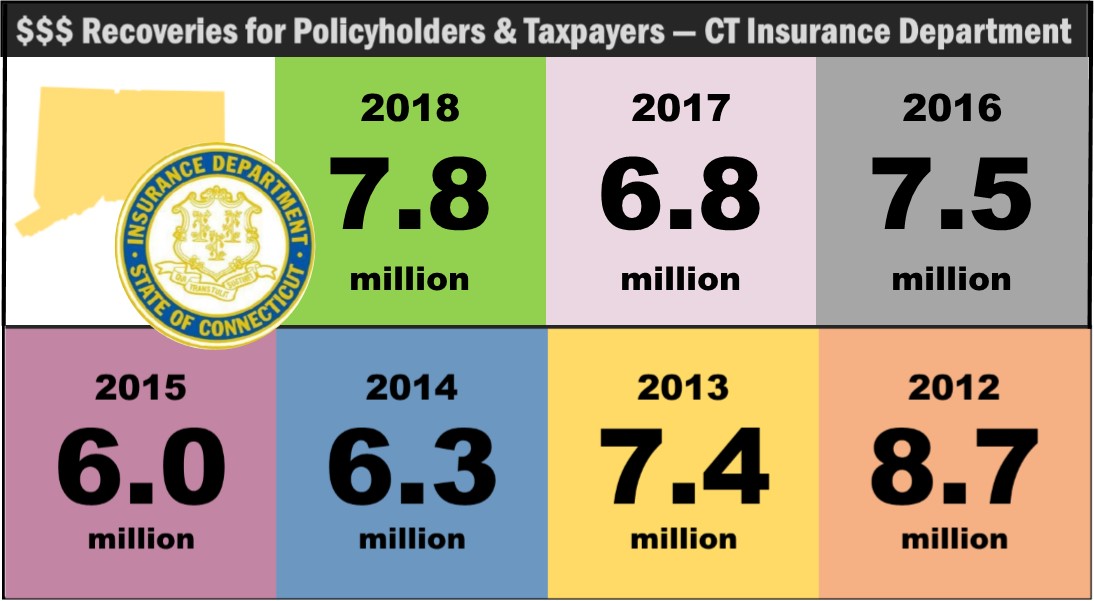
The Connecticut Insurance Department recovered $7.8 million for policyholders and taxpayers in 2018, helping individuals, families and employers with their claims and complaints, according to department officials. The Department’s Consumer Affairs Unit (CAU) fielded 6,350 complaints and inquiries in 2018 and helped policyholders recoup more than $5.5 million during the calendar year. In addition, the Department’s Market Conduct Division levied approximately $2.3 million in fines against carriers and returned that money to the state’s General Fund.  Both financial results are up from a year ago.

“The Department’s Consumer Affairs staff helps thousands of consumers each year with their questions and concerns about their insurance and makes certain that companies are compliant with all state insurance laws and regulations,” Acting Commissioner Paul Lombardo said.

In comparison, during 2017 CAU fielded 5,800 complaints and inquiries and helped policyholders recoup nearly $4.8 million.  The Department’s Market Conduct Division levied approximately $2 million in fines.  The Department’s fines result from a variety of violations and settlements ranging from untimely claim payments to improper licensing. The Market Conduct enforcement actions are posted on the Department’s Web site at www.ct.gov/cid

The majority of the funds recovered during 2018 for policyholders stemmed from complaints over health, accident, homeowners and life and annuities policies. The breakdown of funds recovered:

  • Accident, Health - $2.3 million
  • Auto - $1.5 million
  • General Liability - $30,000
  • Homeowners and Commercial Property - $1.13 million
  • Life, Annuities - $523,000
  • Miscellaneous - $37,000

Recoveries in the area of Homeowners and Commercial Property more than tripled, going from $344,600 in 2017 to $1.13 million in 2018.

The Department calculates its consumer recoveries based on what the policyholder received as a result of the Department’s intervention. The inquiries and complaints also help the Department identify industry trends that may adversely affect consumers and trigger investigation by the Market Conduct division.

In 2017, the state Insurance Department recovered $6.8 million for policyholders and taxpayers.   That was a slight drop from the previous year, when it recouped $7.5 million in 2016.   and approximately $6 million in 2015.  In previous years, the department recaptured $6 million in 2015, reached a recent high of $8.7 million in 2012, $7.4 million in 2013 and $6.3 million in 2014.

Complaint data also help determine topics for consumer education and serve as tools to help the Department monitor the industry, officials noted.

The mission of the Connecticut Insurance Department is to protect consumers through regulation of the industry, outreach, education and advocacy. The Department’s annual budget is funded through assessments from the insurance industry.