CT An Also-Ran Among States in Entrepreneurial Growth, Despite Some Gains
/Connecticut ranks 13th among the nation’s 25 smaller states – and 36th overall - in the growth of entrepreneurship, according to a new study and state-by-state analysis by Kauffman Foundation. A year ago, the state ranked 17th among the smaller states, slightly improving its ranking in the latest data. The rate of start-up growth in Connecticut increased to 45.5 percent in the 2016 report, compared with 23.6 percent the previous year.
The “share of scale-ups” also increased, from 1.29 percent in last year’s analyses to 1.33 percent this year. Scale-ups measures the number of firms that started small but grew to employ fifty people or more by their tenth year of operation as a percentage of all employer firms ten years or younger.
One metric that dropped slightly measured high-growth company density – the number of private businesses with a least $2 million in annual revenue reaching three years of 20 percent annual revenue growth normalized by total business population. Connecticut moved from 55.1 a year ago to 48.8 in the 2016 report. Both researchers and entrepreneurs have suggested density as a key indicator of vibrancy in entrepreneurial ecosystems, and there is high variation on this indicator across U.S. states, according to the report.
The Kauffman Index of Growth Entrepreneurship, released this week, is an indicator of business growth in the United States, “integrating several high-quality sources of timely informa tion into one composite indicator of entrepreneurial business growth.”
In rankings by industry, Connecticut ranked in the top five among the 25 smaller states in two five categories – 3rd in Business Products & Services and 3rd in Software. The state was ranked outside the top five in high-growth companies in the IT Services, Advertising & Marketing and Health industries.
Overall, the Growth Entrepreneurship Index rose in 2016 in thirty-nine states in the last year, indicating a continued return of broad-based business growth, the report concluded.
- Among the twenty-five largest states, the five states with the highest Growth Entrepreneurship Index were Virginia, Maryland, Arizona, Massachusetts, and Texas.
- Among the twenty-five smallest states, the five states with the highest Growth Entrepreneurship Index were Utah, New Hampshire, Delaware, North Dakota, and Oklahoma. (Connecticut ranked 13th)
While most states experienced an increase in growth entrepreneurship activity, changes in state rankings— which measure relative yearly performance across states, as opposed to performance relative to a state’s own growth entrepreneurship rates in the previous year—were different. Twenty-three states ranked higher than they did last year, seven experienced no changes in rankings, and twenty ranked lower, the report pointed out.
"Growth entrepreneurship directly contributes to the economy through creating jobs, innovation and wealth," said Arnobio Morelix, senior research analyst at the Kauffman Foundation, which conducts the annual study.
Virginia took first place in growth entrepreneurship activity among the 25 largest states, followed by Maryland, Arizona, Massachusetts and Texas. Kauffman researchers said it is no coincidence that two of the top states include the highly entrepreneurial Washington, D.C., metro area. Among larger states, 12 ranked higher than they did last year, four experienced no change in rankings and nine ranked lower.
Among the 25 largest states, the five that experienced the biggest increase in rank from 2015 to 2016 were North Carolina (15 to 8), Alabama (13 to 9), Ohio (16 to 12), Tennessee (18 to 14) and Arizona (6 to 3).
The five large states that saw the greatest decrease in rank in 2016 were, with a tie for fifth place, New Jersey (8 to 20), Pennsylvania (10 to 16), Illinois (14 to 17), Wisconsin (20 to 23), Louisiana (4 to 6) and South Carolina (11 to 13).
Among the 25 smallest states, Utah led growth entrepreneurship activity, followed by New Hampshire, Delaware, North Dakota and Oklahoma. Eleven states ranked higher than they did last year, three experienced no change in rankings and 11 ranked lower.
The five small states that saw the biggest increase in rank were Mississippi (22 to 10), Wyoming (23 to 15), North Dakota (11 to 4), Nevada (15 to 8) and Connecticut (17 to 13).

 The quarterly survey is released by
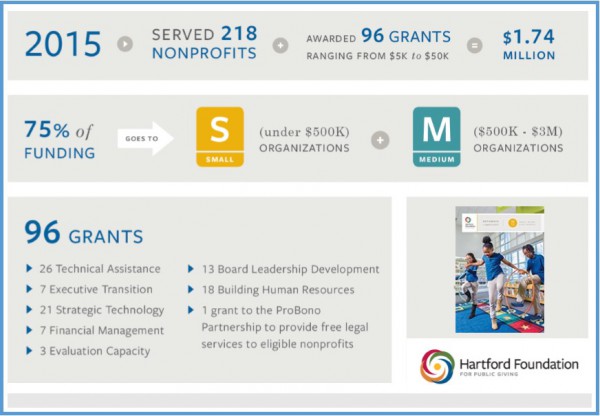
 The Foundation invested 30 percent of its grants in education from birth through high school, and new and renewed college scholarship, according to the report. Grants for family and social services received 20 percent; health – 11 percent; arts and culture – 11 percent; community and economic development – 19 percent, general – 5 percent and summer programs – 4 percent.



 Already, 2.9 million freelancers earned more than $100,000 last year, up from 2 million who hit the six-figure mark just four years earlier, according to MBO Partners. The report indicated that 60 percent of freelancers surveyed said they started freelancing by choice—up from 53 percent last year—and 67percent of freelancers agree that more people are choosing to work independently today compared to three years ago.

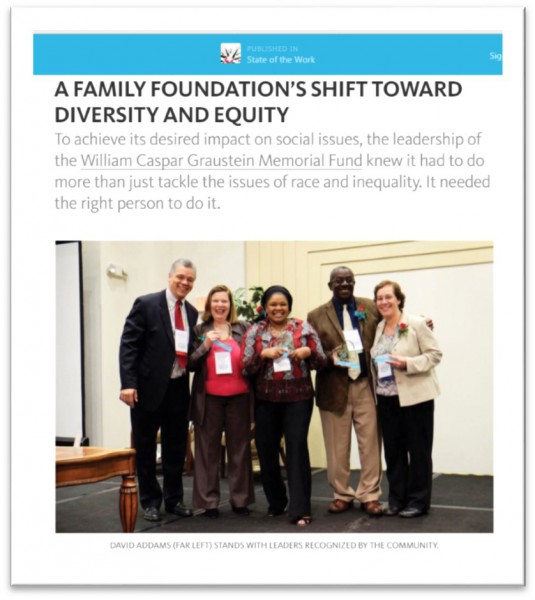 The D5 final report features stories about leaders in foundations and other philanthropic organizations taking meaningful action to advance DEI. “Storytelling is one of the most powerful ways to inspire action and change. We hope people working within foundations—whether they are a CEO, an HR manager or a program officer—draw on the important lessons from these stories, and apply them to their own unique situations,” said Kelly Brown, D5 Director. Kelly also cited statistics indicating that “when companies commit themselves to diverse leadership, they are more successful. Foundations and nonprofits,” she said, “have the opportunity to take a page from successful business playbooks.”
 impact of a seller’s race in a field experiment involving baseball card auctions on eBay. The results, according to the researchers, left little doubt.
 e first total was larger.”
 e Gordon Bradford Tweedy Professor at Yale Law School and the Director of the Law and Economics Program at the National Bureau of Economic Research (NBER) with headquarters in Cambridge, Massachusetts.
  The large majority is also present across the ideological spectrum, with 94 percent of registered Democrats, 79 percent of independents and 68 percent of Republicans indicating their support for state paid family medical leave to support Connecticut workers and family caregivers.
 One-thousand state voters age 25-plus were asked two questions about the paid family medical initiative, whether they supported such a plan, and whether they would support political candidates who did.

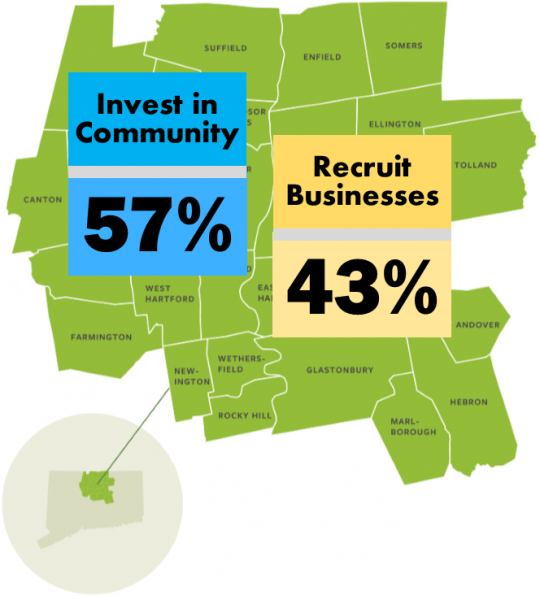 The data from the survey reflect a difference of opinion among older residents of the region. Individuals over age 46 took the opposite view from younger residents, with a majority expressing a preference for spending skewed toward recruiting companies. The reversal was dramatic, with two-thirds of those age 36-45 preferring investing in communities, by a margin of 67%-33%, and individuals age 46-55 expressing a preference for resources to be aimed at recruiting companies, with two-thirds holding the opposite view, 63%-38%.