Nine in Ten CT Residents Have a Usual Source of Care, But 3 in 10 Haven’t Seen Doctor in Past Year
/A new federal report finds that all but 10.1 percent of Connecticut residents had a usual source of medical care during 2014 – tied for the sixth lowest percentage among the states. The same report found great variation among states but, on average, 17.3 percent of Americans lacked a usual source of care.
Vermont led the country with only 2.8 percent of residents reporting they do not have a regular care site, according to data compiled by the Centers for Disease Control and Prevention’s National Center for Health Statistics, followed by Delaware at 6.8 percent.
Even in Connecticut there remains room for improvement as nearly 3 in 10 – 29.6 percent - of Connecticut residents had not seen or talked to a general doctor during the last year, slightly better than the national average. Vermont also led the country in that statistic, with 84 percent having seen or spoken with a physician during the previous year.
The percentage of adults without a usual place of medical care ranged from 2.8 percent in Vermont to 26.7 percent in Nevada. The percentage of adults who did not have a general doctor visit in the past 12 months ranged from 15.9 percent in Vermont to nearly have the state’s population - 48.1 percent - in Montana.
The federal data indicated that nine states (Nevada, Idaho, Texas, Oregon, Wyoming, Kentucky, Arizona, Alaska, and Florida) had a higher percentage of adults without a usual place of medical care compared with the national average (17.3%).
Conversely, Vermont, Delaware (6.8%), Massachusetts (7.5%), Wisconsin (9.5%), Hawaii (10%), Connecticut (10.1%), Rhode Island (10.1%), New Hampshire (11.6%), North Dakota (11.9%), South Dakota, New York, Alabama, Iowa, Maine, and Pennsylvania had a lower percentage of adults without a usual place of medical care compared with the national average.
Eleven states (Montana, South Dakota, Alaska, Nevada, New Mexico, South Carolina, Idaho, Nebraska, Texas, Florida, and California) had a higher percentage of adults who had not seen or talked to a general doctor in the past 12 months compared with the national average (34.0%). Vermont, Delaware, Virginia, Pennsylvania, Michigan, Wisconsin, New Hampshire, Oklahoma, and Ohio had a lower percentage of adults who had not seen or talked to a general doctor in the past 12 months compared with the national average.
Connecticut, at 29.6 percent, ranked just outside the top 10 states in the second quartile, but just below the national average.
Also of note, the study found little impact on these metrics of states’ decisions to expand Medicaid or create a state-based health insurance exchange. The federal analysis concluded that “continued state-specific monitoring will be helpful in identifying and tracking state and regional disparities in health care utilization over time.”
The National Health Interview Survey is a multipurpose health survey conducted continuously throughout the year by the National Center for Health Statistics (NCHS). Interviews are conducted in person in respondents’ homes, but follow-ups to complete interviews may be conducted over the telephone. The federal report was authored by Lindsey I. Black and Jeannine S. Schiller, with the National Center for Health Statistics, Division of Health Interview Statistics.

 tion into one composite indicator of entrepreneurial business growth.”
 The quarterly survey is released by
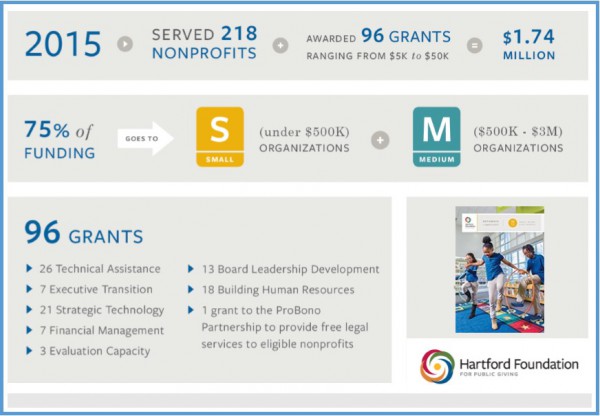
 The Foundation invested 30 percent of its grants in education from birth through high school, and new and renewed college scholarship, according to the report. Grants for family and social services received 20 percent; health – 11 percent; arts and culture – 11 percent; community and economic development – 19 percent, general – 5 percent and summer programs – 4 percent.



 Already, 2.9 million freelancers earned more than $100,000 last year, up from 2 million who hit the six-figure mark just four years earlier, according to MBO Partners. The report indicated that 60 percent of freelancers surveyed said they started freelancing by choice—up from 53 percent last year—and 67percent of freelancers agree that more people are choosing to work independently today compared to three years ago.


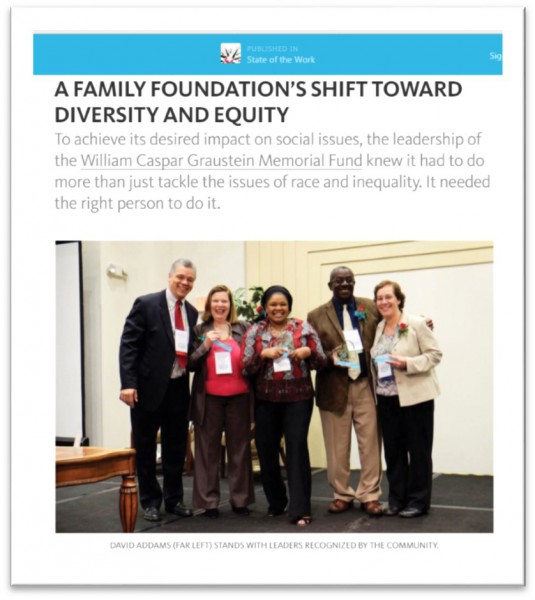 The D5 final report features stories about leaders in foundations and other philanthropic organizations taking meaningful action to advance DEI. “Storytelling is one of the most powerful ways to inspire action and change. We hope people working within foundations—whether they are a CEO, an HR manager or a program officer—draw on the important lessons from these stories, and apply them to their own unique situations,” said Kelly Brown, D5 Director. Kelly also cited statistics indicating that “when companies commit themselves to diverse leadership, they are more successful. Foundations and nonprofits,” she said, “have the opportunity to take a page from successful business playbooks.”
 impact of a seller’s race in a field experiment involving baseball card auctions on eBay. The results, according to the researchers, left little doubt.
 e first total was larger.”
 e Gordon Bradford Tweedy Professor at Yale Law School and the Director of the Law and Economics Program at the National Bureau of Economic Research (NBER) with headquarters in Cambridge, Massachusetts.
  The large majority is also present across the ideological spectrum, with 94 percent of registered Democrats, 79 percent of independents and 68 percent of Republicans indicating their support for state paid family medical leave to support Connecticut workers and family caregivers.
 One-thousand state voters age 25-plus were asked two questions about the paid family medical initiative, whether they supported such a plan, and whether they would support political candidates who did.