Student Loans Grow; Home Ownership Pushed Back 5 Years, on Average
/An analysis on the cost of student loans and home-buying nationwide finds that it takes graduates with the average student loan debt of $28,950 about 5 years longer to save a 20 percent home down payment. Thereafter, these graduates have almost $50,000 less in home equity 15 years after graduation compared to debt-free graduates, according to an analysis by GoodCall, The Real Cost of Student Loans.
In Connecticut, where 62 percent of students graduate with debt averaging $29,750, above the national average, and home prices tend to be higher than in most states, the challenge is particularly acute. Delaware has the highest average student loan balances, at $33,808. Utah has the lowest, with $18,921, according to data compiled by the Institute for College Access & Success and included in the report.
Nationally, average debt for new bachelor’s degree recipients rose at more than double the rate of inflation from 2004 to 2014, but in some states it grew even faster. In Connecticut, the percentage of graduating students with debt rose from 57 percent in 2004 to 62 percent in 2014; the average amount of debt increased by 57 percent (20th highest increase among the states), from $18,906 to $29,750.
Homeownership has generally fallen over the past decade, and for college graduates with student loan debt, the downward trend is even more marked, according to research by the Federal Reserve Bank of New York, the report indicates. What is clear, the report notes, is that after college, graduates with student debt must use part of their income to pay down loans. This means less income is available for saving compared to debt-free graduates.
It also means that graduates with student loan debt will have to save at a higher rate than their debt-free counterparts to buy a home sooner. This points to another challenge student loan borrowers face: making tough decisions over whether to pay student loans off as quickly as possible or save for big purchases like a home, the report explains.
Waiting longer to buy a home can mean missing out on accruing home equity, an important part of building wealth and financial security over the long term. Home equity is how much of the home’s current value is owned by the homeowner. This is calculated by taking the current market value, which typically grows year over year, and subtracting any remaining mortgage payments.
A recent Harvard study noted in the report revealed the consequences for wealth building that these financial decisions can have over the long-term, where college-educated households with student loan debt were found to have significantly less in assets, cash savings, and net wealth compared to college-educated households without student loans.
Among the report’s key findings regarding the home buying timeline:
- A 23-year-old debt-free college graduate today will be ready to buy a home with a 20 percent down payment in 2021 at age 28. That’s five years earlier than the 33-year-old average home buyer today.
- Graduates with $12,000 in student loan debt can expect to save until 2022 before they’re able to put a 20% down payment on a median price home.
- A 23-year-old graduate with $28,950 in student loan debt today will be saving until 2026 before she can make a 20% down payment on a home, at age 33 – the current average age for home buying.
- Graduates with $50,000 in student loans will be saving until age 36 in 2029 before they’ll have enough for a 20 percent home down payment.
The report also highlights the impact of student loans on the age at which people decide to get married, their job choices, starting salaries and retirement savings – and the impact those choices have on their ability to pay off student loans.
 The site said of
  s, including:
 Funding for the competition prize awards will be provided both by the State of Connecticut, which has committed $1 million, and an additional $2 million commitment from private partners. The Doris Duke Charitable Foundation, The Kresge Foundation, Living Cities, NeighborWorks America, The United Illuminating Company, Stanley Black & Decker, Boehringer Ingelheim, Travelers Companies, Inc., The Hartford Foundation for Public Giving, Webster Bank, Eversource Energy, Liberty Bank Foundation, Hartford HealthCare, Barnes Group, Hoffman BMW of Watertown/Hoffman Auto Group, United Technologies Corp., Charter Communications, and Fairfield County’s Community Foundation have all committed to participating in the challenge.
 “We are pleased to bring the Working Cities Challenge to Connecticut and are thankful to Governor Malloy for his support of the effort, as well as the Hartford Foundation, the Doris Duke Foundation, Living Cities, The Kresge Foundation, and many others,” Boston Fed President Eric Rosengren said. “The partners have come together to make it possible to bring the competition to Connecticut – precisely the model of cross-sector collaboration that forms the basis of the Working Cities Challenge. This competition focuses on the residents of the state’s postindustrial cities – places with unique assets that taken together can help to build civic leadership infrastructure, which our research shows is a key component of economic resurgence.”
 “It’s gratifying to see the strong support from Connecticut companies, foundations, and the Malloy administration for the Working Cities Challenge under the thoughtful leadership of the Boston Fed,” James C. Smith, Chairman and CEO of Webster Bank, said. “By encouraging the development of civic infrastructure as a prerequisite to physical infrastructure, the Working Cities Challenge promises to revitalize Connecticut’s smaller cities economically and transform the lives of inner city residents.”
 A recent report in Business Insider indicated that one in three new businesses in the U.S. were started by an entrepreneur age 50 or older. Describing “running a business as the new retirement,” the news report cited an infographic in easylifecover that highlighted those aged 55-64 in the U.S. have actually had the highest rate of entrepreneurial activity in the last 10 years, noting that the founders of McDonald's, Coca Cola, and Kentucky Fried Chicken – among others - were all over 50 when they established their businesses.
 The interactive “Boot Camp” event at reSET – open to people of all ages with a special focus on the 50 and over –included short presentations from local resource organizations, networking opportunities and valuable information on the programs and tools available to potential business owners. Attendees were updated on the necessary steps and tools to launch a business, and had opportunities to talk one-on-one with local mentoring organizations, lenders, small business advisors and community leaders for advice and assistance.
 hand at the reSET event in mid-June were representatives of the Office of Secretary of State (where new businesses are registered),
  reSET serves all entrepreneurs, but specializes in social enterprise ― impact driven business with a double and sometimes triple bottom line. In addition to providing co-working space and accelerator and mentoring programs, reSET aims to inspire innovation and community collaboration, and to support entrepreneurs in creating market-based solutions to community challenges. The organization’s goal is to “meet entrepreneurs wherever they are in their trajectory and to help them take their businesses to the next level.”

 Among the nation’s top businesses for new dad, an analysis by the website Fatherly, determined that two Connecticut-based companies – alcoholic beverages producer Diageo and financial data and analysis provider FactSet, earned slots in the top 50. Fatherly is a digital lifestyle guide for men entering parenthood.
 were Netflix, Spotify, Facebook, Patagonia, Bank of America, Pinterest, Google, Microsoft, Twitter, Airbnb, Johnson & Johnson, Accenture, MasterCard, Intuit and Intel.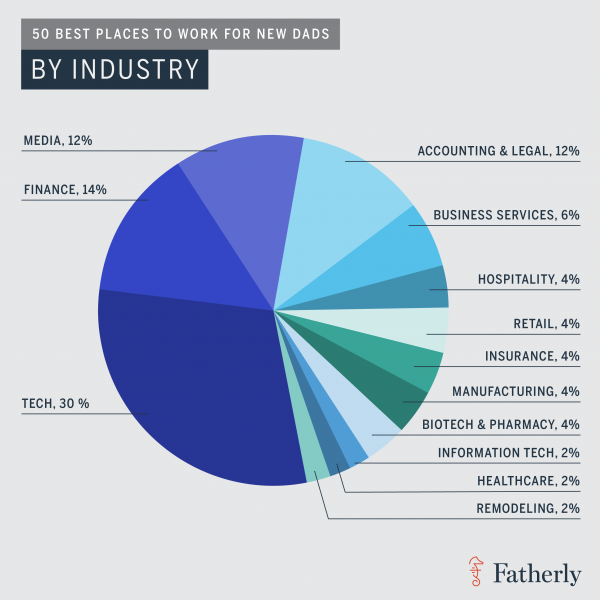


 tion into one composite indicator of entrepreneurial business growth.”
 The quarterly survey is released by
 The Foundation invested 30 percent of its grants in education from birth through high school, and new and renewed college scholarship, according to the report. Grants for family and social services received 20 percent; health – 11 percent; arts and culture – 11 percent; community and economic development – 19 percent, general – 5 percent and summer programs – 4 percent.