Metro Hartford Progress Points Report Looks at Promise in Communities Amidst Considerable Challenges
/First, the bad news. The Metro Hartford region “has not produced meaningful job growth in the past 25 years, despite having advanced industries that offer a family-sustaining wage and having residents eager to work.” The region’s spending on local schools continues to increase, even as enrollment declines, and the region “retains the fewest four-year graduates of any metro region in the country – with 60 percent of recent graduates citing jobs as their primary reason for leaving.” Even in the region’s traditional strength in advanced industries, such as aerospace manufacturing and computer systems designs, “our competitive advantage may be eroding.”
If the goal of the latest edition of the Metro Hartford Progress Points report, driven by the Hartford Foundation for Public Giving, is to push a region-wide conversation that spurs progress, the data highlighting five key issues impacting the region’s 38 communities may have just enough unsettling news and rays of hope to do just that. “The need for systemic change,” the report indicates, “requires leadership and more regional coordination and integration.”
The third annual edition of the report is the result of collaboration between nine stakeholders representing local government, businesses, nonprofits, academic and philanthropic institutions and organizations committed to making long-term progress in the region.
The 2016 report focuses on five related themes: attracting and retaining a skilled workforce; better connecting people to opportunity; aligning workforce and economic development strategies; ensuring a quality education for all despite scarce resources and building collaborative leadership and civic engagement to create long-term progress.
The data suggests that the region may be poised for greater success, but not without accelerated efforts, noting flatly that “more is needed.”
The report notes that the beginnings of “meaningful change” is evident, with towns creating walkable areas near transportation through transit-oriented development along the CT Fasttrak corridor and the New Haven-Hartford-Springfield rail line, expanding transportation options to meet the needs of today’s population and employers, an expanding presence of colleges in downtown Hartford, and regional collaboratives creating career pathways and bridging the divide among differing aspects of the education system from middle school through the workforce.
 Local and regional organizations and associations, such as the MetroHartford Alliance’s HYPE, reSET, United Way’s Emerging Leaders and the Urban League’s Young Professionals “engage and connect millennials” and offer “business advisory services and other supports to help small businesses thrive,” the report explains, providing “a great start” on what needs to be done.
The report notes that “regional thinking is not new to Metro Hartford, even if successes have been intermittent. Without regional government, we must rely on informal, voluntary collaboration among leaders to address regional challenges.”
Among the findings:
- Most job openings in the future will be in either high-wage jobs that require advanced degrees (27 percent) or low-skill jobs with wages that cannot sustain a family (72 percent).
- While school enrollment in our region has declined by 7 percent since 2001, amounting to 29,000 additional empty seats in our region’s classrooms, education expenditures have increased 25 percent.
- Millennials are projected to be the largest workforce segment by 2025, but who are they? Nearly half (43%) of the region’s 18- to 34-year-olds live in households that don’t earn family-sustaining wages.
- Millennials and those aged 45-64 are moving out of our state in large numbers, along with those with post-secondary education, and are taking $912 million of their income with them. Overall, college graduates, individuals with advanced degrees and older residents are moving out of state, while younger and less educated people are moving in.
Regarding economic growth – or the lack thereof – the Hartford region ranks at the bottom of the list among Cleveland, Buffalo and New Orleans over the past quarter-century. Topping the list are Austin, Las Vegas, Orlando and Raleigh.
 The report includes a timeline of past efforts aimed at addressing the region’s long-standing challenges, “not to be disheartening, but instead to highlight where positive changes have been made” and how collaborative efforts can “create opportunities for all Greater Hartford residents.” The report also indicates that:
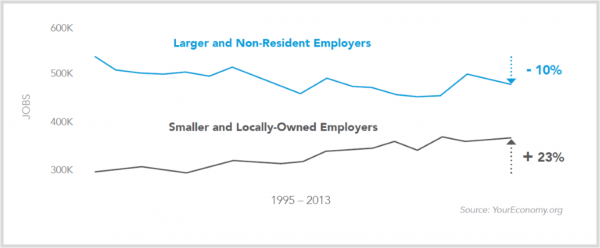
- While net job growth in our region has been flat, the region’s smaller and locally-owned businesses have increased employment by 23 percent between 1995 and 2013. Unfortunately, larger and employers headquartered out of state have decreased employment by 10 percent during this same time period.
- New and proposed rail, bus and highway projects offer the promise of access to jobs, housing and amenities that can spur economic growth.
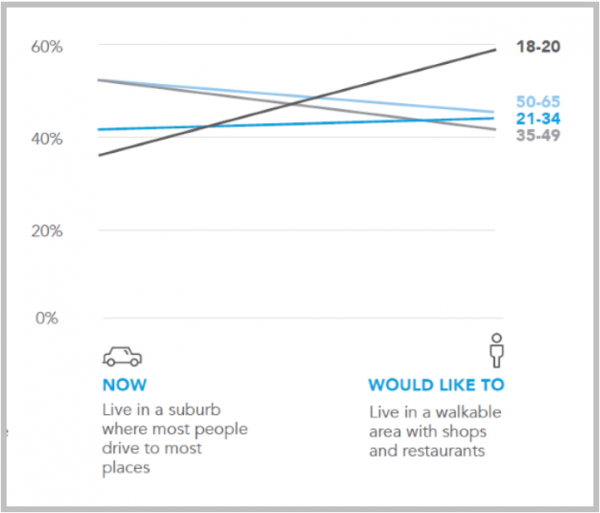
- Many of the region’s residents – of all ages – would like to live where they can walk to shops, restaurants and other amenities, compared to where they lie today. That is true of 60 percent of those ages 18-20, and more than 40 percent of other age demographics.
The Metro Hartford region consists of 1 million people living in Hartford, New Britain and the 36 surrounding communities. The partners in the initiative expressed the hope that the latest edition of the Progress Points report creates the “sense of urgency necessary to address shared regional challenges.”
The Metro Hartford Progress Points Partners are: Capitol Region Council of Governments, Capital Workforce Partners, City of Hartford, Hartford Foundation for Public Giving, Hispanic Health Council, MetroHartford Alliance, Trinity College Center for Urban and Global Studies, United Way of Central and Northeastern Connecticut, and Urban League of Greater Hartford.
https://youtu.be/0zTQjsbNlw0
 The NCHS data also ranked Connecticut 12th in the Cesarean Delivery Rate.
 Regarding the percentage of babies born to unmarried mothers, a statistic long tracked by federal health officials, three states saw more than half the children born in that category. The highest percentages were in Mississippi (54.0%), Louisiana (52.7) and New Mexico (51.3%).
 The same measure showed the age 20-34 demographic group, at 0.22 percent, was considerably below the rate for other age groups. (This rate means that 221 out of every 100,000 adults in this age group became entrepreneurs in a given month.) The data also indicates that the rate of new entrepreneurs for the age 20-34 group is down from the high point for this age group of 0.28 percent in 1996.


 The Connecticut Interscholastic Athletic Conference


 The site said of
  s, including:
 Funding for the competition prize awards will be provided both by the State of Connecticut, which has committed $1 million, and an additional $2 million commitment from private partners. The Doris Duke Charitable Foundation, The Kresge Foundation, Living Cities, NeighborWorks America, The United Illuminating Company, Stanley Black & Decker, Boehringer Ingelheim, Travelers Companies, Inc., The Hartford Foundation for Public Giving, Webster Bank, Eversource Energy, Liberty Bank Foundation, Hartford HealthCare, Barnes Group, Hoffman BMW of Watertown/Hoffman Auto Group, United Technologies Corp., Charter Communications, and Fairfield County’s Community Foundation have all committed to participating in the challenge.
 “We are pleased to bring the Working Cities Challenge to Connecticut and are thankful to Governor Malloy for his support of the effort, as well as the Hartford Foundation, the Doris Duke Foundation, Living Cities, The Kresge Foundation, and many others,” Boston Fed President Eric Rosengren said. “The partners have come together to make it possible to bring the competition to Connecticut – precisely the model of cross-sector collaboration that forms the basis of the Working Cities Challenge. This competition focuses on the residents of the state’s postindustrial cities – places with unique assets that taken together can help to build civic leadership infrastructure, which our research shows is a key component of economic resurgence.”
 “It’s gratifying to see the strong support from Connecticut companies, foundations, and the Malloy administration for the Working Cities Challenge under the thoughtful leadership of the Boston Fed,” James C. Smith, Chairman and CEO of Webster Bank, said. “By encouraging the development of civic infrastructure as a prerequisite to physical infrastructure, the Working Cities Challenge promises to revitalize Connecticut’s smaller cities economically and transform the lives of inner city residents.”
 A recent report in Business Insider indicated that one in three new businesses in the U.S. were started by an entrepreneur age 50 or older. Describing “running a business as the new retirement,” the news report cited an infographic in easylifecover that highlighted those aged 55-64 in the U.S. have actually had the highest rate of entrepreneurial activity in the last 10 years, noting that the founders of McDonald's, Coca Cola, and Kentucky Fried Chicken – among others - were all over 50 when they established their businesses.
 The interactive “Boot Camp” event at reSET – open to people of all ages with a special focus on the 50 and over –included short presentations from local resource organizations, networking opportunities and valuable information on the programs and tools available to potential business owners. Attendees were updated on the necessary steps and tools to launch a business, and had opportunities to talk one-on-one with local mentoring organizations, lenders, small business advisors and community leaders for advice and assistance.
 hand at the reSET event in mid-June were representatives of the Office of Secretary of State (where new businesses are registered),
  reSET serves all entrepreneurs, but specializes in social enterprise ― impact driven business with a double and sometimes triple bottom line. In addition to providing co-working space and accelerator and mentoring programs, reSET aims to inspire innovation and community collaboration, and to support entrepreneurs in creating market-based solutions to community challenges. The organization’s goal is to “meet entrepreneurs wherever they are in their trajectory and to help them take their businesses to the next level.”

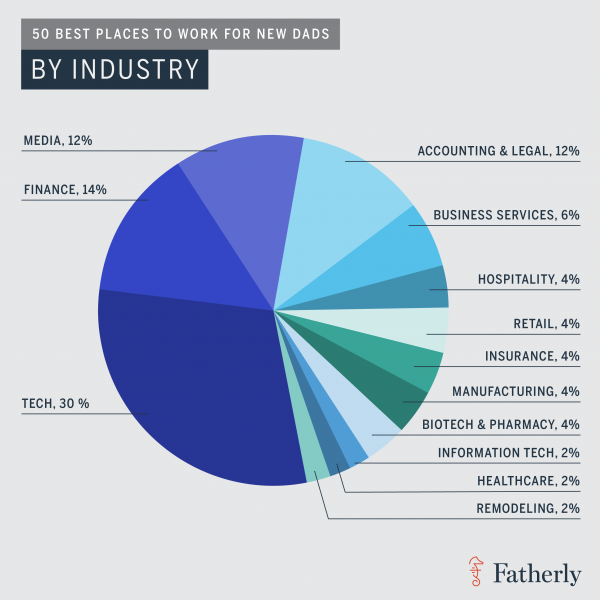
 Among the nation’s top businesses for new dad, an analysis by the website Fatherly, determined that two Connecticut-based companies – alcoholic beverages producer Diageo and financial data and analysis provider FactSet, earned slots in the top 50. Fatherly is a digital lifestyle guide for men entering parenthood.
 were Netflix, Spotify, Facebook, Patagonia, Bank of America, Pinterest, Google, Microsoft, Twitter, Airbnb, Johnson & Johnson, Accenture, MasterCard, Intuit and Intel.