Concerns Raised That U.S. Census Count Changes, Funding Cutbacks May Hurt Connecticut
/It occurs once every decade – the U.S. Census aims to count everyone in the United States, and is the foundation upon which a plethora of funding and policy decisions are based for much of the decade that follows. The next nationwide census, in 2020, is already raising red flags, here in Connecticut and across the country.
The Connecticut Council for Philanthropy is encouraging local participation in a national webinar about the role that philanthropy in ensuring a fair and accurate count in the U.S. Census in 2020. The webinar, on October 30, 1:00 – 2:00 pm, is one of the early efforts to raise awareness of potential implications for the census if Congress, in an effort to keep costs in check, makes fiscal decisions that turn out to be penny wise and pound foolish – potentially jeopardizing levels of federal aid to communities and states, including Connecticut, that will last a decade.
"If you underfund the Census, you get an undercount," says Kenneth Prewitt, who directed the bureau during the 2000 Census. "And if you don't count people, they are politically invisible, in effect," he said earlier this year in Time magazine.
Announced plans by the U.S. Census Bureau, that it will be “introducing significant innovations to conduct the 2020 Census,” is spurring concerns even as the planning process is being refined and funding and operational decisions are being made. The Bureau is focusing on “four key innovation areas… with cost reductions in mind.” Among them is “re-engineering address canvassing,” a critical first stage in the census counting process.
Policy and administrative decisions, such as the changes outlined in the latest Census Bureau plan, will carry significant implications for census accuracy and outcomes, point out webinar organizers the United Philanthropy Forum and Funders' Committee for Civic Participation (FCCP). It is imperative, the organizations emphasize, that philanthropy take action now to support a fair and accurate count. Speakers on the webinar will include:
- Terri Ann Lowenthal, Census Consultant with Funders' Committee for Civic Participation's Funders Census Initiative 2020
- Debbie McKeon, Senior Vice President of Member Services, Council of Michigan Foundations
- Daranee Petsod, President of Grantmakers Concerned with Immigrants and Refugees (GCIR)
Officials point out that “Data from the census drive key decisions made by government, business, nonprofits and philanthropy. Unfortunately, the Census has historically missed disproportionate numbers of people of color, immigrants, young children and low-income and rural households.”
In a commentary article earlier this month in CT Mirror, Aparna Nathan and Mark Abraham of New Haven-based DataHaven raised concerns not only about the impact on nonprofit organizations from a less-than-accurate census, but about the across-the-board dangers of a census that does not provide an accurate count – particularly for Connecticut.
The culprit: underfunding. 
In 2012, according to Nathan and Abraham, Congress told the Census Bureau to spend no more for the 2020 Census than they spent on the 2010 Census, and even encouraged them to spend less. Carrying out the same operation as in 2010 would cost a projected $17.8 billion overall, but the 2020 Census Operational Plan aims for $12.5 billion. Already, a number of dry-runs and field tests have been postponed or cancelled outright, potentially undercutting plans for the census, now littler more than two years away.
“An underfunded 2020 Census is likely to systematically undercount some of the state’s more vulnerable populations and undermine efforts to create a more equitable, opportunity-rich state,” they wrote. “Since population distributions are used to draw voting districts and determine the number of representatives each state or neighborhood gets in our legislative bodies, undercounting hard-to-count groups means that their vote may count less and their voice might not be heard at the state level or in Congress.”
 The U.S. Census Bureau’s 2020 Census Operational Plan, dubbed “A New Design for the 21st Century,” increases reliance on technology to determine its count, considered to be a most cost-effective approach. But others say technology has its limits, especially among certain populations, and overreliance can lead to an incomplete and inaccurate count.
The document itself acknowledges that possibility, noting that “As the Census Bureau continues to evaluate the 2020 Census operational design, an analysis of the impact on the quality of the census results is required to ensure that innovations designed to reduce cost do not have an unacceptable impact on quality.”
Sizeable immigrant populations throughout much of the state, and refugee populations in Hartford and New Haven, might find themselves questioning the confidentiality and importance of the census, especially in the current climate of fear and anti-immigrant rhetoric, pointed out Terri Ann Lowenthal, a consultant and former congressional staffer who directed the House’s census oversight subcommittee and now lives in Stamford, Connecticut.
Because individuals in urban and immigrant communities tend to respond at lower rates to census inquiries received by mail, the more costly personal visits be c ensus officials are necessary to obtain more accurate population and demographic counts. If those visits are reduced in order to cut costs, the accuracy of the census itself is likely to diminish, observers say. Connecticut, which does not have independent counts of its entire population, depends heavily on data derived from the U.S. Census for a host of policy and funding decisions.
Fred Carstensen, Professor of Finance and Economics at the University of Connecticut and director of the Center for Economic Analysis at the school, commented recently that “In the face of its fiscal/budget crisis, an accurate census and vastly improved understanding of demographics is crucial. But in all likelihood, Connecticut will fly blind--and lose significant federal dollars.”
The National Committee for Responsive Philanthropy recently pointed out that "Counting every person in the United States is an extraordinarily complex endeavor – it is the nation’s largest peacetime mobilization of personnel and resources. Even with careful planning, a perfect count is virtually impossible: Some people are missed, some are double-counted, and some do not respond fully. But, because the accuracy of the census directly affects our nation’s ability to ensure equal representation and equal access to public and private resources, achieving a fair and accurate census must be regarded as one of the most significant civil rights and social justice priorities facing the country."

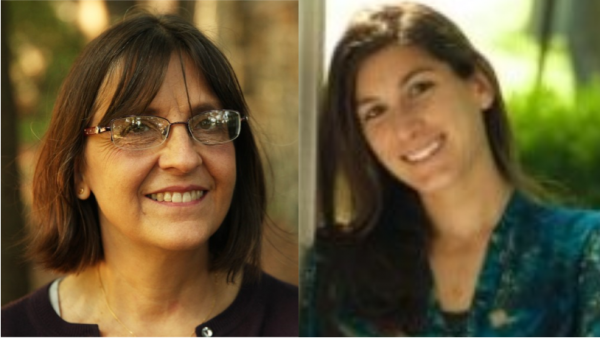
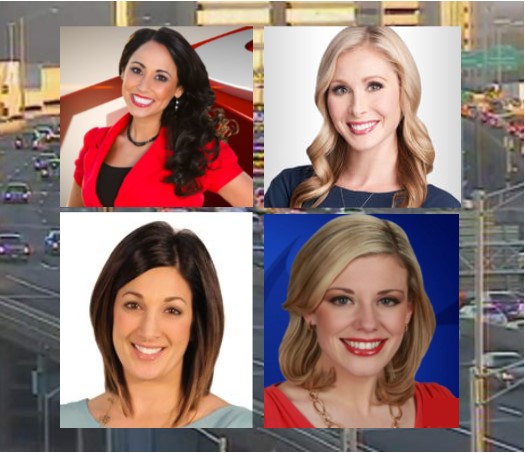 Lutzger also handles traffic reporting each morning for Kiss 95.7, Country 92.5, The River 105.9, WELI and KC101, and afternoons on The River 105.9. A native New Yorker, she first came to Connecticut to attend the University of Hartford. In addition to traffic reporting, Dufour is co-host for CT Style, a daily lifestyle program on WTNH. She graduated from the University of Connecticut in 2001 with a bachelor’s degree in broadcast journalism, and handled traffic reporting for WFSB before moving over to WTNH.


 Food and beverage companies often target marketing for nutrient-poor products such as candy, sugary drinks, snack foods, and fast-food restaurants to Hispanic audiences, including youth, the researchers state. They cite previous research that has documented disproportionate exposure to unhealthy food marketing by Hispanic youth in their communities and on TV, but theirs is the first examination of the phenomenon on the internet.
 g vulnerable populations,” according to the publication’s website, “with the goal of providing optimal outcomes and ultimately health equity for all.” The journal intends to provide coverage ranging from translational research to prevention, diagnosis, treatment, and management of disease and illness, in order to serve as a primary resource for organizations and individuals who serve these populations at the community, state, regional, tribal, and national levels.



 Attracting hundreds of women in manufacturing from across the country, WiM's annual Summit is the only national conference of its kind. This networking and educational event features manufacturing plant tours, professional development tracks, industry roundtables, keynote presentations and social events to expand participants' networks.
 any, TRUMPF Inc., and Pratt & Whitney, all on the opening day of the conference on September 13.
 Engineers, and George Saiz, President & CEO of The Association for Manufacturing Excellence.
 Among the host committee members is the Connecticut Business and Industry Association. The New Haven Manufacturers Association and the Waterbury Regional Chamber’s Manufacturer’s Council are among the Supporting Partners for the Summit.


 For example, almost a quarter (23%) of Connecticut workers in science, technology, engineering, and math fields such as healthcare and bioscience were immigrants. Over 36,000 foreign-born Connecticut residents are self-employed, with immigrant-owned businesses generating $1.1 billion income in 2014 while employing 73,047 people. “Immigrants are already playing a huge part ensuring that Connecticut remains a leading innovator in industries like healthcare and bioscience,” according to the analysis.