
CT Is 6th Oldest State in the Nation, with Projections Pointing to Even Older Population, Economic Ramifications
/Considered the 7th oldest state in the nation for the past few years, Connecticut is getting older relative to other states, according to newly released analysis. The state is now seen as being the 6th oldest in the nation, following Maine, New Hampshire, Vermont, West Virginia, and Florida.
The analysis, by S&P Global Ratings, found that the median age of the U.S. increased to 38.0 from 37.2 from 2010-2017. It is projected that by 2030, all baby boomers will be older than 65, and the size of the older population will be such that one in every five residents will be of retirement age.
Connecticut’s median age is 40.9, among a list of “oldest states” that is dominated by New England. S&P declared that “Northeast States Face A Substantial Old-Age Wave That Is Verging On A Crisis,” highlighting the economic impact of the aging population.
 “This aging population has contributed to diminished economic growth, with Connecticut being one of only four states in the country with contracting output. This occurred while its population growth was nearly at the bottom for all states, along with having one of the largest contractions of prime working-age adults,” S&P noted in their analysis. “The outlook is equally dim. We expect the state's higher concentration of middle-aged and elderly residents compared with young adults and children to worsen.”
Connecticut’s State Department on Aging (SDA), re-established in 2013, is a cabinet-level agency, which developed in August 2017 the state’s 2018-2020 State Plan on Aging, entitled “Growing Older Together”, to serve as a blueprint for the agency’s work. It outlines the activities and strategies the state will pursue to navigate the issues arising from a growing older population.
Citing U.S. Census Bureau data, the report pointed out that “the nation’s population is aging, but not as fast as Connecticut’s.” At the time, it noted “Connecticut is the 7th oldest state in the nation, in terms of median age, with the third longest lived constituency.”
The 100-page report described Connecticut as “one of the slowest-growing states. The state’s total population grew by only 11,169 people from 2010 to 2015. Connecticut had just fewer than 3.6 million residents last year” (2016).
 It went on to explain that “upon further look, there is a profound distinction among the projected population shift when broken down by age. Between 2010 and 2040, Connecticut’s age 65 years and over population is on pace to increase by 57%. However, its population between the ages of 20-64 is projected to grow less than 2% and the population age 18 and under is projected to decline by 7%.”
The Connecticut Commission on Women, Children and Seniors, in a presentation titled “Connecticut’s Aging Landscape: State Policy Overview” issued last year, also noted the state’s 7th oldest status. Looking ahead, the report cited data developed by the former Legislative Commission on Aging and the Connecticut State Data Center that shows that by 2020, the vast majority of Connecticut municipalities will have populations that include more than 20 percent individuals age 65 and older. Only six towns are projected to have less than 13 percent of their populations in that age bracket, reflecting the anticipated aging of the population throughout the state.
By 2050 the number of people in Connecticut aged 85 and older is projected to increase to 260,052, according to an analysis by the AARP Public Policy Institute in 2015. This age cohort will more than double in 2050 when it will represent 6.3 percent of state’s overall population compared to 2.6 percent in 2015.


 Obesity is a problem in virtually every city and town, and every income and social sector. But its impact is most serious in communities where conditions make access to healthy foods and regular physical activity more difficult, such as lower income and rural areas, including many communities of color. The national costs of obesity are enormous, officials point out. Obesity drives an estimated $149 billion annually in directly related healthcare spending, and an additional $66 billion annually in lowered economic productivity. Also, one in three young adults is ineligible for military service, due to being overweight, officials noted.

 Among the report’s other key findings:
 That shift of political influence has ramification across the electoral system, and was the impetus for a lawsuit filed this summer against the state of Connecticut by the NAACP to force an end to the practice. It is the first of its kind, and being widely watched.

 According to state Department of Education data, enrollment in 2007-08 was 574,848, which slid down to 535,025 this past year, a decline of 39,823 students, or just under 7 percent.


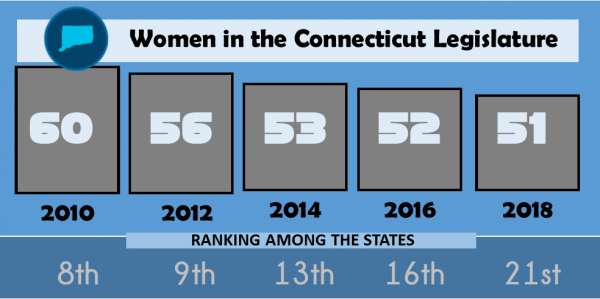 The 2018 election year has been widely declared the year of the woman in politics, a reaction to the MeToo movement and related issues that have risen to the top of many political agendas. It appears that Connecticut ballots may have a record number of women candidates in November, depending upon the outcome of the August 14 primaries in some legislative districts.
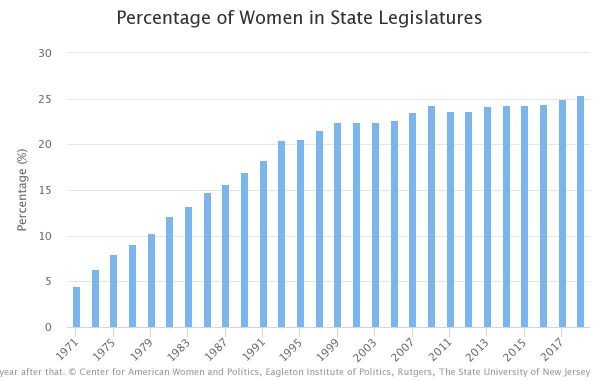
 Leading the nation were Arizona (40%), Vermont (40%), Nevada (38.1%), Colorado (38%), Washington (37.4%), and Illinois (35.6%). Women make up 25.4 percent of all state legislators

 The review of the research, conducted by Connecticut-based Rodriguez Data Solutions, points out that policymakers often promote K-12 regionalization as a way to achieve cost savings, but often fail to consider the consequences for student educational achievement. The report reviewed initiatives to promote K-12 regionalization in several states including Connecticut, Maine, New York and Vermont. Among the findings: