Economic Impact of Arts & Culture in Hartford Region Gains Notice

When the MetroHartford Alliance and the Greater Hartford Arts Council brought business and arts leaders together at the Bushnell Center for the Performing Arts this week, it was the numbers that carried the day, touting the business benefits of the arts and culture industry.  The national study focused on regions across the country using data developed by Americans for the Arts.  In the Greater Hartford region, 123 local arts institutions participated, with more than 800 audience surveys. The top ten stand-out facts about the annual economic impact of arts and culture in the Greater Hartford area, which was defined as Hartford County and Tolland County:

  1. Total Arts and Culture Industry expenditures in the Greater Hartford area:  $230.4 million
  2. Full time equivalent jobs supported: 6,879
  3. Revenue generated to local government: $5,184,000
  4. Revenue generated to state government:  $16,244,000
  5. Spending by Arts & Heritage Organizations;  $148,242,871
  6. Event-Related Spending(total)excluding the cost of admission:  $82,005,472
  7. Average Spending per person: $20.35 ($17.50 from residents of the region; $30.02 from those who reside outside the region)
  8. Total Attendance:  4,028,850  (3,110,272 from within the region; 918.578 from outside the region)
  9. Estimated aggregate value of volunteer hours:  $7,506,865 (7,258 volunteers donated a total of 351,445 hours to nonprofit arts and culture organizations).
  10. Greater Hartford’s arts and cultural community ranks in the top 10% of metro areas across North America.

The findings also noted that of those surveyed:

  • 48% of those attending a cultural event, and who live in the Greater Hartford area, would have traveled to a different community in order to attend a similar cultural experience.
  • 60% of those who live outside the immediate region said the same.

The report concluded, therefore, that if the money wasn’t being spent in Hartford, it would be spent elsewhere.  The report’s overall  bottom line:  arts and culture is “an industry that supports jobs, generates government revenue, and is a cornerstone of tourism.”

The national study included 182 regions include 139 individual cities and counties, 31 multi-city regions, 10 states, and two arts districts and represent all 50 states and the District of Columbia.  Greater Hartford was one of the cities that participated in the survey, which was conducted using 2010 data.

The study results were announced at the MetroHartford Alliance's November Rising Star Breakfast, which  featured Randy I. Cohen, Vice President of Research and Policy for Americans for the Arts, and a local panel that included Catherine Smith, commission of the Connecticut Department of Economic & Community Development; Thomas E. Deller, director of Hartford’s development services and Michael Stotts, managing director of Hartford Stage. The event was sponsored by The Phoenix Companies, Inc. and included remarks from Cathy Malloy, executive director of the Greater Hartford Arts Council.

Quest Program Participants Target Issues From Sex Trafficking to Job Skills

Leadership Greater Hartford’s highly regarded Quest program develops and engages emerging and established leaders in the region through opportunities to sharpen skills, build new professional relationships and – most importantly - address pressing community issues.  The 2012 class of Quest – 47 participants strong – were grouped into four teams, each pursuing distinct and important projects during the course of the year.  Their work is already in evidence in the community, and received high praise at a recent “graduation” ceremony held at the Mark Twain House in Hartford.  The initiatives:

  • The HartBeat Ensemble taskforce focused on what members described as the “appalling, abhorrent and terrifying nature of human sex trafficking” in the Hartford region, coordinating with the Hartford Police Department. They worked with HartBeat Ensemble, an ensemble company that creates original, professional theater based on stories from the community. To help increase public awareness of the issue, the taskforce developed a marketing, collaboration and public relations plan for their newest play in development, Project: Turnpike, which is based on the 2007 landmark federal trial of United States vs. Dennis Paris that took place in Hartford. The play represents 72 hours in the life of four exploited sex workers in a motel room on the Berlin Turnpike.  The play’s opening night is scheduled for April 24, 2013.

Law enforcement officials have observed that Hartford’s location  - near mass transit and between New York and Boston – contributes to the human trafficking industry’s presence here.  Recently, human trafficking – estimated to be a $32 billion-a-year business worldwide – has been the subject of a national crackdown by the travel industry, which has launched an initiative to train employees to identify and report potential trafficking incidents.    The U.S. Departments of Homeland Security and Transportation along with Amtrak also announced plans to training 75,000 employees.

  • The North End Career Resources taskforce focused on the importance of providing career resources to the North End community of Hartford.  They developed and conducted a “Job Skills Resources Fair” at the Albany Avenue Branch of the Hartford Public Library on September 25, 2012.  It was a job skills fair, not a job fair – with the goal of connecting fair attendees with the skills necessary to make them employable in a tough hiring environment.  The “vendors” were non-profit agencies that work in the areas of job skills training.
  • The Billings Forge Community Works taskforce worked with Billings Forge Community Works, an innovative job education and training, housing, and community development organization that serves the residents of Hartford's Frog Hollow neighborhood. This taskforce accomplished three main goals: enhanced their corporate sponsorship program, implemented their auction event for the annual “Farm to Table” event/fundraiser and created an organizational membership program.
  • The Hartford Children’s Theatre taskforce partnered with Hartford Children’s Theatre, which provides theatrical training and entertainment for Connecticut children and families. The taskforce focused on the summer theatrical production of Hartford Children’s Theatre and worked specifically in the areas of development, marketing and general public relations efforts.  In doing so, they not only raised sufficient funds to offset the costs of the production, they also provided input and novel suggestions for future marketing and fundraising operations.

Participating in Quest 2012 were:

Kelsey Aderman - Lincoln Financial Group Debbie Albrecht- Murtha Cullina, LLP. Deb Battit - Hartford Foundation for Public Giving Yvette Bello - Latino Community Services Theresa Benoit - ConnectiCare, Inc. Joe Bierbaum - Stone Academy Maureen Bowman - Travelers Monique (Roxanne) Brown - Phoenix Life Suzanne Butler - OptumHealth Katie Carges - Hartford Hospital Vrinda Dabke - OptumHealth Theresa Desilets - Cigna Steve  Dibella - Hartford Police Department Alisa Dzananovic - Saint Francis Hospital Martin Estey - Hartford Consortium for Higher Education Tom Farrish  - Day Pitney, LLP Fred Faulkner - The Open Hearth Julie Geyer - Capital Workforce Partners LaResse Harvey - Civic Trust Lobbying Company John Henry Decker - Certified Financial Planner Kelly Hewes - The Hartford Carolyn Hoffman - Junior League of Hartford, Inc. Margo  Kelleher - VestA Corporation Lynne  Kelleher - CT Children's Medical Center Ryan Kocsondy - University of Connecticut John McEntee - Travelers Nicole  Miller   Goodwin College Kelly Muszynski - OptumHealth Tokuji Okamoto - Our Piece of the Pie Mario Oquendo, Jr. - Hartford Fire Department Janet Pasqua - ConnectiCare, Inc. Lisa Pawlik - Catholic Charities Sara Phillips - Travelers Jason Roberts - Travelers Josie Robles - Hartford Behavioral Health Kevin Roy - Shipman & Goodwin LLP Michael Ryan - Lincoln Financial Group Leslie Sanborn - Oak Hill Jerene  Slivinsky - UnitedHealthcare Quinten  Smallwood - Travelers Danielle Smiley - City of Hartford - HHS Jen Sprague - United Way of Central and Northeastern Connecticut Paul Stigliano - Hill-Stead Museum Amelinda Vazquez - Eastern Connecticut State University Sonia Worrell Asare, Esq. -  Travelers Andrea  Young - Goodwin College

Housing Supply Tight, Prices High, Choices Limited, Report Finds

Housing continues to be a challenge across Connecticut, with a new report outlining data that reveals a tight supply, high prices and limited choices for individuals and families looking to live and work in the state. The HousingInCT2012 report, by Partnership for Strong Communities, highlighted the following:

  • Despite a housing downturn that pushed median sales prices 19% below their 2007 peak, Connecticut residents struggled with a housing supply problem that kept prices among the highest in the nation.
  • Connecticut's housing production fell to 50th among the 50 states in 2011 and for the 2002-2011 decade. As a result, the extremely modest demand for homes still left the state with the 8th highest median sales price in the nation.
  • The number of communities with affordable housing fell. While the state’s median home sales price declined to $240,000 from a 2007 peak of $295,000, cities and towns where 10% or more of the housing stock was affordable dropped to 29 of 169, from 31.
  • Renters -- now 33% of all Connecticut households, up from 30% just two years ago -- suffered most from the dearth of supply.  Connecticut remained 33,000 units short of the number of affordable rental homes needed and, even more telling, 82,000 units short of the number that were both affordable and available, according to the Census.
  • 26% of Connecticut's 436,000 renting households earn less than 50% of the median income and spend half of that meager income on housing; 51% of all renters spend more than 30% of their incomes on housing.

The report also noted that Connecticut grew older, jumping to 9th in 65-plus population, while young workers with average education debt of about $25,000 and older workers and retirees – half or more with less than $25,000 in savings – fueled demand for smaller, denser, affordable and energy-efficient homes.

The Partnership publishes HousingInCT annually to provide the public with a snapshot of our state’s housing market and needs, using current data and research.


Family Owned Businesses May Spur State's Economic Recovery

A hint of optimism goes a long way.  At least that’s the hope of Connecticut’s small businesses heading into 2013.  A new survey has found almost two-thirds of respondents project sales and revenue growth next year, which, if realized, could be just the boost the state’s economy needs. That growth is increasingly coming from beyond the state’s borders, the survey found.  While 47% of family businesses surveyed identify Connecticut sales as their greatest source of growth, 42% trace the majority of their revenue to other U.S. states, and 11% to international sales. This represents a significant shift from as recently as 2009, when 59% said Connecticut was their largest customer base and only 2% reported international sales as their greatest source of revenue.

The 2012 Survey of Connecticut Businesses, produced by the Connecticut Business & Industry Association and the University of New Haven’s Center for Family Business, highlights the challenges, concerns, and growth prospects a critical sector of the state’s economy.  Almost half of the businesses surveyed said their workforces will remain stable, while 43% plan on hiring new employees in 2013. In addition, many said they anticipated making significant investments in equipment, IT systems, facilities, and training.

Industries represented in the survey included manufacturing, services, retailing, construction, finance, insurance, real estate, wholesale trade, transportation, communications, and utility services.  Many cited the high cost of doing business in Connecticut as the single greatest obstacle to growth.  A lack of skilled workers, particularly in computer/IT knowledge, engineering and mechanical skills, and management and leadership also were noted as ongoing concerns.

Employment looks brighter in 2013: in addition to 43% of family busi­nesses planing  on hiring new employees in 2013 (compared to 30% in 2012), nearly half (48%) expect no change in their company size in 2013. Only 9% expect a decrease in their workforce in 2013, compared with 13% in 2012.The survey questionnaire was emailed to top executives at 3,000 family companies in August 2012. There were 580 responses, for a response rate of 19.3%, and a +/- 4.15% margin of error.

The average tenure for employees at Connecticut’s family businesses is 20.2 years for family members and 12.7 years for non-family members—both substantially higher than the national average for employees overall (4.6 years as of January 2012, according to the Bureau of Labor Statistics).

Family businesses are vital to their communities and to the economy. The survey found that more than three-quarters of family business owners (77%) consider it important or very im­portant that they leave a positive, lasting legacy, and 53% intend to pass their business on to the next generation.

Overall, family businesses comprise 80%−90% of all businesses in North America, contributing 64% of the nation’s gross domestic product (GDP), employing 62% of the U.S. workforce, and outperforming non-family firms on measures such as operating return on assets.

The 2012 Survey of Connecticut Businesses is part of CBIA’s Family Business Program, an initiative designed to support and grow the state’s thousands of family businesses.  Sponsored by CohnReznick, First Niagara Bank, and Reid and Riege PC, the program features forums and networking opportunities where business leaders can discuss solutions to issues ranging from family governance to succession planning.

CT Leader in Jobs, Salaries in Community & Social Service Fields

If you’re interested in working in the community and social service fields, Connecticut is the place to be, according to the latest federal data.  Nationally, community and social service occupations had an annual mean wage of $43,830, which was just below the U.S. all-occupations mean wage of $45,230, according to data compiled by the U.S. Bureau of Labor Statistics, for the 2011 calendar year.   Out of the 17 occupations in the community and social service group, seven had a mean wage above the U. S. average and 10 had a mean wage below average. Connecticut, however, had among the highest levels in the nation. According to the federal agency, Connecticut had some of the highest annual average wages in the community and social services occupations, and a strong concentration of workers as well. The BLS reported recently that:

  • Hartford-West Hartford-East Hartford had the highest employment of any metropolitan area in Connecticut (2,370).   The area had the 14th-highest location quotient (2.00) out of all U.S. metropolitan areas and an annual average wage of $61,980. (Location quotients are useful for analyzing occupational employment while controlling for the size of the state. They are useful for comparing the composition of jobs in an area relative to the average or for finding areas that have high concentrations of jobs in certain occupations.)
  • Waterbury, the metropolitan area with the highest location quotient (2.41) in Connecticut, had one of the highest average annual wages ($64,270) and employment of 330 for community and social service occupations.
  • With an employment of 430 community and social service workers and a high location quotient (1.54), Norwich-New London had an annual average wage of $58,130, the lowest wage for this group out of the metropolitan areas in Connecticut, but still well above average.The Eastern non-metropolitan area had the second-highest annual average wage ($68,880) out of all U.S. non-metropolitan areas, the fourth-highest location quotient (2.63) out of all non-metropolitan areas, and an employment of 150 for community and social service occupations.

The state of Connecticut also has two non-metropolitan areas, Eastern and Northwestern.

  • The Eastern non-metropolitan area had the second-highest annual average wage ($68,880) out of all U.S. non-metropolitan areas, the fourth-highest location quotient (2.63) out of all non-metropolitan areas, and an employment of 150 for community and social service occupations.
  • The Northwestern non-metropolitan area had the third-highest annual average wage ($65,510) out of all non-metropolitan areas, the 21st-highest location quotient (1.84), and an employment of 140.

Nationally, some of the highest-paying occupations in the community and social service group were educational, guidance, school, and vocational counselors ($56,540); health educators ($52,150); and probation officers and correctional treatment specialists ($52,110). Two of the lowest-paying occupations, social and human service assistants ($30,710) and religious workers, all other ($31,600), had the highest (359,860) and lowest (7,660) employment, respectively, in the occupational group.


Entrepreneurship is Focus of November Attention in CT and Beyond

November is a terrific month to glimpse the future.  Startup Weekend returns to New Haven the weekend of November 9-11.   And right behind it arrives Global Entrepreneurship Week, November 12-18. Startup Weekend is a global grassroots movement of active and empowered entrepreneurs who are learning the basics of founding startups and launching successful ventures. It is the largest community of passionate entrepreneurs with over 400 past events in 100 countries around the world a year ago. All Startup Weekend events follow the same basic model: anyone is welcome to pitch their startup idea and receive feedback from their peers. Teams organically form around the top ideas (as determined by popular vote) and then it’s a 54 hour frenzy of business model creation, coding, designing, and market validation.

The weekends culminate with presentations in front of local entrepreneurial leaders with another opportunity for critical feedback. Whether entrepreneurs found companies, find a cofounder, meet someone new, or learn a skill far outside their usual 9-to-5, everyone is guaranteed to leave the event better prepared to navigate the chaotic but fun world of startups.  New Haven and Hartford have been host to Startup Weekends in Connecticut.

Right on the heels of that weekend will be Global Entrepreneurship Week, when millions of young people around the world - including some in Connecticut -  join a growing movement of entrepreneurial people, to generate new ideas and to seek better ways of doing things.

Countries across six continents come together to celebrate Global Entrepreneurship Week during Nov. 12-18, an initiative to inspire young people to embrace innovation, imagination and creativity. Students, educators, entrepreneurs, business leaders, employees, non-profit leaders, government officials and many others participate in a range of activities, from online to face-to-face, and from large-scale competitions and events to intimate networking gatherings.

Among the Connecticut locations already signed on to participate in at least one activity during the week are Norwalk High School, Quinnipiac University, RHAM High School in Hebron, and Pathways to Technology Magnet School in Windsor.

National Park System Growing Rapidly, Coltsville Awaits OK

When U.S. Secretary of the Interior Ken Salazar visited Hartford a little more than a year ago, the hope was that his support would push plans for a National Park designation for Hartford’s Coltsville complex over the goal line in Congress.  The project has been advocated for more than a decade by state political leaders in Washington, most visibly by First District Congressman John B. Larson.  The slow pace of final approval may be related to what USA Today recently described as a “growth spurt” in the national park system. Among states with pending National Park Service sites: Delaware, Illinois, Maryland, Nevada, New Mexico and Ohio. Ten sites have been added since May 2004; a record 33 were added in 1978. Only Congress can create national parks, but the president can designate national monuments. A commission that proposed goals for the National Park Service's future recommended in 2009 that the process for selecting new sites be streamlined.

“The Coltsville National Historical Park Act,” introduced in Congress two years ago and again last year, would establish a  National Historical Park after certain conditions are met, including the donation of at least 10,000 square feet in the East Armory to be used for a Colt museum and the donation of the land within the proposed Park boundaries. The bill would also give the Secretary of the Interior authority to enter into written cooperative agreements with the various land owners living in Coltsville as well as with various museums in order to acquire different artifacts for display in the Colt museum.

The proposed park has two goals: commemoration and economic revitalization. “The Coltsville National Historical Park Act of 2011 is designed to preserve the important story of Samuel Colt and boost our economy by revitalizing downtown Hartford,” Larson and Senator Joseph Lieberman wrote, in an op-ed in the Hartford Courant. “A recent National Parks Conservation Association study found every federal dollar invested in national parks generates at least $4 in benefits to state and local economies. Connecticut deserves this boost.”

Hartford waits, but is certainly not alone.

Targeting Financial Fraud Against Senior Citizens in CT

Attorney General George Jepsen is encouraging members of the public and social service agencies that work with seniors to attend the annual Connecticut Triad conference to learn more about financial exploitation and ways to protect against such abuse. The conference will be Thursday, Nov. 1 from 8:30 a.m. to 12:30 p.m. at the Riverfront Community Center, 300 Welles Street in Glastonbury. In addition to the Attorney General, featured speakers include Hubert H. Humphrey III, of the Consumer Financial Protection Bureau’s Office of Financial Protection for Older Americans; Special Agent Anna Ferreira-Pandolfi of the U.S. Department of Health & Human Services’ Office of the Inspector General and Dr. Linda Eagle of the Global Bankers Institute.

Assistant Attorney General Phillip Rosario, head of the OAG’s Consumer Protection unit, will moderate a panel discussion by representatives of the Glastonbury Police Department, the state Department of Banking, the state Department of Social Services, People’s Bank Fraud Unit and the Probate Court.

The event is free and open to the public, but seating is limited and those attending are asked to reserve a space by e-mailing gjames@swcaa.org, or by calling 203-814-3620, on or before Friday, Oct. 26.

Triad is a national initiative of law enforcement agencies and community groups working together to reduce crimes against seniors. There are more than 60 local Triad chapters in Connecticut. Current members of the CT Triad Advisory Board include: The Office of the Attorney General, The Department of Social Services Aging Services Division, People’s United Bank, The CHOICES Senior Medicare Patrol (SMP) Healthcare Fraud and Abuse Project, AARP Connecticut and the Connecticut Area Agencies on Aging.

David B. Fein, U.S. Attorney in Connecticut, hosted the first of the six summits nationwide focusing on financial fraud earlier this month. He says between 2008 and 2011, FBI statistics show at 136 percent increase in investor fraud schemes. At an event in Stamford on October 1, speakers discussed an increase in scams involving reverse mortgages, the failure of victims to have done any due diligence on those they trust their money to, and a lack of skepticism when an "investment counselor" asks for funds to be paid directly to them.  Since last year, the U.S. Department of Justice says, it has charged, brought to trial, taken pleas or received sentences for more than 800 defendants in investor fraud cases. The amount taken from victims exceeds $20 billion.

Earlier this week, a Wells Fargo survey found that a growing number of middle-class Americans plan to postpone their golden years until they are in their 80's.  CNN reported that nearly one-third, or 30%, now plan to work until they are 80 or older -- up from 25% a year ago, according to the survey of 1,000 adults with income less than $100,000.   Overall, 70% of respondents plan to work during retirement, many of whom plan to do so because they simply won't be able to afford to retire full time.


Robotics, Simulation Training Draws Medical Talent to Hartford

An unassuming building on Hudson Street in Hartford, in the midst of a construction zone and a short walk from Hartford Hospital, is what’s known as CESI - the Center for Education, Simulation and Innovation, located on the second floor of Hartford Hospital’s Education & Resource Center. Part of the hospital campus, it is among a select number of premier centers for comprehensive experiential learning and innovation nationwide, using simulation, robotics and other leading-edge training technologies – a hands-on magnet for  tomorrow’s technology that is increasingly becoming today’s reality in medicine.  Some suggest that CESI is– or soon will be – among the top five facilities in the country.  Already, CESI is a regional and national training destination. As the second largest surgical center in New England and the Northeast’s largest robotic surgery center, Hartford Hospital is widely viewed as a hub for medical training.

The vision of the rapidly growing facility is fundamental to the mission of Hartford Hospital, and parent-organization Hartford Healthcare:  to assist all providers in enhancing multidisciplinary team performance, the quality of patient care, and patient safety through a comprehensive range of educational programs using state-of-the-art simulation and cutting edge technologies. CESI features exact replicas of an operating room, intensive care unit, delivery room and trauma room. It has the same equipment as the hospital, including two robots and two robotic simulators designed especially for training purposes.

Seeing is believing, and a recent tour provided to representatives of Leadership Greater Hartford by CESI staff was a window into medical technology not often seen by those outside the field (or their patients).  If you believe that a picture is worth a thousand words, CESI does that one better, with a virtual tour available on-line, which allows individuals, organizations, and the general public a glimpse of the sophisticated technology available to teach surgeons and medical teams the robotic techniques now emerging.

During the two decades since its inception – with exponential growth in recent years – its predecessor facilities and CESI (so-named in 2010) has expanded from 900 square feet to 20,000 square, training thousands of medical personnel. Incredibly, the entire operation is run with a staff of six – from the medical and program directors down to the simulation technician. The dedication and pride is evident in every aspect of the facility’s operation, which has a schedule that is consistently busy – not only with surgeons, residents and nursing staff from Hartford Hospital, UConn and local acute care facilities, but from organizations local – such as the Connecticut Fire Academy – and worldwide, such as teams from France and Israel (during the past two weeks alone).

In fact, both the Navy and Army National Guard use the CESI facility for their training purposes. The Navy trains their independent duty coremen and physicians. The state-of-the-art facilities enable CESI staff to simulate not only medical emergencies, but the environment that teams such as those in a war zone would face in responding.  That level of training is invaluable,  and not readily available elsewhere.

CESI has been recognized as a Center of Excellence - one of only 20 centers designated nationwide. Nearly two dozen training courses are offered, ranging from labor & delivery to bio-terrorism, traumatic brain injury to advanced cardiac life support.  This summer, Governor Dannel P. Malloy announced that the state will provide a $10 million grant to support a 30,000 square foot expansion of CESI - part of the hospital’s larger $100 million capital improvement plan, designed to make the institution a leader in training the world’s healthcare professionals in the latest medical techniques.

CESI is comprised of three separate areas:

  • Robotic and endovascular simulators
  • Task trainers, ultrasound technology and Fundamentals of Laparoscopic Surgery (FLS)
  • Five simulated clinical environments each with its own control room: Labor & Delivery, Resuscitation, ICU, Trauma/ED, and Operating Room.

Internally, Hartford Hospital’s Departments of Anesthesia, Critical Care, Emergency Medicine, Ob-Gyn and Surgery are all using the facility to orient their first year residents and fellows to their clinical practices. The residents are able to experience hands-on training without the added pressure of performing new tasks on real people. It builds their confidence and allows them to learn, practice and repeat procedures in a controlled, non-rushed and educational environment.

It is also an ideal setting to begin to establish a culture of patient safety and open communication among an interdisciplinary medical team, whether from Hartford Hospital or elsewhere. Participants are able to train in a setting similar to an actual work environment to create an atmosphere of realism - mirroring multiple types of acute crises and patient care scenarios. Through simulation, the team can learn the physiologic components of crisis management, equipment knowledge, technical skills, and the leadership and teamwork needed to successfully deliver exceptional health care.

As Connecticut steps up its international presence in bioscience research and personalized medicine, facilities such as CESI have the potential to complement that effort, broadening the state’s impact on health care and medicine for decades to come.


State’s Mature Firms Are Key to Job Growth, Study Finds

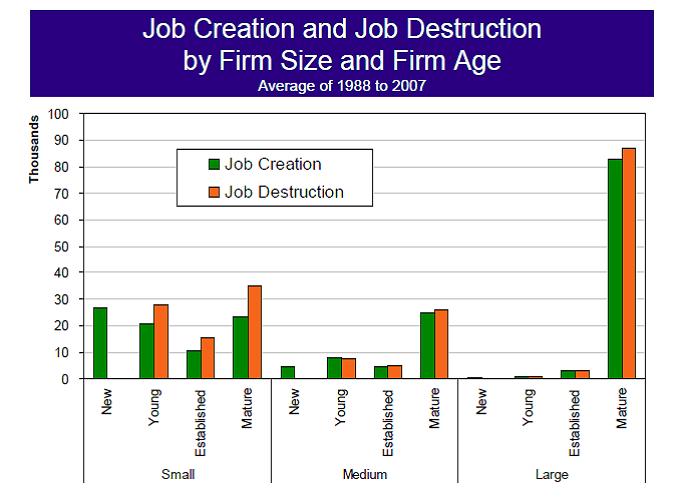
Because new firms, by definition, can’t “destroy” jobs, only create them, analysis of “job creation” often skews towards new rather than mature firms.  But an analysis by economist Manisha Srivastava of the state Department of Labor, writing in The Connecticut Economic Digest, suggests that when one looks a gross, rather than net, job creation - it is the mature companies that lead the way.  In fact, Connecticut has outperformed the national average in gross job creation by mature companies during the past two decades (through 2007).  The research and analysis, presented at a state data conference, suggests that state policy should focus on “helping firms destroy less jobs” as well as assisting them in creating new jobs. Reviewing two decades of data, the study found that Connecticut is six percentage points above the national average on job creation from mature firms – and that most job creation comes from mature firms.  Mature firms are defined as those that have been in business for at least 11 years.

“Connecticut created about 4.35 million jobs between 1988 and 2007.  An almost equivalent number of jobs were also destroyed during the time period,“ the study noted.  But that said, the number of jobs created by mature firms – and thus “the number of employment opportunities for individuals seeking jobs, mature firms outweighed the availability of jobs from firms of all other categories, including small businesses.”

The answer to the question who creates jobs “will change depending on how the question is framed,” the report concluded.  “If the desired metric is net job creation, than new firms create the most jobs.  If the question is simply job creation, then mature firms create the most.”  If a greater percentage of those jobs can be retained, since the numbers are far larger, the impact will likely be as well.

A series of charts and graphs highlighting the report appeared in The Connecticut Economic Digest in May.