Start-Up Business Accelerator Program Selected to Receive Federal Funds to Expand Impact
/The LaunchPad for Impact is an accelerator program for early-stage ventures that equips entrepreneurs with tools, resources, and guidance to test drive business assumptions and build a business model that delivers peak value and impact. The program, developed and operated in Hartford by reSET, the Social Enterprise Trust, has been selected to receive a cash prize of $50,000 from the U.S. Small Business Adminstration (SBA), one of only 80 organizations in the country to be designated to receive the funding.
Selected in the SBA's Growth Accelerator Competition, LaunchPad for Impact is the only Connecticut accelerator to receive an award this year. President Obama made the announcement this week from the White House of awards totallying $4.4 million. The award includes a $50,000 cash prize to help fund the Hartford-based accelerator, and provides public recognition. Overall, the recipients represent 39 states, the District of Columbia and Puerto Rico. 
The selected accelerators across the nation serve entrepreneurs in a broad set of industries and sectors – from manufacturing and tech start-ups, to farming and biotech – with many focused on creating a diverse and inclusive small business community. "The entrepreneurial ecosystem in America is incredibly exciting and very powerful,” said Javier Saade, Associate Administrator for the U.S. Office of Investment and Innovation. Elsewhere in New England, three Massachusetts programs were selected, as were two Maine initiatives, and one in both Rhode Island and New Hampshire.
 Through customer feedback, expert guidance, and a peer network, Launchpad for Impact helps transform a start-up business or concept in to a scaleable model by helping entrepreneurs learn quicker, pivot where necessary, and move forward with a better chance of success. Through peer to peer feedback from other entrepreneurs, expert coaching, and an innovative online platform that captures validation and measures investment readiness, participants “get the data, knowledge, and tools needed to pitch to clients, investors, and partners. In an environment where most start-up businesses fail, this program helps you get the validation and sound evidence you need to support your business model,” the program website indicates.
Thus far, the program has included 138 social entrepreneurs in Connecticut, helped launch or accelerate 54 impact ventures, and awarded over $75,000 in funding to early stage ventures in the past two years, according to the program website. Participants meet for nine scheduled, in person sessions and are offered supplemental workshops in multiple areas of business development.
In the SBA competition, applications were judged by more than 40 experts with entrepreneurial, investment, startup, economic development, capital formation and academic backgrounds from both the public and private sector. The first panel of judges reviewed over 400 applications and presentations and established a pool of 180 highly qualified finalists. The second panel evaluated the finalists’ presentations and pitch videos and selected the 80 winners.
“SBA is continuing to make advances in supporting unique organizations that help the start-up community grow, become commercially viable, and have a real and sustained economic impact,” said SBA Administrator Maria Contreras-Sweet. “Through the wide-spread outreach of this competition, we are able to reach entrepreneurial ecosystems across the country. My commitment is to make our resources available to 21st century entrepreneurs where they are, and these accelerators, also known as incubators and innovation hubs, are the gathering place for today’s innovators and disruptors.”
 Looking at five year trends, the report found that the region’s population of about 1 million people has grown by 2 percent, which translates to about 20,000 people or about 4,000 families. Regional job growth, 3.5 percent, is on par with the state, but remains about 8,000 jobs below pre-recession levels. The crime rate across the Greater Hartford region has been reduced by about 18 percent during the past five years, faster than the state (-16%) and national (11%) trends.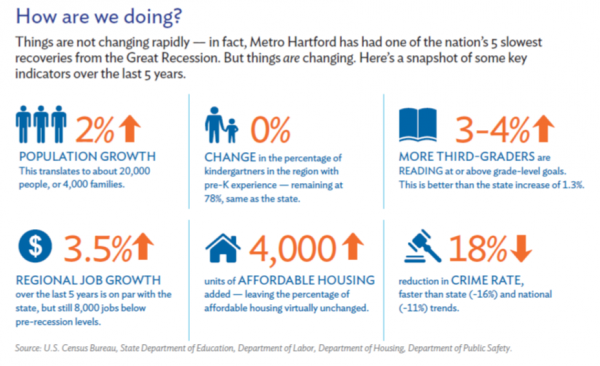
 Partner organizations in developing the report include the Hartford Foundation for Public Giving, Capital Workforce Partners, Capital region Council of Governments, Metro Hartford Alliance, Hispanic Health Council, United Way of Central and Northern Connecticut, Urban League of Greater Hartford, Center for Urban and Global Studies at Trinity College, and the City of Hartford.


 The survey noted that more than two-thirds of consumers (68 percent) looking to purchase their first home are interested in move-in ready homes while one-third would like to buy a fixer-upper. And when it comes to amenities, respondents are most interested in their first home having a backyard or pool and an attractive design, followed by energy efficient / smart homes technologies.
 U.S. Commerce Secretary Penny Pritzker honored a total of 45 American companies and organizations, many of which are small- and medium-sized enterprises (SMEs), at the 2015 President’s “E” Awards ceremony, held earlier this year. The six Connecticut businesses were among the 45 honored.
 Proton Onsite makes hydrogen and nitrogen generators. Mutualink manufactures equipment used to facilitate collaborative communication between public safety and first response teams at the scene of emergencies. Jonal Laboratories makes sealant used in the aerospace industry. Dymotek manufactures custom injection molded plastic and silicone parts for electronics, plumbing valves and juice dispensers.
 t assist and facilitate export activities were honored with the “E” Award for Export Service. Four firms received the “E” Star Award for Exports, which recognizes previous “E” Award winners who have reported four years of additional export growth. And, three companies were awarded the “E” Star Award for Export Service, which recognizes previous “E” Award winners that have shown four years of continued support of exporters since first winning the “E” Award.
 This year marks the 53rd anniversary of the
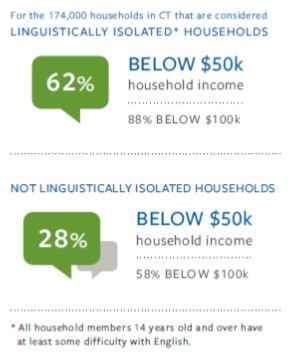
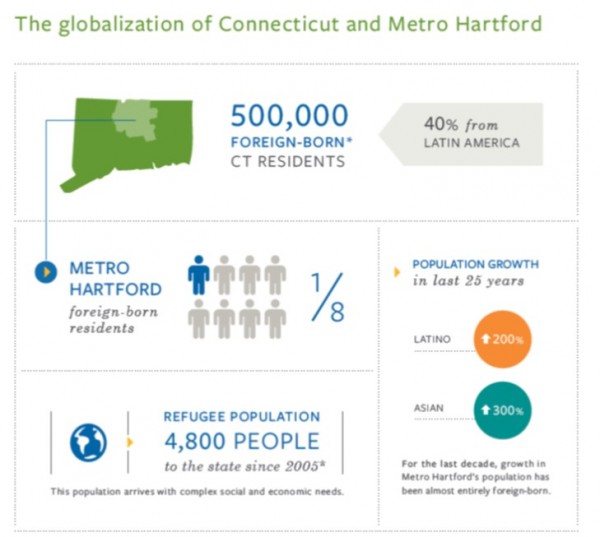 “The Latino Endowment Fund has offered this report as a means to expand the important discussion on efforts to support English Language Learners in our communities,” said Luis Cabán, chair emeritus of the Latino Endowment Fund Steering Committee. “This document provides us with an opportunity to reframe how we think about our increasingly global community and recognize the advantages of people speaking more than one language to enhance the richness of our community and create stronger links to the global marketplace.”


 As a result, the study found that inequality between “top and bottom income” neighborhoods intensified in the great majority of commuting zones. Even where inequality dropped, the story was not always positive: it often occurred because top-neighborhood incomes fell in the wake of economic stagnation.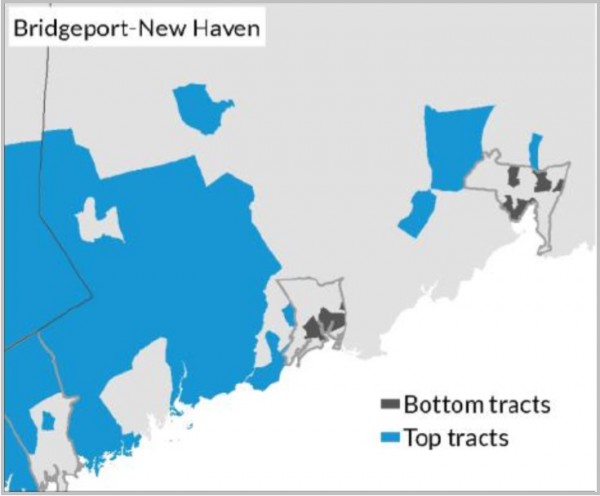

 Overall, the top 5 up-and-coming regions for tech jobs in the U.S. were 1) Austin-Round Rock, TX, 2) Raleigh-Cary, NC, 3) Provo-Orem, UT, and 4) Fort Collins-Loveland, CO. Also reaching the top 10 were 6) Indianapolis-Carmel, IN, 7) Boise City-Nampa, ID, 8) Manchester-Nashua, NH, 9) Nashville-Davidson-Murfreesboro-Franklin, TN and 10) Eugene-Springfield, OR.
 nd online interview tools, all while eliminating bulky and expensive software. Founded in 2010,
  Abstract processing has several effects on consumers, such as increasing their willingness to pay. The presumed source of the effect is that people are accustomed to looking downward to process nearby, concrete information and upward to absorb distant, more-abstract information, the researchers say.
 , “The Floor Is Nearer than the Sky: How Looking Up or Down Affects Construal Level,” is published in the April 2015 edition of the Journal of Consumer Research.
 A year ago, the website