GE Leaves Wisconsin for Canada, Blames Government; Cuts Thousands of Former Alstom Jobs Across Europe
/Virtually unnoticed amidst the attention given to the months long saga of GE’s decision to move its corporate headquarters from Fairfield was another relocation by the company – this time not only leaving a state, but the United States. And in that instance as well as the latest decision, government was cited as a reason for the departure.
Less than four months ago, GE announced it was leaving Waukesha, Wisconsin for Canada, and moving 350 jobs north of the border. GE closed a long-time engine manufacturing plant in Wisconsin and announced plans to invest $265 million to build a new one in Canada in order to take advantage of Canadian export credit financing. The new plant was expected to be completed in 20 months and was described by GE as “a flexible production facility that can expand over time and also support manufacturing requirements for other GE businesses.”
The company said the new state-of-the-art plant in Canada and will be a flexible facility that can expand over time and also support manufacturing requirements for other GE businesses. GE notified employees in Waukesha and more than 400 U.S. suppliers of its plans. In Wisconsin alone, suppliers generated almost $47 million in revenue from the plant, GE said at the time.
“We know these announcements will have regrettable impact not only on our employees but on the hundreds of U.S. suppliers we work with that cannot move their facilities, but we cannot walk away from our customers,” said John Rice, Vice Chairman, GE, when the Wisconsin move was announced.
The blame, according to a GE news release, rested on Congress, which allowed the nation’s Export-Import Bank to cease functioning. Last week, in an effort to break a political logjam in the Republican-controlled Congress, the White House announced it would nominate a Republican to lead the agency.
When the company announced its decision to leave Wisconsin for an unnamed Canadian city, it pointed the finger squarely at Congress:
“GE is currently bidding on $11 billion of projects that require export financing. While more than 60 other countries have export credit agencies (ECAs) that support domestic manufacturing for export, the US does not. The authorization for the U.S. export credit agency – the Export-Import Bank, or Ex-Im – lapsed on July 1. For the last year, exporters and suppliers have called upon Congress to reauthorize the U.S. Export-Import Bank to support manufacturing jobs and level the playing field for U.S. companies that compete globally. Most countries are hungry for manufacturing and export jobs. The U.S. remains the only major economy in the world without an export bank.”
The headquarters move to Boston was not GE’s only major announcement this week. The company also announced plans to cut 6,500 jobs in Europe as it moves to integrate Alstom SA’s power business and push through cost savings from the acquisition, made last year. The acquisition included facilities in Windsor and Bloomfield in Connecticut, including about 1,000 jobs. No word on whether cuts may be coming there as well. Published reports indicated that GE has not yet announced how many jobs it could eliminate in the Americas, Africa and Asia, where it is also working to integrate Alstom’s operations with its own power business.


 Since entering the Connecticut market in the summer of 2014, the company has been aggressively growing its customer base in a competitive market while working diligently to grow and expand its network of doctors. Harvard Pilgrim Health Care announced recently that its Connecticut membership has grown to more than 24,000, exceeding expectations for 2015. It now serves more than 800 Connecticut businesses. Twenty-nine of the state’s 30 hospitals are now in-network.
 With more than 500 business leaders in attendance at an annual Economic Summit & Outlook last week, brought together by the Connecticut Business and Industry Association and MetroHartford Alliance, Schmitt spent some time touting a new model launched in the state of New Hampshire that he believes may be a glimpse into the direction the industry is moving. Harvard Pilgrim Health Care’s footprint in New England now covers “where 90 percent of New Englanders live,” in Massachusetts, Connecticut, Maine and New Hampshire.
 Launched
 Congressional Districts, with the exception of the Fourth District, did better than the national average in the degree of income inequality.


 MassChallenge, an independent nonprofit organization, envisions “a creative and inspired society in which everyone recognizes that they can define their future, and is empowered to maximize their impact.” They note that “novice entrepreneurs require advice, resources and funding to bring their ideas to fruition. Currently there is a gap between the resources these entrepreneurs need and the ability of the entrepreneurial ecosystem to provide them.” To bridge that gap, the organization’s primary activities include running an annual global accelerator program and startup competition, documenting and organizing key resources, and organizing training and networking events. They “connect entrepreneurs with the resources they need to launch and succeed immediately.”
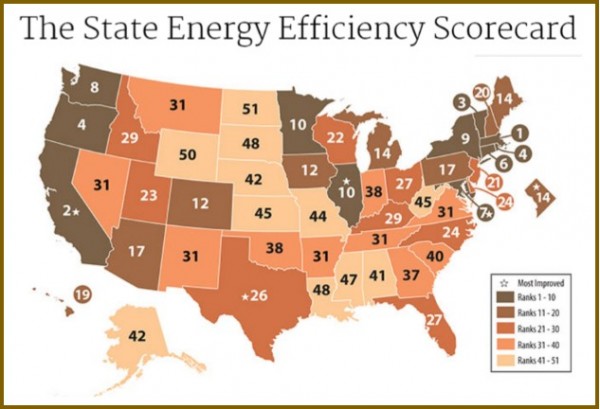 nd compliance efforts, earned 3 points out of 4 for its combined heat and power policies and programs, 5.5 out of 7 points for state-led energy efficiency initiatives, and 1 point out of 2 for appliance standards.
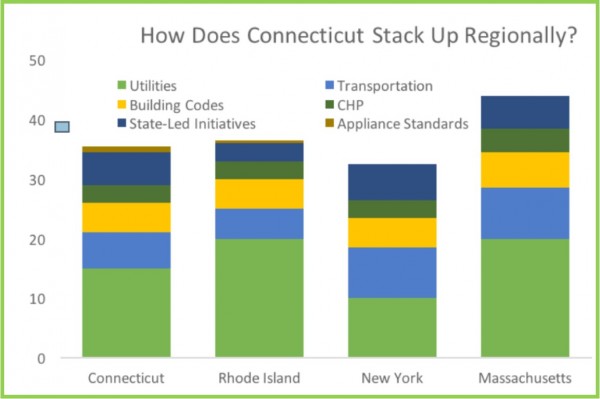 olar power in Connecticut has grown 221 percent per Capita since 2012, ranking the state 13th in the nation, the report points out. The top solar growth states in the nation, like Connecticut, have adopted renewable energy requirements, strong laws allowing solar customers to sell their excess power to the electric grid, and other policies encouraging growth of the industry, the report indicates. The industry is also adding jobs much faster than the overall economy, employing 1,600 people in Connecticut last year, according to
  ."
."

 "The Connecticut Council for Philanthropy along with other funding partners invested in the first ever statewide Community Wellbeing Survey, a scientific survey of the state’s entire adult population that will provide timely, powerful knowledge about our communities and enable us to better know the people and places we care about,” added Maggie Osborn, President of the Connecticut Council for Philanthropy.

 The
The  Plans for the new Academic Science & Laboratory Building at Southern began back in 2007 with a comprehensive 10-year capital improvement plan, dubbed CSUS 2020, for upgrading the four institutions of the Connecticut State University System. Approved by the state legislature and signed into law by Gov. M. Jodi Rell, the plan was developed during the administration of Chancellor David G. Carter. It included upgrades and repairs to existing facilities, as well as construction of a new Visual & Performing Arts Center at Western Connecticut State University, which

 The work, which has yet to be funded, is likely to include moving or eliminating some exits and entrances – and possibly adding others in new locations - to improve traffic flow. Cost estimates range from $4 billion to $12 billion, depending on the option selected. Upcoming public meetings are to be held in East Hartford on Dec. 2 and Hartford on Dec. 10.


 The celebration also included a tour of the lab’s research and development projects. Employees from Alstom’s nearby Windsor, campus, where the
  company employs more than 1,000 people, also attended tours of the new facility.