CT Ranked 14th Among Smaller States for Small Business Activity; MA Is 2nd Among Large States
/Small business activity is on the rise in 49 of the 50 U.S. states, according to a new report from the Kauffman Foundation. The report provides a broad index measure of small local business activity, analyzing the states in peer groups of the 25 largest states by population and the 25 smallest states by population. Connecticut ranked 14th among the smaller 25 states, for the second consecutive year, and was the lowest-ranked New England state. The density of established small businesses per 100,000 residents increased slightly from the previous year, from 1,147.3 to 1,167.4 in 2015. Established small businesses are defined in the study as businesses over the age of five employing at least one, but less than fifty, employees. The rate of small business ownership also grew slightly in Connecticut, from 6.14 percent to 6.34 percent.
Demographic trends for Connecticut noted in the report indicate an increase in native-born small business ownership, and upticks in the percentage of small businesses led by Latinos, 55 to 64 year-olds, 35-44 year-olds, high school graduates and college graduates. More small businesses are run by men than women.
Overall, what the report describes as “Main Street entrepreneurial activity – an indicator of the number of established small businesses and the number of business owners in a location – experienced a large increase in 2015, reversing a six-year downward and stagnant trend in the U.S.”
"Following a post-recession downward and stagnant trend in small business activity, we're now seeing Main Street Entrepreneurship begin to rise," said E.J. Reedy, director in Research and Policy at the Kauffman Foundation. "This obviously is good news given that these small businesses make up 63 percent of all employer firms nationally."
The Kauffman Index: Main Street Entrepreneurship State Trends report includes these findings:
Among the 25 largest states, the five states with the highest activity were Minnesota, Colorado, Massachusetts, New York and New Jersey. Among the 25 smallest states, the states with the highest activity were Vermont, Montana, North Dakota, South Dakota, Wyoming, Maine, Nebraska, New Hampshire, Rhode Island, Iowa, Oregon, Idaho, and Kansas.
Insights on business owner demographics for the 25 smallest states, including Connecticut:
- States with the highest rates of female business owners were Vermont, Montana, Wyoming, Oregon, and South Dakota.
- States with the highest rates of older adult business owners (ages 55-64) were South Dakota, Vermont, North Dakota, Montana and Nebraska.
- States with the highest rates of young adult business owners (ages 20-34) were South Dakota, North Dakota, Montana, Wyoming and Vermont.
 Tennessee is the only state that did not show an increase in established small business activity in 2015 compared with 2014.
The new Main Street Entrepreneurship Index is an indicator of small business activity, presenting trends over the past two decades, focusing on established small businesses (firms older than five years with less than 50 employees) and trends in ownership rates. The Index measures business activity along two distinct and complementary dimensions: the rate of business owners in the economy – the percentage of adults owning a business in a given month, and established small business density – the ratio of established small employer businesses compared to population.
The Kauffman Index of Entrepreneurship is the first and largest index tracking entrepreneurship across city, state and national levels for the United States, and also presents demographic characteristics of the business owners.
In a companion study and report, focusing on the nation’s largest metropolitan areas, Small business activity is on the rise 38 of the top 40 largest metropolitan areas, the top five metropolitan areas for small business activity as measured by the Index were New York, Boston, Providence, San Francisco and Portland. The report on metropolitan areas noted that “the one to experience the biggest increase in rankings was Providence, which moved up three spots to tie with Boston for second place in the 2015 Index.”
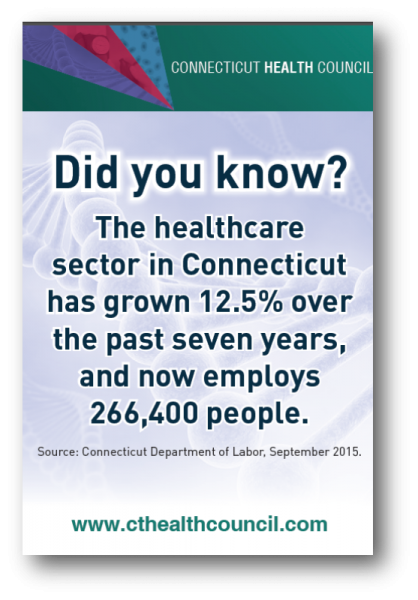
 In addition, the marketing campaign also highlights that thee of the top 10 fastest growing companies headquartered in Connecticut in 2014 were healthcare related companies, and that Connecticut’s healthcare sector has the fifth highest number of sole proprietorships of any sector in the state, with the seventh highest revenues. Connecticut’s “unique base of health sector assets” include health insurance companies, hospitals, medical schools, research capacity, and specialty practices, according to the organization’s website.
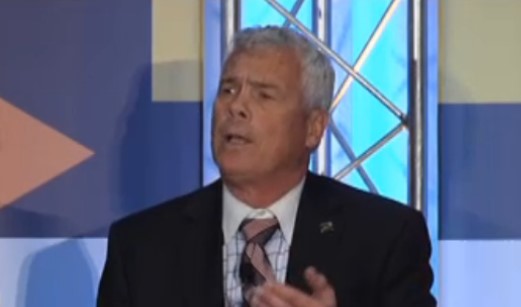
 The Council's primary activity is to host programs focused on health sector topics that feature speakers of regional, national and international renown, the website points out. The Council also provides “a forum for a robust network of experts, professionals and other parties interested in promoting Connecticut as a center of health excellence and the health sector as a primary driver of economic and employment growth in our State.”


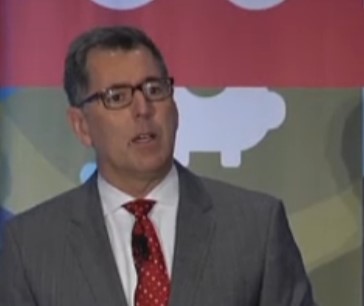 Since entering the Connecticut market in the summer of 2014, the company has been aggressively growing its customer base in a competitive market while working diligently to grow and expand its network of doctors. Harvard Pilgrim Health Care announced recently that its Connecticut membership has grown to more than 24,000, exceeding expectations for 2015. It now serves more than 800 Connecticut businesses. Twenty-nine of the state’s 30 hospitals are now in-network.
 With more than 500 business leaders in attendance at an annual Economic Summit & Outlook last week, brought together by the Connecticut Business and Industry Association and MetroHartford Alliance, Schmitt spent some time touting a new model launched in the state of New Hampshire that he believes may be a glimpse into the direction the industry is moving. Harvard Pilgrim Health Care’s footprint in New England now covers “where 90 percent of New Englanders live,” in Massachusetts, Connecticut, Maine and New Hampshire.
 Launched
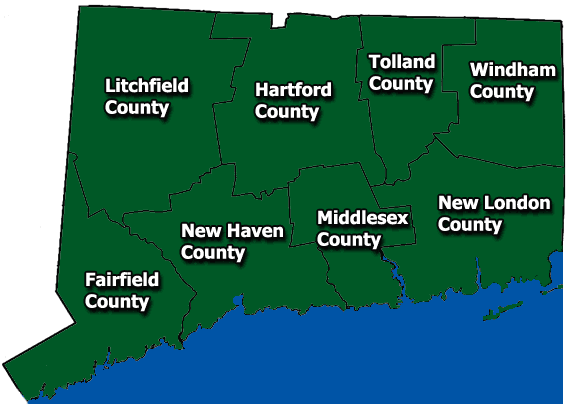 Congressional Districts, with the exception of the Fourth District, did better than the national average in the degree of income inequality.


 MassChallenge, an independent nonprofit organization, envisions “a creative and inspired society in which everyone recognizes that they can define their future, and is empowered to maximize their impact.” They note that “novice entrepreneurs require advice, resources and funding to bring their ideas to fruition. Currently there is a gap between the resources these entrepreneurs need and the ability of the entrepreneurial ecosystem to provide them.” To bridge that gap, the organization’s primary activities include running an annual global accelerator program and startup competition, documenting and organizing key resources, and organizing training and networking events. They “connect entrepreneurs with the resources they need to launch and succeed immediately.”
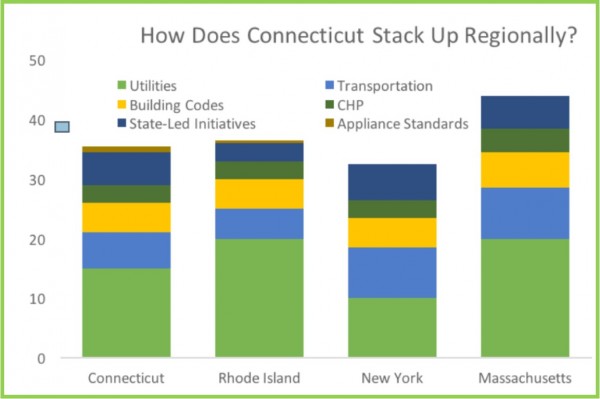
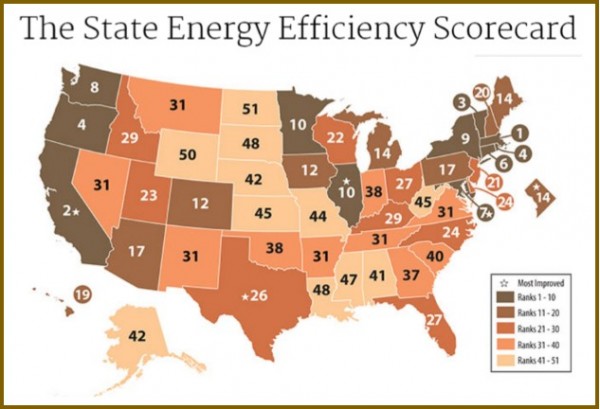 nd compliance efforts, earned 3 points out of 4 for its combined heat and power policies and programs, 5.5 out of 7 points for state-led energy efficiency initiatives, and 1 point out of 2 for appliance standards.
 olar power in Connecticut has grown 221 percent per Capita since 2012, ranking the state 13th in the nation, the report points out. The top solar growth states in the nation, like Connecticut, have adopted renewable energy requirements, strong laws allowing solar customers to sell their excess power to the electric grid, and other policies encouraging growth of the industry, the report indicates. The industry is also adding jobs much faster than the overall economy, employing 1,600 people in Connecticut last year, according to
  ."
."

 "The Connecticut Council for Philanthropy along with other funding partners invested in the first ever statewide Community Wellbeing Survey, a scientific survey of the state’s entire adult population that will provide timely, powerful knowledge about our communities and enable us to better know the people and places we care about,” added Maggie Osborn, President of the Connecticut Council for Philanthropy.

 The
The  Plans for the new Academic Science & Laboratory Building at Southern began back in 2007 with a comprehensive 10-year capital improvement plan, dubbed CSUS 2020, for upgrading the four institutions of the Connecticut State University System. Approved by the state legislature and signed into law by Gov. M. Jodi Rell, the plan was developed during the administration of Chancellor David G. Carter. It included upgrades and repairs to existing facilities, as well as construction of a new Visual & Performing Arts Center at Western Connecticut State University, which