CT Residents Believe Economy, Business Conditions Have Improved, But Uncertain About Future
/Connecticut residents are somewhat more upbeat about the state of the state’s economy, but less than convinced that good economic news will keep coming, according to the results of the Connecticut Consumer Confidence Survey for the fourth quarter of 2015, released this week. The quarterly survey, by InformCT, a public-private partnership that provides independent, non-partisan research, analysis, and public outreach to help create fact-based dialogue and action in Connecticut, is designed to generate an ongoing measure of consumer confidence in the Connecticut economy. When asked to think about overall business conditions in Connecticut versus 6 months ago, respondents – for the first time in three quarters – said conditions are better now than 6 months ago. The margin was narrow - with 27 percent saying “better” and 25 percent saying “worse”, but that’s a reversal from the past two quarters, when more people were of the view that business conditions has worsened (22%-24% and 24%-28% in the two previous quarters).
The percentage of respondents who feel that the Connecticut economy is improving increased from 23 percent in the 3rd quarter to 27 percent in the most recent survey, and the percentage expressing concern that their job, or their spouses’ job, is in jeopardy, has declined in each of the four quarterly surveys, from 38 percent in the first quarter of 2015, to 36 percent, 35 percent and now 33 percent.
Administered for InformCT by the Connecticut Economic Resource Center, Inc. and Smith & Company, the analysis is based on the responses of residents across Connecticut and addresses key economic issues. The most recent consumer confidence survey also saw an uptick in key indicators, as the percentage who believe:
- there are “plenty of jobs for anyone who wants to work (as compared with 6 months ago)” increased from 10 percent to 13 percent
- the employment situation will be better still in 6 months increased from 15 percent in the 3rd quarter to 17 percent in the 4th quarter
- their personal financial situation is better now than 6 months ago increased from 63 percent in the third quarter to 65 percent in the 4th quarter survey.
Even though Connecticut residents feel conditions are improved, they are increasingly divided when asked if they expect that will continue.
When asked to look ahead six months, respondents have consistently believed business conditions will improve, but by a narrowing margin in each of the past four quarters. In the beginning of the year, 30 percent thought business conditions would improve, as compared with 19 percent who thought conditions would worsen – an 11 point differential. In the following three quarters, that differential narrowed to 9 points, then 5, and now 4.
There were other positive outcomes in the final quarterly survey of 2015, as the percentage who anticipate:
- making a major consumer expenditure for furniture or some other product in the next 6 months jumped from 26 percent to 34 percent, reversing a slide from 36 percent in the year’s first quarterly survey.
- buying a new car also increased, from 22 percent in Q3 to 25 percent in Q4, the highest percentage of any of the quarterly surveys on that question.
- taking a vacation outside Connecticut in the next 6 months also rebounded, from 51 percent to 56 percent, reversing a diminishing percentage in each of the past two quarters.
There remain some troubling signs amidst the generally upbeat news.
The percentage who agree that Connecticut is a good place to live and raise a family and dropped slightly, and is under 50 percent for the first time in the quarterly surveys, at 47 percent. The percentage of respondents who say they are likely to move out of the state in the next five years has increased in three consecutive quarters, from 32 percent to 34 percent to 37 percent, but remains lower than in the first quarterly survey, when it stood at 39 percent.
InformCT is a public-private partnership that currently includes staff from the Connecticut Economic Resource Center and the Connecticut Data Collaborative. More information about subscribing can be found at informct.org. Based in Rocky Hill, the Connecticut Economic Resource Center, Inc. is a nonprofit corporation and public-private partnership that provides economic development services consistent with state strategies, leveraging Connecticut’s unique advantages as a premier business location. Smith & Company LLC, is a Shelton, Connecticut-based market research firm.
 "There are some things that state governments can do to make their states more attractive to research and development," including R&D tax credits, Nariman Behravesh, chief economist at IHS Inc. in Lexington, Massachusetts told Governing magazine. "State governments — if they carefully target areas where they think they have a bit of a competitive advantage — they could develop a cluster around their universities, as well."


 with the addition of headrest and ceiling speakers.

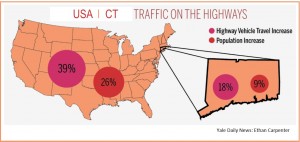
 The OLR report also indicates that a Federal Highway Administration pilot program permits up to three states to toll existing Interstate highways that they could not otherwise adequately maintain or improve, and increase funding available for public transportation initiatives. In addition, $2.6 billion is provided to Amtrak’s Northeast Corridor (and $5.4 billion to other Amtrak lines) over five years. It separates the Northeast Corridor, from Boston to Washington, D.C, from other Amtrak accounts to ensure that the amounts assigned to that Corridor are used there, OLR reports.
 ecessarily result in that many jobs,” according to the website
  . Boston may be in the running for similar relocations.
 The Crain’s article reports that headquarters began shrinking a decade ago, but the trend has accelerated in the past three years, according to Vinay Couto, a consultant in the Chicago office of Strategy&. In recent years, 16 companies have relocated their main headquarters to the city from the suburbs. Seventeen came from outside the metro area. The phenomenon, he points out, is driven by the outsourcing of shared services such as IT, accounting and human resources, as well as by a mindset borrowed from private equity to cut overhead and make every part of a business count toward profitability.
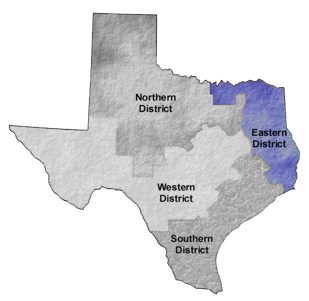 While action to combat the rapidly escalating challenge to businesses of every size has been unable to navigate through a divided Congress, the problem is growing. One jurisdiction in particular is a hospitable home for the legal attacks. Federal court in the Eastern District of Texas is the epicenter of patent troll litigation, and nearly 50 Connecticut companies are among those hauled into court there under dubious circumstances.
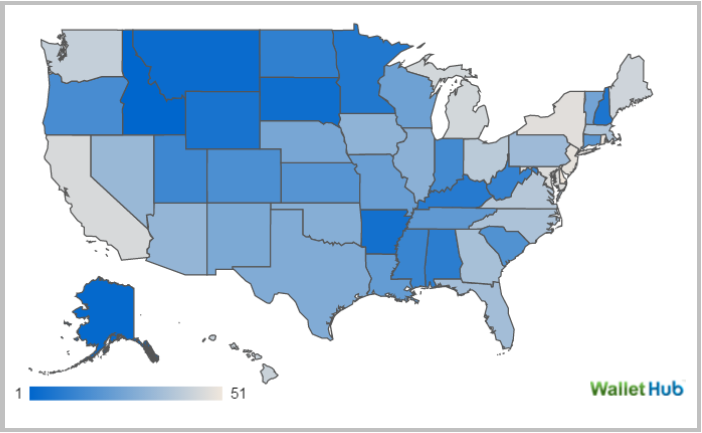
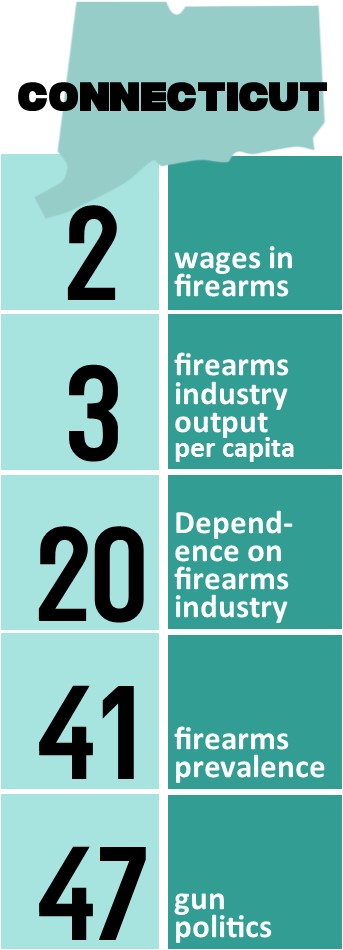 With the gun debate center-stage in the presidential primaries and in Washington, D.C., the website WalletHub analyzed which states depend most on the arms and ammunitions industry both directly for jobs and political contributions and indirectly through firearm ownership. WalletHub’s analysts compared the 50 states and the District of Columbia across three key dimensions: 1) Firearms Industry, 2) Gun Prevalence and 3) Gun Politics and eight metrics.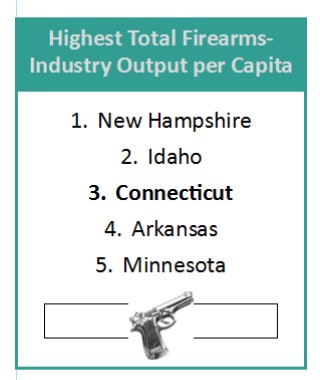


 ast season as the New Britain Rock Cats, the team

 The density of established small businesses per 100,000 residents increased slightly from the previous year, from 1,147.3 to 1,167.4 in 2015. Established small businesses are defined in the study as businesses over the age of five employing at least one, but less than fifty, employees. The rate of small business ownership also grew slightly in Connecticut, from 6.14 percent to 6.34 percent.
 Tennessee is the only state that did not show an increase in established small business activity in 2015 compared with 2014.