Olympic Coverage Starts in Rio But Reaches Us Through Stamford, Connecticut
/The 2012 London Olympic Games, the most watched event in U.S. television history with 217 million viewers, is so four years ago. NBC Sports, with the epicenter of its operations in Stamford, is looking to break its own Olympic and world record with coverage from Rio. So far, it seems to be working.
 Just over three years ago, NBC Sports launched a new state-of-the-art 300,000 square foot facility headquartered in Stamford, on a thirty-three acre campus (formerly the home of Clairol). The facility brought NBC Sports, NBC Sports Network, NBC Olympics, NBC Sports Digital, and NBC Regional Networks all under one roof. Connecticut’s First Five program, providing financial incentives to major business entities to relocate to the state, helped get the deal done. At the ribbon cutting for the facility in July 2013, just off exit 9 along I-95, NBC Sports Group Chairman Mark Lazarus said it was “built for every conceivable media platform, known today or yet to be built or conceived.”
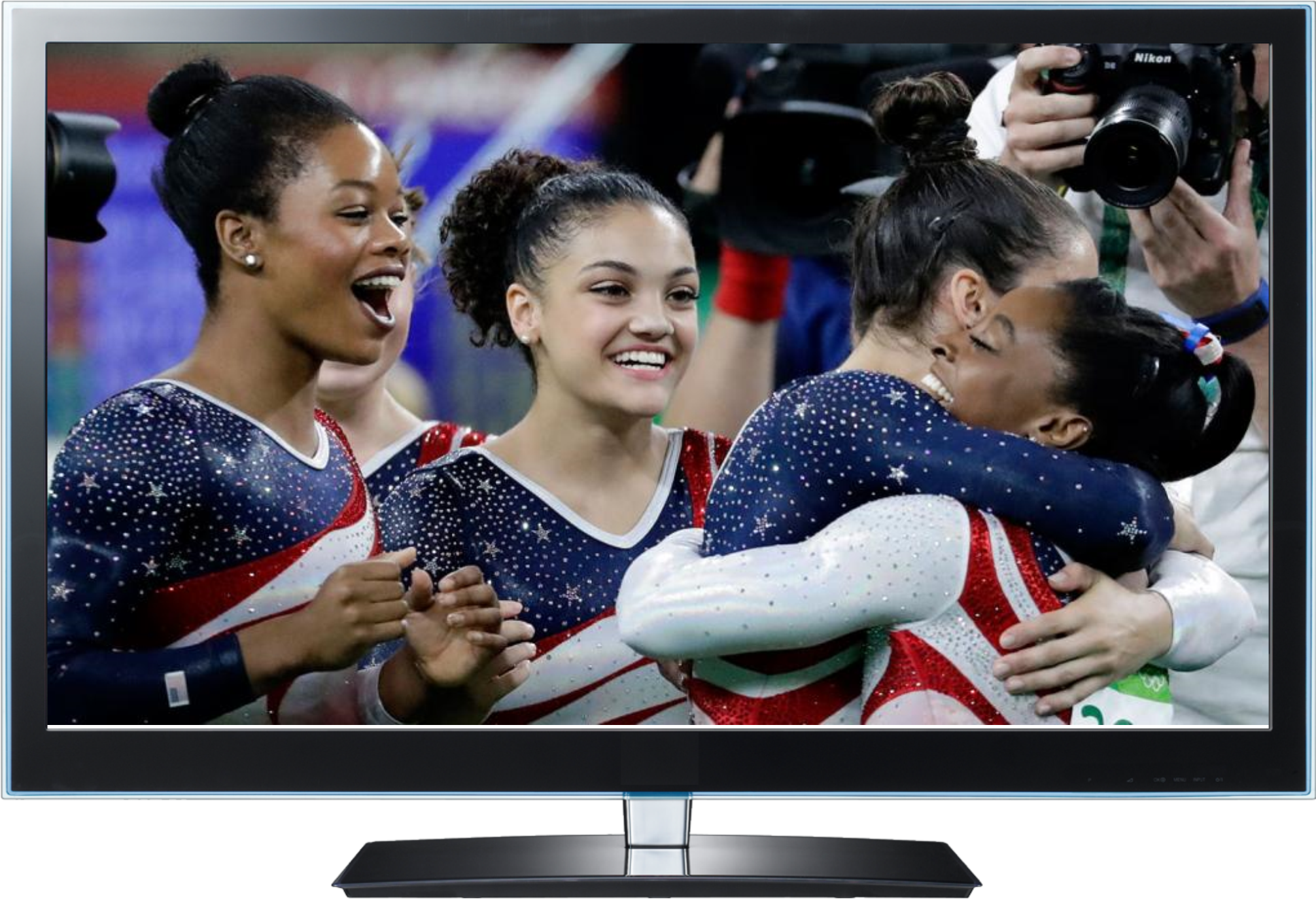
This month, much of what we see of the Olympics in Rio, across a range of media platforms, has come through Stamford.
NBC reports that over the past six nights, the network’s primetime Olympics coverage has averaged three times more households watching than the other television networks combined, across the ten NBC owned and operated stations – including NBC Connecticut. Digital viewership is outpacing the numbers achieved during the London Games, and has grown in recent days mirroring the Olympic achievements of American athletes.
All the video coverage comes to Stamford from Rio and then is relayed to a variety of NBC Universal platforms — the NBC broadcast television network; cable channels, such as the NBC Sports, MSNBC and CNBC; plus websites and apps. Telemundo and NBC Universal are narrating events in Spanish and focusing on sports popular in Latin America, Paul Janensch, a former local newspaper editor, noted recently. A total of 6,700 hours of content are being televised and streamed, with much of it live. NBC is telecasting Rio events on five cable channels, compared with two for the 2008 summer games in Beijing.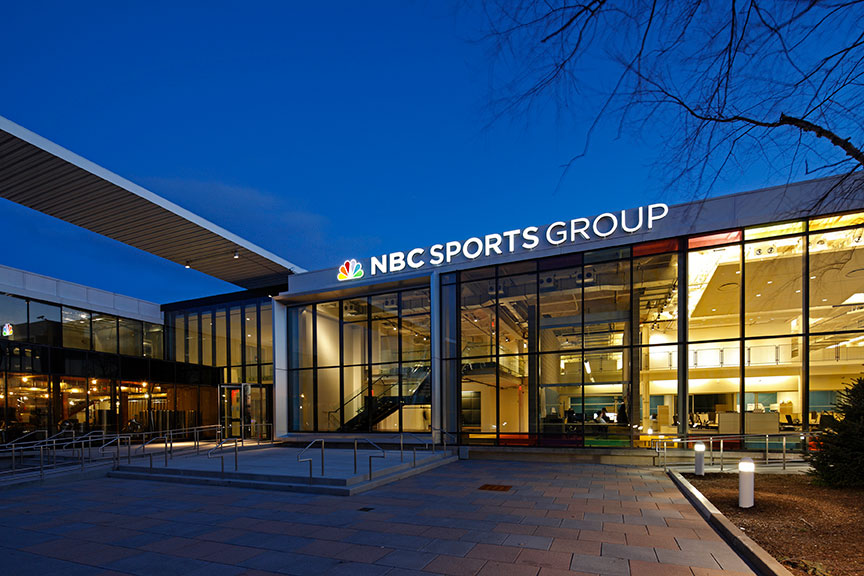
“Naturally, due to the volume of events and sports and amount of talent and employees, it's a vast challenge,” said Kaare Numme, NBC Sports’ at-home coordinator producer for the Rio games, told the Stamford Advocate, before the Games began. “This will be our largest single event happening.” Lazarus has called the Rio Olympics the “biggest media event in history.”
Published reports indicate that the number of employees and other personnel involved in the Stamford operations for the Olympic games has grown to nearly 1,400. That is nearly double the routine staffing levels, and considerably higher than the approximately 1,000 people involved in coverage of the 2014 Winter Olympics. It is virtually a 24 hour-a-day operation (and some days may indeed be round-the-clock) with 6 AM to 2AM the regular work day for the duration of the Games.
There has been some pushback on NBC’s coverage, some from a generation more accustomed to viewing-on-demand and watching commercial-free. And NBC announcers have had some unforced errors, which are commonplace these days largely due to the pervas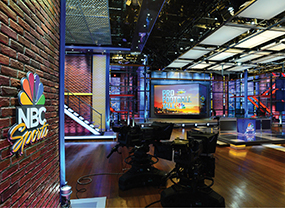 iveness of social media. In addition, ratings from the Opening Ceremonies on NBC television were down substantially from the London Games. But that seems to have been the floor, not the ceiling, for viewership levels.
As part of the expansion for the Olympic coverage, NBC Sports built two new control rooms and brought in another portable center in Stamford, the Advocate reported. It also installed an additional 13 announcing booths to bring its total to 18, nearly double the quantity used to telecast the London games four years ago.
In a section of the facility dubbed The Highlights Factory, about 200 highlights and features packages will be produced each day during the games, Eric Hamilton, NBC Sports’ director of digital Olympic video production, told the Advocate. “You might be able to watch one of seven different streams of gymnastics on the first day of gymnastics,” Hamilton said. “You can really channel surf in a big way.” Scores of edit rooms and graphics suites fill the sprawling center.
There is more to come in Stamford. In addition to a range of sports programming throughout the year, NBC Sports owns the rights to the Olympics through the 2020 Summer Olympics, at which point the network will have presented 12 consecutive and 17 total Olympic Games, the most for a U.S. media company in both categories.
https://youtu.be/rXO5zRj6rFg
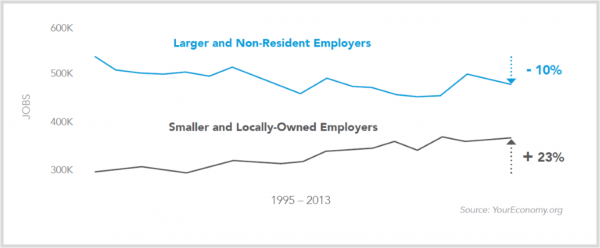 Local and regional organizations and associations, such as the MetroHartford Alliance’s HYPE, reSET, United Way’s Emerging Leaders and the Urban League’s Young Professionals “engage and connect millennials” and offer “business advisory services and other supports to help small businesses thrive,” the report explains, providing “a great start” on what needs to be done.
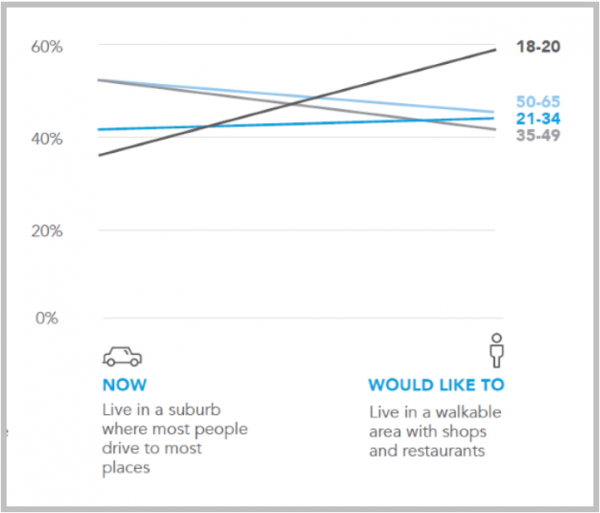 The report includes a timeline of past efforts aimed at addressing the region’s long-standing challenges, “not to be disheartening, but instead to highlight where positive changes have been made” and how collaborative efforts can “create opportunities for all Greater Hartford residents.” The report also indicates that:


 The
The  In lower Fairfield County, the city of Norwalk launched a rebranding initiative earlier this year. Using the new slogan “The Sound of Connecticut,” the campaign, according to Mayor Harry Rilling “was necessary to help reposition Norwalk. Our visual brand and identity system will become a recognized symbol of Norwalk’s progressive and connected vibe. We understand and live the brand’s values, goals and promises on a daily basis.” The Mayor


 Funding for the competition prize awards will be provided both by the State of Connecticut, which has committed $1 million, and an additional $2 million commitment from private partners. The Doris Duke Charitable Foundation, The Kresge Foundation, Living Cities, NeighborWorks America, The United Illuminating Company, Stanley Black & Decker, Boehringer Ingelheim, Travelers Companies, Inc., The Hartford Foundation for Public Giving, Webster Bank, Eversource Energy, Liberty Bank Foundation, Hartford HealthCare, Barnes Group, Hoffman BMW of Watertown/Hoffman Auto Group, United Technologies Corp., Charter Communications, and Fairfield County’s Community Foundation have all committed to participating in the challenge.
 “We are pleased to bring the Working Cities Challenge to Connecticut and are thankful to Governor Malloy for his support of the effort, as well as the Hartford Foundation, the Doris Duke Foundation, Living Cities, The Kresge Foundation, and many others,” Boston Fed President Eric Rosengren said. “The partners have come together to make it possible to bring the competition to Connecticut – precisely the model of cross-sector collaboration that forms the basis of the Working Cities Challenge. This competition focuses on the residents of the state’s postindustrial cities – places with unique assets that taken together can help to build civic leadership infrastructure, which our research shows is a key component of economic resurgence.”
 “It’s gratifying to see the strong support from Connecticut companies, foundations, and the Malloy administration for the Working Cities Challenge under the thoughtful leadership of the Boston Fed,” James C. Smith, Chairman and CEO of Webster Bank, said. “By encouraging the development of civic infrastructure as a prerequisite to physical infrastructure, the Working Cities Challenge promises to revitalize Connecticut’s smaller cities economically and transform the lives of inner city residents.”
 A recent report in Business Insider indicated that one in three new businesses in the U.S. were started by an entrepreneur age 50 or older. Describing “running a business as the new retirement,” the news report cited an infographic in easylifecover that highlighted those aged 55-64 in the U.S. have actually had the highest rate of entrepreneurial activity in the last 10 years, noting that the founders of McDonald's, Coca Cola, and Kentucky Fried Chicken – among others - were all over 50 when they established their businesses.
 The interactive “Boot Camp” event at reSET – open to people of all ages with a special focus on the 50 and over –included short presentations from local resource organizations, networking opportunities and valuable information on the programs and tools available to potential business owners. Attendees were updated on the necessary steps and tools to launch a business, and had opportunities to talk one-on-one with local mentoring organizations, lenders, small business advisors and community leaders for advice and assistance.
 hand at the reSET event in mid-June were representatives of the Office of Secretary of State (where new businesses are registered),
  reSET serves all entrepreneurs, but specializes in social enterprise ― impact driven business with a double and sometimes triple bottom line. In addition to providing co-working space and accelerator and mentoring programs, reSET aims to inspire innovation and community collaboration, and to support entrepreneurs in creating market-based solutions to community challenges. The organization’s goal is to “meet entrepreneurs wherever they are in their trajectory and to help them take their businesses to the next level.”


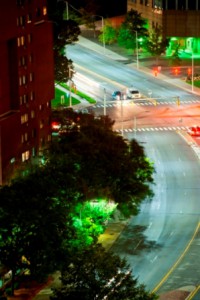 In addition to its impact on drivers, the AMA notes that blue-rich LED streetlights operate at a wavelength that most adversely suppresses melatonin during night. It is estimated that white LED lamps have five times greater impact on circadian sleep rhythms than conventional street lamps, the AMA indicated. Recent large surveys, according to the AMA, found that brighter residential nighttime lighting is associated with reduced sleep times, dissatisfaction with sleep quality, excessive sleepiness, impaired daytime functioning and obesity.
 The Conversation website is a collaboration between editors and academics to provide "informed news analysis and commentary that’s free to read and republish." It
 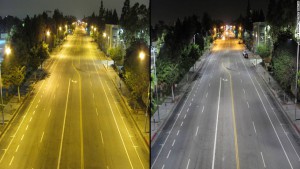 PHOTO: Traditional street lighting (left) vs. LED lighting (right).