Toll Technology, Revenue Considered in Indiana, Minnesota and (Possibly) Connecticut

“Toll technology advancements significantly altered the tolling landscape, expanded the types of toll facilities being operated and improved customer experience,” a report on tolling feasibility developed for the Minnesota Department of Transportation explained.  “New toll facilities using all-electronic tolling are being implemented in several places across the country to add new roadway capacity, manage congestion and provide a sustainable revenue source for asset lifecycle costs.” The 106-page report, issued in January, concluded that more study is needed — if that’s the direction the state wants to take, the Minneapolis StarTribune reported.  The StarTribune noted that “Minnesota doesn’t have the kind of toll-road system that is common on the East Coast and other regions of the country. The E-ZPass electronic toll system, for example, was first deployed in New York 25 years ago and now serves 17 states, stretching from Maine to Illinois to North Carolina.”
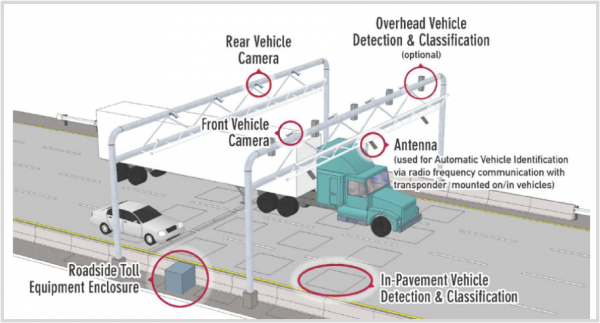
The MnDOT study, initiated at the legislature’s behest, cost $175,000 and recommended a follow-on in-depth study, anticipated to have a considerably larger price tag.  The report stated that “results of the feasibility analysis are a high-level revenue assessment based on numerous assumptions and a more detailed study would be required before any decision is made to implement a specific toll project.” The report was prepared by four consultants – the Minneapolis offices of WSB and HNTV Corporation, and Prime Strategies, Inc. and Lock Lord LLP, both of Austin.

Indiana is also giving tolls a careful look, with the type of in-depth study recommended in Minnesota, and proposed by Connecticut Governor Dan Malloy, who signed an Executive Order authorizing a $10 million study.  Malloy’s proposal is to be considered by the State Bond Commission later this week.  “Without transforming the way the state funds its highways,” Malloy said recently, “we will be unable to pay for the large-scale construction and rehabilitation projects that our state needs to ensure continued safe travel while attracting businesses and growing our economy.”

In Indiana, a strategic plan that could clear the way for that state to add tolls to its interstate highways, including inside the I-465 loop in Indianapolis, is currently being developed by one of the companies utilized by Minnesota.
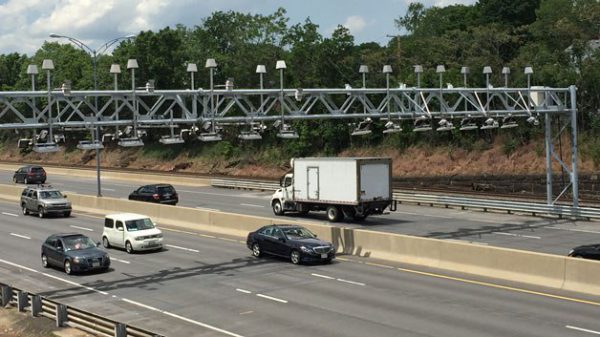
The Indianapolis Star reported earlier this summer that the state signed a $9.6 million contract with HNTB Indiana Inc. to study the impact of tolling and provide project planning if the state chooses to move forward with tolling.  The administration of Gov. Eric Holcomb is required to study tolling under a road-funding plan lawmakers passed in 2017, but a decision has not been made on whether the state will go forward with authorizing a tolling plan, according to published reports.

Under the law, Indiana’s Governor is permitted to draft a strategic plan "if the governor determines that tolling is the best means of achieving major interstate system improvements in Indiana."   That decision has yet to be made.

"He wanted more information to make an informed decision and will use the strategic plan due Dec. 1 as a basis for that," a spokesman for the Governor told the Star. "If after reviewing the plan the governor determines that tolling is not the best option, the state won’t move forward with the remainder of the contract."

The contract with HNTB lays out specific requirements for the consultant if the state chooses to add tolling. For example, the Star reported, HNTB would be required to assist with project start-up for tolls in the Indianapolis Metropolitan Planning Area, which includes Indianapolis and portions of nearly all of the bordering counties.

In Iowa earlier this year, a state DOT report on tolls was received by political leaders with distain.  In an editorial, The Gazette noted the possibility of tolls “is worthy of much more careful consideration than the political class is willing to grant.”  The publication added “Political fecklessness will not solve Iowa’s mounting transportation funding problems. Iowans love driving, we have a lot of roads and somebody has to pay for them.”

“Many Iowans have noticed a pattern in state government, a repetitive cycle of studies, recommendations and inaction. That may serve politicians fixated on their next election, but it does little to solve the very real problems Iowans face.”


https://youtu.be/kQxCVcMUq1s

Video: Connecticut House Democrats

Graphics:  2018 Minnesota DOT Toll Study Report
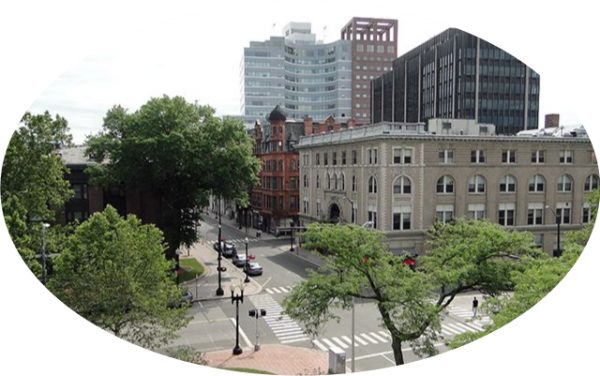
Power of Nature to Help Cities and Local Residents Being Revealed in Bridgeport

What would happen if ways to integrate nature into a major urban community were pursued?  In Connecticut, the largest city is Bridgeport, and the Connecticut chapter of The Nature Conservancy (TNC) has been undertaking an effort to find out. Nature offers a lot of benefits to communities, TNC points out. “Trees provide shade and help clean the air. Gardens absorb and filter water, which reduces flooding and runoff into nearby rivers. Healthy dunes and wetlands protect coastlines from storms.”  In addition, the organization points out, “nature can also transform the way people experience their neighborhood.”

With 70 percent of the world’s population predicted to live in cities by 2050, heat and air pollution constitute a major public health concern, TNC points out, underscoring the importance of the organization’s initiatives to plant trees in urban areas across the country, among a series of related undertakings.

“People are at the core of our efforts to identify how neighborhoods are addressing daunting challenges in this formerly industrialized city,” said Drew Goldsman, Urban Conservation Program Manager. “We want to partner with communities to implement natural solutions in Bridgeport that help both people and nature.”

Their Eco-Urban Assessment looked at areas in Bridgeport that have poor air quality, high risk of flooding, and limited access to nearby green spaces and layered it with data on income level, impervious surfaces and asthma rates. The team was able to pinpoint neighborhoods where trees, green stormwater systems and open spaces will make the biggest difference for people and nature.  Air quality and flood risk topped the list of most acute needs.

In collaboration with local partners, the Conservancy is supporting a neighborhood-led greening effort known as ‘Green Connections’ in Bridgeport’s East Side neighborhood. Creating a plan for ways natural resources can shape the future of the community while making immediate changes to the landscape —through tree plantings and green stormwater infrastructure projects— is one of the initiative’s main goals, along with empowering volunteer stewards living in the community to take ownership of these natural areas. All of this helps create safe spaces for the community to gather, provides cooler and cleaner air, and improves wildlife habitat in the city.

According to the Nature Conservancy, Bridgeport currently has a 19% tree canopy cover, for example.  If all open spaces, vacant lots and parking lots could be planted, the city would have a 62% tree canopy cover.  The ramifications would be substantial, impacting various health and quality of life factors.

“Healthier people, cooler temperatures in the summer, cleaner air, reduced flooding, more urban habitat, parks and forests, less sewage overflow, a clean Pequannock River a more resilient coastline and green jobs” are cited as potential benefits.

The national publication Governing pointed out last year that “Streets cover about a third of the land in cities, and they account for half of the impervious surfaces in cities. Impervious surfaces don’t allow water to soak through them, which means they can alter the natural flow of rainwater. City streets collect, channel, pollute and sometimes even speed along water as it heads to the sewers.”

Goldsman indicates that currently efforts are focusing on the city of Bridgeport, but the Eco-Urban Assessment model is available to urban communities that want a deeper understanding of where nature can bring solutions to some of the most pressing urban issues.

“With the Eco-Urban Assessment model, we’re able to help municipalities identify the places and ways we can work together to use nature to improve residents’ quality of life and build more sustainable communities,” said Dr. Frogard Ryan, Connecticut state director for The Nature Conservancy. “From the beginning, we wanted this to be a community-led and TNC-supported program. Residents help us identify areas of other focus that aren’t highlighted by the model and be sure our study reflects what people experience day-to-day.”

State Funds Continue to Support Transit-Oriented Development; $8.5 Million in New Grants to 5 Municipalities

Five Connecticut communities – Danbury, Hartford, Stamford, Torrington and West Hartford - will share approximately $8.5 million in funding under the second phase of the state’s 2017 Responsible Growth and Transit-Oriented Development (TOD) Grants. They are the latest in a series of competitive state grants to be awarded in recent years to support the development and implementation of TOD initiatives around the state. The competitive grant program “supports transit-oriented development and responsible growth in the state and is targeted at boosting economic activity and creating jobs,” according to state officials. Administered by the Office of Policy and Management (OPM) the grants rely on a combination of funding from the Responsible Growth Incentive Fund and the Transit-Oriented Development and Pre-development Fund.

A year ago, OPM released a request for applications for the current grant program, and the State Bond Commission approved a total of $15 million to be used – comprised of $5 million from the Responsible Growth Incentive Fund and $10 million from the Transit-Oriented Development and Pre-development Fund. Following that, OPM – with input from other state agencies – reviewed, rated, and ranked each of the proposals.

In this round of funding, Danbury’s Downtown Streetscape Project is receiving $2 million to prepare design drawings and construct sidewalk and streetscape infrastructure improvements along key downtown pedestrian routes within the vicinity of the Danbury train station. Improvements include the new construction or replacement of sidewalks, intersection improvements, landscaping, removal and installation of street trees, ornamental lighting, and pedestrian access improvements as detailed in the city’s Downtown TOD Planning Study.

Stamford’s Springdale TOD Implementation project is receiving $1,994,188 to prepare design and engineering drawings and construct improvements around the Springdale train station consistent with the recommendations of the Glenbrook/Springdale TOD Feasibility Study. Improvements include safer bicycle and pedestrian access to the village center and rail station, realignment and modification of the station’s main entrance at Clearview Avenue, and other improvements to landscaping, lighting, and general accessibility in and around the station area.

In Torrington, the East Main Street (Route 202) Sidewalk Implementation will receive $1,997,700 to construct new sidewalks, and repair/replace existing sidewalks along portions of East Main St (Route 202) between Torrington Heights Road and the Big Lots Plaza. The city will use a portion of the funding to evaluate existing conditions at nine signalized intersections within the project boundary, and at more complex sections of roadway which lack sidewalks, to determine if additional pedestrian improvements are feasible.

Hartford’s Main Street Complete Streets Vision Plan and Innovation District Activation will receive $450,000 to develop a Complete Streets Vision Plan for a section of Main Street from State House Square to the vicinity of South Green in order to identify improvements to bike and pedestrian amenities, and prepare complete construction documents for future buildout. In addition to bike and pedestrian amenities, the final plan is to identify potential improvements to transit services, new streetscaping, a new cycle track, and other linkages to improve bike and pedestrian connections within the project area.

A portion of Hartford’s funding will also be used to implement the Innovation District Activation Program, to provide grants to new and existing businesses within the project area to support capital and other investments such as façade improvements, building infrastructure, marketing, business planning, public events, and other business/community support services with the objective of creating vibrant employment and residential hubs.

West Hartford’s New Park Avenue Complete Streets Implementation will receive a grant of $2,000,000 to construct complete streets infrastructure improvements along New Park Avenue from New Britain Avenue to Oakwood Avenue, consistent with the recommendations of the 2017 New Park Avenue Transit Area Complete Streets Study. Improvements include a road diet with center turn lane, landscaped medians and protected bike lanes, new street trees, lighting, wayfinding signage and other amenities, and a pocket park at the gateway to the Trout Brook Trail.

“Transportation isn’t just about cars, trains, and buses – it’s about building vibrant communities and continuing to make Connecticut a more attractive place to live, visit and do business,” Gov. Malloy said in announcing the grants. The awards “will build upon the smart, targeted investments we have made in recent years, which have already led to significant growth in transit-oriented development across the state.”

The first round of grants under the current initiative were released in December 2017, with eleven projects to receive $15 million.  Communities selected to receive funds were Berlin, Clinton, East Windsor, Madison, New Britain, Norwalk, Stratford, Wallingford, Winchester, Windsor Locks, and the Southeastern Connecticut Council of Governments.

In 2016, state officials announced that twenty projects in towns and cities across Connecticut would receive a total of nearly $11 million to transit-oriented development and responsible growth, targeted at boosting economic activity and creating jobs. At the time, Gov. Malloy said “Our focus is on not only improving overall quality of life for residents in these areas, but also encouraging economic development by making our towns and cities more accessible."

Communities selected were Berlin, Branford, Canton, Clinton, Danbury, Hartford, Madison, New Canaan, New Haven, Old Saybrook, Torrington/Winsted, Waterbury, Westport, Windsor, and Windsor Locks.  Also receiving funds were the Capitol Region Council of Governments, Naugatuck Valley Council of Governments, and Northwest Hills Council of Governments.

Previously, 11 state grants between $75,000 and $150,000 were provided in 2015 to “prospective planning projects that best support transit oriented development.”  Receiving the state grants were Berlin, Bethel, Bridgeport, Enfield, Meriden, Milford, New Britain, New Haven, Stratford, Wallingford and West Hartford.

Aetna, CVS Health Earn Place Among 50 Civic-Minded Companies

Hartford-based Aetna and Rhode Island-based CVS Health, with their merger plans currently under review at the state and federal levels, have both been named to The Civic 50 for 2018, reflecting their community-minded programs and policies.  They are among the public and private companies with U.S. operations and revenues of $1 billion or more, selected based on four dimensions of their U.S. community engagement program.  Both companies also reached the list of 50 in 2017. The Civic 50 survey, produced annually since 2011 for Points of Light, has provided “a national standard for superior corporate citizenship and showcased how companies can use their time, skills and other resources to improve the quality of life in the communities where they do business,” according to Points of Light.

The survey analysis is administered for the Points of Light Foundation by True Impact, a company specializing in helping organizations maximize and measure their social and business value, and analyzed by VeraWorks. The survey instrument consists of quantitative and multiple-choice questions that inform the Civic 50 scoring process. It is the only survey and ranking system that exclusively measures corporate involvement in communities.


Among findings highlighted in the latest annual report:

  • Civic 50 companies are evolving from being supporters to engaging as stewards of social causes. Instead of confining themselves to writing checks or piggybacking off of nonprofit work, Civic 50 companies are involving themselves in all aspects of social causes which they champion. In 2018, 70 percent of Civic 50 companies took national leadership positions on four or more public education or policy efforts, an increase from 62 percent in 2017.
  • Civic 50 honorees continue to exemplify one of the core tenets of corporate citizenship: "doing well by doing good". The 2018 honorees demonstrate that integrating community engagement initiatives into business strategy can support business interests. The 2018 honorees are using community engagement to drive key business functions, including employee engagement (86 percent), marketing/PR (78 percent), diversity and inclusion (74 percent), skill development (74 percent) and stakeholder relations (56 percent)
  • Leading innovations for purpose at work, Civic 50 honorees have found community engagement as a meaningful and valuable investment to inspire employee changemakers and create a strong culture of giving back. 68 percent of Civic 50 companies include community engagement as a formal component of employees' performance reviews, an increase from 62 percent in 2017.
  • Civic 50 companies understand the importance of impact: to ensure the sustainability and success of their community engagement initiatives, Civic 50 companies are using measurement practices to not only measure quantifiable outputs, but social outcomes. Civic 50 companies are making sure to measure social outcomes as part of regularly implemented data collection. In 2018, 68 percent of Civic 50 companies collected and analyzed data on organizational grants and 42 percent did so for volunteerism.

Among the other companies included in the Civic 50 are KeyBank, Marriott International, Wells Fargo, UPS, Prudential Financial, and Comcast NBC Universal.

In its Corporate Social Responsibility Report, Aetna noted that as the company “pursues its goal of building healthier communities, we view social responsibility as a critical driver of success and an integral part of how we conduct our business.”

The report notes that “three quarters of Aetna employees are women, a third are people of color, 11 percent self-identify as LGBT and nearly 5 percent self-identify as having a disability.  Additionally, millennials comprise 31 percent of Aetna’s employees, which was a key driver of our new program to provide up to $10,000 to qualified recent college graduates to help them repay education loans.”
CVS Health, in the company’s social responsibility report, shares that their work “is rooted in our company’s values:  innovation, collaboration, caring, integrity and accountability.”  Three pillars – Health in Action, Planet in Balance and Leader in Growth – make up the company’s Prescription for a Better World, which provide the framework for the CVS Health strategy in corporate responsibility.

The four-dimension criteria used in assessing companies include:

  • Investment: How extensively and strategically does the company apply its resources to community engagement in the United States, including employee time and skills, cash, in-kind giving and leadership?
  • IntegrationHow does the company integrate their U.S. community engagement programs into key business functions, including employee engagement, marketing/PR, diversity and inclusion, recruiting, stakeholder relations and skill-development?
  • InstitutionalizationHow does the company support community engagement in the United States through organizational policies, systems and incentives?
  • ImpactHow does the company measure the social and business impact of their U.S. community engagement program?

Points of Light is the world’s largest organization dedicated to volunteer service.  It grew from the vision of 1,000 points of light shared by founder President George H. W. Bush in his 1989 inaugural address. The Points of Light Corporate Institute is a leading resource for community-minded companies looking to build and expand effective employee volunteer programs.

US DOT Looks to Future of Transportation Infrastructure, Taps College Consortium Including UConn for $14.2 Million Initiative

Connecticut’s deteriorating transportation infrastructure, and the lack of sufficient funding to make needed improvements, have been in the news often in recent months.  While not an immediate solution to pressing challenges, an announcement from the U.S. Department of Transportation may provide encouragement for those seeking longer-term remedies. The U.S. DOT has selected the University of Maine to lead the creation of a highly competitive University Transportation Center (UTC), to focus on “improving the curability and extending the life of transportation infrastructure.”

The initiative, to include the University of Connecticut and the Connecticut Department of Transportation, will be called the Transportation Infrastructure Durability Center (TIDC). TIDC aims to help save taxpayer dollars by extending the life of transportation assets, including bridges, roads and rail.

The U.S. DOT will provide as much as $14.2 million over five years for the UMaine-led coalition including UConn, University of Rhode Island, University of Massachusetts Lowell, University of Vermont, and Western New England University.

Additional partners include representatives from the Maine Department of Transportation (MDOT), Vermont Agency of Transportation, Massachusetts Department of Transportation (MassDOT), Connecticut Department of Transportation (ConnDOT), Rhode Island Department of Transportation (RIDOT), and the American Society of Civil Engineers (ASCE) Transportation and Development Institute.

“Along with our partners from all New England states, we look forward to leading research to extend the life of existing bridges, construct longer-lasting assets, and reduce costs for the DOT and the public,” said Dr. Habib Dagher, founding executive director of the UMaine Advanced Structures and Composites Center, and center director of the newly formed TIDC Center.

Officials explain that working with state DOTs, the new TIDC will seek to identify new materials and technologies that maximize the impact of transportation infrastructure investments. The center will work along four pathways:

  1. develop improved road and bridge monitoring and assessment tools;
  2. develop better ways to strengthen existing bridges to extend their life;
  3. use new materials and systems to build longer-lasting new bridges and accelerate construction; and
  4. use new connectivity tools to enhance asset and performance management while promoting workforce development, the release said.

According to the U.S. DOT, each University Transportation Center is a consortium of two- and four-year colleges and universities that come together to form a unique center of transportation excellence on a specific research topic.

“Together, they advance U.S. technology and expertise in the many disciplines comprising transportation through education, solutions-oriented research and technology transfer, and the exploration and sharing of cutting-edge ideas and approaches,” USDOT explains.

The U.S. DOT invests in the future of transportation through its University Transportation Centers (UTC) Program, which awards and administers grants to consortia of colleges and universities across the United States.  In the Northeast, other consortia with the same policy focus include a 9-institution UTC led by Rutgers, the State University of New Jersey and a 6-institution group led by Pennsylvania State University.
Other groupings include a 10-institution consortium led by the University of Florida devoted to reducing congestion; a 6-institution effort to promote safety led by the University of Michigan and a 8-institution initiative to improve mobility of people and goods coordinated by the University of Southern California.

The newly announced TIDC will harness the experience of 28 faculty researchers, including a team of five engineering faculty members from UConn, led by Civil and Environmental Engineering Department Professor Ramesh B. Malla, and will train 280 student researchers from all New England states. It will focus on real infrastructure needs identified by DOT partners, and prioritize extending the life of existing transportation assets to ensure cost-effectiveness.

“As a regional and national leader in transportation-related research, UMaine is prepared and ready to take on this work,” said U.S. Sen. Angus King of Maine. “The creation of this new center will allow the university to expand its efforts to tackle the infrastructure problems facing communities not just in Maine, but across the country. This project has the potential to save taxpayer money and improve quality of life.”

“We are eager to partner with this program to support research that will offer new technologies and techniques that ensure taxpayer investments continue to be maximized while also extending the lifespan of our investments,” said Maine DOT Commissioner David Bernhardt.  Officials noted that member universities of the new TIDC have an extensive record of accomplishments in transportation infrastructure research, education and technology transfer.

New England’s transportation infrastructure faces unique challenges due to harsh winter weather and short construction seasons. According to ASCE, Nearly 30 percent of New England roads are rated in poor condition which, on average, costs each motorist $584 annually in extra vehicle repairs and operating costs. Nationally, driving on roads in need of repair costs U.S. motorists $120.5 billion.

Since 1987, the UTC program has advanced transportation research and technology at colleges and universities across the country. Every five years, academic institutions nationwide compete to form their region’s UTC.


Fiscal Commission’s Work is Done (Technically), But Members Aren’t Going Away

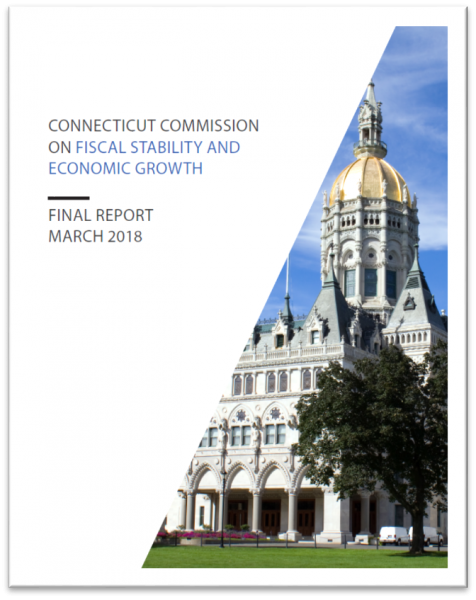
They may be disbanded, but they’re sticking together – driven by a belief that the state’s future hangs in the balance. The Connecticut Commission on Fiscal Stability and Economic Growth, a panel of primarily state business leaders appointed by the state legislature and Governor last year to help the state grapple with its ongoing fiscal challenges, went out of existence on March 1 when they issued a comprehensive 119-page report following three months of public hearings and deliberations. 

Nonetheless, the 14 members, mostly prominent business leaders, continue to seek opportunities to discuss their recommendations in public forums, regularly advocate for substantial changes in the management of state fiscal affairs, have begun meeting with gubernatorial candidates, and are urging business leaders across the state to keep up the pressure on state elected officials to take comprehensive action consistent with their wide-ranging recommendations.

“We committed to see it through,” said Commission co-chair Jim Smith, Chairman and former CEO of Webster Bank. “We knew it wouldn’t be one (legislative session) and done.  This is about policy, not politics.  We’ve all checked our politics at the door.  This is about the greater good, and how we change the course of Connecticut’s future.”

With all 187 legislative seats and the six state’s statewide constitutional offices – including Governor - up for election this November, the Commission co-chairs believe Connecticut’s best opportunity for much-needed systemic structural changes will be in the next legislative session, which begins in January. They intend to “actively engage” throughout this election season and in next year’s legislative session, and have already met with about half of the current field of gubernatorial candidates.

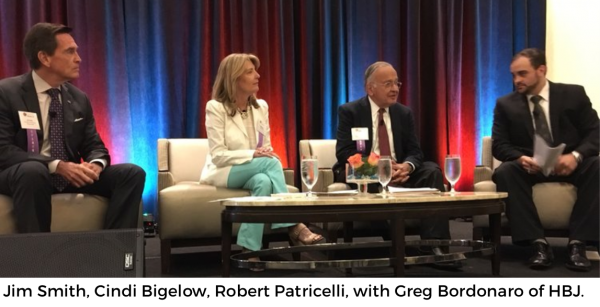
Smith and Robert Patricelli, former CEO & Founder of Women's Health USA, who co-chaired the panel, were featured along with Commission member Cindi Bigelow, CEO of Bigelow Tea, at an event coordinated by the Hartford Business Journal last week. It was one of nearly 100 forums, discussions and one-on-one meetings that the co-chairs and other commission members have had since their findings and recommendations were issued.
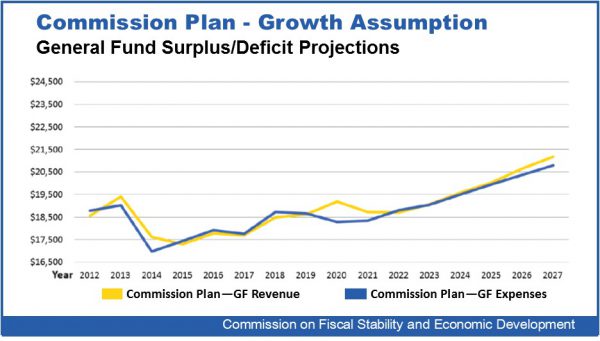
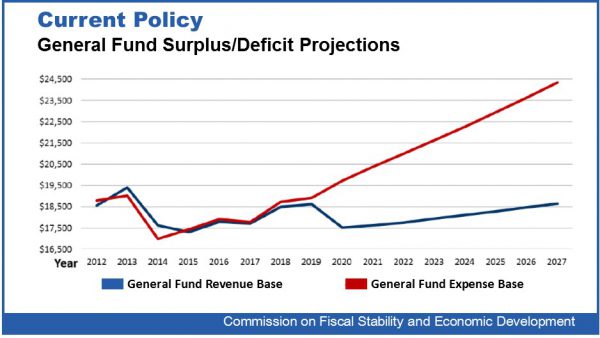
The Commission uses the analogy of a “burning platform” to describe the current budgetary process, fiscal structure and economic status of the state, a frame of reference that reflects the public’s concern about the state’s precarious standing.  Smith said he is encouraged by the response they’re receiving.

“When we talk about the platform burning, people are riveted.  They’re anxious to hear solutions,” Smith explains, noting that the approaches proposed by the Commission are resonating with audiences because they provide a comprehensive – if challenging – path to douse the flames and stimulate economic growth, achieve sustainable budgets long-term, and re-establish the state’s competitiveness.

“Our findings are irrefutable, inescapable and require action,” Smith told CT by the Numbers.  “That comes across loud and clear.”

The Commission leaders are committed to generating a spirited public conversation about their findings and recommendations.  They told an attentive audience in Hartford last week that the 14 members remain in communication, and have now been working longer since they ceased to exist as a Commission than during the 76 days that they were officially constituted by law.  And they have no plans to walk away from the work they began.

In underscoring their commitment to remain involved beyond the life of the Commission, the co-chairs have evoked the memorable phrase from the 1976 movie Network – they’re mad as hell and they’re not going to take this anymore.  In fact, their goal remains to do something about it.  Pursuing a public conversation and meeting privately with leading gubernatorial candidates are parts of the strategy.

Smith indicates that as the Commission’s work unfolded, members were concerned that the “platform was even hotter than we knew,” but encouraged that creation of the Commission reflected a willingness to involve the private sector in charting the path forward.

Patricelli, in fact, has floated the idea of having 500 businesses to sign a letter to the state’s elected officials urging action on the Commission’s recommendations, which include changes in spending, tax policy, investments, infrastructure, transportation and competitiveness. Only with sustained pressure, he argues, will the incoming legislature and Governor take action.  They point to the sustained drop in Connecticut’s Gross State Product (9.1% over the past decade), while the state’s New England and Tri-State neighbors saw growth, as among the numerous factors that led to their conclusion that substantial changes are needed in the state’s fiscal policies.

The co-chairs say it is understandable that more was not done with the Commission’s recommendations during the short 2018 legislative session, largely because an election was just around the corner.  Instead, the legislature opted to have the Office of Policy and Management (OPM) coordinate two studies, soon to get underway.  One would look at the Commission’s recommendations that involve “rebalancing of state taxes to better stimulate economic growth without raising net new taxes”; the other would conduct a study of the proposal for reform of the Teachers' Retirement System.

The legislature also voted to have OPM issue a request for proposals to hire a national consultant to study and make recommendations regarding efficiency improvements in revenue collection and agency expense management that will result in a savings of at least 500 million dollars.

Each is a potential step forward, but not nearly enough, the co-chairs have indicated since the session ended on May 9. Some aspects of the Commission’s work is evident in those actions, and the timing of those efforts, to be ready in January as newly elected officials take office, may provide pieces to build on.

Patricelli has also suggested that the state’s part-time legislature is not up to the task of governing a 21st century state, by its very nature.  The legislature is in session for 5 months in even-numbered years and 3 months in odd-numbered years, in accordance with the state constitution.  That’s just not enough, he says, suggesting that a comprehensive study be done on the legislative systems in other states to determine what might be best for Connecticut.

In addition to Smith, Patricelli, and Bigelow, Commission members were Pat Widlitz (Vice-Chair), former state representative from Guilford and Co-Chair of the General Assembly’s Joint Committee on Finance, Revenue and Bonding; Jim Loree, President and CEO of Stanley Black & Decker; Chris Swift, Chairman and CEO of The Hartford; Bruce Alexander, Vice President of State Affairs and Campus Development at Yale University; Greg Butler, Executive Vice President and General Counsel of Eversource Energy; Roxanne Coady, Founder and CEO of R.J. Julia Booksellers; David Jimenez, Partner at Jackson & Lewis and a member of the state Board of Regents for Higher Education; Paul Mounds, Vice President for policy at the Connecticut Health Foundation; Frank Alvarado, Veterans Affairs Officer, Small Business Administration; Eneas Freyre, New York Life and Michael Barbaro, President, Connecticut Realtors.

CT Aerospace Industry Seeking Strong Presence at International Airshow

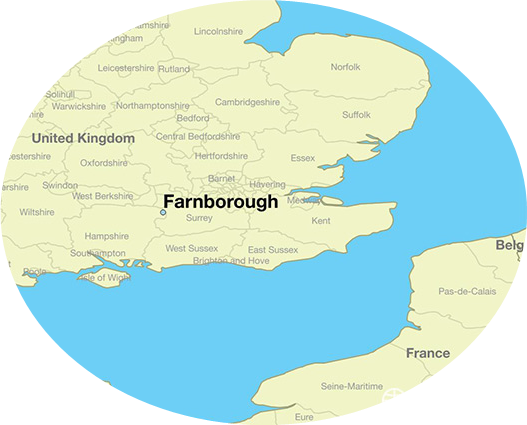
Described as “the largest industry event on the aerospace calendar,” the Farnborough International Airshow, to be held in mid-July in Great Britain, boasts more than 1500 exhibitors from more than 50 countries.  Among them will be a contingent from the State of Connecticut, if the state’s aerospace industry suppliers step up and sign on.  At the most recent Farnborough show, in 2016, $14.5 million in sales was reported by Connecticut exhibitors. The State Department of Economic and Community Development (DECD) and the Connecticut Center for Advanced Technology (CCAT)  have invited Connecticut aerospace manufacturers to participate in promoting the state’s world-class aerospace industry at the upcoming show, July 16-22, 2018.  Exhibit space is available on a first-come, first-served basis, with the cost per exhibit set at $11,000.

An anticipated 73,000 industry professionals “from across the globe and a range of aerospace sectors” are expected, including “key global influencers plus the latest thought leadership and industry insight,” according to organizers.  Farnborough’s news network will run a series of talks, panel discussions and seminars, and high-profile keynote speakers “will challenge current perceptions and provide ideas for the future.” Among the featured sessions will be “meet the buyer,” described as a structured approach to putting sellers in front of targeted buyers.

The biennial event is widely recognized for its role in connecting the worldwide aerospace market. It has traditionally been a backdrop for the announcement of multi-billion dollar deals, and for the launch of major innovations.

The state’s exhibit space is to include a prime location in the U.S. Pavilion, with Connecticut companies to receive allocated space to display graphics, literature and parts; pre-arranged B2B meetings at discount price; access to the U.S. Exhibitors Lounge and meeting rooms; company listing in two show directories and logistical support prior to the show and on-site.

Among the participating companies is Connecticut Coining, based in Bethel, a leading manufacturer of deep-drawn metal parts used in aerospace, medical, defense and high voltage tubes.  The 50-year-old company includes among its customers industry leaders manufacturing bellows, joints, bleed, duct (anti-ice, telescopic) assemblies as well as silencers, and crossover & oil cooler systems.

Satisfied Connecticut companies in 2016 include Windsor-based Aero Gear: “I have been trying to get a foot in the door with Rolls Royce for years. This air show allowed me to make the contacts necessary to develop them into a customer. The show was a home-run for Aero Gear,” said Doug Rose, who founded the company in 1982, developing expertise in the design, engineering and manufacturing of gears and gearbox assemblies for the global aerospace industry.

Countries including Mexico, Turkey and the U.S. will be vying for business alongside a significant European presence from Germany, France and Spain as well as the U.K.  Organizers say the 2018 edition will see the largest presence yet from China, with 70 per cent growth in participation since the 2016 show. Japan has increased its presence with a second Pavilion, joining Malaysia, Korea and Indonesia representing Asia.  It all comes just weeks after escalations in tensions among the world’s leading industrialized nations, reflected in the G7 meeting in Canada last week.

Stamford's InventLab Looks to Nurture Technology Innovation

Stamford-based Whitmyer Group, patent and trademark attorneys and litigators with expertise in intellectual property and technology, has launched InventLab™ in its downtown Stamford offices. Described as providing an opportunity for companies developing inventions to “tap into WHIPgroup's tech and IP Law know-how in order to grow and expand their businesses,” the expansion is drawing praise from local entrepreneurial enterprises. It is designed to build upon WHIPgroup’s successful Stamford Tech Entrepreneur Meetup (meetup.com/whipgroup) by offering direct support to qualified local tech startups.

InventLab™ companies are provided with office space and parking, a custom package of complimentary and discounted IP Law services, WiFi Internet, printing, use of conference rooms, kitchen, and space to host Meetups, events. The direct support includes IP legal advice and office space with professional-grade tech amenities at no cost, and is intended to help these companies access other resources in Fairfield County and beyond.

WHIPgroup founder Wes Whitmyer, Jr. explained that “while the firm tends to service the IP needs of large international companies, we saw the exciting growth in Stamford and wanted to share our expertise with local tech firms.  Our recently-expanded offices are ideal for this purpose.  We look forward to getting to know startup and technology businesses in our area, and to helping them with their intellectual property strategies.”

“We are thrilled that WHIPgroup has decided to invest in the growth of Stamford’s Innovation District, and specifically, the local tech community,” said Sam Gordon, program manager for Innovate Stamford. “Following in the footsteps of other top tech communities like Boston and Boulder, this program is a perfect fit for Stamford. We look forward to seeing companies thrive at WHIPgroup’s InventLab™.”

Whitmyer, with patent, trademark and litigation departments, describes the firm as “a law firm built by technology to serve technology companies.” Applications for WHIPgroup’s InventLab™ should be sent to inventlab@whipgroup.com.  Further information about InventLab™ is be available online at whipgroup.com. IP specialties include physicists, mechanical, civil, electrical, biomedical and chemical engineers, computer scientists, and trademark attorneys on staff.

CT's BIO Industry Has Strong Presence at Record-Setting International Convention

Connecticut was one of 18 states to have a strong presence at the BIO International Convention, held this week in Boston. It was a record-setting year, as 18,289 U.S. and international attendees – the most in the last 10 years – participated in what was described as “the epicenter of the biotechnology industry” for four days of programming, 46, 916 partnering meetings (setting a new Guinness World Record for “The Largest Business Partnering Event”) and entertainment. More than a dozen Connecticut companies had a presence in the state’s pavilion at the event:  Jackson Laboratory, Sema4, Genotech Matrix, AlvaHealth, RallyBio, Cantor Colburn, Pfizer, e-Path Learning, Thetis Pharmaceuticals, XViVO, Clarity Quest, Lucerna, Wyant Simboli, Boehringer Ingelheim, Aeromics, LambdaVision, Pattern Genomics.

Also participating were Southern Connecticut State University, Yale University and the University of Connecticut, as well as the City of New Haven, and the town of Branford, along with BIO CT, Connecticut Innovations and the Connecticut Department of Economic and Community Development.  Additional companies from the state were on-hand, although not as part of the state’s coordinated effort.

All told, there were more than 1,000 companies from dozens of nations represented at the 25th anniversary conference.  The organizations represented at the BIO International Convention include the world’s leading biotech companies, top 25 pharma companies, top 20 CROs and CMOs, and more than 300 academic institutions including the major research labs and government agencies. Organizers indicate that one out of three attendees based outside of the U.S. and nearly 40 percent are C-level executives at their respective companies.

"If you are or want to be any type of a life science hub, you need to be at this convention," Dawn Hocevar, president and CEO of BioCT, recently told New Haven BIZ. "Connecticut participated in the last two conventions, however, this is the largest footprint we've ever had." BioCT is the bioscience industry voice for the state of Connecticut.  BioCT is dedicated to growing the vibrant bioscience ecosystem in Connecticut by supporting innovation, collaboration, networking, education, talent engagement and advocacy. 

This year’s educational programming was more robust and diverse than ever before, according to organizers, with more than 180 educational sessions, including brand new tracks on genome editing, opioids and corporate best practices.

Among the presenters, panelists, and featured speakers was Scott Gottlieb, Commissioner of Food and Drugs at the U.S. Food and drug Association, a graduate of Wesleyan University in Middletown.

https://youtu.be/rT-HCSKcsqU


Communities, Innovators Recognized for Excellence in Main Street Awards

A hybrid business incubator that provides unique opportunities for collaboration between schools and business to increase college and career readiness while expanding downtown Wallingford business, and a Connecticut Trust for Historic Preservation website that is a point of entry for those seeking to spur redevelopment of Connecticut’s historic mill buildings are just two of this year’s Awards of Excellence winners recognized by the Connecticut Main Street Center (CMSC) at annual ceremonies held this year in Danbury. In total, seven initiatives receive the prestigious awards, including organizations and initiatives from Danbury, Hartford, New London, Wallingford, and Windsor, as well as the CT Trust for Historic Preservation and the State of Connecticut.

Winning entries also included collective efforts in bringing more people to Hartford through creative placemaking; a block-by-block initiative to create a positive perception of downtown New London by working with store owners to install LED lights inside storefront windows; a young professionals’ initiative to highlight the diverse culture in downtown Danbury through weekly food truck events; a multi-year deliberate and incremental effort to redevelop Windsor Center with residential and office use around transit; and the State of Connecticut’s coordinated approach to improve the economy and quality of life through investments in development around transit.

Individual awards were also presented to Andrea Pereira, Executive Director of Local Initiatives Support Corporation (LISC), and R. David Genovese, CEO of Baywater Properties in Darien.

CMSC’s mission is “to be the catalyst that ignites Connecticut’s Main Streets as the cornerstone of thriving communities.” CMSC is dedicated to community and economic development within the context of historic preservation, and is “committed to bringing Connecticut’s commercial districts back to life socially and economically.”

The Jack Shannahan Award for Public Service for 2018 goes to Andrea Pereira, a former Board Chair of Connecticut Main Street Center, who has been a partner in CMSC’s Come Home to Downtown program, providing financing through the Come Home to Downtown Loan Fund. Pereira, Executive Director of Local Initiatives Support Corporation (LISC), earned the recognition for her leadership in “guiding strategic investments aimed at creating tangible, sustainable improvements in our communities.”
She has led LISC for over 20 years, having previously served as the Director of Urban Revitalization & Investment at the State of CT Department of Economic & Community Development. She is an accomplished community development professional with expertise in community development finance, organizational development, nonprofit management, grant-making, public policy, and program development. LISC Connecticut provides financial and technical resources to over 60 local housing and community development organizations each year. LISC also offers predevelopment, acquisition, bridge and/or construction financing for affordable housing and other community development projects.

The 2018 CT Main Street Founder’s Award, presented by Eversource, is presented to R. David Genovese of Baywater Properties in Darien, founded in 2001. Genovese and his team have “committed themselves to transformational projects in Darien, remaining thoughtful, creative, flexible, innovative, and respectful of the community.”  For more than a decade, he has led numerous key developments in downtown Darien that “breathed new life into the area, revitalizing buildings and reinvigorating its residents.”

Genovese has led a multi-disciplinary team of architects, civil engineers, landscape architects, retail consultants and legal advisors in creating Your Downtown Darien. Otherwise known as the Corbin Development, Baywater assembled this portfolio of properties over the course of nearly 15 years, to be redeveloped to create a mixed-use center incorporating retail, offices, and luxury residences.

“This year’s winners represent a culture of inclusivity in ensuring that Main Street belongs to everyone,” said CMSC Associate Director Kimberley Parsons-Whitaker. “From enlivening our public spaces with ethnic cuisine and multi-cultural entertainment, to redeveloping formerly abandoned mills and blighted areas around bus and train stations with residential and commercial options for people of all background and incomes, our 2018 award recipients are leading their communities and our state in improving the quality of life and our economy.”  The 2018 Awards of Excellence went to:

▪  Great Placemaking in Hartford; including Know Good Market, Riverfront Recapture, One World Market at CTfastrak Station in Parkville, Hartford BID Bicycle Roadside Assistance Program, Pratt Street Patio, and Winterfest)  – Recipients: Breakfast Lunch & Dinner, Riverfront Recapture, International Hartford, Hartford BID, and iQuilt Partnership.

▪  Light Up New London – Recipient: New London Main Street. Partners: Dominion Foundation, National Main Street Center.

▪  Downtown Chow-Down, Danbury – Recipients: CityCenter Danbury, City of Danbury. Partners: Get Downtown Danbury, Greater Danbury Chapter of CT Young Professionals.

▪  HUBCAP Wallingford – Recipients: Wallingford Center, Inc., Town of Wallingford Board of Education, Wallingford Economic Development Commission.

▪ Mills: Making Places of Connecticut – Recipient: CT Trust for Historic Preservation. Partner: Connecticut State Historic Preservation Office.

▪ Coordinated Approach to Responsible Growth and Transit Oriented Development – Recipient: State of Connecticut.

▪ Setting the Stage for TOD in Windsor Center – Recipient: Town of Windsor. Partners: CIL Development, Lexington Partners, LLC.

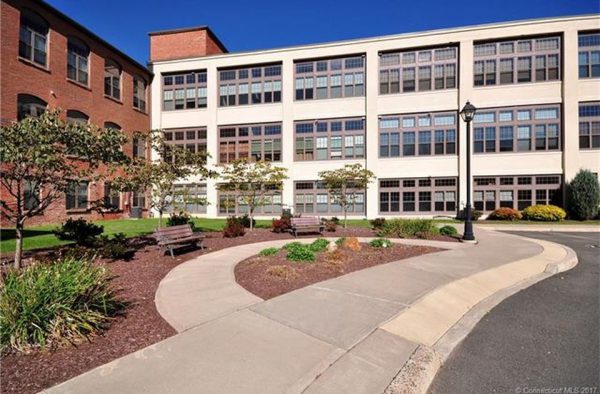
The Town of Windsor was recognized for the redevelopment of the portion of Windsor Center lying just east of the railroad tracks in town, which previously contained a mix of obsolete industrial and municipal uses which no longer contributed to the vitality of the Center.  The turn-around, with an eye towards transit-oriented development, included development of Windsor Station, a 130-unit market-rate rental project on a 6.5 acre site adjoining the passenger rail station.

The $23 million development project included demolition of two former industrial buildings, environmental remediation and construction of two, four-story elevator buildings with parking and site amenities. The project includes 32 studio, 65 one-bedroom and 33 two-bedroom units and is targeted to an underserved rental market of young professionals 20 to 35 years of age and baby boomers.  Construction was completed a year ago, and 90 percent occupancy was achieved within five months.