

New Business Aims to Deliver Science to 8-11 Year-Olds, One Month at a Time
/There’s a new Connecticut start-up launching this month, aiming to engage upper elementary school age children with the fields of science, technology, engineering and math (STEM) through monthly hands-on activities delivered right to their doors. What began as a response by two college friends to an entrepreneurial start-up challenge is now a full-fledged business, hoping to grow as it excites children ages 8-11 about the potential of the STEM fields.
The business, Genius Box, delivers a “monthly STEM adventure to a subscriber’s mailbox, featuring a topic to explore and the tools to do so." Each box will contain activities or experiments that further illustrate the topic of the month, providing hands on learning opportunities through a narrative “challenge” posed in each box.
Kate Pipa and Shivangi Shah received second place at Demo Day at Northeastern University a few years ago, and “with much excitement and encouragement,” decided to launch a company based on their idea. Next was a successful crowdfunding campaign in fall 2013, which led to initial beta testing and feedback collection, including work with students in Connecticut classrooms to obtain reactions from students and their teachers. Earlier this year, a prototype Genius Box was provided to middle-school age participants at the Connecticut Technology Council’s annual Girls of Innovation program.
Genius Box aims to connect kids with real life examples of science, technology, engineering, and math to further the understanding of these critical subjects “in a way that resonates with upper elementary school aged children.” The topic to be explored in December’s inaugural Genius Box will be Kaleidoscopes. The company’s website is now accepting one month, three month or six month subscriptions for the monthly deliveries.
“We are excited to sta rt this new chapter,” said co-founder and CEO Kate Pipa, who lives in Shelton. “And we are excited to bring kids a new box each month of hands-on fun that also doubles as a learning opportunity and is making social impact for the kids and for our partner organizations.”
Co-founder and COO Shivangi Shah adds, “We hope that the next generation of geniuses will embrace STEM and apply it to the world around them. We want them to believe they can change the world.”
Each box includes a narrative story and activity cards to explain topic and activities in a fun, engaging way, and three or more activities and experiments in each box. Each monthly kit is “designed in a way that puts each genius in the driver's seat to solve the challenge at hand, with minimal help from adults.”
Extending the Benefits
Pipa and Shah have also added a social benefit component to their sales. For each box sold, Genius Box Inc. will donate $1.00 to a partner nonprofit. December’s partner organization is Connecticut-based ManyMentors, which connects middle and high schools students interested in the S.T.E.M. fields with near age peer mentors via interactive, engaging workshops and a highly innovative online platform.
Genius Box is also among the first social benefit corporations in the state of Connecticut, allowing the company to pursue an expanded mission that embraces societal good along with profits. Legislation creating the new designation was approved by the state legislature earlier this year, and took effect in October.
The company’s website explains “We want to provide an experience that inspires, encourages, and empowers kids to think big. To be curious. To experiment. To make mistakes. To explore new topics. Overall, to be the change makers and problem-solvers of tomorrow, today.” Aiming directly at its target audience, the site invites, “Adventure on, geniuses. Your monthly mystery awaits.”
The company is currently shipping only within the United States, and offers free shipping. More information about Genius Box is available at www.geniusbox.me.
Photo: Kate Pipa and Shivangi Shah
 Making the grade are Bridgeport, Hartford, and New Haven. Their respective round one opponents make the Connecticut cities strong underdogs in need of a sizable population surge. Bridgeport goes up against San Francisco, Hartford faces Baltimore, and New Haven is up against Portland. (No, not Portland, Connecticut.)
 one of two versions of the game, geographic level: metro areas or states. Then they click on the name of the city in each match-up that you think has the larger population. Green shows a correct answer, red indicates an incorrect answer. Players are urged to “see how close you can come to a perfect score of 63” and then asked to “mouse-over results to view the most current population estimates for each pair.”



 ld University at #396. Outside the top 400 from Connecticut were Wesleyan University, Yale University, Quinnipiac University and Trinity College.
 ity in New Jersey, Florida Agricultural and Mechanical University, Florida International University, and six institutions in California, including California State Polytechnic University, the University of California and Cal State.

 t households unable to afford all of life’s basic necessities far exceeds the official federal poverty statistics. United Way calls this newly revealed demographic ALICE, an acronym for Asset Limited, Income Constrained, Employed.
 an double the official U.S. poverty level.


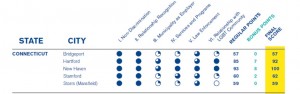
 with the Equality Federation, provide “a revealing snapshot of LGBT equality in municipalities of varying sizes, and from every state in the nation,” the report noted.
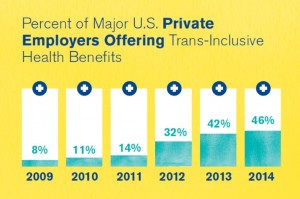 tive state laws.


 This past Saturday, the Huskies football team played Army at Yankee Stadium – the





















