Leadership Greater Hartford Connects More Than 400 Volunteers with Nonprofit Board Service
/In just over six years, more than 400 people in the Greater Hartford area have joined the board of directors of local nonprofit organizations, through an innovative matching program run by Leadership Greater Hartford. The program has proven both popular and successful, and is seen as a win-win for the nonprofit organization in need of expertise and individuals looking for ways to contribute to the well-being of the community.
The Leaders on Board program has matched 404 individuals – from young professionals to retirees - with more than 100 nonprofit organizations since January 2009. The program attracts individuals with an interest in serving on a board, and looking to develop their leadership skills and serve the community. Potential board members receive training in nonprofit organizational structure and management, are introduced to the role and responsibilities of board members and are encouraged to explore their own individual skills. The training session provides the foundation for effective board service. 
Leaders on Board, unique in Connecticut and perhaps the largest initiative of its kind in the region, provides a critical connection for nonprofit organizations who are looking for board members that have been trained in the basics of board membership and have expressed an interest in serving on a nonprofit board. In some cases, individuals’ employers encourage such community activism, in others, the person is seeking to give back to the community or broader their involvement in issues that are of particular interest. Corporations and businesses participate in the Leaders on Board program by offering board governance training to encourage their employees who are interested in serving the community.
The program works in a round-robin matching session, where representatives of nonprofit organizations conduct brief one-on-one interviews. At the end of the session, both the individual and the organizations indicate where they think there might be a match. If there’s agreement, there are further follow-up conversations to determine if selection to a specific board should go forward. Often, the answer is yes.
“I decided to participate in leaders on Board because I was looking for a way to become a board member on a local, small to medium-sized nonprofit organization," explained Bill Valentine, Donor Relations Manager, United Way of Central and Northeastern CT. "Leaders on Board is the ideal way to learn the basic information about the responsibilities of being a board member and to learn about the organizations that are looking for new board members.”
At times, prospective board members learn of nonprofit organizations they had not been aware of or knew little about. For people new to the region, and even those who have spent a career in Greater Hartford, the variety of nonprofit organizations, and they work they pursue with various populations, can be eye-opening. The list of organizations that have placed members on boards through the Express Match process is quite impressive – a who’s who of community organizations.
In 2013, the Association of Leadership Programs, a national organization with affiliates across the country, presented Leadership Greater Hartford with its first “Excellence in Innovation” award for the implementation and success of the Leaders on Board program. Recent years have also seen greater diversity among prospective board members, and interest by nonprofit organizations in having boards that more closely reflect the diversity of the community they serve.
"I had been considering pursuing board membership for a few years when The Junior League of Hartford offered its members a chance to participate in Leaders on Board," recalled Patricia Sasser, Dean of Students at Loomis Chaffee. "The Leaders on Board orientation provided great information on what a prospective board member needs to know about board service; it definitely set me up for success. I felt prepared and excited when I attend my first Leaders on Board Express Match. Having a chance to speak with different organizations about their mission and purpose opened my eyes to all the different types of organizations I could support. I found several that really spoke to my heart and was excited when I was matched with an organization I admired."
Among those who have recently accepted board of directors positions, following the most recent Leaders on Board session:
- Ann Means - Hartford Preservation Alliance
- Chris Whelan - First Choice Health Centers
- Sue Murphy & George Montowski - Hebrew Health Care
- Nancy Frede - Hartford Knights Youth Foundation
- Jessica Dansereau & Veda White - Lupus Foundation of America - CT Chapter
- Veda White - Trinity Academy
- Michael Fournier, Richard Moriarty and Patrick Garrity - Kinsella Arts, Inc.
- Chris Thomas - Mental Health Association of CT
- Jim Barrett - St. Philip House
- Bernard Jenkins, Meri Horowitz and Gary Brochu - Coram Deo Recovery, Inc.
- Richard Moriarty and Patrick Garrity - Kinsella Arts, Inc.
- Karen Adamson, Maia Brooks, and Anthony Viggiano - Project Genesis
- Aaron Clay and Jasmine Baten - West Hartford YMCA
Leaders on Board operates with support from the Hartford Foundation for Public Giving. For more information, contact Mae Ryan Maloney at 860.951.6161 x1900 or email Mae.Maloney@leadershipgh.org. The mission of Leadership Greater Hartford is to develop, connect and inspire diverse leaders to build strong and vibrant communities.
https://youtu.be/vuXF7lKGuew






 Fixed route transportation operates along a prescribed route and on a fixed schedule, and includes buses and light rail. In 2014 in Connecticut, buses provided over 43 million passenger trips and rail provided over 39 million passenger trips. Demand-responsive transportation provides routes and scheduling more individually tailored to the needs of the user. The Americans with Disabilities Act (ADA) requires transit agencies to provide paratransit service, subject to certain parameters, to people with disabilities who cannot use the fixed route services. Paratransit ridership in Connecticut in fiscal year 2014 under the ADA totaled over one million rides, and dial-a-ride ridership neared 100,000 rides.
 ommunities are located within a reasonable distance of quality, dependable public transportation.” In addition, policy makers were urged to “identify funding streams to sustain, coordinate, grow and make more convenient both fixed route and demand-responsive transportation options (including providing door-to-door service), and provide technical assistance to support regionalization efforts.”


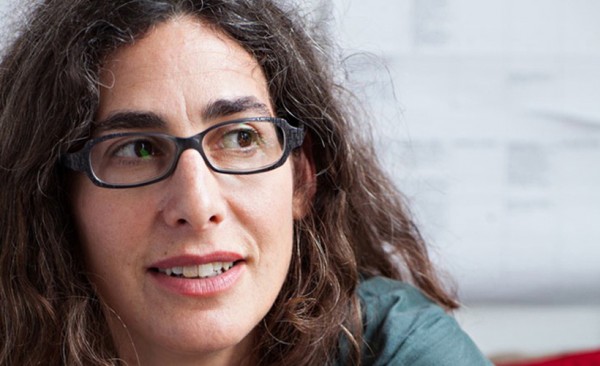 At the Law and Government Academy of Hartford Public High School, one class used Serial as the basis for a semester’s curriculum. Over the course of five months, students examined the issues in each episode of the 12-episode podcast and were asked to choose a side – such as defense counsel, prosecutor, or witness – and then advocate for their position. For their final exam, students wrote appellate court briefs and argued their cases.
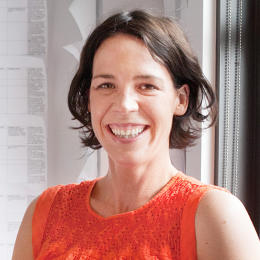 “It’s use of new media and compelling storytelling has opened up many new opportunities for students, educators, and the intellectually curious to reexamine aspects of our legal system,” said CT Forum Executive Director Doris Sugarman. “We’re thrilled to see what is sparked when our community connects to the expression of big ideas that The Forum brings to Connecticut audiences.”


 “We are equally fortunate in bringing Daniel Mackay to the Trust. Dan has tremendous experience, vision and a passion for historic preservation. We also know that he will nurture the relationships of the Trust with the Governor's office, our legislature and the other organizations we partner with. We are very excited for a bright future led by Daniel.”



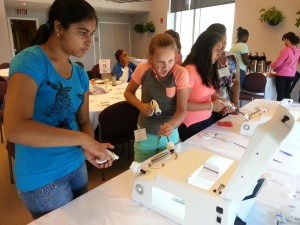
 The July event is part of a year-long effort to listen, learn, and share with older adults, their families, their caregivers, community leaders, and experts in the aging field on how to best address the changing landscape of aging in the coming decade, officials said. Since the 1960’s the
 ment; how to remain healthy as we age; what types of services and supports can help older Americans remain independent in the community as we age; and how to support this care and the caregivers who provided it; and how to protect older Americans from financial exploitation, abuse and neglect.

 The organization also accepts