State Will Step Up Efforts to Respond to Needs of Women Veterans
/The U.S. Department of Veterans Affairs estimates there are 16,545 veterans in Connecticut who are women. Some among them struggle with issues such as unemployment, homelessness and mental illness, and many more are unaware of the support services available to them. That was the impetus for legislation approved this year by the General Assembly and recently signed into law by Gov. Malloy, requiring the Department of Veterans' Affairs to establish, within available resources, a Connecticut women veterans' program.

The new women’s veterans program must:
- reach out to women veterans to improve awareness of eligibility for federal and state veterans' benefits and services;
- assess women veterans' needs for benefits and services;
- review programs and research projects and other initiatives designed to address or meet Connecticut women veterans' needs; and
- incorporate women veterans' issues in strategic planning on benefits and services.
The program must also annually submit recommendations for improving benefits and services for women veterans to the veterans' affairs commissioner and the Veterans' Affairs Committee of the legislature, beginning January 15, 2016.
Under the law’s provisions, a “veteran” is anyone discharged or released (under conditions other than dishonorable) from active service in the armed forces - U. S. Army, Navy, Marine Corps, Coast Guard, and Air Force -and any reserve component of these branches, including the Connecticut National Guard operating under certain Homeland Security missions.
Jackie Evonison, the women veterans’ outreach coordinator with the American Legion Connecticut, told legislators considering the program that many female veterans are unaware of available services or don’t feel they’re qualified to receive them.
In 2012, there were more than 2,600 women veterans residing in Hartford County, according to data included in a report from the Aurora Foundation. Women veterans face substantial and unique challenges readjusting to civilian life, the report pointed out, especially in the areas of housing, mental health, health care, employment and homelessness:
- In Hartford County, approximately 8 percent of the population are veterans; females are 5 percent of this population (approximately 2,619 women vets in Hartford County).
- Female veterans are almost four times more likely to become homeless than women who have not served in the military.
- Only one of the three veterans’ housing facilities in the county house female veterans.
As a group, female veterans are younger than their male counterparts, with an average age of 48, compared to 63 for men. More than 80 percent of the female veterans are working age, compared to 55 percent for men, according to published reports.
Commissioner Sean Connolly of the state Department of Veterans Affairs said the mission of the program will be “to see what kinds of programs are out there, develop recommendations for improving benefits, and determining whether new programs and projects are necessary to meet the needs of our women veterans.”


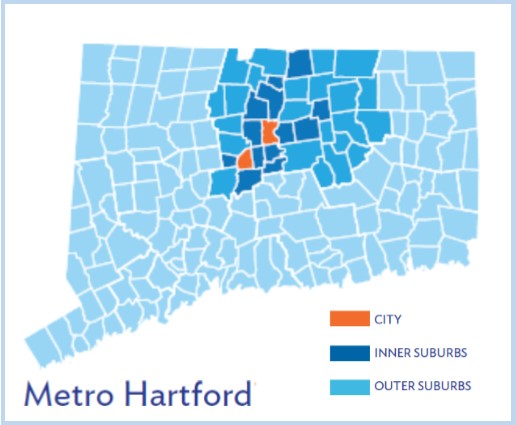
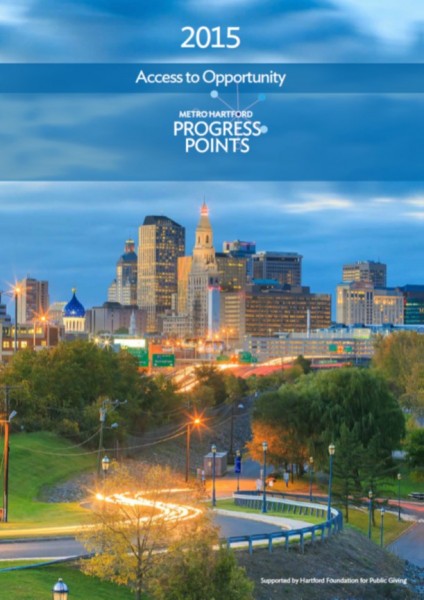 Looking at five year trends, the report found that the region’s population of about 1 million people has grown by 2 percent, which translates to about 20,000 people or about 4,000 families. Regional job growth, 3.5 percent, is on par with the state, but remains about 8,000 jobs below pre-recession levels. The crime rate across the Greater Hartford region has been reduced by about 18 percent during the past five years, faster than the state (-16%) and national (11%) trends.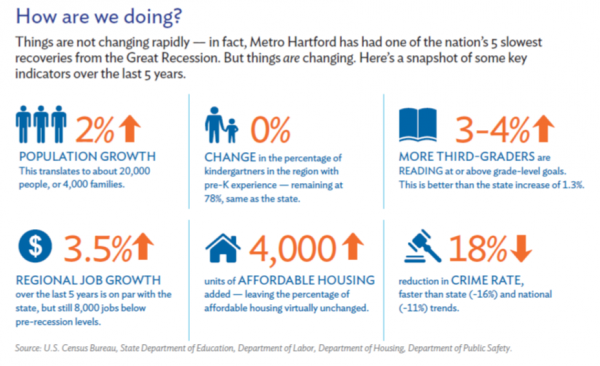
 Partner organizations in developing the report include the Hartford Foundation for Public Giving, Capital Workforce Partners, Capital region Council of Governments, Metro Hartford Alliance, Hispanic Health Council, United Way of Central and Northern Connecticut, Urban League of Greater Hartford, Center for Urban and Global Studies at Trinity College, and the City of Hartford.




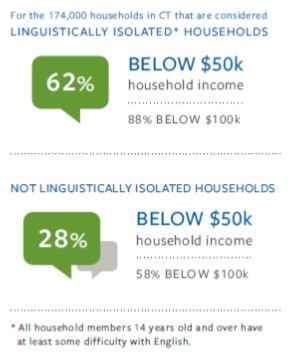
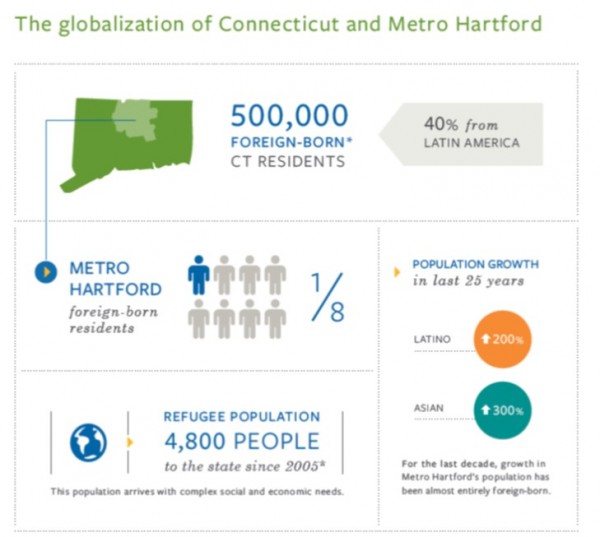 “The Latino Endowment Fund has offered this report as a means to expand the important discussion on efforts to support English Language Learners in our communities,” said Luis Cabán, chair emeritus of the Latino Endowment Fund Steering Committee. “This document provides us with an opportunity to reframe how we think about our increasingly global community and recognize the advantages of people speaking more than one language to enhance the richness of our community and create stronger links to the global marketplace.”
 Rather than having delegates from throughout the nation stream into Washington, D.C., Americans are asked to watch events unfold via live stream – either at home, or by getting together with co-workers or people from their local communities. Officials note that more than 600 public and private Watch Parties—in every state—have been organized and registered with WHCOA.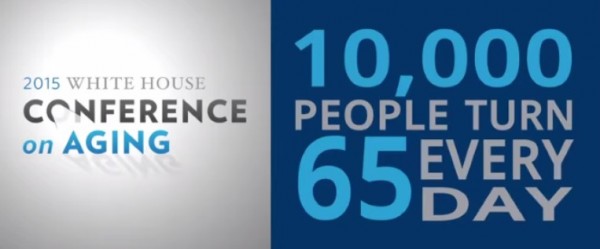
 rez, U.S. Department of Labor. The panel will include Jean Chatzky, AARP Financial Ambassador; Vickie Elisa, Mothers’ Voices Georgia;
  emarks or participating in panels are Secretary Tom Perez, U.S. Department of Labor; DJ Patil, White House Office of Science and Technology Policy; Secretary Tom Vilsack, U.S. Department of Agriculture; professional athlete Diana Nyad; Vice Admiral Vivek Murthy, U.S. Surgeon General; Director Richard Cordray, Consumer Financial Protection Bureau; and Stephanie Santoso, White House Office of Science and Technology Policy.
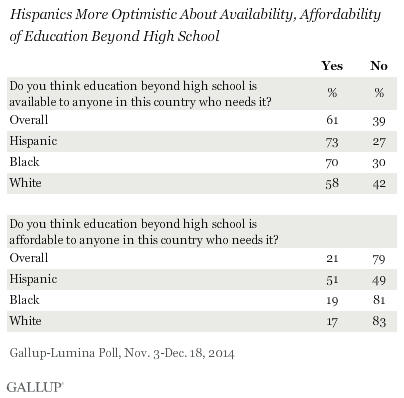 Data released this year indicates that:
 Survey analysts indicate that the greater optimism among Hispanics may reflect their increase as a portion of the student body in postsecondary institutions in recent years. Almost all of those surveyed believed that U.S. high school students need to go to college or technical school in order to be successful in today's economy.


 Later this month, Bike Walk CT is offering the League of American Bicyclist-designed Traffic Skills 101 program, a comprehensive day long course to give cyclists the skills, knowledge and confidence to handle on-road cycling.

 ws recently