
Combatting Childhood Obesity Starts From Day One; Wide-Ranging Policies Proposed
/Less “screen time,” more physical activity, more nutritional foods and fewer sugary beverages – that’s the formula to prevent obesity from taking root in infants and toddlers in the formative years of childhood, according to new recommendations by the Child Health Development Institute (CHDI) of Connecticut. A series of “science-based policy opportunities” for Connecticut, outlined this week, also include support for breastfeeding in hospitals and child care centers. The need for stronger action is underscored by recent statistics. In Connecticut, one of every three kindergartners is overweight or obese, as is one of every three low-income children. Children who are overweight or obese are more likely, according to the policy brief, to have:
- risk factors for future heart disease, such as high cholesterol and high blood pressure
- a warning sign for type 2 diabetes called “abnormal glucose tolerance,” although many children are being diagnosed with the full-blown disease in increasing numbers
- breathing problems such as asthma
- gallstones, fatty liver disease, and gastroesophageal reflux (acid reflux and heartburn)
- problems with their joints
“Recent research shows that obesity may be very difficult to reverse if children are not at a healthy weight by 5 years of age,” the policy brief indicated. “Investing early in preventing childhood obesity yields benefits for all of us down the line by fostering healthier children, a healthier population overall and greatly reducing obesity-related health care costs over time.”
The policy brief recommends five ways Connecticut’s child care settings and hospitals can help our youngest children grow up at a healthy weight:
- Support breastfeeding in hospitals and in child care centers and group child care homes.
- Serve only healthy beverages in all child care settings.
- Help child care centers and group child care homes follow good nutrition guidelines.
- Increase physical activity time for infants and toddlers in all child care settings.
- Protect infants and toddlers in all child care settings from “screen time.”
The recommendations stress that “talking, playing, singing and interacting with people promotes brain development and encourages physical activity,” and urges that healthy infant and toddler development be encouraged by:
- Never placing them in front of televisions, computers, or tablets to occupy them
- Never allowing infants and toddlers to passively watch a television, computer, mobile phone or other screen that older children in the same room are watching
“Healthy lifelong weight begins at birth,” said Judith Meyers, President and CEO of CHDI and its parent organization the Children’s Fund of Connecticut. “Investing in obesity prevention policies makes sense for Connecticut.” Meyers added that “the numbers are staggering,” and it has become clear that “to really address this problem we need to prevent it in the first place.”
If Connecticut were to implement the five recommendations highlighted in the policy brief, it would be the first state in the nation to do so, officials said.  A number of the proposals have been successfully implemented in other jurisdictions, including states and cities. Marlene Schwartz, Director of UConn's Rudd Center for Food Policy and Obesity, noted that Connecticut has long been a leader in providing nutritional lunches in schools, and said that now the state’s attention needs to move to the earlier years of childhood. “The field has realized that we need to start even earlier,” she said. Rudd also indicated that determining "policy changes that might help reduce the disparities" in Connecticut, which are apparent in race, ethnicity and socioeconomic data, is also essential.
Legislation now pending at the State Capitol, which is not as comprehensive as the policy brief recommendations, is designed to "increase the physical health of children by prohibiting or limiting the serving of sweetened beverages in child care settings, prohibiting children's access to certain electronic devices in child care settings, and increasing children's participation in daily exercise." The proposed legislation, HB 5303, was recently approved by a 10-3 vote in the Committee on Children, but has an uncertain future before the full legislature.
Dealing with childhood obesity has been a challenge because of the “many different systems and programs that impact childhood development – which can also provide “many different places for opportunities to influence what happens.” Officials said that some of the policy proposals can be realized through legislative action, others by regulatory changes, and others through voluntary initiatives. They indicated that since Connecticut established the Office of Early Childhood in recent years, coordination of oversight and services has improved, which is an encouraging development. Child care settings provide an opportunity to impact a large proportion of the state’s pre-kindergarten children, but plans to disseminate the message more broadly, including through pediatrician’s offices, are being considered. 
The recommendations call for “allowing toddlers 60-90 minutes during an 8-hour day for moderate to vigorous physical activity, including running, and “adherence to federal nutrition guidelines” including more whole grains and low-sugar cereals, no sugary drinks, and fewer fried foods and high-sodium foods. Through 11 months, infants should be served “no beverages other than breast milk or infant formula, and those 12 months through 2 years old should be served no beverages other than breast milk, unflavored full-fat milk water, and no more than 4 ounces of 100% fruit juice.”
The CHDI policy brief indicates that “childhood obesity can contribute to poor social and emotional health because overweight and obese children are often bullied and rejected by their peers as a result of their weight. That stress can affect every part of their development, interfering with their learning (cognitive), health (physical and mental), and social well-being.”
 The recommendations, described as “affordable, achievable, common sense measures,” were prepared for CHDI as part of a grant to the UConn Rudd Center for Food Policy and Obesity, funded by the Children’s Fund of Connecticut. The author was public health policy consultant Roberta R. Friedman, ScM.
CHDI began focusing on strategies to promote healthy weight in children from birth to age two after publishing the IMPACT “Preventing Childhood Obesity: Maternal-Child Life Course Approach” in 2014. The report reviewed scientific research on the causes of obesity and explored implications for prevention and early intervention. In 2015, the Children’s Fund of Connecticut funded four obesity prevention projects in Connecticut that addressed health messaging, data development, policy development and baby-friendly hospitals.
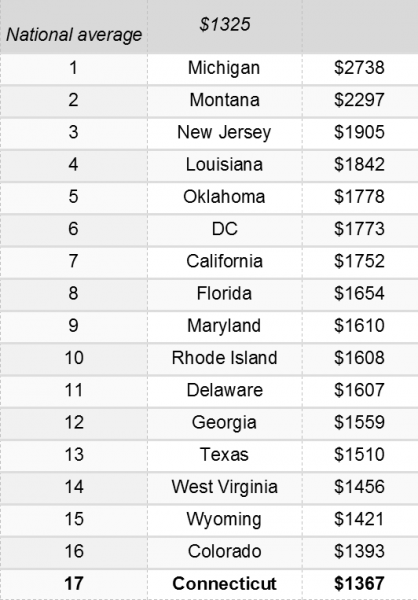
 The national average for a full-coverage policy as featured in the Insure.com report came in at $1,325 this year – a slight increase from last year’s average of $1,311. Rates varied from a low of $808 a year in Maine to a budget-busting $2,738 in Michigan. Insurance rates in Michigan are more than double (107 percent) the national average.

 ucation systems positively, the lowest percentages in the country, in a
 State residents were asked “how would you rate the quality of public education provided in grades K-12” on a scale including excellent, good, fair and poor. The top 10 states after North Dakota, Minnesota and Nebraska are Iowa, New Hampshire and Massachusetts (80%), Wyoming (79%), South Dakota (78%) and Vermont and Virginia (75%).


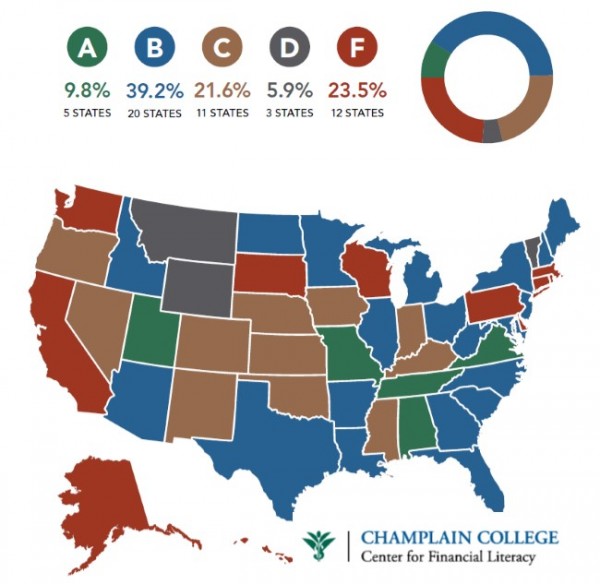 s a comprehensive look into the state of K-12 economic and financial education in the United States, collecting data from all 50 states and the District of Columbia. The biennial Survey of the States serves as an important benchmark, revealing “both how far we’ve come and how far we still have to go.” This year the report concluded that nationally “the pace of change has slowed.”
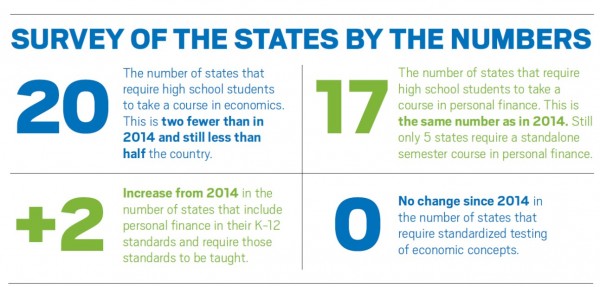 nts accountable for learning objectives have the best chance of promoting the development of young people who are better financial managers and stewards of their credit—behaviors with which many, if not most, young people tend to struggle,” said J. Michael Collins of the University of Wisconsin-Madison’s Center for Financial Security. “Rigorous state standards can facilitate local schools to implement well-designed programs, which in turn expose students to concepts they otherwise would not learn.”
 The new network would dramatically extend televised and online coverage and “on-demand access” to all legislative hearings and debates, as well as public policy conferences, regulatory hearings, executive agency meetings, and state Supreme Court and Appellate judicial proceedings.
 Giguere pointed out that “there are 10 hearing rooms, but CT¬N’s physical plant limits us to covering only two events concurrently. That means up to 80% of the Legislative committee process at any given time goes unseen. Our capacity to cover the Executive and Judicial Branches is even more limited.”
 currently funded, CFOG notes, “the new entity would be monitored and accountable to the public, but independent from government itself.”
 Following Connecticut in the top ten are New Jersey, Massachusetts, and Delaware, the only other states to receive an “A”, followed by North Dakota, New Hampshire, New York, Nebraska, Montana and Virginia. Connecticut, New Jersey and Massachusetts also ranked 1-2-3 a year ago.
 llege entrance exam, the percentage of students taking an advanced placement test and the student-teacher ratio.
 Callahan’s extensive touring, public speaking, and teaching make her a natural fit for the position. “


 ents currently working on the Hartford Hand initiative. Each week, Welch and colleagues Yonathan Moshayev, Jake Green, Amber Sayer, and Stephen Sousa, spend several hours improving the current design to make the unique Hartford Hand a reality for patients.



 with the addition of headrest and ceiling speakers.