Chronic Absenteeism Declining in CT Schools, Except Among African-Americans
/Chronic absenteeism in Connecticut schools declined overall between 2011-12 and 2014-15, but increased among African American students, according to data from the State Department of Education (SDE). In the four-year period, chronic absenteeism among white students dropped statewide from 8.1 percent to 7 percent, among Hispanics from 18.4 percent to 18 percent and among Asians from 7 percent to 6.1 percent. Hispanic students had the highest chronic absenteeism rate all four years.
Among African American students, the percentage of students chronically absent climbed from 15.2 percent in 2011-12 to 16.1 percent in 2014-15. 
Chronic absence is defined as missing 10 percent, or more, of school days for any reason, including excused, unexcused and disciplinary absences. The statistics are included in the Connecticut Department of Education’s new data website, www.edsight.ct.gov
Chronic absenteeism is declining among both male and female students, with males maintaining a slightly higher percentage (one-tenth of one percent) in the 2011-12 and 2014-15 school years as both rates declined.
While English-Language-Learners had a consistently higher percentage of chronic absenteeism than non-English Language Learners, the percentage was dropped at a higher rate, one percentage point versus four-tenths of a point.
The only other sub-category of students to see a higher percentage of chronically absent students when comparing the 2001-12 and 2014-15 school years, in addition to African American students, was Special Education students, according to the data. In 2011-12, 18.6 percent of special education students were chronically absent. By 2014-15 the percentage was 19 percent, which was, however, lower than the two previous years (19.4 percent and 19.1 percent).
 Overall in Connecticut, the chronic absenteeism rate dropped from 11.1 percent in 2011-12 to 10.6 percent in 2014-15. The State Department of Education website explains that “improving and sustaining good attendance requires the active engagement of district and school-based leaders and administrators along with a clear articulation of roles and responsibilities.”
In comprehensive guidance provided to local school districts nearly three years ago, the state Department of Education explained that “chronic absenteeism is also emerging as an early indicator of future academic difficulty. Children who are chronically absent in both kindergarten and first grade are much less likely to read proficiently by the end of third grade.”
The guidelines also indicated that “If chronic early absence is not addressed at the elementary level, then it may worsen in the higher grades (Chang and Romero, 2008). By sixth grade, chronic absence is a key early indicator of dropout from high school (Baltimore Education Research Consortium, 2011). By ninth grade, attendance may be a better indicator of dropout than eighth-grade test scores (Allensworth and Easton, 2007).”
The 17 pages of guidelines, which outline how various absences are defined, documented and prevented in accordance with “nationally recognized best practices,” aimed to serve “as a valuable resource to help decrease rates of chronic absenteeism and enhance student outcomes,” former commissioner Stefan Pryor said in a memo to school superintendents and principals in May 2013.
Public Act 15-225, passed by the legislature a year ago, requires schools to track and publish chronic absenteeism data. Schools and districts that exhibit a certain percent of chronic student absenteeism must institute Student Attendance Review Teams (or use an existing body for this purpose), to coordinate interventions for students who are chronically absent. The legislation requires SDE to help develop prevention and intervention plans for districts in tackling chronic absenteeism.

 The recommendations are drawn from the experiences of nine communities in Connecticut that explored researched-based strategies over the past year, to link supports for social-emotional and literacy skills. The effort was part of the Connecticut Peer Learning Pilot on Social-Emotional Development and Early Literacy, developed and led by the Campaign for Grade-Level Reading, in partnership with the National Center for Children in Poverty and with support from the Irving Harris Foundation and others.



 “Parental voices can be influential in mobilizing advocacy efforts, and enacting policy change affecting children’s health,” said Rebecca Puhl, a study author, professor in UConn’s Department of Human Development and Family Studies, and deputy director of the Rudd Center.

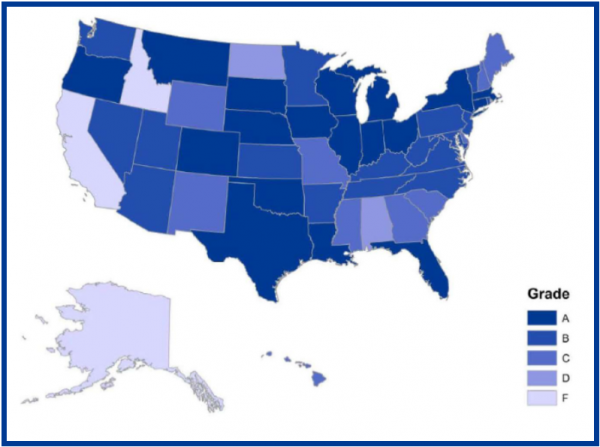
 Based on an inventory of the content and ease-of-use of states' transparency websites, the report assigns each state a grade of “A+” to “F.” The leading states with the most comprehensive transparency websites are Ohio, Michigan, Indiana, Oregon, and Connecticut, with each receiving an A+ grade.

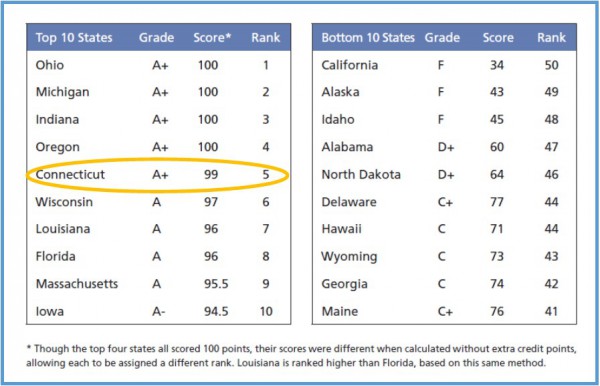 inue to improve, the states that most distinguished themselves as leaders in spending transparency are those that provide access to types of expenditures that otherwise receive little public scrutiny. Only 11 states- including Connecticut - provide checkbook-level information that includes the recipients of each of the state’s most important subsidy programs.


 impact of a seller’s race in a field experiment involving baseball card auctions on eBay. The results, according to the researchers, left little doubt.

 e first total was larger.”
 e Gordon Bradford Tweedy Professor at Yale Law School and the Director of the Law and Economics Program at the National Bureau of Economic Research (NBER) with headquarters in Cambridge, Massachusetts.


 Stamford has a public park named in his honor, recalling that Robinson represented tolerance, educational opportunity, and the confidence that inspires personal achievement and success. A life-size bronze statue of Jackie Robinson with an engraved base bearing the words “COURAGE,” “CONFIDENCE,” AND “PERSEVERANCE” stands in the park located on West Main Street, the gateway to downtown Stamford.
 “It brought back very personal memories of my father talking about his trip to Cuba in 1947, when the Brooklyn Dodgers trained in Havana. At the time, dad was a member of the Dodgers' farm team, the Montreal Royals. Branch Rickey arranged for him to fly to Cuba for an exhibition game, just a couple of months before he broke down baseball's color barrier in the United States. To me, this connection to my father almost brought me to tears. I was watching a baseball game in the same stadium nearly 70 years later.”


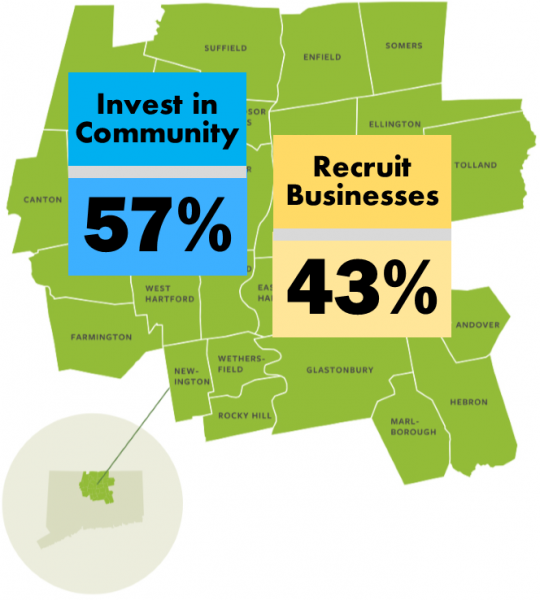 The data from the survey reflect a difference of opinion among older residents of the region. Individuals over age 46 took the opposite view from younger residents, with a majority expressing a preference for spending skewed toward recruiting companies. The reversal was dramatic, with two-thirds of those age 36-45 preferring investing in communities, by a margin of 67%-33%, and individuals age 46-55 expressing a preference for resources to be aimed at recruiting companies, with two-thirds holding the opposite view, 63%-38%.