Children Who Primarily Attended Early Childcare Centers Before Kindergarten Start School Stronger in Math, Reading
/Young children who attended day care, preschool and other types of center-based care in the year before kindergarten earned higher scores in math and reading and had stronger learning and cognitive flexibility skills than their peers who did not participate in such activities, according to a national report by Institute of Education Sciences (IES).
The study revealed racial and ethnic disparities in early care arrangements. The percentages of first-time kindergartners who received center-based care as their primary early care and education arrangement the year before kindergarten were lower for Hispanics (48%) and Pacific Islanders (28%) than for whites (58%), blacks (56%), Asians (62%), American Indians/Alaska Natives (57%) and kindergartners of two or more races (61%).
About 36 percent of kindergartners from households where a primary language other than English was spoken had no regular early care and education arrangement in the year before kindergarten, compared with 18 percent of kindergartners whose primary home language was English. The data of the study, released this year, is from the fall of 2010.
The 60-page report, produced by the American Institutes for Research (AIR) for the U.S. Department of Education’s National Center for Education Statistics (NCES), drew from a nationally representative sample of U.S. kindergartners as they entered school.
Connecticut's Office of Early Childhood, established in 2014, notes that "Study after study confirms the value of high-quality early childhood education for developing the cognitive, social and emotional skills that children need to succeed in kindergarten."
Major findings from the study, which examined children’s performance as they entered kindergarten in fall 2010, include the following:
 Reading: children who had no regular early care and education arrangements the year before kindergarten and those whose primary arrangements were home-based relative care or non-relative care tended to score lower than children who were primarily in center-based care or who spent the same amount of time in multiple care arrangements.
Math: children who had no regular early care and education arrangements the year before kindergarten tended to score lower than children who attended any type of arrangement outside of parental care. Children who were primarily in home-based relative care scored lower than children who were primarily in home-based non-relative care, center-based care or multiple care arrangements for equal amounts of time.
Cognitive flexibility scores were lower, on average, for children who had no regular early care and education arrangements the year before kindergarten and for those whose primary arrangements were home-based relative care than for children who primarily attended center-based care. (These scores measure a child’s ability to adjust behavior or attention in response to changes in the environment.)
Approaches to learning—in which teachers rated students on attentiveness, task persistence, eagerness to learn, learning independence, flexibility, organization and ability to follow classroom rules—tended to be lower for children who had no regular early care and education arrangements the year before kindergarten than for those who were primarily in home-based non-relative care, center-based care or multiple care arrangements for the same amount of time.
The report examined five categories of primary early care and education arrangements for children:
- center-based care, including day care centers, Head Start programs, preschool, prekindergarten and other early childhood programs;
- home-based relative care;
- home-based non-relative care;
- multiple arrangements for equal amounts of time;
- no regular early care arrangement (i.e., mainly parental care only)
It found that the percentage of children who attended center-based care as their primary arrangement before kindergarten has increased only slightly over nearly two decades, from 55 percent in 1995 to 58 percent in 2012.
The American Institutes for Research (AIR) is a nonpartisan, not-for-profit organization that conducts behavioral and social science research and delivers technical assistance both domestically and internationally in the areas of health, education and workforce productivity.
https://youtu.be/bs_Svx6JPro

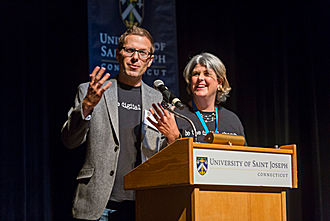 nship bloggers to follow in 2014 by Common Sense Media. Polgar, an attorney and college professor, is a frequent speaker (three-time TEDx) and tech commentator on television and in print, focusing on digital citizenship, creativity, cyber ethics, tech balance and humanizing the online experience.
 Joining internationally renowned

 “I picked out five of each of their songs that I liked, and that I thought had a sound that would work. Then I let them have at it.” Ladd recalled. When he received the first rough videos from them of the words and music, his response was succinct: “This is perfect. Keep running with it.”


 Members of the Department of Motor Vehicles (DMV) Teen Advisory Board said the week is important for a variety of reasons, and encourages teens to play an active role in promoting safety behind the wheel. The risk of motor vehicle crashes is higher among 16-19-year-olds than among any other age group, CDC data indicates. In fact, per mile driven, teen drivers ages 16 to 19 are nearly three times more likely than drivers aged 20 and older to be in a fatal crash.


 According to the most recent data, adult obesity rates now exceed 35 percent in four states, 30 percent in 25 states and are above 20 percent in all states. Louisiana has the highest adult obesity rate at 36.2 percent and Colorado has the lowest at 20.2 percent.
 “Every student deserves the opportunity to receive a math education that is rich and rigorous, and equips them with the skills needed to graduate from high school prepared to be successful in both college and career,” said Commissioner Wentzell. “These recommendations by the Council on Mathematics have created a clear path that will help the State Department of Education take the steps needed to ensure that every student in our state receives a high-quality mathematics education.”
 Council members included parents, teachers, curriculum specialists, principals, superintendents, board of education members, higher education professors, business leaders, and State Department of Education staff members with the purpose of closely examining the current state of mathematics education in Connecticut.



 Unite For Sight's international eye care services with partner local eye clinics are provided year-round and are comprehensive, including examinations by local eye doctors, diagnosis and care for treatable conditions, education, and preventative care. The organization’s website indicates that Unite For Sight has provided eye care services to more than 2.1 million people worldwide, including more than 93,166 sight-restoring surgeries.
 The conference also includes Social Impact Labs, which provide an opportunity for selected speakers to present their new idea in the format of a 5-minute pitch. All of the presentations are ideas that are being developed, meaning that the ideas are in the brainstorming, early development, or early implementation stage. Following each presenter’s 5-minute pitch, there is a 15-minute period for discussion and coaching with two expert speakers, questions, answers, and feedback from the audience.
 Recent articles by The New York Times and Atlantic are referred to, noting that they also reflected poorly on the state’s current condition. National Review adds to the journalistic observations of a state filled with seemingly intractable dilemmas, noting that “Connecticut’s tax system is currently so dependent on the incomes of Fairfield County high-earners — as Governor Malloy has often made clear — that even the slightest variations can trigger a budget crisis.” The article adds, however, that “finance lies somewhere near the bottom of a long list of factors in explaining the current state of Connecticut.”