Connecticut Book Awards Set to Make a Comeback in 2017

Connecticut Center for the Book at Connecticut Humanities is now accepting submissions for the Connecticut Book Awards, returning after a multi-year absence from the literary landscape in the state.  The awards were last presented in 2011.  They were presented annually beginning in 2002. These awards recognize the best books of 2016 by authors and illustrators who reside in Connecticut.   The 2017 Connecticut Book Awards will honor authors in Fiction, Nonfiction, and Poetry. There will also be awards open to authors and illustrators in the category of Books for Young Readers (Juvenile, Young Adult, and Teen).  Book award nominations may be made through April 21, with the formal announcement of recipients later this year.

"There is a void in the Connecticut literary landscape for this kind of recognition of home grown authors. Several other awards and prizes in the state exist, awards such as The Nutmeg Awards, New Voices in Children’s Literature: Tassy Walden Awards, The Windham Campbell Prize, and a small handful of others, but these awards have specific criteria and don’t necessarily focus on Connecticut-based authorship," the Center for the Book website points out. "Without the Connecticut Book Awards, there is no statewide recognition of Connecticut authors who craft words and convey ideas in a compelling way."

Entry fee starts at $40 for a 2,000 copy or less print run. Award winners will receive exposure in Connecticut media outlets and personal appearances in Connecticut locations. For guidelines and to submit, please visit http://bit.ly/CTBook2017

The Center for the Book at Connecticut Humanities promotes the written and spoken word throughout the state and is an affiliate of the Center for the Book in the Library of Congress.  "We’re bringing the Connecticut Book Awards back. Because they are important," the website notes emphatically.

Nominated authors must currently reside in Connecticut and must have lived in the state at least three successive years or have been born in the state, or the book must be substantially set in Connecticut. Panels of five judges will assess nominated books in each category.

Eligibility Requirements for Book Awards to be made in 2017:

  • Author must currently reside in Connecticut and must have lived in the state at least three successive years or have been born in the state. Alternatively, the work may be substantially set in Connecticut.
  • Titles must have been first published between January 1, 2016 and December 31, 2016.
  • All submitted books must have a valid ISBN.
  • Authors may enter more than one book per year.
  • Anthologies are acceptable. Author(s) must have resided in Connecticut for at least three years of have been born in the state. Alternatively, the works must be substantially set in Connecticut.
  • Books by deceased authors will be accepted only if the author was still living at the beginning of the eligibility year (January 1, 2016).

Nominations Open for State's First Connecticut Entrepreneur Awards

A consortium of public and private associations and agencies, higher education institutions and entrepreneur-assisting nonprofit and for-profit organizations is launching the CT Entrepreneur Awards, designed to celebrate “the entrepreneurs and support system that make Connecticut work.” The inaugural awards, to be presented this spring, will recognize a variety of individuals and organizations that connect, collaborate and communicate amongst each other to help entrepreneurs succeed, according to organizers of the initiative. Nominations are now open for the CT Entrepreneur Awards, which will recognize the individuals and organizations that are instrumental in running the state’s ecosystem. From community builders and events to government officials and advisors that continuously support entrepreneurs, the awards are intended to highlight local leaders “that make a difference.”

Award categories include: Venture, Community Builder, Program, Space, Event, Education, Funding, Corporate/Institutional, and Government.

The CT Entrepreneur Awards are described as “community driven,” reflecting the easy online nomination form. The nine main categories were established in an effort to gather and honor “a broad array of leaders that create the foundation for entrepreneurs to succeed.” Individuals are asked “to nominate as many leaders that deserve recognition for their work in the community.”

During January, nominations are being sought and collected. From that broad list, the consortium will narrow the field and hold final online voting in February. Plans are to hold an awards in late March or early April, with event serving to “bring together all of the people dedicated to supporting entrepreneurs throughout the state.”

The CT Entrepreneur Awards are a product of the CT Entrepreneur Event Organizers consortium, an all-volunteer cooperative effort of people and organizations that host and facilitate entrepreneur facing events in throughout the state.  Proceeds from the CT Entrepreneur Awards will be directed to fund the statewide Entrepreneur Events Calendar, www.ctevents.co.

Consortium members include Accelerated Ventures, Axis 901, Baypath University, BEACON, Bridgeport Innovation Center, Business New Haven, CBIA, CCSU, ColoDesk.com, Congressman Jim Himes, Connecticut Economic Resource Center, Inc., Connecticut Innovations, CTNEXT, Connecticut Small Business Development Center, Connecticut Technology Council, CountMeIn!Hartford, Crossroads Venture Group, CT Entrepreneur Meetup, CT Hackerspace, CT Invention Convention, CT User Experience, Design Professionals CT ,Women's Small Business Development Council, CURE, and Danbury Hackerspace.

Consortium members also include the state Department of Economic & Community Development, Digital Surgeons, Economic Development Corp of New Haven, Enhanced Capital, Entrepreneurship Foundation, Fairfield University, Founderstood, Goodwin College, Hartford Business Journal, Help CT Grow, Innovate Hartford, Innovation Destination: Hartford, Launch EZ, LEARN TO PROGRAM MEDIA, LootScout, M5 Information Services, Madison Mott, MakeHaven, MakerspaceCT, Metro Hartford Alliance, Miles Finch Innovation, and MJX Asset Management

Also participating in support of the initiative are National Invention Convention, New Haven Chamber of Commerce, New Haven Lean Startup Meetup, Remarkable Technologies, reSET, SCORE – Hartford, SCORE - Western Connecticut, Senator Chris Murphy’s office, Spark, SPARK MakerSpace, Stamford Innovation Center, Stamford Tech Meetup, Startup Grind - New Haven, Startup Hartford, TAN2000 International, Test My Pitch, The Business Council of Fairfield County, The Diversion, The Grove, The Refinery, Thrise, Town of Old Saybrook, and Transactions Marketing, Inc.

Members also include the U.S. Small Business Administration, University of Connecticut, UConn - Connecticut Center for Entrepreneurship and Innovation, UConn - Entrepreneurship and Innovation Consortium, UConn - School of Business, UConn - School of Engineering, UConn - Technology Incubation Program, University of Hartford - Entrepreneurial Center, University of Hartford - Women's Business Center at Entrepreneurial Center, University of New Haven - Tagliatela College of Engineering, Wesleyan University, Western Connecticut State University, Westfair Communications, Whitneyville Cultural Commons, Yale Center for Molecular Discovery, Yale Entrepreneurial Institute, Yale Office of Cooperative Research & Yale Entrepreneurial Institute, Yale School of Management, and Yale University.

National Effort to "Revive Civility" is Underway, Looking Ahead to Next Elections

The National Institute for Civil Discourse (NICD), launched in the aftermath of the shooting targeting Congresswoman Gabby Giffords in Arizona in 2011, has launched a new initiative – Revive Civility. “Incivility in America has reached epidemic proportions,” organizers point out. “Every day rudeness, disrespect and hostility sideline collaboration and compromise. Sound bites replace sound journalism. Extremes on both ends of the political spectrum stymie productive dialogue. The public, initially worn and weary, is increasingly enraged about how the lack of civility has left government helpless in the face of our nation's most pressing problems.”

The initiative includes proposed Standards of Conduct, toolkits for citizens, and suggested text messages  that emphasize how ”civility strengthens our democracy.”

Pointing out that “research found that most people think mocking or making fun of a political opponent, making disrespectful or demeaning statements, refusing to listen to arguments of different points of view, or making exaggerated statements that misrepresent the truth are all uncivil behaviors.”

In 2017, “reviving civility is more important than ever” and NICD plans to continue to champion “respectful interactions” in media, legislatures, and the public.  The organization will also educate “the next generation on the importance of civility and ways in which respectful dialogue and interaction between a variety of viewpoints can be created in your own life.”

The 2016 campaign, NICD points out, “brought political incivility directly into living rooms across America,” pointing out that candidates used “disrespectful remarks, name calling,” insulted various members of minority groups, and “the tone of the campaigns has also led to physical violence. Uncivil words have led to uncivil actions and are the direct result of the nature of the rhetoric expressed by those competing to lead in public office.”

NICD points out that:

  • 2 in 3 voters say the 2016 election has been less civil than other elections.
  • 6 in 10 agree with the statement "The 2016 election will go down as one of the most negative elections."
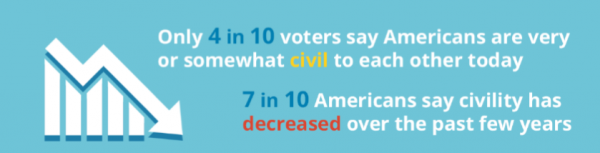
  • 4 in 10 voters say Americans are very or somewhat civil to each other today.
  • 7 in 10 Americans say civility has decreased over the past few years.

The honorary chairs of NICD, a nonprofit organization, are former presidents George H.W. Bush and Bill Clinton.  Among the honorary co-chairs is former U.S. Supreme Court Justice Sandra Day O’Connor.


Financial Cost to Connecticut Smokers Among Highest in the Nation

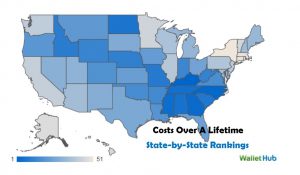
The financial cost of smoking in Connecticut is higher than just about anywhere in the United States.  The total cost over a lifetime per smoker is $2,183,204, the third highest in the nation, and the annual cost per year per smoker of $42,808, is also third highest in the nation, just behind New York and Massachusetts. The lifetime health care cost per smoker, $274,272 in Connecticut, is higher than every state but one, (Massachusetts), and the out-of-pocket cost per smoking individual of $170,513 for smokers living in Connecticut is third highest in the nation.

The data was compiled by the financial website WalletHub, where analysts calculated the potential monetary losses — including the cumulative cost of a cigarette pack per day over several decades, health-care expenditures, income losses and other costs — brought on by smoking and exposure to secondhand smoke. 

Emphasizing that “the negative physical and financial effects of smoking can be significant,” WalletHub noted that Connecticut’s rankings placed it as among the most costly in every category.

Over a lifetime, the financial opportunity cost for smokers living in Connecticut was $1.436,335 and the income loss per smoker was calculated at $286,950.  Other costs per smoker, such as not being able to qualify for homeowner’s insurance discounts for non-smokers, were $15,133.  In each instance, the costs in Connecticut were among the three highest among the 50 states and District of Columbia.

Annual income loss for Connecticut smokers is calculated at $5,626.  Only Maryland, Alaska, New Jersey and D.C. were higher, according to the analysis. Attributable factors included absenteeism, workplace bias or lower productivity due to smoking-induced health problems.  The website also noted that according to a recent study from the Federal Reserve Bank of Atlanta, smokers earn 20 percent less than nonsmokers, 8 percent of which is attributed to smoking and 12 percent to other factors.

For the calculations, WalletHub assumed an adult who smokes one pack of cigarettes per day beginning at age 18, when a person can legally purchase tobacco products in the U.S., and a lifespan thereafter of 51 years, taking into account that 69 is the average age at which a smoker dies. Data used in developing the ranking were collected from the U.S. Census Bureau, Bureau of Labor Statistics, Centers for Disease Control and Prevention, Insurance Information Institute, NYsmokefree.com, Federal Reserve Economic Data (FRED), Kaiser Family Foundation and the Independent Insurance Agents & Brokers of America.

In 2016, the American Lung Association gave Connecticut an “F” grade in its spending of tobacco prevention and control funds.  The ALA points out that 40 states and Washington D.C. spend less than half of what the Centers for Disease Control and Prevention recommends on their state tobacco prevention programs.  Overall, states spend less than two cents of every dollar they get from tobacco settlement payments and tobacco taxes to fight tobacco use.  Each day, more than 2,600 kids under 18 try their first cigarette and about 600 kids become new, regular smokers, according to nationwide data from ALA.

A report on Connecticut's spending on tobacco prevention just over a year ago found that the state was being outspent over 67 times by tobacco companies' marketing efforts - due in large part to the state spending only a small portion of tobacco settlement funds on anti-smoking efforts.

The report, “Broken Promises to our Children: A State-by-State Look at the 1998 State Tobacco Settlement 17 Years Later," said the state was spending $1.2 million in FY 2016 to fight tobacco use. That's compared to an estimated marketing investment of $80.4 million by tobacco companies in Connecticut that year. The national average shows a margin of 20.1 to 1.  At that time, Connecticut ranked 38th in spending on a percentage basis.  The state has consistently spend less than the CDC has recommended.

The annual report was developed by the Campaign for Tobacco-Free Kids (CTFK), a coalition that includes the American Heart Association, the American Cancer Society Cancer Action Network, the American Lung Association, the Robert Wood Johnson Foundation, Americans for Nonsmokers’ Rights, and the Truth Initiative.

A year later, the next report ranked Connecticut last, as Connecticut’s projected spending on smoke cessation and tobacco prevention efforts for FY 2017 dropped to zero.  The report found that 13.5 percent of adult state residents are smokers, and 10.3 percent of high school students smoke.  Just under 5,000 deaths each year are caused by smoking in Connecticut, and 27 percent of cancer deaths are attributable to smoking.  Connecticut’s cigarette excise tax, $3.90 per pack, is the second highest in the nation. It was estimated that the state would collect $519.7 million in revenue this year from the 1998 state tobacco settlement and tobacco taxes, but will spend none of it on tobacco prevention programs.


Was Holocaust News in Connecticut As It Happened? Historians Seek to Find Out

What could Americans have known – in Connecticut and across the country - about the Nazi threat from reading their local newspapers in the 1930s and 1940s? The Connecticut League of History Organizations (CLHO) is looking for some research help to find out. CLHO is participating in History Unfolded, a project of the United States Holocaust Memorial Museum in Washington, DC. It asks students, teachers, and history buffs throughout the United States what was possible for Americans to have known about the Holocaust as it was happening and how Americans responded. “

Participants look in local newspapers for news and opinion about 31 different Holocaust-era events that took place in the United States and Europe, and submit articles they find to a national database, as well as information about newspapers that did not cover events. History Unfolded raises questions for scholars and will inform the Museum’s initiative on Americans and the Holocaust.

CLHO and Connecticuthistory.org are teaming up to introduce this project to Connecticut. On January 26, 2017, (the day before the United Nations Holocaust Remembrance Day) “citizen historians like you can register to join ‘Team Connecticut’ as we explore Holocaust history.”  Research volunteers will learn how to use primary sources in historical research, and challenge assumptions about American knowledge of, and responses to, the Holocaust.

Officials stress that no experience is needed to participate. Individuals may get involved on their own using online newspaper archives, at local libraries or participating museums, or in groups working as members of a research team.

Data from History Unfolded: U.S. Newspapers and the Holocaust will be used for two main purposes: to inform the upcoming exhibition on Americans and the Holocaust at the United States Holocaust Memorial Museum, and to enhance scholarly research about the American press and the Holocaust. Information captured in the general database will be available as a research source for generations to come.

As of January 9, 2017, 920 participants from across the country had submitted more than 6,300 articles from their local newspapers. The articles were published in newspapers located in all 50 states and the District of Columbia, and represent news articles, editorials, letters to the editor, political cartoons, and advertisements. Individuals are urged to check with their local museum, historical society, or library to see if they will be hosting a research group. A classroom or school, a temple or church, a museum or library, or other community organizations can participate. Individuals can also participate.  Organizations can email Liz Shapiro at liz@clho.org or Gregg Mangan, at gmangan@cthumanities.org for additional information.  For more about the national project, visit the project at https://newspapers.ushmm.org/

Median Income for Students Who Attended College in CT Exceeds National Average

Median student earnings among those who attended college in Connecticut and received federal financial aid is between $27,500 and $74,200 ten years after enrollment, with most institutions students’ well above the national average, according to data included in the U.S. Department of Education’s (USDOE) College Scorecard. The earnings data is compiled 10 years after the students enrolled, as part of the College Scorecard that appears on the USDOE website. CT by the Numbers reviewed the data for schools that offer a four-year bachelor’s degree, a view that includes nearly two dozen colleges located in Connecticut.

Nationally, the median earnings for students is $33,400.

Connecticut’s top ten:  Yale University ($74,200); Fairfield University ($68,500); St. Vincent’s College ($61,800); Quinnipiac University ($57,700); Trinity College ($54,700); University of Connecticut ($54,000); Sacred Heart University ($53,900); Albertus Magnus ($52,100); Connecticut College ($51,700); and University of Saint Joseph ($49,500).

The next ten include Wesleyan University ($48,400), University of New Haven ($48,300); University of Hartford ($46,100); Central Connecticut State University ($44,300); Eastern Connecticut State University ($43,400); Western Connecticut State University ($43,400); University of Bridgeport ($42,700); Southern Connecticut State University ($40,700); Charter Oak State College ($39,200) and Post University ($38,600).  Also included in the College Scorecard among bachelor’s degree granting institutions are Lincoln College of New England ($31,800); Mitchell College ($30,400); and Goodwin College ($27,500).

According to the university’s website, 51 percent of Yale students receive need-based financial aid from the University. At Fairfield University, 46 percent of full-time undergraduates receive some kind of need-based financial aid, at Quinnipiac University it is 61 percent, according to U.S. News. Approximately 40 percent of Trinity College students receive need-based financial assistance from the institution; more than 80 percent of UConn students receive some form of financial assistance, with 33 percent of UConn's fall incoming freshmen class receiving a merit-based scholarship, the university website points out.

The College Scorecard, recently updated by the federal agency, is designed “to ensure that students and families have the most up-to-date, comprehensive, and reliable information available on colleges, all in an easy-to-understand format.” The website allows visitors to sort and filter search results to compare schools to assist students in deciding “which college makes the most sense when considering the typical costs, average student loan amount, students’ ability to repay their loans, and their future earnings,” the website materials explain.
The site notes that “experts say that by 2020, two-thirds of all jobs will require a postsecondary education; and college graduates are likely to earn a lot more and experience lower unemployment than those with only a high school diploma.”

State’s First Law Incubators Set to Launch in Hartford, Bridgeport

Connecticut’s first law incubators are due to open early this year at the Center for Family Justice, a Bridgeport-based nonprofit, and at UConn School of Law,  being established to provide affordable legal services to people who need them and help lawyers establish solo practices. The Connecticut Community Law Center, an initiative of the law school and the Hartford County Bar Association, aims to help people who have traditionally been underserved by the justice system: low- and moderate-income clients who don’t qualify for legal aid but can’t afford standard legal fees, the UConn School of Law announced this month.

“Too many people face legal problems concerning essential human needs without proper representation because they fall into the growing access-to-justice gap, between the very poor who qualify for legal aid and those with the financial means to pay a private lawyer,” said attorney Mark Schreier, who was appointed director of the Connecticut Community Law Center. “Standing alone and without professional guidance, those individuals enter our justice system at a tremendous disadvantage.”

The incubator is set to open in February in William F. Starr Hall on the UConn Law campus in Hartford. In addition to the services of the director, the law school will provide office space and support – including training, guidance, and legal research resources – for up to six solo practitioners. The Hartford County Bar Association and the law school faculty will provide mentors, and Greater Hartford Legal Aid will help with training and referrals.

The subsidized working environment will allow participating lawyers to provide legal services at a modest cost that is lower than standard legal fees, with each lawyer setting the fee on a case by case basis. Schreier said he expects cases to involve a wide range of legal problems, including family, consumer, probate, housing, bankruptcy, employment, immigration, and other general civil matters.

In Bridgeport, the Center for Family Justice, a Bridgeport-based nonprofit that provides services to trauma survivors affected by domestic violence, sexual assault or child abuse, will house the incubator.

The Center is working with Connecticut law schools to help build the center’s legal apparatus, Fairfield County Business Journal reported, with several professors from Quinnipiac University on the steering committee to help develop the parameters of the program.  Four attorneys are being sought.

Lawyers in the incubator program at the Center will provide the legal advices services and representation needed by victims of domestic violence, including restraining orders, divorce proceedings, child custody and support, housing and immigration issues.  An Open House was held in September to interest local attorneys in participating.

“A legal incubator is like a business incubator,” Jennifer Ferrante, who joined the Center for Family Justice staff as the coordinator for the new service, told the Journal.  At the center’s office at 753 Fairfield Ave., “We are going to be housing four attorneys here on site,” she said. Two of the first attorneys who applied and were accepted in the program are recent law school graduates.

The American Bar Association counts more than 60 lawyer incubators around the country, three-fourths of them established since 2014. The Connecticut Community Law Center and the Justice Legal Center at the Center for Family Justice in Bridgeport, will be the first in Connecticut.

Participating lawyers will spend 18 to 24 months at the Connecticut Community Law Center before moving on with their practices. The training and experience they receive will not only help them jump-start their practices, it will spread seeds of innovation in the delivery of legal services at an affordable cost, UConn Law Dean Timothy Fisher said.

Clients who qualify for services at the Hartford incubator will be those whose incomes exceed the limits for legal aid but fall within three times the federal poverty level. For a family of four, this would mean a maximum household income of $72,900. Clients wishing to apply for services may do so beginning in February, when information will be available at the center’s website: cclc.law.uconn.edu.

“I think it will give the low- and moderate-income community a real chance in getting their legal needs met and ending their cycles in abuse and poverty,” Ferrante said of the new Bridgeport center.

Planning for the legal incubator has been ongoing since 2009. Although the Center for Family Justice is focused on serving six Fairfield County municipalities – Bridgeport, Easton, Fairfield, Monroe, Stratford and Trumbull – it also welcomes those seeking help from elsewhere in the state, officials said.

CT Council Urges Change in Focus to Combat Human Trafficking in State

Recognizing that the sex industry – especially when it involves underage children – is a form of human trafficking, the Connecticut Trafficking in Persons Council (TIP) is making several legislative recommendations aimed at shifting the onus for the crime of prostitution from the prostitute to “the demand side” – the buyers of sex. On National Human Trafficking Awareness Day, the TIP Council released its Annual Report and recommendations for the state legislature, and launched a new initiative and website, www.enddemandct.org.

“Conversations about sex trafficking almost exclusively disregard the role of the individual buying sex—the ‘john,’” says Jillian Gilchrest, chair of Connecticut’s Trafficking in Persons Council and Director of Health Professional Outreach at the Connecticut Coalition Against Domestic Violence. “The sex trafficking of Connecticut’s women, men, and children is driven by demand for the commercial sex acts they perform. Put simply, without ‘buyers’ to purchase sex there would be no sex-for-pay industry. So, we are embarking on an ‘End Demand’ campaign to bring much needed attention to those buying sex who create the demand that fuels sex trafficking.”

The TIP report questions why, since Connecticut enacted the felony crime of patronizing sex from a minor in 2013, there have been no arrests or convictions for the felony. Significantly, DCF has seen an increase in the trafficking of children; currently, there are 456 referrals for children at high risk of trafficking.

The report also calls on Connecticut lawmakers, state agencies, and advocates to work together to better understand the demand side of sex trafficking in order to effectively prevent this crime from happening. This begins, the report explains, with creating awareness, since more often than not, those buying sex are left out of conversations about human trafficking. With the use of social media, traditional media, and advertising, the TIP Council indicated it aims to raise public awareness about the individuals in our state who choose to pay to sexually abuse children and exploited individuals.

The report indicates that law enforcement and State’s prosecutors argue that those buying sex with children and exploited adults can be charged with other crimes, such as sexual assault in the second degree or risk of injury. The Council will be looking into this, the report notes, to better understand if buyers of sex are being arrested, and if not, why.

In addition, the report outlined that with over 100 members, the Department of Children and Families (DCF) Human Anti-trafficking Response Team (HART) comprises multi-department, multiagency partners, various levels of law enforcement, the provider community, faith-based network, among others. In 2015, DCF received 133 referrals of youth who were at risk or confirmed victims of human trafficking. As of September 2016, DCF has received 151 referrals of youth who were at risk or confirmed victims of human trafficking, the report indicated.

Tammy Sneed, Director of Gender Responsive Adolescent Services at Department of Children and Families and co-chair of DCF’s Human Anti-Trafficking Response Team, said: “Reports of children suspected to be victims of domestic minor sex trafficking are increasing every year -- and, in 2016, there were just under 200 such referrals. For every child victim, the number of buyers on a given day in Connecticut is unfathomable. Some children report 10 to 15 buyers per night, which leads us to estimate that a minimum of 2,000 buyers in Connecticut bought sex from children last year.”

In the report, the Council recommends:

  • the Connecticut Sentencing Commission, Special Committee on Sex Offender, Subcommittee on Sex Offender Sentencing consider whether to include 53a-192a. Trafficking in persons and 53a-83(c), Patronizing a prostitute when such other person is under the age of 18, to the Registration of Sex Offender statutes;
  • further discussion and inquiry on why there have not been any convictions under Sec. 53a-83(c), Patronizing a prostitute under the age of 18, effective 2013;
  • further discussion on increasing the penalty for Sec. 53a-83(c), patronizing a prostitute under the age of 18, to align with similar sexual crimes against children; and
  • further discussion on revising Sec. 53a-192a, Trafficking in persons, to include recruitment, harboring, transportation, provision, obtaining, patronizing, or soliciting of a person for the purpose of a commercial sex act and increasing penalties to recognize the severity of the crime.

The Trafficking in Persons (TIP) Council is convened by the Commission on Women, Children and Seniors and chaired by the Connecticut Coalition Against Domestic Violence (CCADV). The Council was formerly run by the Permanent Commission on the Status of Women. The council consists of members from a diversity of backgrounds, including representatives from state agencies, the judicial branch, law enforcement, motor transport and community based organizations that work with victims of sexual and domestic violence and immigrants and refugees, and address behavioral health needs and social justice and human rights.

“Demand keeps sexual exploitation and trafficking profitable,” says Beth Hamilton, associate director of the Alliance to End Sexual Violence (formerly CONNSACS). “We’ve started seeing the criminal justice system hold traffickers responsible, but we do not often see the people who purchase sex being held accountable for their role in keeping the industry thriving.  If we want to end commercial sexual exploitation, we need to focus on ending demand and creating survivor-centered services.”

In Connecticut, a person is guilty of trafficking in persons when such person compels or induces another person to engage in sexual contact or provide labor or services by means of force, threat of force, fraud or coercion. Anyone under the age of 18 engaged in commercial sexual exploitation is deemed a victim of domestic minor sex trafficking irrespective of the use of force, threat of force, fraud or coercion.

The report points out that “For many people, sex and labor trafficking bring visions of foreign places and people, but this idea is false. In reality, sex and labor trafficking are happening in the state, to Connecticut residents.”

College Debt Continues to Climb; Connecticut Students Graduate with 3rd Highest Loan Debt in US

Nearly two-thirds of students who graduated from public and nonprofit colleges in Connecticut in 2015 had student loan debt averaging $34,773, the third highest level in the nation.  The state ranked 14th in the percentage of students graduating with debt, according to data compiled by The Institute for College Access & Success (TICAS). Student debt continues to rise for new graduates, across the country and in Connecticut.  Student debt at graduation ranged from $15,521 for Yale University graduates to $47, 715 at Sacred Heart University and $47,873 at Quinnipiac University.

At public and nonprofit colleges in 2015, seven in 10 graduating seniors (68%) had student loans. Their average debt was $30,100: up four percent compared to the Class of 2014. About one-fifth of 2015 graduates’ debt (19%) was in private (non-federal) loans, which are typically more costly and provide far fewer consumer protections and repayment options than federal student loans, the Institute pointed out.

At institutions across the country, state averages for debt at graduation in 2015 ranged from $18,850 to $36,100, and new graduates’ likelihood of having debt ranged from 41 percent to 76 percent.

In 12 states, including Connecticut, average debt was more than $30,000 – up from six states the year before. High-debt states remain concentrated in the Northeast and Midwest, with low-debt states mainly in the West. Average debt at the college level varies even more, from a low of $3,000 to a high of $53,000, and the share graduating with loans ranges from seven percent to 100 percent.

“Student debt is still rising, and the typical college graduate now leaves school with over $30,000 in loans,” said TICAS president Lauren Asher. “We need to make college more affordable and debt less burdensome for students and families.”

The states with the highest debt levels for graduating students, according to the TICAS study, are New Hampshire ($36,101); Pennsylvania ($34,798); Connecticut ($34,773); Delaware ($33,849) and Rhode Island ($32,920).  At the other end of the spectrum, students graduation from colleges in Oklahoma have the lowest average debt ($24,849), followed by Washington, Arizona, Nevada and Hawaii.


Career Services Grows in Importance to College Students, Survey Finds

While 52 percent of U.S. college graduates report visiting the career services office at least once during their undergraduate experience, they are equally likely to say their experience was "not at all helpful" (16%) as they are to say it was "very helpful" (16%), according to a new national survey of college graduates.  Overall, just under eight in 10 graduates who visited a career services offices describe the experience as “very helpful,” "helpful" or "somewhat helpful." The findings are outlined in the Gallup-Purdue Index Report 2016, released last month, based on more than 11,000 interviews with U.S. adults aged 18 and older with at least a bachelor's degree, conducted Aug. 22-Oct. 11, 2016. The study was conducted as part of the third year of the Gallup-Purdue Index -- a nationally representative survey that has interviewed 70,000 different college graduates over three years.

The survey found that graduates who recall having a high-quality experience with their career services office are markedly more likely to rate their college experience positively. For example, graduates who rated their experiences with career services as very helpful are 5.8 times more likely to strongly agree that their university prepared them for post-collegiate life, nearly three times more likely to "strongly agree" that their education was worth, and 3.4 times more likely to recommend their alma mater.

The campus Career Services office has grown increasingly important to students.  The survey found that recent college graduates are more likely than those who graduated earlier to report visiting their school's career services office. Sixty-one percent of graduates who received their degree since 2009 say they visited the career services office at least once during their undergraduate experience, while 32 percent report they did not (7 percent were unsure).

The results could stem from substantial changes in college students' interactions with career services over time and the fact that colleges' career services' offerings have evolved dramatically in past decades. It is also possible that a larger percentage of earlier graduates may be unable to recall their experience with the career services office, Gallup points out.

Gallup notes that Americans with a bachelor's degree can expect to earn about $1 million more than those with a high school diploma over the course of their careers. However, the unemployment rate for college graduates in the U.S. aged 25 and older is now nearly double what it was in 2000, compared with an overall employment rate that is only one percentage point higher in 2016 than it was in 2000.

As a result, the Gallup organization observes, “schools must adopt new programs and policies to better prepare their graduates for a changing and competitive job market.”  Career services are apparently an increasingly important part of that changing landscape.

Career services offices often provide this support, which can include stimulating student interest in disciplines they had previously not considered, helping students select a major field of study, helping students secure employment while enrolled in college, and preparing students for finding a job upon graduation through mock interviews and resume workshops.