
Combating Opioid Epidemic in Connecticut Schools - Officials Team Up for Educators Workshop
/The Connecticut Association of Schools (CAS), in partnership with the U.S. Attorney's Office, the FBI, the Drug Enforcement Agency (DEA), and victims of drug abuse, will be offering a one-half day workshop for administrators, teachers, and counselors on the devastating opioid epidemic that is growing in severity in Connecticut an across the country. This video-based educational program is designed for high schools and geared specifically for teens and adolescents, officials explain, and will be accompanied by an educator’s discussion guide. The guides will be available for participants to immediately use in a variety of educational settings.
Projections for 2016 by the State Medical Examiner indicate that close to 900 people died of accidental drug overdoses in Connecticut. That is almost three times the number of people who died in car accidents last year, organizers point out. Even more devastating, they note, is the fact that a majority of these deaths are of young people ages 18 to 25, many of whom developed an addiction to opioids after misusing prescription pills while in their teens or early adolescence. Sports injuries, dental pain and other illnesses are common reasons for the original prescription.
According to the Centers for Disease Control and Prevention, opioids were involved in 33,091 deaths nationwide in 2015, and opioid overdoses have quadrupled since 1999.Significant increases in drug overdose death rates from 2014 to 2015 were primarily seen in the Northeast and South Census Regions. States with statistically significant increases in drug overdose death rates from 2014 to 2015 included Connecticut, Florida, Illinois, Kentucky, Louisiana, Maine, Maryland, Massachusetts, Michigan, New Hampshire, New Jersey, New York, North Carolina, Ohio, Pennsylvania, Rhode Island, Tennessee, Washington, and West Virginia. In Connecticut, between 2014 and 2015 the rate increased by 25 percent. 
Recognizing that law enforcement is only one facet of the solution, the U.S. Attorney’s Office is fighting this epidemic on several fronts, including criminal prosecution and outreach to schools for prevention, officials said. The office has formed a Heroin Education Action Team (HEAT), which includes parents of local overdose victims, to further assist in this effort.
“Opioid Epidemic in CT – Stemming the Tide” will take place on March 3, 2017, 8:30 to 11:00 a.m., at the CAS-CIAC Conference Center in Cheshire. Registration deadline is February 24, 2017; the cost is $15.00
CAS officials are also calling for schools to show, “as soon as possible, and no later than the end of the school year,” videos about the crisis.
“Please ensure that every student in your high school sees at least one of the following two films,” the association urges:
- 1) a 15-minute film called The Opioid Crisis Hits Home: Stories from Connecticut that can also be used to educate educators, parents and the general public about the opioid epidemic; and
- 2) the FBI/DEA documentary film Chasing the Dragon: The Life of an Opiate Addict, which is 45-minutes long and accompanied by an educator’s discussion guide geared specifically to teens and adolescents.
Since last September, a number of Assistant U.S. Attorneys have partnered with parents of overdose victims, young recovering addicts, FBI, DEA, and local law enforcement to facilitate Chasing the Dragon presentations at high schools in Milford, New Haven, Danbury, Plymouth, Shelton, East Hartford and New Fairfield.
The films “are provided as a public service for the sole purpose of saving lives,” officials underscore. School officials can schedule an opioid awareness presentation by contacting Assistant U.S. Attorneys Vanessa Avery or Robert Spector at 203-821-3700.
The Connecticut Association of Schools, a non-profit, tax-exempt educational organization, has grown to represent well over 800 of Connecticut’s public and parochial schools.

 The researchers say it’s important to look at the context in which foods are presented as well as the frequency, observing that the people they interviewed rarely noticed that food was mentioned in children’s books, nor what messages were being conveyed, UConn Today reported.


 Eligibility Requirements for Book Awards to be made in 2017:



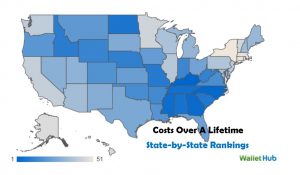
 The report, “Broken Promises to our Children: A State-by-State Look at the 1998 State Tobacco Settlement 17 Years Later," said the state was spending $1.2 million in FY 2016 to fight tobacco use. That's compared to an estimated marketing investment of $80.4 million by tobacco companies in Connecticut that year. The national average shows a margin of 20.1 to 1. At that time, Connecticut ranked 38th in spending on a percentage basis. The state has consistently spend

 As of January 9, 2017, 920 participants from across the country had submitted more than 6,300 articles from their local newspapers. The articles were published in newspapers located in all 50 states and the District of Columbia, and represent news articles, editorials, letters to the editor, political cartoons, and advertisements.
Individuals are urged to check with their local museum, historical society, or library to see if they will be hosting a research group. A classroom or school, a temple or church, a museum or library, or other community organizations can participate. Individuals can also participate. Organizations
 can email Liz Shapiro at

 uded in the College Scorecard among bachelor’s degree granting institutions are Lincoln College of New England ($31,800); Mitchell College ($30,400); and Goodwin College ($27,500).
 The College Scorecard, recently updated by the federal agency, is designed “to ensure that students and families have the most up-to-date, comprehensive, and reliable information available on colleges, all in an easy-to-understand format.” The website allows visitors to sort and filter search results to compare schools to assist students in deciding “which college makes the most sense when considering the typical costs, average student loan amount, students’ ability to repay their loans, and their future earnings,” the website materials explain.