Municipal Leaders to Urge Community Involvement at Rell Center Forum
/Municipal leaders from Essex, Hampton, Norwich, West Hartford, and Wethersfield will gather to discuss how citizens can make a difference in local communities at a panel discussion, “Better Government Begins at Home: How to Make a Difference in Your Community,” presented by the Governor M. Jodi Rell Center for Public Service at the University of Hartford.
The discussion, to be held on Thursday, October 12, at 6 p.m. in the Harry Jack Gray Center’s 1877 Club on university campus, will include:
- Anne Gruenberg, the President of the Connecticut Association of Boards of Education and a member of the Hampton Board of Education;
- Norwich Mayor Deb Hinchey;
- Essex First Selectman Norm Needleman;
- former Wethersfield Planning and Zoning Commission Chairman Rich Roberts.
West Hartford Town Manager Matt Hart will serve as moderator and lead a discussion about the importance of public involvement in local politics and how residents can take an active role in town governance. Hart became town manager this summer, moving from Mansfield, where he was town manager since 2006.
Deb Hinchey was elected in November of 2013 and took the oath of office in December of 2013, becoming Norwich’s first female Mayor. Prior to being elected Mayor, Hinchey served on the city council. She is not seeking re-election this year. Norm Needleman is serving his third term as First Selectman, and is a successful local business owner. He is currently seeking re-election.
Attendance at the program is free. More information is available at www.hartford.edu/rellcenter or 860.768.4234.
 The program will focus on the many ways that individuals can get involved in local government service. Some communities, such as Wethersfield, list individuals serving their local communities on the town website, also including vacant positions that need to be filled.
The mission of The Governor M. Jodi Rell Center for Public Service at the University of Hartford is to provide a community and academic forum for the discussion of ethics in government, the importance of civil discourse in politics, and citizen involvement in public service and government.
This fall, Leslie Smith of Hartford was named director of the Rell Center. Smith has taught American government at the University of Hartford since 2000 and directed the Politics, Economics, and International Studies Department’s internship program since 2005. The Center seeks to encourage students and others to pursue careers in public service and to assist in providing a clearinghouse for student public service internships.

 Food and beverage companies often target marketing for nutrient-poor products such as candy, sugary drinks, snack foods, and fast-food restaurants to Hispanic audiences, including youth, the researchers state. They cite previous research that has documented disproportionate exposure to unhealthy food marketing by Hispanic youth in their communities and on TV, but theirs is the first examination of the phenomenon on the internet.
 g vulnerable populations,” according to the publication’s website, “with the goal of providing optimal outcomes and ultimately health equity for all.” The journal intends to provide coverage ranging from translational research to prevention, diagnosis, treatment, and management of disease and illness, in order to serve as a primary resource for organizations and individuals who serve these populations at the community, state, regional, tribal, and national levels.


 Orders. Most historians agree the Fundamental Orders are significant, but the state of Connecticut decided in 1959 to call itself the Constitution State based on the premise that the Fundamental Orders were the first constitution in North America.

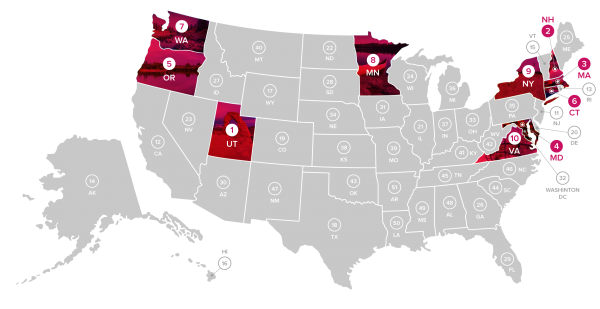
 The analysis points out that a main reason why people don’t have access to broadband internet is due to a lack of income. Cited is a Pew Research poll that found 23 percent of people making under $30,000 per year don’t use the internet, possibly because of the high price for something they don’t consider a basic need. Most rural schools across the country still lack access to fiber and pay more than twice as much for bandwidth.

 There are a series of steps that your body goes through to develop immunity through vaccination, the


 In Stamford, CHDI assisted in training school social workers and psychologists to deliver

 The National Institutes of Health estimates that between six to 17 percent of school-age children have some form of dyslexia, although not all of those students have been identified by their schools.