Public Access to State Government Data Would be Strengthened by Proposed Law
/“If we want better government, we need better data.” That succinct observation by Michelle Riordan-Nold, Executive Director of the Connecticut Data Collaborative, summed up the push for legislation that would codify in state law an “expectation of increased access to state government public data.”
The proposal, House Bill 5172, supports the ongoing work of the State’s Open Data Initiative, which is currently maintained by the state Office of Policy and Management. Riordan-Nold, in supportive testimony last week, said passage of the bill would be “an important step in institutionalizing the state’s commitment to public open data sharing.” She noted that Connecticut has been a national leader in its commitment to open data, adding that passage of the bill was necessary to “continue the momentum.”
The Connecticut Data Collaborative works with state agency staff, nonprofit staff and community organizations. Riordan-Nold said that “data users from all sectors across the state are hungry for unbiased, high quality public data,” pointing out that “the increased availability of public data from state agencies will not only aid many individuals, organizations and researchers in their daily work, it will also drive programming decisions, support funding opportunities and illuminate the health and well-being of our residents and municipalities.”
State Comptroller Kevin Lembo told the Government Administration Committee that “Making raw data regarding state agency performance and operations available to the public increases accountability. Access to data allows third parties in the public, including journalists and academics, to review and critique government performance, resulting in a more efficient and responsive government.”
Lembo added that passage of the bill would “affirm Connecticut’s commitment to open government. It allows existing transparency efforts to evolve and grow, providing easy access to public data while increasing government accountability and responsiveness.” The Comptroller’s Office has a number of initiatives on its website that provide easy public access to data, and Lembo said passage of the bill would ensure that the data necessary for the sites would continue to be available to the public.
State Consumer Counsel Elin Swanson Katz added that the bill “provides the confidence and volume of data that users require through the open access to the quality and unbiased public data that H.B. 5172 ensures.” She said the bill “will allow for increased agency accountability and responsiveness in order to improve public knowledge of the state government and its operations, by safely providing timely data that the state makes easily accessible to the public.”
In his testimony before the committee, David Wilkinson, Commissioner of the Office of Early Childhood, said “by advancing better data systems, customer feedback mechanisms, and outcomes-driven contracting, we will get smarter and spend smarter, becoming more cost-effective as we achieve better results.” A recent report by Connecticut Voices for Children pointed out that “integrated data would improve reporting and decision making within agencies, but public access to data is also vital.” The report also noted that “the state needs more holistic and actionable data on health and social determinants of health in order to work towards health equity.”
The bill would codify Governor Malloy’s Executive Order 39, signed in 2014, which requires executive branch agencies to regularly publish data that is of high value to the public.
On behalf of the Hartford Foundation for Public Giving, Research and Community Indicators Director Scott Gaul testified in support of the provisions in HB 5517 that would establish the Connecticut Data Analysis Technology Advisory Board and encouraged the state to involve philanthropy and nonprofits on the Board. In recent testimony before the Commission on Fiscal Stability and Economic Growth, the Foundation asked the Commission to prioritize the development and coordinate use of high-quality research and data to ensure that limited public and private resources support best practices and policies.


 On campus will be:

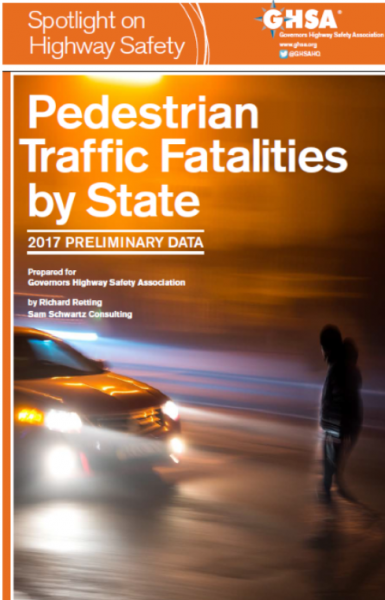
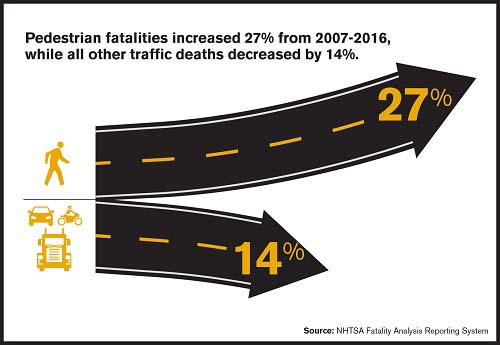 The total number of multimedia messages sent has more than tripled since 2010. The report also suggests a possible link with marijuana use. According to the report, the seven states (Alaska, Colorado, Maine, Massachusetts, Nevada, Oregon, Washington) and DC that legalized recreational use of marijuana between 2012 and 2016 reported a collective 16.4 percent increase in pedestrian fatalities for the first six months of 2017 versus the first six months of 2016, whereas all other states reported a collective 5.8 percent decrease in pedestrian fatalities.

 The most expensive average elementary school tuition cost is also on the East Coast, and Connecticut leads the way. The average private elementary school tuition is $13,412, with Massachusetts ($10,822), New Hampshire ($10,773), Virginia ($10,755), and New York ($10,513) rounding out the top five.
 In a
In a 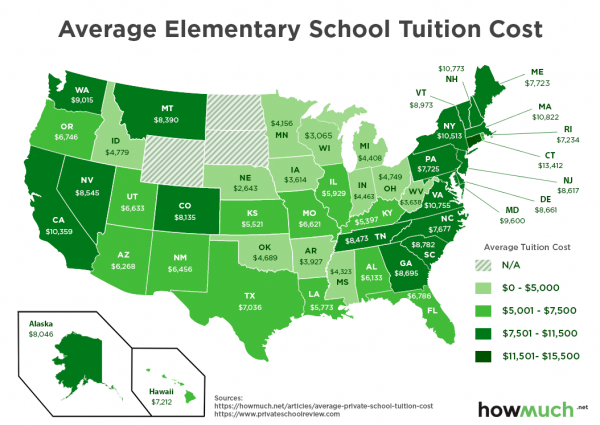

 The report defines Eastern Connecticut as the Community Foundation of Eastern Connecticut service area: 42 towns that include 453,000 people, 227,000 women. The population of the region is 80% white, 9% Latina, 4% Black and 4% Asian. Approximately 33,700 residents, or 7 percent, are foreign born. Looking ahead, the report noted that the population of women ages 65 and up is projected to grow significantly over the next decade; estimated to increase 44 percent by 2025.


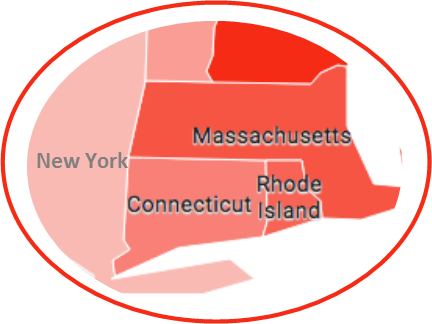 Even in advance of the merger plan, the Board of Regents has been extending lower tuition offers in every direction, reaching out to students in Massachusetts, Rhode Island, New York and even New Jersey, making offers that the Regents hope will be tough to refuse.
 When Bloomberg Businessweek ranked the nation’s business schools offering two-year full-time MBA programs, Harvard, the University of Pennsylvania’s Wharton School and the MIT Sloan School of Management topped the list, issued in late-2017. Among Connecticut business schools, Yale University ranked at number 16 and the University of Connecticut placed at number 66. Yale dropped two places from the previous year, UConn dropped three. In 2015, Yale ranked #11. A total of 85 schools nationwide received rankings.