LED Street Lights Being Installed in CT Towns Even As Health Concerns Are Raised
/The American Medical Association’s new policy stand “against light pollution and public awareness of the adverse health and environmental effects of pervasive nighttime lighting,” comes as municipalities across Connecticut and the nation are replacing longstanding lighting systems with LED lights in an effort to save money and improve safety. The AMA however, is warning that the rapid pace of change could bring long-term detrimental health and safety effects. The AMA has noted that “it is estimated that white LED lamps have five times greater impact on circadian sleep rhythms than conventional street lamps. Recent large surveys found that brighter residential nighttime lighting is associated with reduced sleep times, dissatisfaction with sleep quality, excessive sleepiness, impaired daytime functioning and obesity.”
The organization noted earlier this month that “approximately 10 percent of existing U.S. street lighting has been converted to solid state LED technology, with efforts underway to accelerate this conversion.” The AMA’s Report of the Council on Science and Public Health on “Human and Environmental Effects of Light Emitting Diode (LED) Community Lighting” cautioned that “white LED street lighting patterns also could contribute to the risk of chronic disease in the populations of cities in which they have been installed. Measurements at street level from white LED street lamps are needed to more accurately assess the potential circadian impact of evening/nighttime exposure to these lights.
The AMA recommendations were developed to “assist in advising communities on selecting among LED lighting options in order to minimize potentially harmful human health and environmental effects”:
- an intensity threshold for optimal LED lighting that minimizes blue-rich light
- all LED lighting should be properly shielded to minimize glare and detrimental human health and environmental effects,
- consideration should be given to utilize the ability of LED lighting to be dimmed for off-peak time periods.
The concerns are not new, but they are receiving greater attention in the wake of the AMA’s formal community guidance and policy position, adopted at the organization’s annual conference in Chicago in mid-June.
Communities in Connecticut that have taken steps to switch to LED lighting include New London, Berlin, Plainville, East Hartford, Rocky Hill, Stamford, Southington, and Cheshire, according to published reports. An article authored by UConn professor of Community Medicine and Health Care Richard G. Stevens, highlights red flags being raised by the AMA regarding the safety of LED lighting being installed in cities around the country. The article first appeared on an international website, theconversation.com, and has since appeared on sites including CNN. Stevens, an expert on the health impact of electric lighting, has raised concerns for more than a decade.
The Illuminating Engineering Society, founded in 1906 and based in New York, noted in a position statement that “exposure to optical radiation affects human physiology and behavior, both directly (acute effects including melatonin suppression, elevated cortisol production, increased core temperature) and indirectly (resetting the internal circadian body clock). There is no confirmation that typical exposures to exterior lighting after sunset lead to cancer or other life‐threatening conditions.” The Illuminating Engineering Society of North America (IES) is described as “the recognized technical authority on illumination.” The IES website indicates that the organization was “not represented in the deliberations leading to [the AMA document]. We intend to contact the AMA and work with them to ensure that any lighting related recommendations include some discussion with the IES.”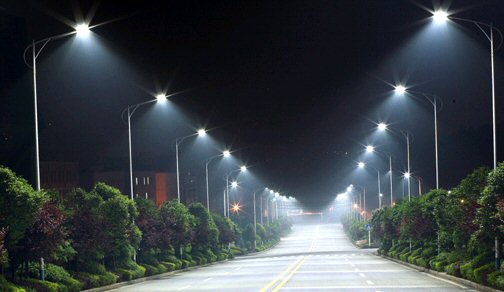
ANSES, the French Agency for Food, Environmental and Occupational Health & Safety, has published a report entitled (in English): " Lighting systems using light-emitting diodes: health issues to be considered," which focuses squarely on potential problems caused by LED lighting. The LEDs Magazine website indicates that the full report is available in French only, but the report summary (in English) says that risks have been identified concerning the use of certain LED lamps, raising potential health concerns for the general population and professionals.
"The issues of most concern identified by the Agency concern the eye due to the toxic effect of blue light and the risk of glare," says the report, adding that the blue light necessary to obtain white LEDs causes "toxic stress" to the retina.
Back in 2011, a comprehensive report by Carnegie Mellon University’s Remaking Cities Institute (RCI) on the city of Pittsburgh’s transition to LED street lighting indicated that “Glare is an issue with LED street lighting. The RCI research team’s literature review and interviews with manufacturers and municipal agencies in cities with LED replacement projects indicate that the emphasis is being placed almost entirely on energy savings, to the exclusion of visual quality issues. The substantial glare caused by LEDs is not typically included as a measurable criteria in evaluation processes, and when it is, the tools of measurement are inadequate. As a result, glare persists as an issue.”
That report also noted that “the public is informed that LEDs save energy told that they are better in quality (often false) and that more accurate in color (often false).” In addition, the 113-page report indicated that “While the use of bright lights is believed to reduce accidents, it actually creates dangerous conditions for drivers, especially when night vision is affected by sharp differences in illumination. Bright lights are particularly hazardous for older persons because the human eye’s accommodation reflex slows with age.”
Regarding health concerns that have been raised, the report indicates that “Bright white light suppresses melatonin, the hormone that regulates tumors. Blue light wavelengths are to blame, because they ‘reset’ the circadian clocks of humans, animals, and plants even at very low levels of blue light. This might account for the significantly higher rates (30-60%) of breast and colorectal cancer in night shift workers.”
Some have compared the growing controversy regarding LED lighting to the ongoing debate in towns around the country regarding the use of crumb rubber from recycled tires as fill for sports turf fields. Federal, state, and municipal governments have weighed in on the discussion, but even as health concerns continue to be raised, fields using the materials continue to be installed and used by youth in Connecticut and across the country. The U.S. Environmental Protection Agency recently launched a research project aimed at providing better answers on that safety question.
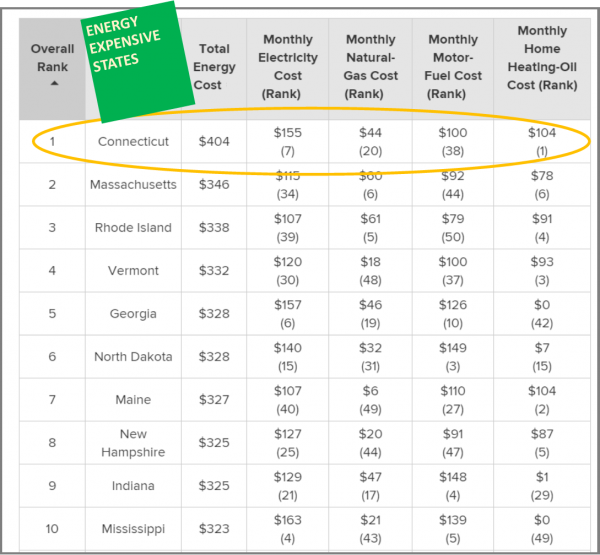
 necticut ranked as the most energy expensive state mainly due to its high retail prices for energy,” analyst Jill Gonzalez told CT by the Numbers. “The state has the third highest retail price for electricity and heating oil at $0.20 per kWh and almost $4 per gallon, respectively. Natural gas isn't cheap either, ranking 14th highest, at $14 per thousand cubic feet. These prices paired with high heating consumption in the winter months put Connecticut on top of these rankings."
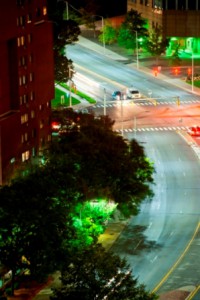 In addition to its impact on drivers, the AMA notes that blue-rich LED streetlights operate at a wavelength that most adversely suppresses melatonin during night. It is estimated that white LED lamps have five times greater impact on circadian sleep rhythms than conventional street lamps, the AMA indicated. Recent large surveys, according to the AMA, found that brighter residential nighttime lighting is associated with reduced sleep times, dissatisfaction with sleep quality, excessive sleepiness, impaired daytime functioning and obesity.
 The Conversation website is a collaboration between editors and academics to provide "informed news analysis and commentary that’s free to read and republish." It
 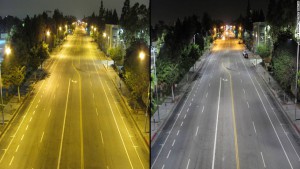 PHOTO: Traditional street lighting (left) vs. LED lighting (right).




 Also making the list were Evariant of Farmington, a software developer, at number 272, and HP One, a software company in Trumbull at number 307. Biopharmaceutical company Alexion, in the midst of moving its headquarters from Cheshire to New Haven, was ranked at number 349, and etouches, a Norwalk software company ranked at number 357. Rounding out the Connecticut companies on the list is Wallingford oil extraction technology company APS Tecnhology, at number 466.
 rough technology’s continued disruption and proliferation across industries,” said Sandra Shirai, principal, Deloitte Consulting LLP and US technology, media, and telecommunications leader.
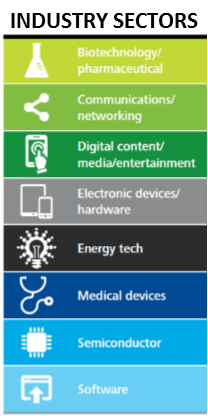 Overall, 283 of the 500 companies were in the software sector, and 67 percent of the 500 companies have received venture capital funding at some point in their company’s history. Topping the list was StartApp, with a growth rate of 21,984 percent from 2011 to 2014. Based in New York and founded in 2010, StartApp provides a free monetization and distribution platform that integrates with applications on mobile devices.


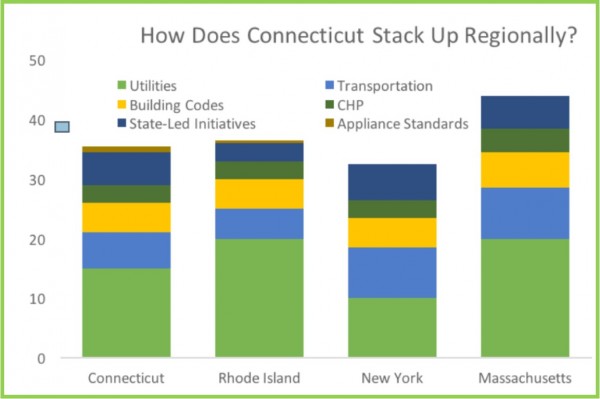
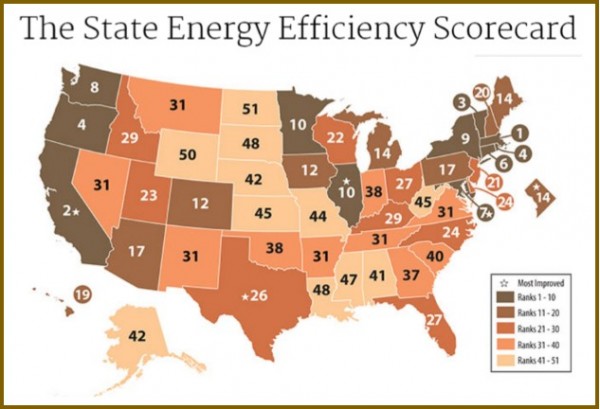 nd compliance efforts, earned 3 points out of 4 for its combined heat and power policies and programs, 5.5 out of 7 points for state-led energy efficiency initiatives, and 1 point out of 2 for appliance standards.
 olar power in Connecticut has grown 221 percent per Capita since 2012, ranking the state 13th in the nation, the report points out. The top solar growth states in the nation, like Connecticut, have adopted renewable energy requirements, strong laws allowing solar customers to sell their excess power to the electric grid, and other policies encouraging growth of the industry, the report indicates. The industry is also adding jobs much faster than the overall economy, employing 1,600 people in Connecticut last year, according to
  ."
."
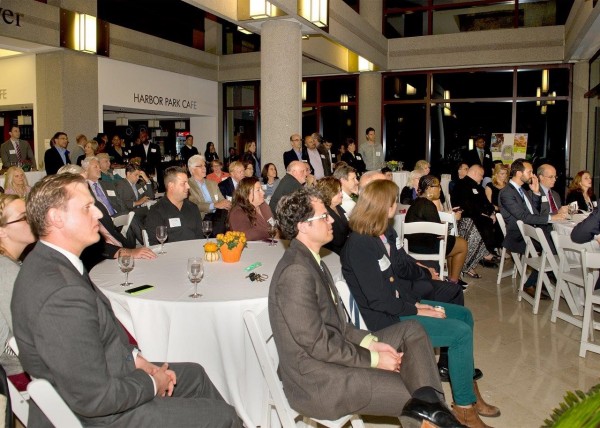 “I would like to congratulate all of the members of Stamford 2030 for joining together to make vital changes for our community," said Stamford Mayor David Martin. "The partners in Stamford 2030 have really stepped up for the success and sustainability of our city and the surrounding area. And they are not alone. For our part, the city is committed to improving storm resiliency and moving forward with the Energy Improvement District. We believe these efforts are tied to our economic development and ability to attract people to Stamford while conserving important natural resources, all necessary for sustained growth and prosperity.”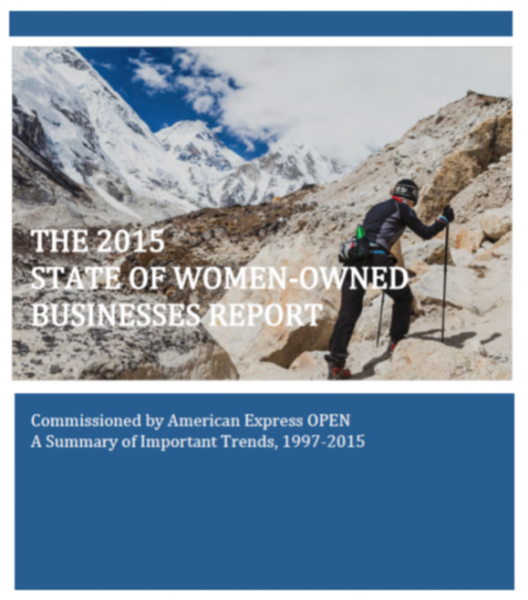
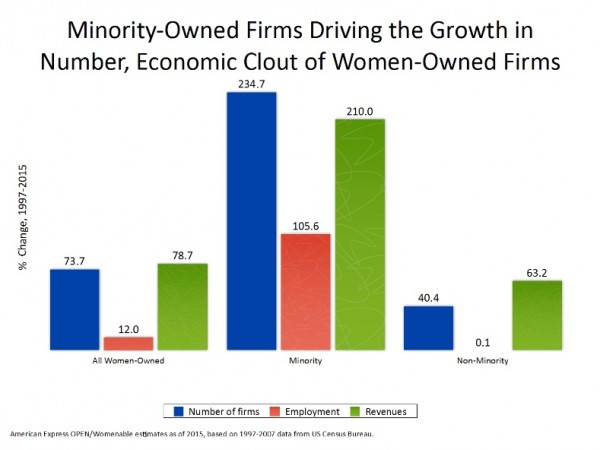
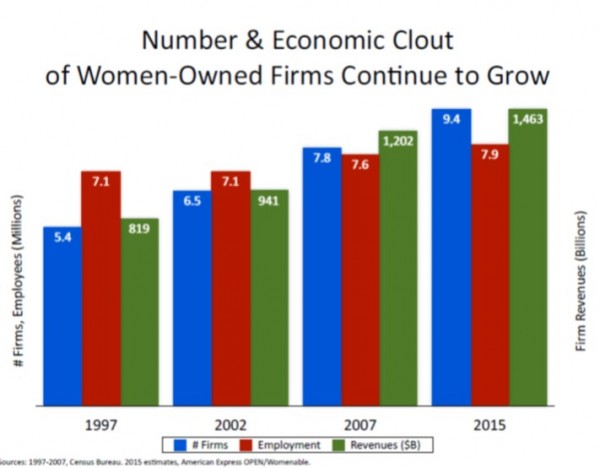 Of the nation’s women-owned businesses, African-American women own 1.3 million, Latinas 1 million, and Asian women more than 700,000. Businesses owned by women of color tend to be smaller in terms of their average employment and revenue, the report indicated. But their growth, both in numbers and in their economic clout—the combined average of their growth, revenue, and employment—continues to outpace that of their white peers, the data indicates.
 ow, there are an estimated 3.1 million minority women-owned firms, representing one in three (33 percent) women-owned firms,” pointed out Julie Weeks, President and CEO of

 Fixed route transportation operates along a prescribed route and on a fixed schedule, and includes buses and light rail. In 2014 in Connecticut, buses provided over 43 million passenger trips and rail provided over 39 million passenger trips. Demand-responsive transportation provides routes and scheduling more individually tailored to the needs of the user. The Americans with Disabilities Act (ADA) requires transit agencies to provide paratransit service, subject to certain parameters, to people with disabilities who cannot use the fixed route services. Paratransit ridership in Connecticut in fiscal year 2014 under the ADA totaled over one million rides, and dial-a-ride ridership neared 100,000 rides.
 ommunities are located within a reasonable distance of quality, dependable public transportation.” In addition, policy makers were urged to “identify funding streams to sustain, coordinate, grow and make more convenient both fixed route and demand-responsive transportation options (including providing door-to-door service), and provide technical assistance to support regionalization efforts.”