Will CT School Buses Be Required to Add Seat Belts? New Federal Policy May Spur Change

When word came down from the National Highway Traffic Safety Administration last week that the longstanding preference for school buses without three-point lap/shoulder seat belts was being reversed, one Connecticut town could say: been there, done that. Wilton, which has about 4,200 school children on busses each day, has had the three-point safety belt system installed on its school busses since August 2012.  They apparently were the first in the state to do so.every bus

Earlier this year, Massachusetts legislators considering a requirement for seat belts on school buses were told that passenger restraint systems would add between $11,000 and $13,000 to the cost of buses, which currently range from $90,000 to $105,000.

Frank Underhill, executive director of the School Transportation Association of Massachusetts, which includes more than 100 school bus contractors and municipalities who run their own school buses, told members of the legislature’s Public Safety Committee that six states require seat belts on school buses, but said that none of those states has fully implemented the requirement, due to a lack of funding.

Those states - California, Florida, Louisiana, New Jersey, New York and Texas -- have some sort of legislation in place requiring seat belts on school buses, according to Governing magazine. The states’ laws vary in levels of enforcement; some simply require two-point seat belts to be present on school buses, while others require that all passengers use the more secure, three-point belts.  Connecticut does not have a statewide requirement.students on the bus

Wilton Transportation Coordinator Mary Channing isn’t aware of other Connecticut communities that have followed her community’s lead.  The town included the three-point belt as an option in their most recent RFP, in 2012, for student transportation, and the winning bid included the lap/shoulder belts.  It is not a board policy.

Statewide, nearly 500,000 children are transported on buses to and from school each day.  National policy, based on numerous studies, has been that buses are designed to be inherently safer than cars because of the high backs/fronts creating a “compartmentalization” and providing better crash protection.  It has been noted, however, that when students lean outside the seating “compartment” – which can occur as students, backpacks, winter gear, overcrowd seats – their level of safety diminishes.

The National Highway Traffic Safety Administration is endorsing three-point seat belts on school buses for the first time.  NHTSA Administrator Mark Rosekind acknowledged that the agency "has not always spoken with a clear voice on the issue of seat belts on school buses. The position of the National Highway Traffic Safety Administration is that seat belts save lives," Rosekind said. "That is true whether in a passenger car or in a big yellow bus. And saving lives is what we are about. So NHTSA's policy is that every child on every school bus should have a three-point seat belt."

The issue of seat belts on schools buses garnered considerable attention in Connecticut in 2010 when 16-year-old Vikas Parikh was killed in a school bus accident. The Rocky Hill High School student sustained a traumatic head injury while riding a school bus that tumbled down an embankment off of I-84 after hitting another car.  As a result, state lawmakers reopened the debate on whether to require Connecticut's roughly 10,000 school buses to install three-point seatbelt systems.  They did not.

CT state lawInstead, Public Act 10-83, created a Connecticut School Bus Seat Belt account to help school districts respond to the cost of equipping school buses with lap/shoulder (3-point) seat belts, should they choose to do so.  In June 2010, the office of then-Gov. M. Jodi Rell announced that “under the law, the Department of Motor Vehicles will begin offering a program in July 2011 that offsets a portion of the sales tax bus companies pay for school buses equipped with three-point seatbelts. The program will be funded through a $50 increase in the fees paid for restoring suspended or revoked driver’s licenses, commercial driver’s licenses and vehicle registrations. The program will run through at least 2018. During the 2018 legislative session, lawmakers will hold a hearing on the program and decide whether it should be continued.”

Said Rell: “This law provides a modicum of state assistance to districts wanting to add seat belts to their fleet but does not impose a costly new mandate on all districts –- striking a good balance between incentive and choice.”

It is unclear if funds have accumulated in that account, or if any towns or companies have sought the assistance.  Some published reports suggest that the funds have been diverted to other uses in recent years.  The law requires that “school district participating in the program shall provide written notice concerning the availability and proper use of such seat belts to a parent or legal guardian of each student who will be transported on such school bus,” and that participating  school districts “instruct such students on the proper use, fastening and unfastening of such seat belts.”

A 2010 editorial in The Hartford Courant noted that “A study of emergency room visits by Columbus (Ohio) Children's Hospital found 17,000 schooschool-seat-beltsl bus injuries in the U.S. every year — two to three times National Highway Traffic Safety Administration estimates, which use only a sampling of data and exclude field trips like the one on which Vikas Parikh died.  Seat belts work best in rollover and side-impact collisions in which students are thrown out of their seats, as Vikas was. The American Academy of Pediatrics supports restraints on buses.”

The website of the Connecticut School Transportation Association (COSTA) points out that a three-point system, “similar to the ones in automobiles, works with compartmentalization and, according to NHTSA, could provide some additional benefit to occupants of school buses, if it is consistently and properly used. But the federal government does not believe that a mandate for lap/shoulder belts is justified, because the safety benefits are very small and the cost is high. Furthermore, there are several potential negative factors, such as children wearing the shoulder portion improperly, that could mitigate the benefits of the restraints and result in a net loss of safety.”

The organization goes on to “emphasize that school buses without restraints are still safer than any other current mode of transportation—whether it’s walking to school, riding bikes, or traveling in parents’ cars,” adding “the biggest mistake that districts could make is to reduce the number of students who qualify for transportation in order to afford new buses with restraint systems. Any possible benefit of the restraints would be completely overshadowed by the increased risk to students who were denied school bus transportation.”

Last week, however, the Parikh family was among those lauding the federal change and looking for follow-through from Connecticut policy makers.  Vikas’ mother told NBC Connecticut, “If it can save at least one life, it is worth it.”

https://youtu.be/LGqmgUy2BrM
Questions on Synthetic Turf Continue as New High School Field Opens in Connecticut

Construction of a new, synthetic-surface football field to replace the grass field that had developed drainage problems at Bloomfield High School was driven by concern over player safety.  The conditions on the old field, which had not been renovated in more than a decade, had become dangerous and led to player injuries, according to school officials. But the $1.3 renovation of the field and adjacent track, completed this year and which saw students on the field for the first time last month with the start of football season, has renewed questions first raised months ago locally, and which remain in the news nationally.

Back in March, on the brink of Board of Education approval of the new track and field, concerns were raised about the safety of the proposed turf.  Published reports indicate that “some members expressed concerns over synthetic fields having been linked to carcinogens.”  Board Chairman Donald Harris told The Hartford Courant that BSC Group, the company that was hired to install the field, put those concerns to rest.  "We are fully supportive because there are no carcinogenic concerns," he said.group

In recent months, however, questions have continued elsewhere about sand and rubber-pellet based fields, driven in part by a University of Washington women’s soccer coach who complied statistics of players who became ill, and NBC News reporting of her data.  That has spurred members of Congress to call for an independent federal investigation into crumb rubber, citing lingering health questions surrounding the small rubber shreds used as artificial turf.

There have been dozens of studies that have found there to be no elevated health concerns, including a study by Connecticut’s health officials, but questions persist.

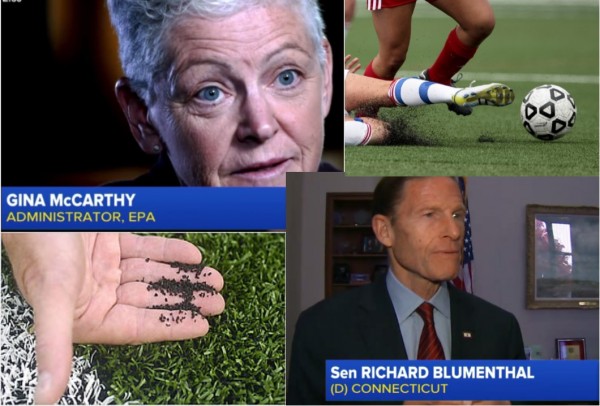
Sen. Richard Blumenthal, D-Conn., who has been described as leading the effort, first became concerned about the artificial surface when his children were playing on the crumb-rubber athletic fields.  “I became concerned as a parent, as much as a public official, ten years ago, and at first was somewhat skeptical, but now very firmly believe that we need an authoritative, real study about what's in these fields," Blumenthal told ABC News this month.  He is calling for an independent investigation of the safety of the rubber pellets used in synthetic turf.

EPA Administrator Gina McCarthy, a former Connecticut Commissioner of the Department of Environmental Protection, told ABC News “there is no evidence yet that is making these links, but it doesn’t mean we’re dismissing the concerns.”

The pellets made from ground-up discarded tires are used as turf on more than 10,000 athletic fields and playgrounds around the country, according to the Synthetic Turf Council.

Boston-based BSC Group, with offices in Worcester, West Yarmouth and Glastonbury, was hired to construct the new synthetic turf field in Bloomfield.  The company was founded in 1965, and is a multi-disciplinary firm with expertise in a range of areas including structural engineering, landscape architecture, environmental permitting, ecological sciences and site engineering.  The work at Bloomfield High School renovation included a resurfaced six-lane track, installation of the synthetic turf field and improved drainage.  The football team began play on the field this season.

syntheticIn Connecticut, like elsewhere around the nation, artificial turf fields have become a popular alternative to natural grass fields. The state Department of Public Health (DPH) website points out that “the advantages of these fields include less maintenance costs, ability to withstand intense use and no need for pesticides.”  To address public safety concerns, four Connecticut state agencies collaborated in 2010 to evaluate the potential exposures and risks from athletic use of artificial turf fields, the DPH website explains.

A two year, comprehensive investigation of releases from five fields during active play was conducted by the Connecticut departments of Public Health, Energy and Environmental Protection, University of Connecticut Health Center, and The Connecticut Agricultural Experiment Station. The study was peer-reviewed by the Connecticut Academy of Science and Engineering.  The overall conclusion of the report, according to the DPH website, is that “use of outdoor artificial turf fields does not represent a significant health risk.”

Gary Ginsberg, a toxicologist with the state Department of Public Health who worked on the states risk assessment study, told The Hartford Courant recently that he has no concerns about his own children playing on artificial fields.  “None at all.”

Driver Distraction Continues Almost 30 Seconds After Text is Sent, Research Reveals

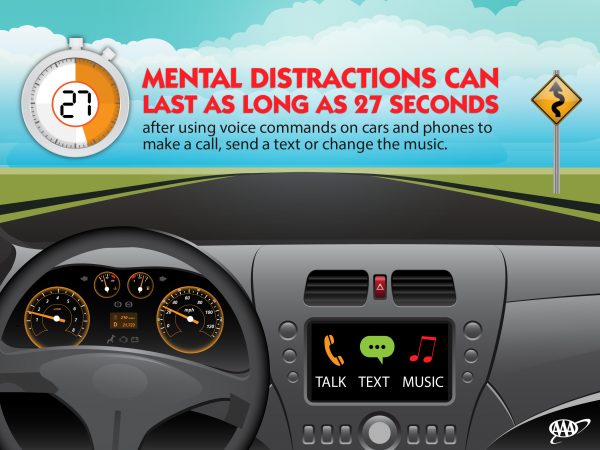
Groundbreaking research by the AAA Foundation for Traffic Safety reveals that the distraction drivers experience using voice activated technology - or their smartphones - to make a call, change music or send a text can linger for almost 30 seconds after the task is complete. “This should be a wakeup call to anyone who feels safe texting while sitting at a red light”, says AAA spokesperson Amy Parmenter. “Just because you can hit the gas when the light turns green, doesn’t mean you’re good to go.”report

Researchers studying various push-to-talk technologies found that potentially unsafe levels of mental distraction lasted for as long as 27 seconds after completing a task in the worst-performing systems. And, at the 25 MPH speed limit in the study, drivers traveled the length of nearly three football fields during this time. Using the least distracting systems, drivers still remained impaired for more than 15 seconds.

The researchers discovered the residual effects of mental distraction while comparing the voice activated technology in ten 2015 vehicles and three types of smart phones. The analysis found that all systems studied increased mental distraction to potentially unsafe levels.

“Automakers often promote everything their connected cars can do, but this research paints a frightening picture of what drivers can’t do if they use the popular features” Parmenter says. “Hands free does not mean risk free. It’s that simple”.Phase-III-Social-Media-Graphic-1

Last month, CT by the Numbers reported that in-car electronics that allow drivers to listen to, read and send text messages while at the wheel may be skirting the spirit, if not the letter, of Connecticut law.  In Connecticut, Public Act 10-109, enacted in 2010, states that “no person shall operate a motor vehicle … while using a hand-held mobile telephone to engage in a call or while using a mobile electronic device while such vehicle is in motion. An operator of a motor vehicle who types, sends or reads a text message with a hand-held mobile telephone or mobile electronic device while such vehicle is in motion shall be in violation of this section.”

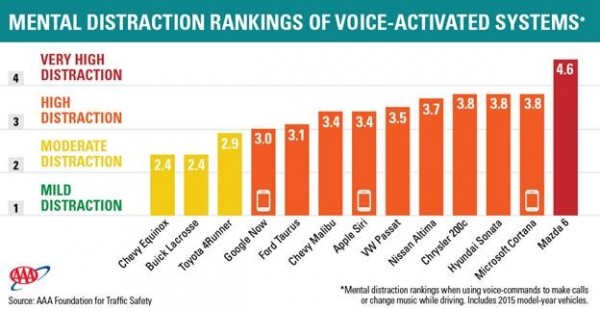
In the AAA study, researchers rated driver distraction on a scale of 1-5, with 1 being relatively safe, about equal to listening to the radio, and 5 being highly challenging in such a way as to overload the driver’s attention. The best performing system was the Chevy Equinox with a cognitive distraction rating of 2.4, while the worst performing system was the Mazda 6 with a cognitive distraction rating of 4.6.

The systems that performed best generally had fewer errors, required less time on task and were relatively easy to use.  The researchers also studied voice activated smartphone technology and found that Google Now outperformed Apple Siri and Microsoft Cortana but, they say, all were dangerously distracting with ratings of 3.1, 3.4 and 3.8 respectively.

Dr. David Strayer and Dr. Joel Cooper of the University of Utah conducted the research. A total of 257 drivers ages 21-70 participated in the study of 2015 model-year vehicles, while 65 additional drivers ages 21-68 tested the three phone systems. Over the last two weeks, AAA has shared its findings with policymakers, safety advocates and manufacturers in hopes of improving the safety of future technology.


AAA chart

Fledgling "Businesses with Impact" Recognized, Receive Funds to Propel Start-Up

When reSET, the Social Enterprise Trust, whose mission is advancing the social enterprise sector, revealed the winners of its annual Impact Challenge last week, the top award recipient was FRESH Farm Aquaponics, with Movia Robotics, Planet Fuel Beverage Company, Hartford Prints! and Parrot MD rounding out the top five. While the businesses may not be household names, they do represent an increasing number of start-up businesses that are not only seeking a foothold in their respective industries, but are looking to contribute to their community – locally or globally – along the way.reSET

Based in Hartford, FRESH Farm Aquaponics is devoted to providing “the best quality aquaponic food to our community sustainably, teaching a new generation with aquaponics, and engaging the community to develop a local food ecosystem.” The company proclaims “expect from us the best produce available locally, year round in the Hartford County area. You will also see us engaging local schools in pioneering aquaponic experiments from elementary schools to universities.” (see video below)

Planet Fuel is a news-othersustainable lifestyle beverate brand for teens and tweens.  The company's goal is to inspire young people to realize the power of consumer choices to effect social and environmental change.
MOVIA Robotics provides an innovative approach in educating children with autism to "form connections inside the world we live in today." The company uses robots and develops "our own software based on interactions with therapists and children."003

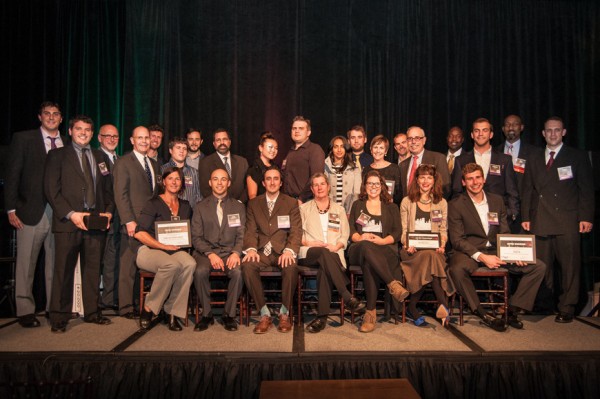
Now in its fifth year, the reSET Impact Challenge recognizes the most innovative and impactful early stage ventures and start-ups from all industries throughout New England.  The event, held at The Society Room of Hartford, saw a record, sellout crowd of 300 in attendance.

Diamond Level - $20,000 + Professional Services Package (1 Winner)

FRESH Farm Aquaponics (http://www.freshfarmct.org)

Gold Level - $10,000 + Professional Services Package (2 Winners)

Movia Robotics (www.moviarobotics.com)

Planet Fuel Beverage Company (http://www.planetfuel.com)

Silver - $5,000 + Professional Services Package (2 Winners)

Hartford Prints! (hartfordprints.com)

Parrot MD (parrotmd.org)

People’s Choice - $1,500 + Professional Services Package (1 Winner)

BookBugs (www.bookbugs.net) 

Investor’s Choice - $1,500 (1 Winner)

Send Help Back Home (www.sendhelptoday.com)

Bronze - $500 (7 Winners)

Asarasi, Inc. (www.asarasi.com)

Beautiful Day / Providence Granola Project (www.providencegranola.com)

BookBugs (www.bookbugs.net)

Daily General Counsel (www.dailygeneralcounsel.com)

Dream See Do (https://www.dreamseedo.org)

Hugo & Hoby (www.hugoandhoby.com)

LOTUS Alliance LLC (www.lotusalliance.org)

logoThe five awards judges - Sherrell Dorsey of Uber and Triple Pundit, Adam Dotson of Ironwood Capital, Claire Leonardi, an advisor to reSET's Social Enterprise Investment Fund and former CEO of Connnecticut Innovations, Anthony Price of LootScout and Paul Witinski of Ironwood Capital - narrowed down more than 100 applicants to 12 honorees.  The People’s Choice winner was selected via more than 1,800 online votes.


Since its inception, reSET’s Impact Challenge has awarded more than $180,000 to scaling entrepreneurs. reSET is a nonprofit organization whose mission is advancing the social enterprise sector. Its strategic goals are threefold: to be the “go-to” place for impact entrepreneurs, to make Hartford known as Impact City, and Connecticut the Social Enterprise state.  In addition to providing co-working space, accelerator and mentoring programs, reSET aims to inspire innovation and community collaboration, and to support entrepreneurs in creating market-based solutions to community challenges. reSET’s goal is to meet entrepreneurs wherever they are in their trajectory and to help them take their businesses to the next level.

reSET’s Impact Accelerator recently was a winner of the U.S. Small Business Administration Growth Accelerator Competition, the only Connecticut growth accelerator to receive the award this year.

https://youtu.be/A03RH_htQ88

Community Plates Rescues Food to Help Hungry; Norwalk-Based Nonprofit Has Appetite for Growth

Hunger in the United States makes no sense. That, in a nutshell, is what drives Norwalk-based nonprofit organization Community Plates. Now in six regions of the country (including it’s home county) and seeking to take root elsewhere, Community Plates is committed to ending American food insecurity by directly transferring fresh, usable food that would have otherwise been thrown away from restaurants, markets and other food industry sources to food-insecure families throughout the U.S.cp

Community Plates is up and running in Fairfield and New Haven in Connecticut as well as in Columbus, OH, Albuquerque, New Mexico and New Orleans, Louisiana. As the company website explains, “Food insecurity is a real problem in parts of the U.S. Many families don't have a good idea where their next meal is coming from. Some people go to work every day and by the time they pay for the roof over their head, their heat and electricity, there isn't always enough money left for food that week. So we definitely have people in need of that resource.”

Jeff Schacher founded the company in 2011, and it has delivered 4.5 million meals to people in need in Fairfield County alone.  Yet, as the organization’s website points out, one “would never imagine that in one of the wealthiest counties in America, there are over 100,000 people (38,000 children) that are classified as food insecure.”rescue

The process is dependent upon volunteers, at each step:

  1. Surplus fresh food is donated by restaurants and markets.
  2. Local volunteers donate their time, vehicles, and fuel to rescue the fresh food.
  3. Receiving agencies deliver rescued food to food-insecure people in their area.

peppersThe organization is driven by volunteers – food donors, food runners and partner agencies.  One such agency in Connecticut is the Manchester Area Conference of Churches, which indicates there are 8,000 food-insecure people in the greater Manchester area.


Community Plates New Haven is working to provide meals to the 123,000 food insecure residents of New Haven County - a stunning 14.4 percent of the county’s population. The organization’s website notes that “Sadly, over 19.2% of New Haven County’s children fall within the guidelines of being food insecure, and the number continues to increase.”

Community Plates began in Fairfield County, and over 80 percent of the 1.5 million pounds of food rescued since the organization’s inception has been “rescued right here,” the website explains.runner

Community Plates is “built on a foundation of social entrepreneurship, and we so strongly believe in the power of community, we built it right into our name,” officials point out.  The organization highlights six Connecticut farms and farmers for their support of the effort in the Nutmeg State:

  • Ambler Farm
  • City Center Danbury Farmers’ Market
  • Feeny Farms
  • Millstone Farmest 2010
  • Rowayton Farmers’ Market
  • Sport Hill Farm

https://youtu.be/DagcKtlJi64

Medical Device Tax Seen as Inhibitor to Innovation, Repeal Sought

Emerging technologies that can develop breakthrough medical devices are at the intersection of innovation and tax policy, and a growing list of businesses and organizations are urging Congress to repeal a tax, instituted as part of the Affordable Care Act, that they say is harmful to industries with the potential to improve lives and boost local economies.  The issue has particular resonance in Connecticut, where efforts to grow technology, precision manufacturing and the medical and pharmaceutical industries have accelerated in recent years. tech Medical technology creates more than two million jobs directly and indirectly across the United States. The industry is one of the few U.S. manufacturing sectors that is a net exporter, and its innovations help reduce the human and economic burden of chronic disease.  Industry officials point out that while U.S. leads the world in the development of new medical technology, the device tax “threatens that leadership.”

Earlier this year, a bipartisan majority of the U.S. House of Representatives voted to repeal the medical device tax.  The fate of the proposal in the Senate is unclear.  A growing coalition of research advocates, disability rights leaders, patient groups and others support repeal of the device tax because, they say, it drains critical resources away medical innovation.  According to a 2015 study by opponents of the tax, two-thirds of med-tech companies that were surveyed said they had to either slow or halt job growth at their companies because of the medical device tax.backpain_skeleton-165x300

Between 2002 and 2012, the number of jobs in the Medical Equipment and Supplies Manufacturing industry in Connecticut increased by 10.75 percent, with the addition of about 700 jobs, according to the Connecticut Economic Resource Center (CERC).  CERC’s research indicated that jobs in the field were almost twice as concentrated in Connecticut in comparison to the United States, with average wages above the national average, with more than 150 companies in the medical equipment and supplies manufacturing business.

Connecticut’s medical device industry continues to see new entries.  Just two years ago, a company launched by a 2011 UConn graduate, Orthozon Technologies, received local notice for its newly developed “minimally invasive tool for spine surgeons,” which led to the company’s quickly “gaining momentum in the medical device field,” the Fairfield County Business Journal reported that year.

The Stamford-based company’s Lumiere™ is a state-of-the-art minimally invasive surgical retractor that provides “access and visibility for physicians as well as faster and less painful recovery time for patients,” according to the company website.  Utilizing a patented technology with powerful unobstructed fiber optic lighting, translucent retractor blades, full medial access, and an expandable field of view, the medical device provides surgeons with a tool “for quicker and more efficient spinal decompressions.”

Earlier this month, when the state’s fastest growing technology firms were honored at the 2015 Marcum Tech Top 40, in partnership with the Connecticut Technology Council, medical devices were among the technologies highlighted. chart

One of the leading categories included “Medical Devices companies manufacturing medical instruments and devices including medical diagnostic equipment (X-ray, CAT scan, MRI), medical therapeutic devices (drug delivery, surgical instruments, pacemakers, artificial organs), and other health related products such as medical monitoring equipment and handicap aids.”

Among the companies selected was Guilford-based Bio-Med Devices, which designs, manufactures, and markets a complete line of critical care and transportable respirators/ventilators, air - oxygen blenders, ventilation monitors,  disposable and reusable breathing circuits, and accessories.

Connecticut Innovations. The state’s leading source of financing and ongoing support for Connecticut’s innovative, growing companies, highlights six Connecticut companies in the medical device industry within its investment portfolio, with some investments dating back to 2007.

Nationwide, an aging population, people with disabilities living longer lives, and chronic disease rates growing at faster rates, lead advocates of repeal say now is the time for more—not less—resources to advance cures and treatments that help people live longer and healthier lives.  The industry survey indicated that 85 percent of respondents plan to reinstate forgone R&D projects if the tax is repealed.

https://youtu.be/uqTdNffOaas

Got Drugs? Take 'Em Back

There will be 64 locations across Connecticut collecting drugs on Saturday, September 26.  It is part of National Prescription Drug Take-Back Day, an initiative of the U.S. Department of Justice Drug Enforcement Administration’s (DEA) Office of Diversion Control.  The aim is to get unused prescriptions and other drugs out of closets, medicine cabinets, glove compartments, and random shelves and drawers, as well as off the streets, before they end up causing harm. In Connecticut, state police barracks and many local police departments are serving as drop off points.  The collection sites will be open as part of the initiative from 10:00 AM to 2:00 PM on Saturday. (See the full list here.)pills20

States around the country are participating, and all but Pennsylvania and Delaware, which held their collection days on September 12, are doing so on September 26. According to a public service announcement prepared by the DEA, “prescription drug abuse is an epidemic in this country, and the source of these drugs is often the home medicine cabinet.”

The National Prescription Drug Take-Back Day aims to provide a safe, convenient, and responsible means of disposing of prescription drugs, while also educating the general public about the potential for abuse of medications.got-drugs-2

“Prescription drug abuse is a huge problem and this is a great opportunity for folks around the country to help reduce the threat,” DEA Acting Administrator Chuck Rosenberg said.  "Please clean out your medicine cabinet and make your home safe from drug theft and abuse.”

In the previous nine Take-Back events nationwide from 2010-2014, 4,823,251 pounds, or 2,411 tons of drugs were collected, officials reported.  Saturday’s event will be the 10th national effort.

Many Americans are not aware that medicines that languish in home cabinets are highly susceptible to diversion, misuse, and abuse, according to officials. Rates of prescription drug abuse in the U.S. are at alarming rates, as are the number of accidental poisonings and overdoses due to these drugs, they point out.

dea-logoOfficials cite studies that show many abused prescription drugs are obtained from family and friends, including from the home medicine cabinet. In addition, manyAmericans do not know how to properly dispose of their unused medicine, often flushing them down the toilet or throwing them away – both potential safety and health hazards.


takeback-collection-hover

Research Shows Schools Start Too Early; Some South Windsor Students Begin at 6:30 AM

A national publication, highlighting policies that school districts around the country are experimenting with to “make schools better for kids,” suggests starting classes after 8:30 a.m.  Some schools in Connecticut and across the nation are doing so, moving high school start times from earlier hours.  In South Windsor, however, the experiment is in the opposite direction, with a select group of high school students beginning weekday classes at 6:30 a.m. It's part of a new pilot plan called "zero period," created as a temporary relief for some students until the school can transition from a seven-period to an eight-period school day, Principal Daniel Sullivan recently told The Hartford Courant.school-start-times_456px

"It's not for everybody and it's not a requirement for the kids that are doing it," Sullivan said. "It's going to be tough … but they chose it because it's what they want. They're doing what they want to do and we're glad to give them that opportunity."

In other schools, the pendulum is moving the opposite way.  “In order to stay healthy, adolescents need at least eight hours of sleep each night; deprivation can lad to weight gain, focus issues, lower academic performance and other problems, the article in TIME magazine points out.

“Biologically, adolescents are hardwired to stay up late, often until 11 p.m. or midnight.  That’s why federal official and medical experts are calling for middle and high schools to start after – at or after 8:30 a.m.,” the magazine indicates.  The Portland Press Herald recently reported that the Centers for Disease Control (CDC),  the American Academy of Pediatrics and numerous studies recommend later start times for secondary education – preferably 8:30 or later. 8 30 clock

In more than 40 states, at least 75 percent of public schools start earlier than 8:30 a.m., according to the CDC’s report. But those numbers are changing.  The idea is to improve the odds of adolescents getting sufficient sleep so they can thrive both physically and academically. Among an estimated 39,700 public middle, high, and combined schools in the United States, the average start time was 8:03 a.m., the CDC reported. In Connecticut, fewer than 5 percent of middle and high schools started at 8:30 or later, one of the lowest rates in the country.

early clockThe CDC’s recommendations in August came a year after the American Academy of Pediatrics urged schools to adjust start times so more kids would get the recommended 8.5 to 9.5 hours of nightly rest. Both the CDC and the pediatricians’ group cited significant risks that come with lack of sleep, including higher rates of obesity and depression and motor-vehicle accidents among teens as well as an overall lower quality of life, The Atlantic recently reported.

At South Windsor High School, two "zero period" courses begin at 6:30 a.m. and end at 7:15 a.m., allowing students about 10 minutes for breakfast before the start of first period at 7:25 a.m. The school day concludes at 2 p.m.

In South Windsor, the early classes are aimed primarily at sophomore intervention, special education, AP science and music and art students, according to school officials. About 25 students are participating in the pilot program as the school year gets underway. The Courant reports that similar programs have been implemented in schools on the West Coast, with mixed reactions.

In Guilford, school officials were considering revised start times in discussions late last year.  But the schedule for the new school year shows the high school start time as 7:25, with middle schools beginning at 7:50 and 8:00 a.m.

This fall, students can choose from a photography and a health class. In the spring, students will have the option of business communications and physical education. Bus transportation is being provided for the students, the Courant reported. "These kids are committing to getting up early, getting here early and taking care of business,” Sullivan said, indicating that the experimental zero period is not a substitute for an eight-period school day.


CT Tax on Cigarettes is Nation’s 4th Highest, Headed Toward 2nd Highest

Connecticut’s cigarette tax, $3.40 per pack, is the 4th highest in the nation.  State cigarette tax rates vary widely, ranging from 17 cents per pack in Missouri to $4.35 in New York, according to a report published in Governing magazine. When Connecticut’s tax increases to $3.65 per pack on October 1, the state will surpass the Massachusetts tax of $3.51 per pack, moving into 3rd place.  Rhode Island, at $3.75 per pack, ranks 2nd, behind New York State.  Should the scheduled increase of another 50 cents occur a year from now, Connecticut would have the nation’s second highest tax on cigarettes. cigarette

Rounding out the top 10 states with the highest cigarette taxes are Hawaii (5), Vermont (6), Washington (7), Minnesota (8), New Jersey (9), Wisconsin (10).

Policymakers often support tax increases on tobacco products as a means of raising revenue or improving public health by encouraging smokers to quit, the Governing analysis points out.  A handful of states passed cigarette tax hikes in the 2015 legislative session. Nevada lawmakers approved the single largest cigarette tax increase, raising the rate from 80 cents to $1.80 per pack, the publication indicates.

While noting that Connecticut's tax rate is set to increase to $3.65 per pack in October, the publication indicated that earlier proposals in the Pennsylvania and New Hampshire legislatures also included cigarette tax increases, but the two states have yet to pass budgets.

Kansas and Louisiana pushed cigarette taxes up by 50 cents and Ohio increased that state’s tax by 35 cents. Earlier this month, Alabama’s legislature voted down a proposal to increase that state’s tax by 25 cents per pack from the current 42.5 cents per pack, the third lowest tax in the nation.  Only Georgia, Virginia and Mississippi have lower taxes on cigarettes.smoking cigarette

The National Taxpayers Union Foundation reported that tobacco tax collections failed to meet initial revenue targets in 72 out of 101 recent tax increases, Governing reported, and as of 2011, only two states were funding tobacco control programs at levels recommended by the Centers for Disease Control and Prevention, which much of the tax revenue funneled into state general funds.

In Connecticut, the cigarette tax increased 61 cents in 2002 to $1.11 per pack, by another 40 cents in 2003, an additional 49 cents in 2007 and $1.00 in 2007 to reach $3.00 per pack.  In 2011, the tax increased by another 40 cents to the current $3.40 per pack.


Sexting Is Now Among Top 10 Concerns in Children's Health, Survey Shows

With more kids online and using cell phones at increasingly younger ages, two issues have quickly climbed higher on the public’s list of major health concerns for children across the U.S: sexting and Internet safety. Compared with 2014, Internet safety rose from the eighth to the fourth biggest problem, ahead of school violence and smoking, in the 2015 annual survey of top children’s health concerns conducted by the C.S. Mott Children’s Hospital National Poll on Children’s Health. Sexting saw the biggest jump, now the sixth top-ranked issue, up from thirteenth.

Childhood obesity, bullying, and drug abuse remained the top three child health concerns for a second year in a row, while child abuse and neglect ranked fifth.  Smoking and tobacco use, usually rated near the top of the list, dropped from the fourth top concern to the seventh – which may reflect the decline in smoking and tobacco use by youth in recent years.

MottPollWeb “The major health issues that people are most worried about for children across the country reflect the health initiatives providers, communities and policy makers should be focused on,” says Matthew M. Davis, M.D., M.A.P.P., director of the National Poll on Children’s Health and professor of pediatrics and internal medicine in the Child Health Evaluation and Research Unit at the U-M Medical School.


“The increasing level of concern about Internet safety and sexting that are now ranked even higher than smoking as major childhood health issues really dominates the story this year,” adds Davis, who is also with the U-M School of Public Health, Gerald R. Ford School of Public Policy, and deputy director for U-M’s Institute for Healthcare Policy and Innovation. “We found that while the public may find benefits to today’s shifting media environment, whether through cell phones or other technology, many also recognize risks that may make young people vulnerable.”

Studies have found that about 1 out of every 5 to 10 teens — guys and girls — have sent sexually suggestive pictures. And about 1 out of every 3 to 8 teens have received them, according to the Connecticut Children's Medical Center website.  The studies focused mainly on pictures, not sexually suggestive comments, messages, or tweets. The percentage of teens involved in sexting goes up if written sexual content is included, but it's not clear by how much. But one thing is clear, the site emphasizes: Sexting is relatively common among teens.

Expanding use of smart phones and other technology potentially exposes children and teens to the danger of predators and other harms like cyber-bullying, the report noted. Sexting (sending and receiving sexually suggestive text messages and photos) has also led to cases of teens around the country suffering from low self-esteem and even committing suicide following photos being widely shared among peers.

Sexting is relatively new, and many states have not created laws that specifically address it, especially when it comes to teenagers. In many states, teens who engage in sexting can be charged with significant crimes (concerning child pornography) because they are sharing images of minors.   Connecticut, however, is one of a number of states with laws that specifically address minor teens (those under the age of 18) who engage in sexting.  The Connecticut law was enacted in 2010.


https://youtu.be/kap7DHQyrww