Connecticut Is 2016’s 2nd Best State for Working Dads; Two Norwalk Businesses Earn Spot Among Nation’s Top 50 for New Dads
/Working fathers in Connecticut are in a great place, according to a newly released analysis. Connecticut is ranked only behind only Minnesota as the 2nd Best State for Working Dads, a glimpse of good news as Father’s Day approaches.
Nearly 93 percent of dads with kids younger than 18 in the labor force, according to the personal-finance website WalletHub, which conducted an in-depth analysis of the Best & Worst States for Working Dads.
The top 10 states were Minnesota, Connecticut, Vermont, Massachusetts, New Jersey, Wisconsin, Iowa, Kansas, Virginia and North Dakota. At the bottom of the list were Mississippi, West Virginia, Alaska and Nevada.
WalletHub analyzed the work-life balance, health conditions, financial well-being and child-rearing environments for working dads in the 50 U.S. states and the District of Columbia, using 20 key metrics, which range from day care quality to male life expectancy.
To identify the best and worst states for working dads, WalletHub analyzed the various factors in the work-life balance that affect paternal roles in the 50 states and the District of Columbia, focused on four key dimensions of fatherhood: 1) Economic & Social Well-Being, 2) Work-Life Balance, 3) Child Care and 4) Health. Among the 20 factors included were parental leave policy, commute time, day care quality, pediatric services, median income, unemployment rate, and mental health.
Leading to its overall ranking of second in the analysis, Connecticut was 13th in “economic and social well-being,” third in “work-life balance,” eighth in “child care,” and third in “health.” Among the sub-categories, Connecticut was:
- 2nd – Male Life Expectancy at Birth
- 2nd – % of Kids Younger than 18 with Dad Present Living in Poverty
- 2nd – “Parental Leave Policy” Score
- 6th – Access to Pediatric Services
- 6th – % of Men Who Report Adequate or Any Physical Activity
- 7th – Male Uninsured Rate
- 14th – Average Freshman Graduation Rate for Men
- 16th – Mortality Rate due to Heart Disease per 100,000 Men
- 17th – Mean Hours Worked per Day Among Males
- 19th - Median Income for Families (Dad Present) with Kids Younger than 18 Years, Adjusted for Cost of Living
 Among the nation’s top businesses for new dad, an analysis by the website Fatherly, determined that two Connecticut-based companies – alcoholic beverages producer Diageo and financial data and analysis provider FactSet, earned slots in the top 50. Fatherly is a digital lifestyle guide for men entering parenthood.
Just a handful of states had companies on the list: California (18), New York (9), Oregon (4), Massachusetts (3) and Georgia, North Carolina, Washington DC, and Connecticut, with two each.
Norwalk’s Diageo ranked 34th, and was praised for policies that include “employees receive up to 8 hours of school activity leave (up to 40 hours per year) so you won’t have to miss your kid’s big game or school play.” FactSet, headquartered in Norwalk, ranked 46th. The company was praised because it “recently upped it’s paternity leave from one week to 4.” FactSet has 8,000 employees in 21 countries. Diageo is a global leader in beverage alcohol with iconic brands in spirits, beer and wine, producing well-known brands from more than 200 sites in over 30 countries.
The top companies were Netflix, Spotify, Facebook, Patagonia, Bank of America, Pinterest, Google, Microsoft, Twitter, Airbnb, Johnson & Johnson, Accenture, MasterCard, Intuit and Intel.
In addition, nine small businesses described as “leading the way,” were change.org (San Francisco), Laughing Planet Café (Portland), Upworthy (New York), Blue Corona (Maryland), Badger Balm (New Hampshire), Square Root (Austin), Able Lending (Austin), Happy Family (New York) and ustwo (New York).
When Fatherly’s 50 Best Places To Work For New Dads was a year ago, nearly half the companies featured offered between one and 2 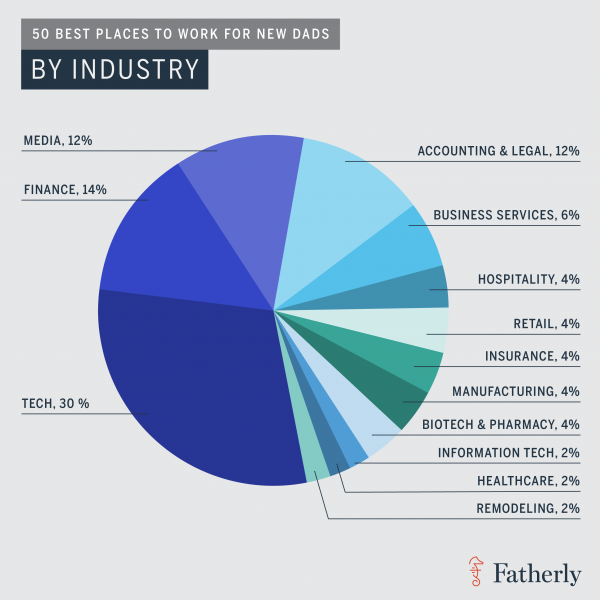 weeks of paid leave to fathers. Twelve months later, 7.5 weeks is the average, 35 percent of companies offer between 6 and 8 weeks, and another 12 companies offer between 10 weeks and a full year, the website pointed out, attributing much of the increase to tech companies, which make up nearly a third of companies on the top 50 list.
Data used to create the WalletHub report were obtained from the U.S. Census Bureau, the U.S. Bureau of Labor Statistics, the Council for Community and Economic Research, the Centers for Disease Control and Prevention, the National Center for Education Statistics, the National Partnership for Women & Families, the American Urological Association, the Social Science Research Council, Child Care Aware of America and WalletHub research.


 tion into one composite indicator of entrepreneurial business growth.”

 In addition to the public poll,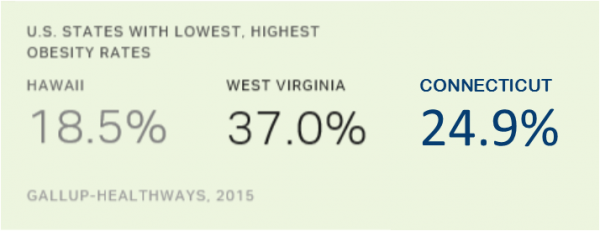
 no state registered a statistically significant decline. Maine, West Virginia, Idaho and Oklahoma experienced the sharpest upticks in obesity.
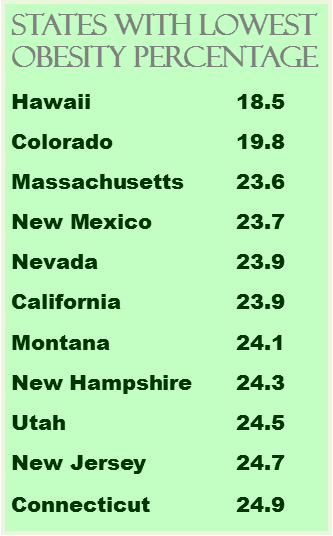 In the five most obese states, the annual incremental cost of obesity per 100,000 residents averages $54 million. By contrast, the average cost is $34 million in the five least obese states. In other words, per capita medical costs attributable to obesity are about 1.6 times higher in the five states with the highest obesity rates than in the states with the five lowest rates. The cost in Connecticut for the obese adult population was estimated at $39 million, for the entire adult population, $1.07 billion.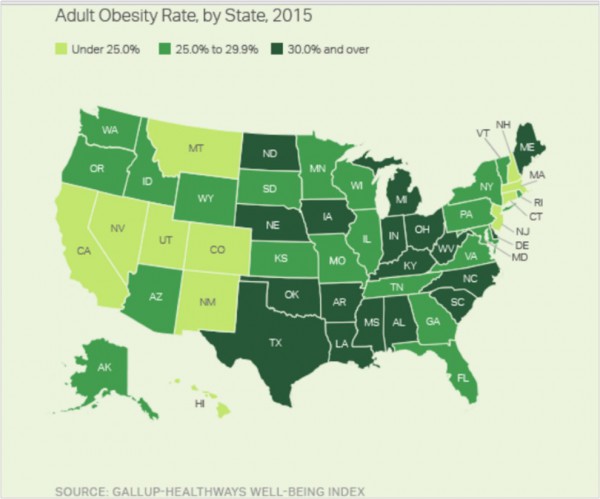
 “Parental voices can be influential in mobilizing advocacy efforts, and enacting policy change affecting children’s health,” said Rebecca Puhl, a study author, professor in UConn’s Department of Human Development and Family Studies, and deputy director of the Rudd Center.
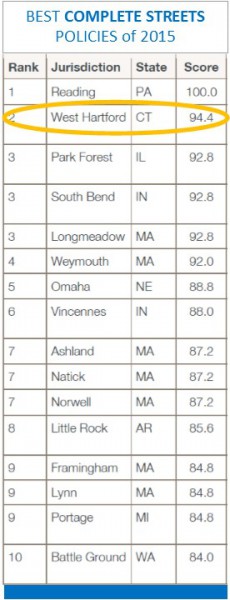 The U.S. Surgeon General and Secretary of Transportation both spoke out for more Complete Streets last year and Congress passed a transportation bill that included Complete Streets language for the first time ever.

 arlier this year, the University of Connecticut released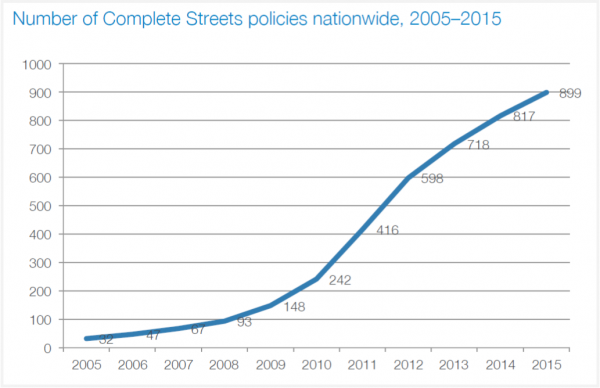


 “We are extremely proud of Dr. Ginsberg and congratulate him on this prestigious and well deserved award,” said Ellen Blaschinski, DPH’s Regulatory Services Branch Chief. “His expertise in toxic exposures and ability to consolidate vast amounts of science into easily digestible, useful information helps protect and inform Connecticut’s citizens.”
 The large majority is also present across the ideological spectrum, with 94 percent of registered Democrats, 79 percent of independents and 68 percent of Republicans indicating their support for state paid family medical leave to support Connecticut workers and family caregivers.
 One-thousand state voters age 25-plus were asked two questions about the paid family medical initiative, whether they supported such a plan, and whether they would support political candidates who did.