Danger in CT: Not Buckling Up in Rear Seat is Hazardous to Your (and Others) Health
/Twenty-nine states require passengers riding in a vehicle’s rear seat to buckle up with a seat belt. Connecticut is not among them. A new survey from the Insurance Institute for Highway Safety highlights the common misperception that buckling up is optional – as well as the potential life-threatening hazards to rear and front seat passengers if those in the back seat opt not to buckle up.
"People who don't use safety belts might think their neglect won't hurt anyone else. That's not the case," indicates Jessica Jermakian, an IIHS senior research engineer and a co-author of the study. "In the rear seat a lap/shoulder belt is the primary means of protection in a frontal crash. Without it, bodies can hit hard surfaces or other people at full speed, leading to serious injuries.”
 Among adults who admit to not always using safety belts in the back seat, 4 out of 5 surveyed say short trips or traveling by taxi or ride-hailing service are times they don't bother to use the belt. Nearly 40 percent of people surveyed said they sometimes don't buckle up in the rear seat because there is no law requiring it. If there were such a law, 60 percent of respondents said it would convince them to use belts in the back seat. A greater percentage said they would be more likely to buckle up if the driver could get pulled over because someone in the back wasn't buckled.
Connecticut considered such a requirement in this year’s legislative session. Urging legislators to approve the requirement, Julie Peters, Executive Director of the Brain Injury Alliance of Connecticut, said “In the event of a crash, unbelted back seat passengers become bullets, putting not only themselves, but everyone in the vehicle at risk. That's because unbelted back seat passengers continue to move at the same rate of speed as the vehicle they are riding in until they hit something -- the seat back, the dashboard, the windshield, the driver or another passenger. It's also not uncommon for unbelted passengers to be thrown from a vehicle and either crushed by that vehicle or another on the road.”
The new survey reveals that many rear-seat passengers don't think belts are necessary because they perceive the back seat to be safer than the front. This shows a clear misunderstanding about why belts are important, no matter where a person sits in a vehicle.
"For most adults, it's still as safe to ride in the back seat as the front seat, but not if you aren't buckled up," Jermakian said. "That applies to riding in an Uber, Lyft or other hired vehicle, too."
Except for New Hampshire, all states and the District of Columbia require adults in the front seat to use belts. All rear-seat passengers are covered by laws in 29 states and D.C. Of these laws, 20 carry primary enforcement, meaning a police officer can stop a driver solely for a belt-law violation. The rest are secondary, so an officer must have another reason to stop a vehicle before issuing a safety belt citation, the IIHS reported.
Rep. Mitch Bolinsky of Newtown, who advocated for passage of a Connecticut law this year, said in February that “Front seats have become much safer but that’s not the case in the back seat. Without the use of seat belts, we needlessly lose lives every year. Those souls should still be with their families.” He cited National Highway Transportation Safety Association (NHTSA) data that unbelted rear seat passengers are three times more likely to die than those who are buckled at the time of a serious impact.
AAA reported last year that three decades ago, Connecticut “moved ahead of the curve nationally with the passage of one of the nation’s first mandatory seat belt laws.” AAA pointed that that estimates are that each year in Connecticut more than 120 adults are injured and approximately five adults die who were unbelted rear seat occupants. Dating back to 1995, AAA noted, that equates to close to 100 deaths and 2,500 injuries. A survey of AAA members (AAA Allied Group and AAA Northeast) found that 7 in 10 members believe seat belts should be mandatory for back seat passengers, regardless of age.
 The Governors Highway Safety Association issued a report in 2015, "Unbuckled In Back," analyzing the difference in highway fatalities between states that require rear seat passengers to buckle up and those that do not, the Hartford Courant reported. At a Connecticut legislative hearing that year, the paper noted, state Transportation Commissioner James Redeker said that everyone in a passenger vehicle should buckle up, saying statistics show "people become projectiles because they're not strapped in a safety device."
Legislation has been introduced annually in recent years in Connecticut to require use of seat belts in the back seat. Earlier this year, state Public Health Commissioner testified in support (HB6054 and HB6269), stressing that “adult seat belt use is the single most effective way to save lives and reduce injuries in crashes.”
Safety belts are credited with having saved 13,941 lives during 2015, the National Highway Traffic Safety Administration estimates. If everyone buckled up, an additional 2,800 deaths could have been prevented, the data indicated. More than half of the people who die in passenger vehicle crashes in the U.S. each year are unbelted.
IIHS surveyed adults 18 and older by cellphone and landline nationwide between June and August 2016. Of the 1,172 respondents who said they had ridden in the back seat of a vehicle during the preceding six months, 72 percent said they always use their belt in the back seat, while 91 percent said they always use their belt when seated in front. This is in line with the 2015 nationwide observed belt use of 75 percent for adult rear-seat occupants and 89 percent for drivers and front-seat passengers.
https://youtu.be/bdW_3oQFO0c
 A pilot partnership between the AGP and CCSU establishes a new base of operations for the
 Márquez-Greene will also work with the School of Education & Professional Studies to establish a Center for Social & Emotional Learning to provide education, training, and research to the campus, community, and state. Other expected collaborations include the training of CCSU undergraduate and graduate students in the Marriage & Family Therapy, Psychology, and Counseling programs in the use of social-emotional curriculum in the classroom.

 Rounding out the top 10 are Wisconsin, Iowa, New Hampshire, Louisiana, Rhode Island, Colorado, Nebraska and South Dakota. The states were ranked based on the most gyms using these four categories: total number of gyms, state population in 2016, people per gym, and gyms per capita (100,000 people). Totals were based on the 14 largest gym chains in America. There were more than 36,000 health clubs in the U.S. last year, up from 29,000 a decade ago.
 The index publication is supported by the Anthem Blue Cross and Blue Shield Foundation. It is a scientific snapshot of the health and fitness status at a metropolitan level using data made up of personal health, community and environmental factors.
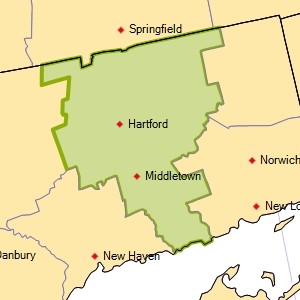 The region’s personal health rank was 13; its community/environmental indicators rank was 25, leading to an overall ranking of 13th. The analysis points to “Areas of Excellence,” in the region, including:

 since 1897. In 2015, Saint Francis became part of Trinity Health of New England, an integrated health care delivery system that is a member of Trinity Health, Livonia, MI, one of the largest multi-institutional Catholic health care delivery systems in the nation.
 The
The 


 Only about 42 percent of motorcyclists in Connecticut wear helmets, according to Neil Chaudhary, PhD, leader of a Trumbull team of premier investigators on behavioral traffic safety-related issues at Preusser Research Group, Inc. In states where helmets are required, there is near 100 percent compliance, he recently told the Newtown Bee, adding professional driver training, offered throughout the state, can help riders to develop stronger defensive driving skills.