No Chocolate Milk? Kids Get Used to Plain Milk, UConn Study Finds
/There’s good news and bad news for chocolate milk advocates, depending upon which University of Connecticut research study you come across. The studies don’t necessarily conflict, but provide differing points of view in the plain milk vs. chocolate milk debate. A new study by the Rudd Center for Food Policy and Obesity at the University of Connecticut has found that most students adjust to drinking plain milk after flavored milk is removed from school lunch menus.
Flavored milk served in the National School Lunch Program contains up to 10 grams of added sugar per serving, which is 40 percent of a child’s daily allowance of added sugar. G iven the nation’s key public health target of limiting added sugars in children’s diets, flavored milk has come under scrutiny in the context of school nutrition, UConn Today recently reported.
The study, published in July in the Journal of the Academy of Nutrition and Dietetics, measured plain milk selection and consumption in the years after flavored milk was removed in two schools. Key findings include:
- The first school year after flavored milk was removed, 51.5 percent of students selected milk and drank 4 ounces per carton, indicating school-wide per-student consumption of 2.1 ounces.
- Two years later, 72 percent of students selected milk and drank 3.4 ounces per carton, significantly increasing the school-wide per-student consumption to 2.5 ounces.
- Older students and boys consumed significantly more milk.
- The availability of 100 percent fruit juice at lunch was associated with a significant decrease in students selecting milk and lower milk consumption per carton throughout the years of the study. Both years, student selection and consumption of plain milk dropped significantly on days when 100 percent fruit juice was also available.
The study could have implications for school nutrition policy and efforts to reduce added sugars in children’s diets. The study was conducted in two elementary (K-8) schools in an urban New England school district during the 2010-2011 and 2012-2013 school years. Researchers assessed the selection and consumption of milk immediately after flavored milk was removed in the 2010-2011 school year, and two years later in the 2012-2013 school year.
“The decision to remove flavored milk has both nutritional benefits and potential costs. It is clearly an effective way to lower student intake of added sugars at lunch, and over time, the majority of students will switch to plain milk,” said Marlene Schwartz, professor of human development and family studies, director of the UConn Rudd Center, and lead author of the study. “However, there will always be some students who don’t like plain milk. The challenge is finding a way to meet their dietary needs by providing other nutrient-rich options at lunch.”
The study was funded by the Cornell Center for Behavioral Economics in Child Nutrition Programs and the Rudd Foundation. In the conclusion to the study, the researchers note that “A school policy to remove flavored milk has potential public health benefits and costs—it is likely to decrease consumption of added sugars at lunch for all children, but it is also likely to decrease consumption of milk for some children and increase their risk of missing key nutrients.”
Seven years ago, another UConn researcher was touting the virtues of chocolate milk. That study, centered in Professor Nancy R. Rodriguez’s lab, found that drinking a 16-ounce glass of fat-free chocolate milk after exercise gives the body essential proteins and carbohydrates that help refuel weary muscles better than a beverage containing carbohydrates alone.
Rodriguez, with joint appointments in the departments of kinesiology and allied health – and who serves, then and now, as UConn’s director of sports nutrition – advocated for the benefits of milk in relation to athletic performance since the late 1990’s. But the 2010 study believed to be the first study of its kind showing a direct correlation between consuming chocolate milk and improved muscle recovery after prolonged exercise.
Results showed that chocolate milk was as effective as the carbohydrate drink in replenishing the body’s stores of glycogen, a form of carbohydrate the body uses as fuel during intense or prolonged exercise. Rodriguez said at the time that the sugar from the chocolate syrup in the milk helps athletes replace depleted glycogen in their muscles to prepare them for their next workout.
Rodriguez subsequently served on the President’s Council on Fitness, Sports, and Nutrition (PCFSN), 2014-2017. She has been a Sports Nutritionist for the NFL’s Indianapolis Colts and has provided services to the NBA’s Chicago Bulls and Charlotte Bobcats, and the AHL’s Hartford Wolfpack.
The 2010 study was funded by the National Dairy Council and the National Fluid Milk Processor Promotion Board.
 Among adults who admit to not always using safety belts in the back seat, 4 out of 5 surveyed say short trips or traveling by taxi or ride-hailing service are times they don't bother to use the belt. Nearly 40 percent of people surveyed said they sometimes don't buckle up in the rear seat because there is no law requiring it. If there were such a law, 60 percent of respondents said it would convince them to use belts in the back seat. A greater percentage said they would be more likely to buckle up if the driver could get pulled over because someone in the back wasn't buckled.
 The Governors Highway Safety Association issued a report in 2015, "Unbuckled In Back," analyzing the difference in highway fatalities between states that require rear seat passengers to buckle up and those that do not, the Hartford Courant reported. At a Connecticut legislative hearing that year, the paper noted, state Transportation Commissioner James Redeker said that everyone in a passenger vehicle should buckle up, saying statistics show "people become projectiles because they're not strapped in a safety device."
 A pilot partnership between the AGP and CCSU establishes a new base of operations for the
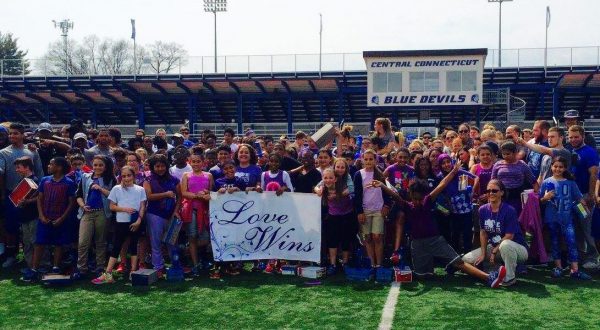 Márquez-Greene will also work with the School of Education & Professional Studies to establish a Center for Social & Emotional Learning to provide education, training, and research to the campus, community, and state. Other expected collaborations include the training of CCSU undergraduate and graduate students in the Marriage & Family Therapy, Psychology, and Counseling programs in the use of social-emotional curriculum in the classroom.

 Rounding out the top 10 are Wisconsin, Iowa, New Hampshire, Louisiana, Rhode Island, Colorado, Nebraska and South Dakota. The states were ranked based on the most gyms using these four categories: total number of gyms, state population in 2016, people per gym, and gyms per capita (100,000 people). Totals were based on the 14 largest gym chains in America. There were more than 36,000 health clubs in the U.S. last year, up from 29,000 a decade ago.
 The index publication is supported by the Anthem Blue Cross and Blue Shield Foundation. It is a scientific snapshot of the health and fitness status at a metropolitan level using data made up of personal health, community and environmental factors.
 The region’s personal health rank was 13; its community/environmental indicators rank was 25, leading to an overall ranking of 13th. The analysis points to “Areas of Excellence,” in the region, including:

 since 1897. In 2015, Saint Francis became part of Trinity Health of New England, an integrated health care delivery system that is a member of Trinity Health, Livonia, MI, one of the largest multi-institutional Catholic health care delivery systems in the nation.
 The
The 


 Only about 42 percent of motorcyclists in Connecticut wear helmets, according to Neil Chaudhary, PhD, leader of a Trumbull team of premier investigators on behavioral traffic safety-related issues at Preusser Research Group, Inc. In states where helmets are required, there is near 100 percent compliance, he recently told the Newtown Bee, adding professional driver training, offered throughout the state, can help riders to develop stronger defensive driving skills.