Yale Cancer Center, Globally-Connected Students Honored by World Affairs Council
/The World Affairs Council of Connecticut marked Connecticut’s global leadership in cancer research and innovation at the organization’s 2018 Luminary Awards program. The Council honored Yale Cancer Center, a ground-breaking center for global health, as the 2018 Luminary Award recipient, noting that “innovations made here in Connecticut impact health on a global scale.”
The Yale Cancer Center is one of the select few centers in the nation and the only one in southern New England designated a comprehensive cancer center by the National Cancer Institute. Through pioneering research, health innovations, and breakthrough treatments, the Yale Cancer Center is leading the world in cancer research for the betterment and advancement of our global community.
“Through collaboration among world-class institutions of education, healthcare, bio-pharma, and research here in Connecticut, the state has developed a health ecosystem that enables scientific risk-taking and fosters a well-developed network of some of the world’s premier hospitals,” the Council website pointed out.
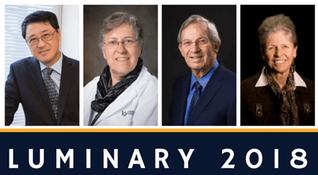 Honored at the event, and participating in a conversation moderated by CBS News medical correspondent Dr. Max Gomez, highlighting their work in the field, were:
- Lieping Chen, MD, PhD, described as the “Father of Immunotherapy”
- Patricia LoRusso, DO, a transformational leader in cancer clinical trials
- Vincent DeVita, MD, a pioneer of chemotherapy and founder of the leading international textbook of oncology, “Cancer: Principles & Practice of Oncology”
- Joan Steitz, PhD, an international pioneer in understanding the role of RNA in biology & cancer development & progression
Also in attendance to receive the Yale Cancer Center’s recognition was Dr. Charles Fuchs, Director of the Yale Cancer Center, Physician-in-Chief of the Smilow Cancer Hospital, and Richard & Jonathan Sackler Professor of Medicine at the Yale School of Medicine.
The annual Luminary Award is the signature event of the World Affairs Council of Connecticut. It honors one or more individuals or an organization from Connecticut that has profoundly influenced global affairs, with a strong emphasis on achieving the overall betterment of the world. Past recipients include United Technologies, AmeriCares, ESPN International, and Hole in the Wall Gang Camps.
In addition to the focus on the work of the Yale Cancer Center, a number of students were recognized for their accomplishments by the World Affairs Council.
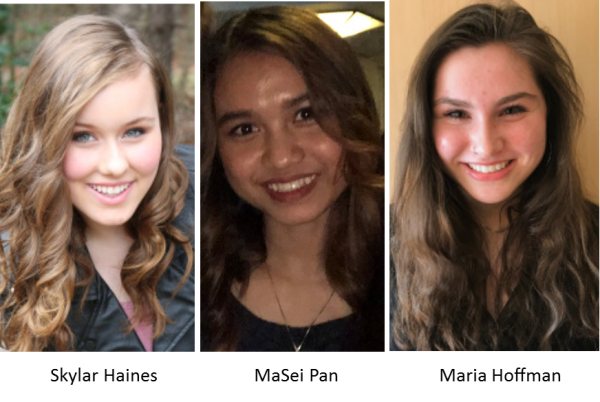
Hartford Public High School student MaSei Pan, who will be attending Central Connecticut State University this fall to study international affairs, received the Peter G. Kelly Global Scholar Award. She arrived in the U.S. six years ago as a refugee from Thailand. She grew up in a refugee camp, was delayed in starting school until age 8, and came to the U.S. without knowing English. Today, she excels in school and uses her experience to help others, including newly arrived immigrants.
The Global Engagement Award was presented to RHAM High School student Skylar Haines, who traveled to Mexico to teach English at the Serapio Elementary School, and subsequently organized fundraisers to purchase a computer lab and musical instruments for the school. She has also written a book of poetry about her experiences.
Global Engagement honorees were Maria Hoffman of Glastonbury High School, who focused on climate change and elephant migration in Botswana, and a trio from Westminster School in Simsbury, Shane Wahlberg, Lucas Wahlberg and Carson Roth, who devoted their attention to Sustainable Farming and Humanitarian Assistance for Cuba.

 The Superlative Award for “Most Improved Pitch” was won by

 “We understand, by all accounts, many of them may be using products that closely resemble a USB flash drive, have high levels of nicotine and emissions that are hard to see. These characteristics may facilitate youth use, by making the products more attractive to children and teens. These products are also more difficult for parents and teachers to recognize or detect. Several of these products fall under the JUUL brand, but other brands, such as myblu and KandyPens, that have similar characteristics are emerging.”
 Stating that “justice should not have an expiration date,” the organization points out that eight states have no statute of limitations for felony sexual assault crimes, and 28 states have a statute of limitations of 21 years or more. Only 10 states, including Connecticut, have a statute of limitation of 10 years or less.
 According to the National Institutes of Health, sexual violence is the leading cause of Post-Traumatic Stress Disorder (PTSD) in women.
 Topping the national rankings were Falls Church, Virginia; Douglas County, Colorado; Broomfield County, Colorado; Los Alamos County, New Mexico; and Dukes County, Massachusetts.
 In comparing the average annual opioid-related death rates per 100,000 population in 2012-13, 2014-15, and 2016-17, the dramatic increases across communities statewide is quite evident. The data analysts point out that data are where deaths from 'any opioid' (meaning some type of opioid were found in the person) take place. Therefore, they explain, one would expect to see higher rates in places with large hospitals (hence high rates in cities). They add that one can also not discount that these places are also seeing higher rates among its residents.
 The Connecticut Data Collaborative has posted on its

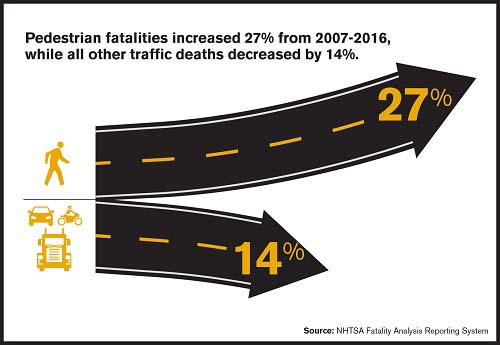 The total number of multimedia messages sent has more than tripled since 2010. The report also suggests a possible link with marijuana use. According to the report, the seven states (Alaska, Colorado, Maine, Massachusetts, Nevada, Oregon, Washington) and DC that legalized recreational use of marijuana between 2012 and 2016 reported a collective 16.4 percent increase in pedestrian fatalities for the first six months of 2017 versus the first six months of 2016, whereas all other states reported a collective 5.8 percent decrease in pedestrian fatalities.
 The report defines Eastern Connecticut as the Community Foundation of Eastern Connecticut service area: 42 towns that include 453,000 people, 227,000 women. The population of the region is 80% white, 9% Latina, 4% Black and 4% Asian. Approximately 33,700 residents, or 7 percent, are foreign born. Looking ahead, the report noted that the population of women ages 65 and up is projected to grow significantly over the next decade; estimated to increase 44 percent by 2025.


 image of Michelle Obama’s face,” the researchers pointed out.