Increasing Engagement by Providers and Consumers, Greater Focus on Holistic Health at Heart of Changing Industry, CVS-Aetna Merger Plan
/“This is a transformational merger and it gives us the opportunity to reshape the health care industry, Aetna President Karen Lynch said this past week, looking at the potential impact of a CVS-Aetna merger. “We expect to transform what a CVS store looks like.” “For too long we’ve been practicing sick care and not health care and the potential of a CVS-Aetna merger is really to organize around the consumer and the consumer experience. It will allow us to be in the local communities, to create another gateway to access healthcare and it will also give Americans a go-to destination for their health care services and their health care needs,” Lynch said.
Appearing this month on Conversations on Health Care, a radio program produced by Middletown-based Community Health Center, Lynch noted that CVS has over 10,000 stores across the United States and that 70 percent of Americans live within five miles of a CVS.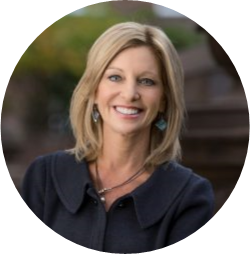
CVS Health chief executive officer Larry Merlo recently said the company’s $69 billion acquisition of health insurance giant Aetna is “making good progress” with state regulators and on track to close later this year, according to published reports.
Merlo said the company is seeking approval from 28 departments of insurance and many are holding hearings, with the key market of Florida already giving it approval. CVS also continues to provide information to the U.S. Department of Justice, which is reviewing the pharmacy chain's agreement to buy the Hartford-based health insurer.
Lynch described a post-merger CVS as “an interactive hub where individuals can come in and learn more about their health care, where they can access healthcare services and they can have further assistance in navigating the overall healthcare system.” Right now, she said, “Your zip code is more important than your genetic code. What that means is your individual behaviors and your environment clearly have meaningful impact on health care costs.”
“Our overall goal is to achieve affordable, quality care for the individuals that we serve,” Lynch said. Lynch was named by Fortune as one of the 50 Most Powerful Women in 2017 and 2016, and is one of the most senior women in the health insurance industry. She joined Aetna in 2012.
CVS has a network of nearly 10,000 retail pharmacies in 49 states, the District of Columbia, Puerto Rico and Brazil and more than 1,100 Minute Clinic locations in 33 states. Aetna – the nation’s third largest insurer - has more than 20 million enrollees in its various health plans. The latest CVS in Connecticut opened this weekend in West Hartford, supplanting a local pharmacy.
In looking ahead to evolving changes in the health insurance industry, Lynch highlighted three areas: provider engagement, consumer engagement and an increasing focus on holistic health.
She explained that “Aetna and providers have one common purpose – to improve the quality and affordability of health care and with value-based care we can demonstrate that partnership to do just that”. She also stressed the importance of “consumer engagement, and being in local communities and really focusing on individual behaviors and the social determinants of care. I believe that can be a very powerful step in reshaping how we think about healthcare.” Another key factor, looking ahead, will be holistic health, “treating the whole person, physical, emotional and behavioral aspects of one’s health,” which she said “could make a meaningful difference on the impact of healthcare.”
Noting that the U.S. spends more on healthcare than any country in the world, which continues to grow at what Lynch described as “an unsustainable rate,” Lynch said “we need to understand people’s health ambitions and we need to support them in their individual behaviors, we need to provide better access, and we need to give them more affordable and more transparent health care in America to really drive down overall health care costs.”
She indicated that 30 percent of Americans now suffer from diabetes, compared with less than one percent in the 1950’s. Citing another major – and costly – health concern, she said that 40 percent of adults and 20 percent of children are considered obese today. And she said that over 900 billion dollars – one in three dollars – “is waste in our healthcare system.”
Aetna Chairman and CEO Mark Bertolini has routinely stressed that "if we keep people healthier, there's lower costs in the system." He has described the health care system as “backwards” – responding to when people are ill rather than seeking to prevent the illness.
Lynch said that technology also drives the changing healthcare landscape, predicting that greater attention would be paid to “leveraging telehealth and telemedicine and having people have access in ways that are unique and different.” Aetna, for example, is increasingly able to access data in real time utilizing newly designed apps and cloud technology, often placing nurses armed with ipads in individual’s homes.
“Having data at our fingertips will allow us to remotely monitor and get information about people where they are so that we can immediately get information back out to them,” Lynch said. “Having real-time access can really change individual behaviors and how people think about their health.”
 Conversations on Health Care focuses on opportunities for reform and innovation in the health care system. Co-hosts Mark Masselli and Margaret Flinter each bring four decades of experience in overcoming the barriers that block access to care in their work at community health centers. It is heard on radio stations from Connecticut to Washington state, and online at www.chcradio.com. Flinter is Senior Vice President and Clinical Director, and Masselli is the President/CEO of Community Health Center, Inc., Connecticut’s largest and most comprehensive provider of primary health care services for the uninsured and underserved.

 Honored at the event, and participating in a conversation moderated by CBS News medical correspondent Dr. Max Gomez, highlighting their work in the field, were:
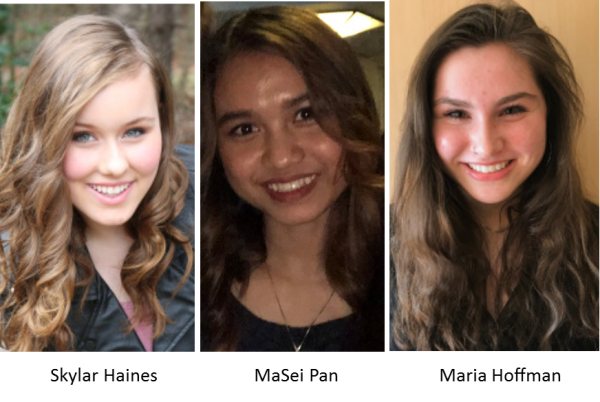

 The Superlative Award for “Most Improved Pitch” was won by

 “We understand, by all accounts, many of them may be using products that closely resemble a USB flash drive, have high levels of nicotine and emissions that are hard to see. These characteristics may facilitate youth use, by making the products more attractive to children and teens. These products are also more difficult for parents and teachers to recognize or detect. Several of these products fall under the JUUL brand, but other brands, such as myblu and KandyPens, that have similar characteristics are emerging.”
 Stating that “justice should not have an expiration date,” the organization points out that eight states have no statute of limitations for felony sexual assault crimes, and 28 states have a statute of limitations of 21 years or more. Only 10 states, including Connecticut, have a statute of limitation of 10 years or less.
 According to the National Institutes of Health, sexual violence is the leading cause of Post-Traumatic Stress Disorder (PTSD) in women.
 Topping the national rankings were Falls Church, Virginia; Douglas County, Colorado; Broomfield County, Colorado; Los Alamos County, New Mexico; and Dukes County, Massachusetts.
 In comparing the average annual opioid-related death rates per 100,000 population in 2012-13, 2014-15, and 2016-17, the dramatic increases across communities statewide is quite evident. The data analysts point out that data are where deaths from 'any opioid' (meaning some type of opioid were found in the person) take place. Therefore, they explain, one would expect to see higher rates in places with large hospitals (hence high rates in cities). They add that one can also not discount that these places are also seeing higher rates among its residents.
 The Connecticut Data Collaborative has posted on its

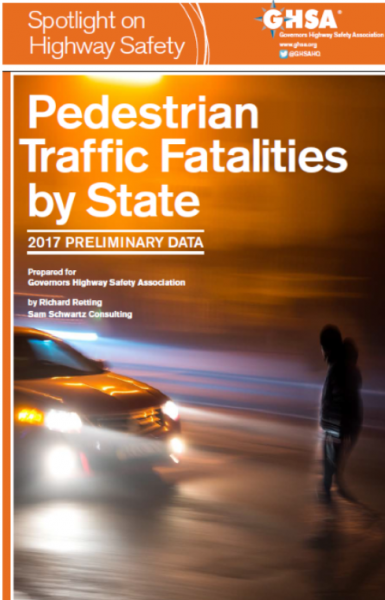
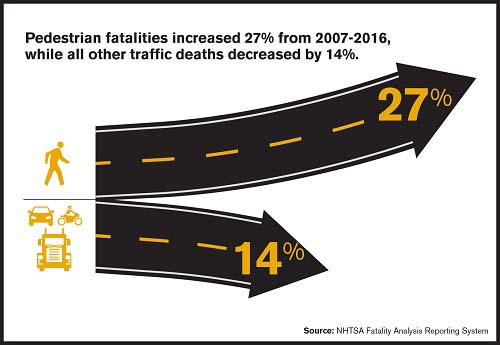 The total number of multimedia messages sent has more than tripled since 2010. The report also suggests a possible link with marijuana use. According to the report, the seven states (Alaska, Colorado, Maine, Massachusetts, Nevada, Oregon, Washington) and DC that legalized recreational use of marijuana between 2012 and 2016 reported a collective 16.4 percent increase in pedestrian fatalities for the first six months of 2017 versus the first six months of 2016, whereas all other states reported a collective 5.8 percent decrease in pedestrian fatalities.
 The report defines Eastern Connecticut as the Community Foundation of Eastern Connecticut service area: 42 towns that include 453,000 people, 227,000 women. The population of the region is 80% white, 9% Latina, 4% Black and 4% Asian. Approximately 33,700 residents, or 7 percent, are foreign born. Looking ahead, the report noted that the population of women ages 65 and up is projected to grow significantly over the next decade; estimated to increase 44 percent by 2025.