Trinity's Berger-Sweeney, Barack Obama, Tom Hanks, Yale Faculty Are Among American Academy Inductees
/The 238th class of new members of the highly selective American Academy of Arts and Sciences, to be inducted later this year, include many household names - and one prominent local individual. The academy is one of the country’s oldest learned societies and independent policy research centers, and its members include some of the world’s most accomplished scholars, scientists, writers, and artists, as well as civic, business, and philanthropic leaders.
Being added to the ranks this year are, among others, former president Barack Obama; actor Tom Hanks; Netflix CEO W. Reed Hastings Jr.; NASA climatologist Claire L. Parkinson; Supreme Court Justice Sonia M. Sotomayor; pediatric neurologist Huda Y. Zoghbi - as well as Trinity College President and Professor of Neuroscience Joanne Berger-Sweeney and three Yale professors in the schools of divinity and medicine.
“This class of 2018 is a testament to the academy’s ability to both uphold our 238-year commitment to honor exceptional individuals and to recognize new expertise,” said Nancy C. Andrews, the academy’s chair of the board. “John Adams, James Bowdoin, and other founders did not imagine climatology, econometrics, gene regulation,  nanostructures, or Netflix. They did, however, have a vision that the academy would be dedicated to new knowledge—and these new members help us achieve that goal.”
The 238 newly elected members represent 25 categories and 125 institutions. The new class will be inducted at a ceremony in October 2018 in Cambridge, Massachusetts. The full class of new members is available at www.amacad.org/members.
“This is truly a great honor that I share with my family and friends and with Trinity College, which I’m privileged to serve,” said Berger-Sweeney. “To be elected to the academy is an extraordinary highlight of my career in science and education.”
Berger-Sweeney has served as president of Trinity College since July 2014. Over the past four years, she has, among other accomplishments, overseen the completion of the college’s strategic plan, Summit, which will guide Trinity toward its bicentennial in 2023 and beyond; the creation of the Bantam Network mentoring program for first-year students; the launch of the Campaign for Community, a campus initiative promoting inclusiveness and respect; and the expansion of Trinity’s footprint to Constitution Plaza in downtown Hartford.
Before coming to Trinity, Berger-Sweeney served for four years as dean of the School of Arts and Sciences at Tufts University. Prior to Tufts, she spent 13 years as a member of the Wellesley College faculty and as associate dean from 2004 to 2010. Berger-Sweeney received her undergraduate degree in psychobiology from Wellesley College and her M.P.H. in environmental health sciences from the University of California, Berkeley. While working on her Ph.D. in neurotoxicology from the Johns Hopkins School of Public Health, Berger-Sweeney did the proof of concept work on Razadyne, which went on to be the second-most-used Alzheimer’s drug in the world. She completed her postdoctoral training at the National Institute of Health (INSERM) in Paris, France.
 Also being inducted in this year's class are John J. Collins of the Yale Divinity School and Gerald I. Shulman and Haifan Lin of the Yale School of Medicine.
Collins is Holmes Professor of Old Testament Criticism and Interpretation at Yale. A native of Ireland, Professor Collins was a professor of Hebrew Bible at the University of Chicago from 1991 until his arrival at Yale Divinity School in 2000, and previously taught at the University of Notre Dame. He has published widely on the subjects of apocalypticism, wisdom, Hellenistic Judaism, and the Dead Sea Scrolls.
Dr. Shulman is the George R. Cowgill Professor of Medicine, Cellular & Molecular Physiology and Physiological Chemistry at Yale University, where he serves as Co-Director of the Yale Diabetes Research Center and Director of the Yale Mouse Metabolic Phenotyping Center. He is also an Investigator of the Howard Hughes Medical Institute. Dr. Shulman has pioneered the use of magnetic resonance spectroscopy to non-invasively examine intracellular glucose and fat metabolism in humans for the first time.

Haifan Lin is Eugene Higgins Professor of Cell Biology, and Professor of Genetics and of Obstetrics, Gynecology, and Reproductive Sciences; and Director of the Yale Stem Cell Center. Current study is focused on molecular mechanisms underlying the self-renewing division of stem cells. There is a focus on small RNA-mediated epigenetic programming and translational regulation that are required for the self-renewal of germline and embryonic stem cells, according to the Yale website, which notes that he continues to explore the clinical implications of recent findings.
https://youtu.be/RK5vvvRhGEA

 “At Pratt & Whitney, we are in a very competitive industry and our continued success depends on our people driving innovation into every part, process and service,” said Carter. “Our customers have depended on Pratt & Whitney innovators literally for generations, and with the GTF, they can continue to count on us for the next generation.”
 nation at the forefront of global technology and economic leadership.
 The five dimensions, mentioned above, were weighted to determine an overall score on a 100 point scale using thirty relevant metrics including the cost of living, rate of home ownership and insurance, average student loan debt, voter turnout rate, unemployment rate, percentage diagnosed with depression and the average price of a latte at Starbucks.
 In comparing the average annual opioid-related death rates per 100,000 population in 2012-13, 2014-15, and 2016-17, the dramatic increases across communities statewide is quite evident. The data analysts point out that data are where deaths from 'any opioid' (meaning some type of opioid were found in the person) take place. Therefore, they explain, one would expect to see higher rates in places with large hospitals (hence high rates in cities). They add that one can also not discount that these places are also seeing higher rates among its residents.
 The Connecticut Data Collaborative has posted on its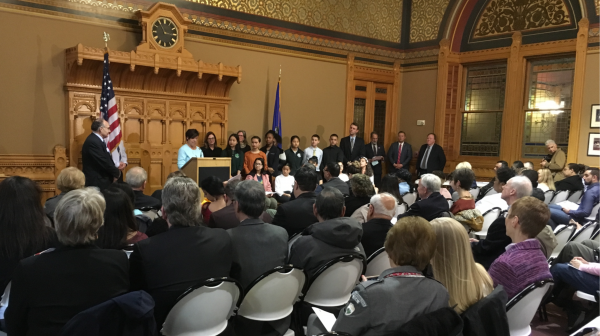
 Sixth-graders from the Interdistrict School for Arts and Communication in New London were recognized for their project, “Community Faces-Humanizing the Immigrant Label,” parts of which were on display at the Capitol. The second group was Teens4Citizenship, a Hartford Public Library and Hartford Public Schools collaborative program. As "Citizenship Guides," these high school immigrant students support family and community members on the path to Citizenship and upon turning 18 pursue their own citizenship.
 Instead of honoring Christopher Columbus, the Indigenous Peoples’ Day recognizes Native Americans, who were the first inhabitants of the land that later became the United States of America. Advocates for the switch to Indigenous Peoples Day argue that Columbus did not “discover” America in 1492 but instead began the colonization of it.
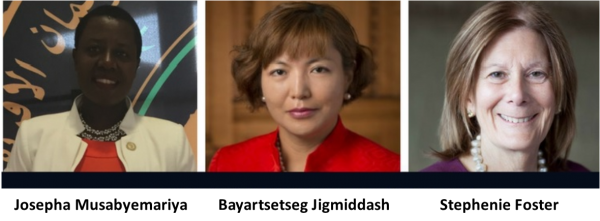 On campus will be:



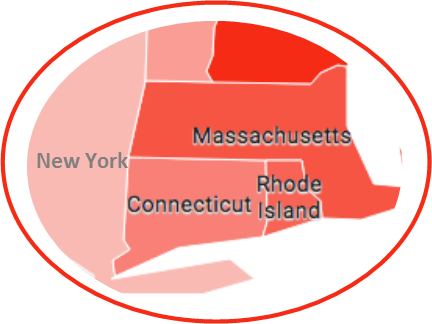 Even in advance of the merger plan, the Board of Regents has been extending lower tuition offers in every direction, reaching out to students in Massachusetts, Rhode Island, New York and even New Jersey, making offers that the Regents hope will be tough to refuse.