Study: Working-Class Candidates Less Likely to Run in Public Financing System

A new academic study has found that working-class first-time candidates for the Connecticut legislature became rarer after the state enacted public campaign financing, when compared with candidates in neighboring Massachusetts and Rhode Island. The study, by a Harvard University researcher, found that working-class candidates in Connecticut were less likely to qualify for the state’s public financing for candidates, apparently because of the requirement to raise a large number of small-dollar private contributions to qualify for public financing.

The findings demonstrate that when public financing is available, fewer low socio-economic status candidates run for state legislative office, and “those who do run are not more likely to win and are less likely to utilize public financing.”

The study’s author, Mitchell Kilborn, is a PhD candidate at Harvard University’s Department of Government concentrating in American Politics. His research focuses on inequality in political participation and the interaction between commercial activity and political behavior.  The study was published in the journal State Politics & Policy Quarterly last month.

Candidates running for the office of Governor, Lieutenant Governor, Attorney General, Secretary of the State, State Comptroller, State Treasurer, State Senator or State Representative can participate in the state’s Citizens Election Program. To participate, candidates must agree to abide by certain requirements, including strict contribution and expenditure limits and mandatory financial disclosures.

Candidates must raise an aggregate amount of small-dollar monetary contributions from individuals (“qualifying contributions”) between $5 and $100 in the case of statewide office candidates and between $5 and $250 in the case of General Assembly candidates.

Education, Individual Impact Drive Mission of New Climate Change Center

Former Connecticut Commissioner of Environmental Protection and Administrator of the federal Environmental Protection Agency Gina McCarthy has made the shift from government to academia, with the launch of The Center for Climate, Health, and the Global Environment (C-CHANGE) at the Harvard T.H. Chan School of Public Health. C-CHANGE is a new collaboration between Harvard University and Google that will seek to reduce the use of harmful chemicals in building products and materials.  C-CHANGE is committed to transforming science into meaningful actions that will deliver a healthier, more just, and sustainable world, according to the university.

The Center aims to ensure that government officials, business leaders, and the public have access to the best science so they can understand the health and environmental challenges they face, why it matters to them, and how they can get engaged.

McCarthy headed the Connecticut DEP from 2004 to early 2009, and left to become head of EPA's air and radiation office before advancing to the nation’s top environmental protection job in 2013.

Appearing on Conversations on Health Care, a podcast produced by Middletown-based Community Health Center Inc., McCarthy discussed past, present and future.  On the program, hosted by President and Co-founder Mark Masselli and Senior Vice President and Clinical Director Margaret Flinter, McCarthy said C-CHANGE was working to make climate change “very personal, and actionable to individuals, and families and businesses.”  She added, “information is power… I want people to have that information.”

McCarthy said she understands the concerns of some in the environmental community regarding Trump Administration efforts to roll back many of the Obama-era policies, but she said it will be tougher to accomplish than most believe.

“What we did was follow the science, we followed the law, we did great public process around it and I think we did a really good job,” McCarthy said, noting that many of the rule-change proposals of the past year or so are not yet final, and may not become final. “They’re going to have a very hard time.”

Her work at C-CHANGE is designed to accelerate and strengthen public education on climate change and pollution issues, bringing the science down to the individual level, highlighting the impacts on people, rather than the planet.

Reflecting on her time leading EPA, McCarthy said “We showed you can make progress environmentally, to preserve and protect public health, and our natural resources, but you can also, at the same time, do them in very cost effective, reasonable ways that in fact enhanced our economy and jobs.”

Last spring, Gov. Malloy appointed McCarthy to serve as a member of the Board of Directors of the Connecticut Green Bank.

At the C-CHANGE kick-off this spring, Harvard Chan School Dean Michelle Williams said “The Center will pave the way for new research and student engagement on energy systems, food and nutrition, healthier buildings, and products to benefit our school, our country, and the world.”  McCarthy spoke about the importance of broadening support for environmental and climate action by calling attention to the impact of climate change on people’s health and the solutions to address it.

“Climate change isn’t about saving the planet and it’s not about politics, it’s about our kids and making sure they have the opportunity for a healthy, sustainable world,” said McCarthy. “C-CHANGE will ensure that cutting-edge science produced by Harvard Chan School is actionable—that the public understands it, and that it gets into the hands of decision-makers so that science drives decisions.”

C-CHANGE, the Harvard Office for Sustainability, and Google will work together to develop a set of public tools and resources that use the latest scientific research to inform decision-making by large institutions, purchasers, and manufacturers to help transform the marketplace to healthier alternatives. The collaboration,  to the university, aims to improve public health and the well-being of communities, reduce the use of harmful chemicals and leverage lessons learned to create a model that can be replicated by other organizations.

Moving forward, the two groups intend to continue partnering with Harvard’s schools to use the campus as a living lab to test new ideas and verify performance.


CT Headed for Population Also-Ran Status by 2040; Eight States Will Be Home to Nearly Half of Us

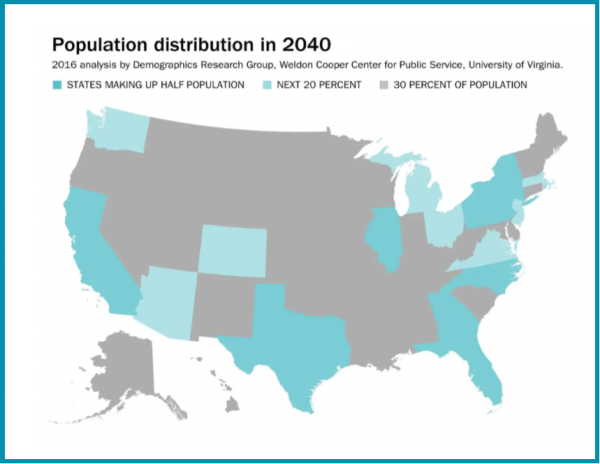
In 2040, it is anticipated that eight states will have just under half of the total population of the country, 49.5 percent, according to the Weldon Cooper Center for Public Service of the University of Virginia, which analyzed U.S. Census Bureau population projections.  Connecticut is not one of them. A report published in the Washington Post also indicated that the next eight most populous states will account for an additional fifth of the population, up to 69.2 percent — meaning that the 16 most populous states will be home to about 70 percent of Americans.

Geographically, the Post reports, most of those 16 states will be on or near the East Coast. Only three — Arizona, Texas and Colorado — will be west of the Mississippi and not on the West Coast.

The eight states expected to dominate the population numbers, with nearly half the nation’s residents, are California, Illinois, Pennsylvania, New York, Texas, North Carolina, Georgia and Florida.  The next eight, which will include 20 percent of the population, are Arizona, Colorado, New Jersey, Ohio, Virginia, Massachusetts, Michigan and Washington.

Connecticut is one of 34 states in which the remaining 30 percent of the nation’s population will reside.

The projections by the Weldon Cooper Center for Connecticut’s population are: 3,606,144 in 2020; 3,634,820 in 2030; 3,585,765 in 2040.

In previous populaton analysis, the Center has noted that the U.S. population is expected to reach 383 million by 2040, but the rate of growth is projected to slow down from nearly 10 percent over the 2000-2010 decade to 6 percent between 2030-2040. Similar trends are also expected from most states.

The geographic distribution of the nation’s overall growing population also reflects geographic shifts. Back in 2000, six of the top ten largest states belonged to the North. By 2040, five of the top ten are expected to be in the South. The slowing down of the northern states growth, along with rapid population growth in the south and west, means that over time the country will become more Southern and Western, the Center indicates. 

The fastest growth is projected to take place in Washington D.C., Texas, Colorado, Utah, and Florida. As noted above, the Connecticut population is expected to drop between 2030 and 2040.  Also expected to see population declines in that decade are Illinois, Maine, Michigan, Mississippi, New Hampshire, Ohio, Pennsylvania, Rhode Island, Vermont and West Viginia.


Gerrymandering Lessens Compactness, Which Lessens Voting, UConn Study Finds

The less geographically compact a district is, the lower the voter turnout. That’s the bottom-line finding of a study by a University of Connecticut political scientist, published in the June issue of Election Law Journal.  The study suggests that gerrymandering – often criticized for skewing political representation to one party or the other – has additional ill-effects, including the act of voting itself. Using a dataset on the compactness of U.S. House districts—with multiple measures generated by geographic information system (GIS) analyses over two redistricting cycles, UConn Associate Professor Jeffrey Ladewig estimated the effects of congressional district compactness on electoral turnout. The conclusion:  compactness matters.  The study “Appearances Do Matter”: Congressional District Compactness and Electoral Turnout” was led by Ladewig.

“Districts that were less geographically compact had lower voter turnout – measured both from election data and individual survey data – even controlling for district demographic and election characteristics,” the Boston Globe reported in a brief news item about the study.

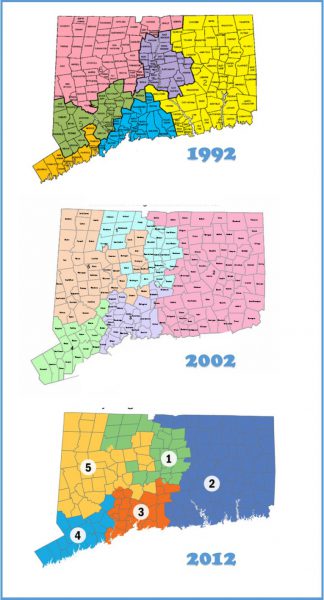
States determine their district lines for Congressional seats and state legislative seats every ten years, following the U.S. Census.  The next Census will be in 2020, with district lines slated to be redrawn for the 2022 elections.

According to Governing magazine, states around the country have a range of criteria in drawing district lines, including:

  • Compactness: Having the minimum distance between all the parts of a constituency (a circle, square or a hexagon is the most compact district).
  • Contiguity: All parts of a district being connected at some point with the rest of the district.
  • Preservation of counties and other political subdivisions: This refers to not crossing county, city, or town, boundaries when drawing districts.
  • Preservation of communities of interest: Geographical areas, such as neighborhoods of a city or regions of a state, where the residents have common political interests that do not necessarily coincide with the boundaries of a political subdivision, such as a city or county.
  • Preservation of cores of prior districts: This refers to maintaining districts as previously drawn, to the extent possible. This leads to continuity of representation.
  • Avoiding pairing incumbents: This refers to avoiding districts that would create contests between incumbents.

Connecticut has no guidelines or limitations in drawing Congressional District lines. (Although it does have a process.)

Jeffrey W Ladewig earned his Ph.D. from the Department of Government at University of Texas at Austin in 2002 and his B.A. from the Department of Political Science and the Department of Economics from the University of Wisconsin at Madison in 1993. He teaches courses on the U.S. Congress, the U.S. President, American political economy, and American political parties.

Will CT Legislature Reverse Representation Trend in "Year of the Woman"?

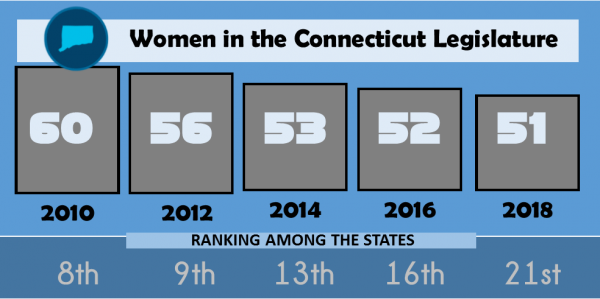
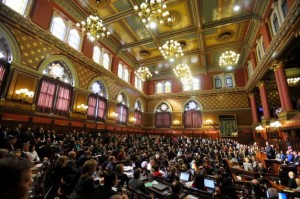
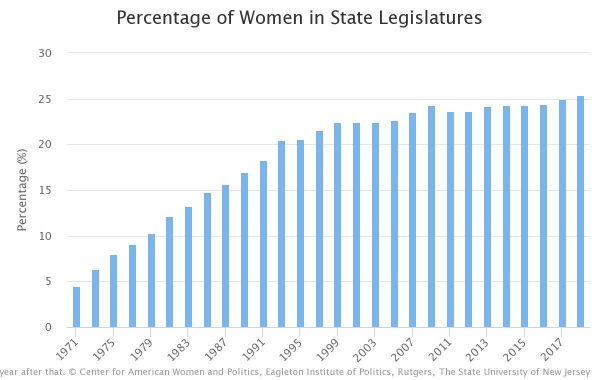
The number of women in the Connecticut legislature has dropped with each legislative election throughout this decade, dropping the state from 8th to 21st in the nation in the percentage of women in the legislature. The 2018 election year has been widely declared the year of the woman in politics, a reaction to the MeToo movement and related issues that have risen to the top of many political agendas.  It appears that Connecticut ballots may have a record number of women candidates in November, depending upon the outcome of the August 14 primaries in some legislative districts.

If it turns out that a record number of women are elected to the state’s 187 General Assembly seats (36 in the Senate, 151 in the House) in November, it would reverse a trend a decade in the making.

This year, the state legislature saw 42 women serving in the House (21 Democrats and 21 Republicans) and 9 women in the Senate (7 Democrats and 2 Republicans).  The total of 51 seats held by women, 27.3 percent of the 187 seats, placed Connecticut as one of 19 states between 25 and 34 percent.

Leading the nation were Arizona (40%), Vermont (40%), Nevada (38.1%), Colorado (38%), Washington (37.4%), and Illinois (35.6%).   Women make up 25.4 percent of all state legislators nationwide.

In 2010, there were 60 women in the Connecticut legislature, 52 in the House and 8 in the Senate.  Connecticut ranked 8th among state legislatures in the percentage of women, at 32.1 percent.

Connecticut’s place among the states continued to drop through the decade, from 8th in 2010 to 9th in 2012, 13th in 2014, 16th in 2016 and 21st in 2018.

Power of Nature to Help Cities and Local Residents Being Revealed in Bridgeport

What would happen if ways to integrate nature into a major urban community were pursued?  In Connecticut, the largest city is Bridgeport, and the Connecticut chapter of The Nature Conservancy (TNC) has been undertaking an effort to find out. Nature offers a lot of benefits to communities, TNC points out. “Trees provide shade and help clean the air. Gardens absorb and filter water, which reduces flooding and runoff into nearby rivers. Healthy dunes and wetlands protect coastlines from storms.”  In addition, the organization points out, “nature can also transform the way people experience their neighborhood.”

With 70 percent of the world’s population predicted to live in cities by 2050, heat and air pollution constitute a major public health concern, TNC points out, underscoring the importance of the organization’s initiatives to plant trees in urban areas across the country, among a series of related undertakings.

“People are at the core of our efforts to identify how neighborhoods are addressing daunting challenges in this formerly industrialized city,” said Drew Goldsman, Urban Conservation Program Manager. “We want to partner with communities to implement natural solutions in Bridgeport that help both people and nature.”

Their Eco-Urban Assessment looked at areas in Bridgeport that have poor air quality, high risk of flooding, and limited access to nearby green spaces and layered it with data on income level, impervious surfaces and asthma rates. The team was able to pinpoint neighborhoods where trees, green stormwater systems and open spaces will make the biggest difference for people and nature.  Air quality and flood risk topped the list of most acute needs.

In collaboration with local partners, the Conservancy is supporting a neighborhood-led greening effort known as ‘Green Connections’ in Bridgeport’s East Side neighborhood. Creating a plan for ways natural resources can shape the future of the community while making immediate changes to the landscape —through tree plantings and green stormwater infrastructure projects— is one of the initiative’s main goals, along with empowering volunteer stewards living in the community to take ownership of these natural areas. All of this helps create safe spaces for the community to gather, provides cooler and cleaner air, and improves wildlife habitat in the city.

According to the Nature Conservancy, Bridgeport currently has a 19% tree canopy cover, for example.  If all open spaces, vacant lots and parking lots could be planted, the city would have a 62% tree canopy cover.  The ramifications would be substantial, impacting various health and quality of life factors.

“Healthier people, cooler temperatures in the summer, cleaner air, reduced flooding, more urban habitat, parks and forests, less sewage overflow, a clean Pequannock River a more resilient coastline and green jobs” are cited as potential benefits.

The national publication Governing pointed out last year that “Streets cover about a third of the land in cities, and they account for half of the impervious surfaces in cities. Impervious surfaces don’t allow water to soak through them, which means they can alter the natural flow of rainwater. City streets collect, channel, pollute and sometimes even speed along water as it heads to the sewers.”

Goldsman indicates that currently efforts are focusing on the city of Bridgeport, but the Eco-Urban Assessment model is available to urban communities that want a deeper understanding of where nature can bring solutions to some of the most pressing urban issues.

“With the Eco-Urban Assessment model, we’re able to help municipalities identify the places and ways we can work together to use nature to improve residents’ quality of life and build more sustainable communities,” said Dr. Frogard Ryan, Connecticut state director for The Nature Conservancy. “From the beginning, we wanted this to be a community-led and TNC-supported program. Residents help us identify areas of other focus that aren’t highlighted by the model and be sure our study reflects what people experience day-to-day.”

CT Aerospace Industry Seeking Strong Presence at International Airshow

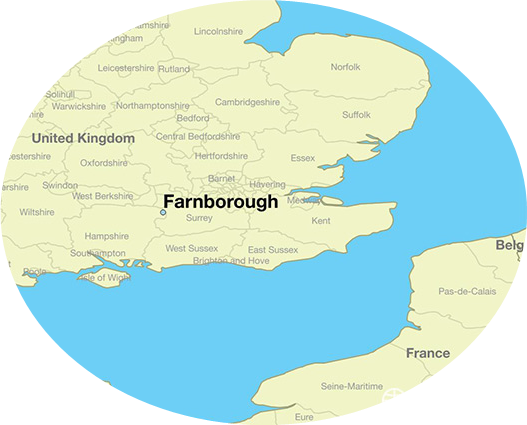
Described as “the largest industry event on the aerospace calendar,” the Farnborough International Airshow, to be held in mid-July in Great Britain, boasts more than 1500 exhibitors from more than 50 countries.  Among them will be a contingent from the State of Connecticut, if the state’s aerospace industry suppliers step up and sign on.  At the most recent Farnborough show, in 2016, $14.5 million in sales was reported by Connecticut exhibitors. The State Department of Economic and Community Development (DECD) and the Connecticut Center for Advanced Technology (CCAT)  have invited Connecticut aerospace manufacturers to participate in promoting the state’s world-class aerospace industry at the upcoming show, July 16-22, 2018.  Exhibit space is available on a first-come, first-served basis, with the cost per exhibit set at $11,000.

An anticipated 73,000 industry professionals “from across the globe and a range of aerospace sectors” are expected, including “key global influencers plus the latest thought leadership and industry insight,” according to organizers.  Farnborough’s news network will run a series of talks, panel discussions and seminars, and high-profile keynote speakers “will challenge current perceptions and provide ideas for the future.” Among the featured sessions will be “meet the buyer,” described as a structured approach to putting sellers in front of targeted buyers.

The biennial event is widely recognized for its role in connecting the worldwide aerospace market. It has traditionally been a backdrop for the announcement of multi-billion dollar deals, and for the launch of major innovations.

The state’s exhibit space is to include a prime location in the U.S. Pavilion, with Connecticut companies to receive allocated space to display graphics, literature and parts; pre-arranged B2B meetings at discount price; access to the U.S. Exhibitors Lounge and meeting rooms; company listing in two show directories and logistical support prior to the show and on-site.

Among the participating companies is Connecticut Coining, based in Bethel, a leading manufacturer of deep-drawn metal parts used in aerospace, medical, defense and high voltage tubes.  The 50-year-old company includes among its customers industry leaders manufacturing bellows, joints, bleed, duct (anti-ice, telescopic) assemblies as well as silencers, and crossover & oil cooler systems.

Satisfied Connecticut companies in 2016 include Windsor-based Aero Gear: “I have been trying to get a foot in the door with Rolls Royce for years. This air show allowed me to make the contacts necessary to develop them into a customer. The show was a home-run for Aero Gear,” said Doug Rose, who founded the company in 1982, developing expertise in the design, engineering and manufacturing of gears and gearbox assemblies for the global aerospace industry.

Countries including Mexico, Turkey and the U.S. will be vying for business alongside a significant European presence from Germany, France and Spain as well as the U.K.  Organizers say the 2018 edition will see the largest presence yet from China, with 70 per cent growth in participation since the 2016 show. Japan has increased its presence with a second Pavilion, joining Malaysia, Korea and Indonesia representing Asia.  It all comes just weeks after escalations in tensions among the world’s leading industrialized nations, reflected in the G7 meeting in Canada last week.

Connecticut Adds High School Certificate of Global Engagement

Much has been said but less has been done to encourage Connecticut students to prepare for an ever more connected and interdependent world.  Until now.  The State Board of Education has voted to establish a Connecticut Certificate of Global Engagement, which high school students can earn by completing specific aspects of the curriculum, and aims to prepare “globally competent students who are college and career ready.”  The Certificate would be noted on high school transcripts. The Connecticut Certificate of Global Engagement was established, according to the curriculum overview, “to recognize public high school graduates who have successfully completed a global education curriculum and engaged in co-curricular activities and experiences that fostered the development of global competencies and global citizenship.”

“In today’s intricately interconnected world, informed citizens require an increasingly broader base of knowledge and perspective, because local communities, societies and economies are directly affected by events and trends that occur well beyond national borders,” the newly adopted curriculum guidelines point out.

The Certificate is based on the guidelines of the Connecticut Social Studies Frameworks and American Council on the Teaching of Foreign Languages (ACTFL) World Readiness Standards, and builds upon the recommendations of the Council of Chief State School Officers (CCSSO).  It supports student literacy as defined by the Common Core Standards and provides a pathway for 21st Century Skills.

Officials stress that the Certificate does not require additional resources in local school districts, “as all coursework would already be part of the curriculum. The Certificate, however, gives school districts an opportunity to evaluate the entire school curriculum through the lens of global knowledge.”

The mission of the Certificate program, officials explain, is to provide Connecticut students a “pathway to gain global knowledge and skills that will increase their competitiveness and ability to succeed in college and career and their participation as informed citizens.  In today’s global marketplace, it is in the long-term economic, social, and democratic interests of the United States, Connecticut, and local communities to encourage and facilitate international connections in the community, state and beyond.”

To be recognized for the Certificate, students will need to complete the following requirements:

  • coursework in world languages;
  • coursework with strong global implications and analysis;
  • extracurricular activities and experiences with global themes; and
  • a global service learning or action project.

The guidelines indicate that through coursework and co-curricular activities, globally competent students will demonstrate the following competencies:

  • investigate and express ideas about the world beyond their immediate environment;
  • recognize and articulate their own and others’ perspectives;
  • communicate ideas effectively with diverse audiences; and
  • translate ideas into appropriate actions to address a contemporary global issue.

Globally-Focused Coursework would require at least 7.0 credits or demonstration of mastery and Globally-focused Student Activities would require competency in global citizenship through active participation in “at least one or more co-curricular and other school-sponsored or endorsed activities over at least 3 years of their high school experience with suggested involvement of a total of at least 15 hours.”

The guidelines for the Certificate of Global engagement were approved at the Board’s May 2 meeting and is now available for high schools throughout the state to implement.  A copy of the guidelines appears on the State Department of Education website alongside the state’s Social Studies Frameworks and Resources.

The curriculum plan was developed by a 24-member committee including Stephen Armstrong, the state’s Social Studies Consultant in the Department’s Academic Office, David Bosso, President of the Connecticut Council for the Social Studies, Robert Rader, Executive Director of the Connecticut Association of Boards of Education, high school teachers, superintendents, language specialists, college professors and representatives of the World Affairs Council of Connecticut.

Exhibit at Wadsworth Atheneum Shows Hartford Roots

Life and art come full circle this month at the Wadsworth Atheneum in Hartford, with the opening of an historic exhibition with an unmistakable hometown connection.  Frederic Edwin Church was a prominent American landscape painter in the 1800’s, born in Hartford, and a central figure in the Hudson River School of American landscape painters. His family wealth came from Church's father, Joseph Church, a silversmith and watchmaker in Hartford.  Joseph subsequently also became an official and a director of The Aetna Life Insurance Company. Joseph, in turn, was the son of Samuel Church, who founded the first paper mill in Lee, Massachusetts in the Berkshires, which allowed Frederic to pursue his interest in art from a very early age, according to the website that features his work.

At eighteen years of age, Church became the pupil of Thomas Cole in Catskill, New York after Daniel Wadsworth, a family neighbor and founder of the Wadsworth Atheneum, introduced the two. Now, the Wadsworth Atheneum Museum of Art will present “Frederic Church: A Painter’s Pilgrimage,” bringing together approximately 50 of the celebrated Hudson River School painter’s compositions of sacred terrain in the Middle East and the Mediterranean.

“This is a rare opportunity for our audience to explore a side of Church’s working process and fierce entrepreneurship beyond the usual experience of landscape paintings,” says Robert H. Schutz, Jr., Associate Curator of American Paintings and Sculpture Erin Monroe. “Church’s story started in Hartford, so it is particularly fitting for the Atheneum to feature this exploration of his pilgrimage as a way to reconnect the artist with his personal and professional origins.” The exhibition opens to the public at noon on June 2 and is on view through Aug. 26.

A leading painter of 19th-century America, Frederic Church was the most popular and financially successful painter in the United States during his lifetime. As a young artist Church’s first formal training was facilitated by Atheneum founder Daniel Wadsworth, who arranged for Church’s apprenticeship with painter Thomas Cole, the father of the Hudson River School. While committed to the natural sciences, Frederic Edwin Church (1826–1900) was "always concerned with including a spiritual dimension in his works".

Organized by Kenneth J. Myers, curator of American art at the Detroit Institute of Arts, “Frederic Church: A Painter’s Pilgrimage” explores the enduring appeal of pilgrimage through a lesser-known body of work resulting from the artist’s journey to powerful sites of spiritual and historical significance in the late 1860s.

As he further established his career, Church traveled to remote places to sketch majestic scenes unfamiliar to his American audience, turning them into dramatic, large-scale paintings. These travels provided Church with ideas and material to produce major paintings for his wealthy patrons, including prominent American industrialists and financiers such as Hartford’s Timothy Mather Allyn, J. Pierpont Morgan and firearms manufacturer Elizabeth Hart Jarvis Colt.

From 1868–1869, Church, his wife and their young son visited the lands of modern-day Syria, Lebanon, Israel, Palestine, Jordan and southeastern Turkey, with Church taking expeditions to Athens, Damascus, Petra, Baalbek and Jerusalem. Church made countless small-scale pencil drawings and oil sketches on these trips, noting observations including colors, light, time of day and even weather patterns. Upon returning to his New York studio Church created large-scale compositions.

“These historic views are especially compelling and relevant now,” says Monroe. “It is a chance to foster conversation around the destruction and urgent need for preservation of cultural heritage sites in the 21st century.”

An illustrated catalogue accompanies the exhibition.  Tours of “Frederic Church: A Painter’s Pilgrimage” are offered Saturdays and Sundays at 2:30 p.m. from June 9–Aug. 26. Free lectures include “Sacred Geographies: Frederic Church, the Holy Land, & the Hudson Valley” with Yale University professor Jennifer Raab, June 12 at 6 p.m. “Art After Dark: Rock the Kasbah” on June 7 at 5 p.m. will feature live music, exhibition tours and an outdoor bazaar; tickets are $5-10.

Another Federal Agency Says School Buses Should Have Lap/Shoulder Belts; Most States, Including CT, Don't

The National Transportation Safety Board (NTSB) this week recommended to states that all new large school buses be equipped with both lap and shoulder seatbelts, the first time such a recommendation has been issued for the vehicles by the agency. The board also recommended requiring collision-avoidance systems and automatic emergency brakes on new school buses, but the follow-through on the recommendations falls to states and local jurisdictions.  The NTSB recommendation is not a federal requirement, and comes three years after a similar call by the National Highway Traffic Safety Administration (NHTSA). Connecticut, as most states, does not require lap and shoulder seat belts in school buses.
The NTSB recommendations, made to the 42 states, the District of Columbia, and Puerto Rico, all of which lack requirements for lap/shoulder belts on large school buses, were accompanied by a recommendation to the states of Florida, Louisiana, New Jersey, and New York to amend their statutes to upgrade their seat belts requirements from lap-only belts to lap and shoulder belts.

Connecticut’s legislature has previously debated a lap-and-shoulder belt requirement on school buses, but has failed to pass such a requirement, including, most recently, last year. Legislation that would have imposed a requirement in Connecticut, effective in 2022, failed to gain approval from the Transportation Committee after a public hearing.
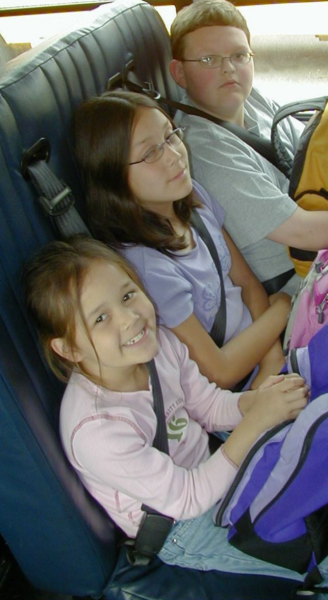
Last summer, Nevada joined California, Florida, Louisiana, New Jersey, New York and Texas in enacting laws requiring seat belts. The law in Louisiana requires school buses be equipped with seat belts, but this is subject to appropriation for the purchase of such buses and the state legislature has not provided funding to trigger the requirement. Similar language in Texas’ law was removed in 2017, according to the National Conference of State Legislatures.

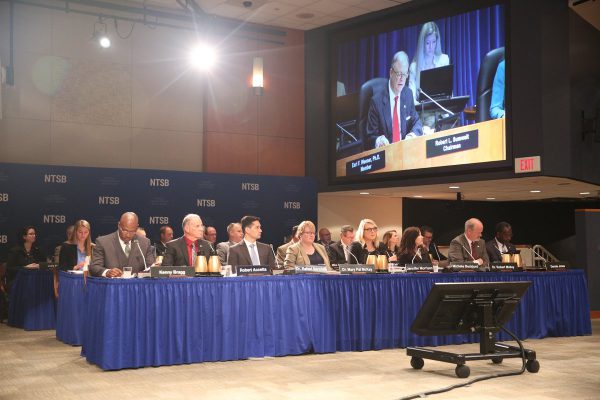
NTSB Chair Robert Sumwalt said at the close of Tuesday’s NTSB meeting this week, which included a review of two 2016 school bus crashes that killed 12 and injured 37, “The recommendations that we issued and reiterated today, if acted on, will help ensure that new school buses are manufactured with tried and true occupant protection such as lap-shoulder belts, as well as collision avoidance technology such as automatic emergency braking.”  The meeting was held just days after a school bus accident in New Jersey that killed a young student and teacher.

The recommendation comes three years after a similar stance from the then-Administrator of NHTSA, Mark Rosekind:  "The position of the National Highway Traffic Safety Administration is that seat belts save lives," Rosekind said in November 2015. "That is true whether in a passenger car or in a big yellow bus. And saving lives is what we are about. So NHTSA's policy is that every child on every school bus should have a three-point seat belt."
“The main hold up continues to be funding,” State Rep. Fred Camillo of Old Greenwich, who introduced Connecticut legislation to accomplish that objective, told CT by the Numbers last year.  Passage has been elusive here, and elsewhere, despite the change in position by NHTSA more than two years ago.  The federal agency previously viewed school buses as safe without seat belts, because of their construction.

That changed in 2015.  Since then, as Connecticut’s Office of Legislative Research noted in a 2016 report to the legislature, “NHTSA has been exploring ways to make seat belts on schools buses a reality.” NHTSA points out that seat belts have been required on passenger cars since 1968; and 49 States and the District of Columbia have enacted laws requiring the use of seat belts in passenger cars and light trucks.

The Connecticut Association of Public School Superintendents testified against the measure last year, calling for approval to be “postponed” until a series of questions – ranging from the use of bus monitors to the cost of seat belt maintenance to district liability from unused seat belts – could be answered.

The Connecticut Association of Boards of Education (CABE) – representing local elected school boards across the state – also voiced their opposition at a January 30, 2017 public hearing.  CABE officials expressed concern about “years of busses” that would “need to be replaced or retrofitted.”  They also noted that lap belts “would not work best for 5-year-olds and 18-year-olds alike.”  In addition, questions were raised about students who might “unclick the belt” and the liability of bus drivers if they did.

Camillo initially proposed the bill in 2011 after a Rocky Hill student was killed in a school bus crash.  Last year in Connecticut, in March, after a school bus accident in Canterbury sent five students to the hospital, public discussion on the pending proposal was renewed, but the legislature ultimately did not take action.  “This accident today is just another reminder that we really need to do something regarding this issue. We don’t want to wait for another tragedy to occur,” Camillo told the Norwich Bulletin.  Later that month, five people were injured after a crash involving a school bus in North Haven.

At NTSB, Robert L. Sumwalt was sworn in as chairman last August, after being nominated by President Trump and confirmed by the U.S. Senate. He began his tenure at the NTSB in August 2006 when President Bush appointed him to the Board and designated him as Vice Chairman. In November 2011, President Obama reappointed him to an additional five-year term as Board Member.

The NTSB this week also called for “facial recognition data to catch driver license fraud at every opportunity, with data shared across states. It demands that certified medical examiners effectively play their role in denying medically unfit drivers a medical certificate.”  Added Sumwalt:  “Action on the safety recommendations issued and reiterated today will constitute a crackdown, but only from the point of view of drivers who put the safety of our children and other road users at risk. Such a crackdown is long overdue.”