School Resource Officers Gain Attention in Aftermath of School Shootings
/School resource officers (SROs) are sworn police officers who typically perform a number of community policing roles to make schools safer for students and staff, including community liaison, mentor, role model, and law enforcement officer. A new report from the Connecticut Office of Legislative Research (OLR), looked at nearly 70 Connecticut school districts with at least one SRO.
With the assistance of the Connecticut Association of Public School Superintendents, OLR, the legislature’s non-partisan research arm, surveyed and researched 113 public school districts in Connecticut to learn whether SROs are utilized in their elementary, middle, or high schools.
Of the 113 districts, 70 were found to be utilizing SROs in some manner. SROs in Connecticut are primarily assigned to middle and high schools but often visit elementary schools in their district. They also may assist in the development of school policies that concern criminal activity and school safety, as well as teach classes in substance abuse awareness, gang resistance, and crime prevention, according to OLR.
Financial cost per SRO varies between municipalities and is sometimes unknown to the district, the report indicated. Generally SROs are funded by the board of education or provided by local police departments through memoranda of understanding (MOU) with the school district.
Last month, the Wallingford Board of Education called for funding for four police officers to serve as SRO’s, one at each middle school and high school in town, along with other safety items, the Meriden Record-Journal reported.
Plymouth is considering bringing a school resource officer back to the school, in the wake of the Parkland, Florida school shooting. The school resource officer position was eliminated two years ago due to budget cuts, NBC Connecticut reported. And Westport Now has reported that Westport’s Board of Education voted 5 to 2 in March to approve the concept of having an armed school resource officer in its schools.
Communities with the highest number of School Resource Officers in their local school district, among the towns surveyed, are New Haven (12), West Hartford (6), Bethel (5), Manchester (5), Meriden (5), and West Haven (5). Communities with four School Resource Officers include East Harford, Milford, and Monroe. The remaining school districts surveyed have three or fewer.
Numerous districts have SRO’s in place, but the range of responsibilities – as well as the numbers - vary.
In Newington, for example, the SRO was initially funded by a grant; currently the Board of Education and the Police Department share the annual cost of the program. The SRO at the local high school works full-time in conjunction with the education system to address a myriad of issues facing the high school population.
Manchester’s SRO’s are trained to fulfill three primary roles, according to the town police website. “First and foremost they are Law Enforcement Officers, whose main purpose is to keep the peace in their schools. Second, they are law related mentors who provide guidance and information to students, their families, and school staff. Thirdly, they are law related ‘teachers’, who can provide the schools with additional resources by sharing their expertise in the classroom (when requested and available).”
In Darien, the SRO's days are spent meeting with students, administration, support staff, and parents in regards to various issues or concerns, according to the police department website. The SRO also “visits classrooms to give guest lessons on alcohol and drugs, search and seizure, and other law-related topics. The SRO often attends extra-curricular events, in an effort to further immerse himself into the community and increase familiarity.”
New Haven’s SRO program, which was established in 1994, consists of 12 uniformed officers that are assigned to middle and high schools. The program, according to the city website, “allows both home and school to be aware of any situation that may impact the health and safety of students, as well as the monitoring of those who show signs of at-risk or delinquent behavior. This interaction provides a valuable resource to keep our children out of trouble during their school years and keeping their focus on education and commitment to family and community.”

 Stating that “justice should not have an expiration date,” the organization points out that eight states have no statute of limitations for felony sexual assault crimes, and 28 states have a statute of limitations of 21 years or more. Only 10 states, including Connecticut, have a statute of limitation of 10 years or less.
 According to the National Institutes of Health, sexual violence is the leading cause of Post-Traumatic Stress Disorder (PTSD) in women.
  In comparing the average annual opioid-related death rates per 100,000 population in 2012-13, 2014-15, and 2016-17, the dramatic increases across communities statewide is quite evident. The data analysts point out that data are where deaths from 'any opioid' (meaning some type of opioid were found in the person) take place. Therefore, they explain, one would expect to see higher rates in places with large hospitals (hence high rates in cities). They add that one can also not discount that these places are also seeing higher rates among its residents.
 The Connecticut Data Collaborative has posted on its

 The Gold Star Memorial Bridge, described as “Connecticut’s most iconic structure,” is the largest bridge in the State of Connecticut. It is 6,000 feet long and over 150 feet tall at the center span. The bridge is actually a pair of steel truss bridges that span over the Thames River, between New London and Groton, according to the project website.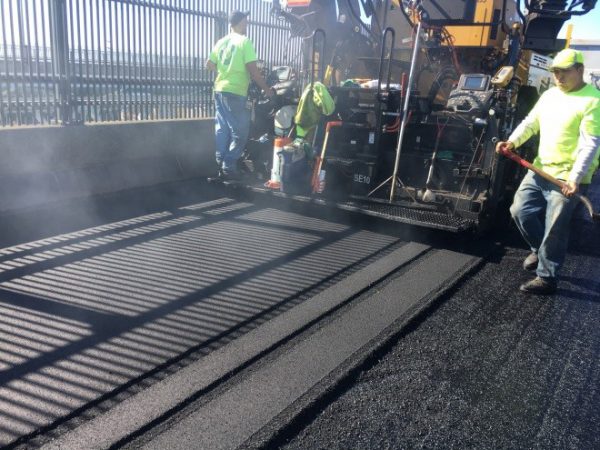
 “Repairs and maintenance of the bridge’s structural steel includes steel girder end repairs, bolt replacements, and bearing replacement and maintenance. Repairs to the substructure include concrete repairs and crack sealing,” the website explains.
 teachers and administrators are armed,” 85 percent said they would not; 15 percent thought they would.

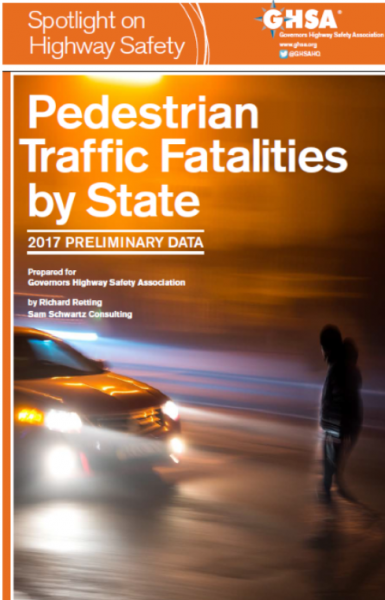
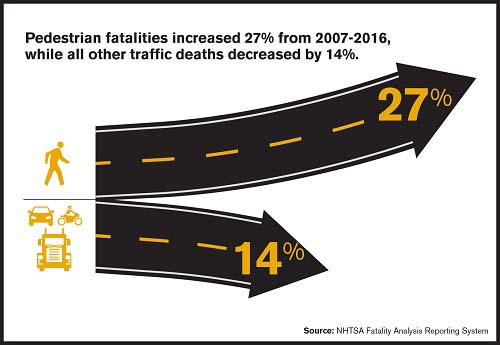 The total number of multimedia messages sent has more than tripled since 2010. The report also suggests a possible link with marijuana use. According to the report, the seven states (Alaska, Colorado, Maine, Massachusetts, Nevada, Oregon, Washington) and DC that legalized recreational use of marijuana between 2012 and 2016 reported a collective 16.4 percent increase in pedestrian fatalities for the first six months of 2017 versus the first six months of 2016, whereas all other states reported a collective 5.8 percent decrease in pedestrian fatalities.
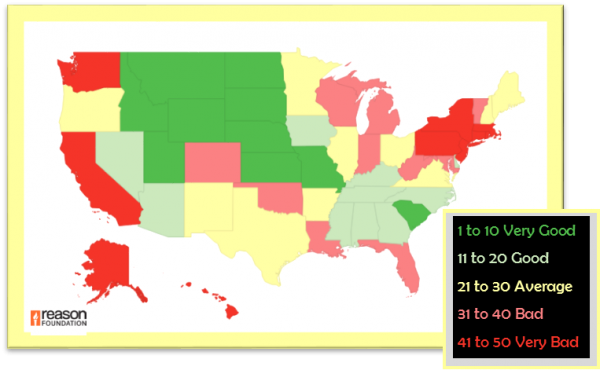 Reason Foundation’s Annual Highway Report ranks the performance of state highway systems in 11 categories, including spending per mile, pavement conditions, deficient bridges, traffic congestion, and fatality rates. At the bottom were New Jersey, Rhode Island, Alaska, Hawaii and Connecticut. Topping the list were North Dakota, Kansas, South Dakota, Nebraska, South Carolina and Montana. New York and Massachusetts were also in the bottom ten, ranked just above Connecticut.
 The report also considered costs related to state roads and bridges.