Innovation Drives Start-Up Businesses to Receive CTNext Funding

When CTNext, described as state’s leading resource for entrepreneurial support, distributed $54,000 to five Connecticut-based businesses at the annual CTNext Entrepreneur Innovation Awards, they instantly became five to watch. The fledgling businesses are among a growing number of start-ups that are being encouraged by state and private funding sources as Connecticut seeks to become a place where innovation, often driven by millennials, can thrive.  Such financial support aims to increase the odds of a business succeeding, while at the same time making it more likely that the company founders would stay in the state, at a time when many millennials are heading elsewhere.

The companies, selected from 10 that sought the CTNext funding of $10,000 per company, were:

  • FallCall Solutions (Stratford): Creating a telemonitoring system for Apple Watch and other mobile systems for elders and caregivers
  • Rumble Helmet (Bridgeport): Developing a smart bicycle helmet that has embedded features designed to communicate the cyclist’s intentions to other road users
  • Sitrep (Cheshire): Creating a system for better communication of heating, ventilation and air conditioning (HVAC) problems
  • Deo2Go (Norwalk): Creating a topical delivery device that can be filled with a variety of products, such as deodorant, lip balm and sunscreen
  • EZ ICE: Manufacturing a kit for a custom and portable backyard ice rink that can be assembled in under an hour, with no tools and on any surface

For the second consecutive EIA, Deo2Go took home the $2,000 Crowd Favorite award. Rumble Helmet won an additional $2,000 as Judges’ Favorite, at the awards ceremony held in Hamden.

Rumble Helmet, founded in January 2017, is a smart bicycle helmet that has an embedded adaptive light system consisting of front flash light, back light, turn signals, and uniquely designed sidelights to communicate the cyclists' intentions to other road users, according to a GoFundMe page, now seeking financial support. The light system can be activated using hand signals. The smart helmet can detect vehicle presence in the cyclist's blind spot. Moreover, it can be paired with a mobile navigation application. This invention has a utility patent and design paten granted.  CEO Reem AlAttas, a University of Bridgeport Ph.D. candidate, is a co-founder.

Sitrep, based in Cheshire, was founded in 2014 to “develop monitoring systems that are intuitively usable.”  Principals are Harland Christofferson, Gary Martin and Michael Byrne.

The mission of Stratford-based FallCall Solutions, LLC is “to become the premier innovator in simplified communication solutions for the geriatric population and their caregivers.” The company website explains that the company aims to maximize elder independence and caregiver peace of mind by “building software based solely on the needs of the consumer rather than the trying to create and introduce new ecosystems into our customers’ lives.”

EZ ICE began in 2010 as a small Rhode Island company constructing ice skating rinks in families’ backyards in the Providence and Boston Suburbs, according to the company’s website.

Since launching the Entrepreneur Innovation Awards in 2014, CTNext has now held 13 total events in the state, awarding a total of $642,000 to 58 unique companies.  All companies – including the most recent selections - must be registered with the Secretary of the State’s Office in Connecticut before receiving any grant dollars from CTNext.

“It’s exciting to see the innovative ideas moving toward commercialization by our state’s entrepreneurs, and we are so pleased to be able to provide support to help progress those ideas to the next level,” said Glendowlyn Thames, Executive Director of CTNext.
Award-Winning Accelerator Prepares for Next Cohort of Start-up Businesses

reSET, a Hartford-based non-profit organization supporting entrepreneurs, has opened applications for its highly regarded business accelerator program for 2018. Tailored for impact-driven businesses but available to early-stage ventures across all industries, reSET’s Impact Accelerator was a winner of the U.S. Small Business Administration Growth Accelerator Competition, and was the only Connecticut accelerator to receive the award, in 2015. Running from next January through May, the five-year old program will provide entrepreneurs with access to the knowledge and resources they need to grow their businesses and impact. Applications are being reviewed on a rolling basis; the final deadline is December 8, 2017.  Applicants are not limited to the Hartford area or Connecticut; in previous cohorts, participants have been from other states and nations.

reSET is a nonprofit organization whose mission is advancing the social enterprise sector. Its strategic goals are threefold: to be the “go-to” place for impact entrepreneurs, to make Hartford known as Impact City, and Connecticut the Social Enterprise state. reSET meets entrepreneurs wherever they are in their trajectory and aims to help them take their businesses to the next level.

The accelerator program has graduated 80 businesses to date. Recent participants have experienced success in advancing their businesses, including competitor acquisition, venture capital investment, and nationwide sales and recognition. 

Among the businesses are Almasuite, CareerPathMobile, Phood, Pelletric, Eureeka, Save America, and Genius Box. Kate Pipa, co-founder of Genius Box, which develops and sends science kits to elementary and middle-school age children, credits the Impact Accelerator with helping her business gain traction.

“reSET’s Impact Accelerator was a great stepping stone for getting introduced to and more involved in Connecticut’s startup scene.  Just being in reSET’s community allowed for access to workshops, mentors and service providers to answers questions and provide advice on different challenges that can come up when starting your business.”

Over the course of four weekend summits during the accelerator program, participants selected for the 2018 cohort will be connected to customers and industry-specific mentors. Up to 20 entrepreneurial teams will have access to:

  • 20+ optional workshops covering a range of topics in business and social enterprise
  • Numerous structured and unstructured opportunities to engage with investors and advisors
  • 1-year reSET membership (includes access to co-working, programming and the on-site Entrepreneur-in-Residence)
  • Exclusive discounts on business software packages and other resources

The accelerator will be free for accepted entrepreneurs and no equity will be taken from their operations. Graduates will also have an opportunity to compete for $20,000 in unrestricted funding at a culminating Venture Showcase in Spring 2018.

“As an entrepreneur myself, I have experienced the ups and downs of launching a new business,” said Jeremy Szechenyi, reSET’s Programs Manager. “Between reSET’s physical office and programs, we give entrepreneurs the resources and network that is critical to surviving and bringing their work to the next level.”

An information sessions will be held at reSET  (1429 Park Street, Hartford) on October 26 from 12:30-1:30pm, and November 15 from 5:30-6:30pm.  The sessions will be informal and meant to address prospective candidates questions.

reSET serves all entrepreneurs, but specializes in social enterprise ― impact driven business with a double or triple bottom line. In addition to providing co-working space, accelerator and mentoring programs, reSET aims to inspire innovation and community collaboration, and to support entrepreneurs in creating market-based solutions to community challenges.

Cybersecurity Remains Top Business Concern As Risks Mount; State Task Force Formed to Investigate

National Cybersecurity Awareness Month, marked annually in October, is sandwiched this year between one of the largest reported data breaches in history and the busiest online shopping period of the year. Now, the Connecticut Better Business Bureau says a new study shows small businesses are having difficulty calculating the cost versus risk of strengthening protection of their vital information.  And state and federal authorities have formed a new statewide task force to investigate cybersecurity crimes. The study, conducted by  the Council of Better Business Bureaus concludes that while most small businesses are aware of specific threats, the majority are at odds about how to prevent becoming a victim.

"Awareness of the potential and perceived cybersecurity threats is a crucial starting point," according to Connecticut Better Business Bureau spokesman Howard Schwartz. "The study shows that most small businesses are strengthening their data protection to some degree, however, it concludes they must place more emphasis on employee education to prevent cybercrime."

In an online survey of 1,100 businesses in North America, The State of Small Business Cybersecurity in North America finds 81 percent of small businesses use basic data protection tools such as antivirus software, and 75 percent protect their systems with firewalls. The downside is that the report reveals less than half of respondents concentrate on employee education, which is considered by the authors to be one of the most cost-effective prevention tools.

The most compelling reason for small businesses to take stronger cybersecurity measures, BBB points out, is because half of the study's respondents said they could not remain profitable for more than one month if their essential data was stolen.

Even though small businesses may be easier targets for determined cybercriminals, data breaches at the largest commercial, industrial and government networks yield information that is of much greater value because of stolen information's quantity and content, officials point out.  BBB urges businesses to train employees about data security protocols, because firewall and antivirus protection are not sufficient if your employees don't know how to detect and steer clear of suspicious online activity.

The Connecticut Business and Industry Association (CBIA) points out that “getting hacked can destroy customers’ trust and cost companies millions of dollars in legal fees, investigations, damage control, and lost income,” adding that “too many companies underestimate this threat or simply don’t know how to protect themselves until its too late.”

CBIA is holding free webinars for CBIA member companies this fall, with sessions upcoming on Oct. 25, Nov. 15 and Dec. 15.

The State Director of the Connecticut Small Business Development Center, Emily Carter, points out that for many small business owners, cybersecurity doesn't extend beyond using antivirus protection.  "It's something they think is only a threat for large corporations and big brands, but that's inaccurate," she explained.  SBDC recommends that small businesses train employees on best practices upon hiring and regularly provide training on cybersecurity.  SBDC has developed a workbook that lists resources that small business owners can access for free training, and a step-by-step guide to create a cybersecurity plan for their business.

“One of the most important things an employer can do for their business in the fight against cyber terrorism is to educate their employees," said Lynn Souza,  CEO of KyberSecure, with Connecticut offices in Fairfield and Rocky Hill.  "Cybersecurity is the responsibility of everyone, and end users are the gate keeper.  Teach them how to spot fraudulent emails, remind them weekly to be vigilant, and post cybersecurity information in public spaces.  Warren Buffet was quoted as saying ‘It takes 20 years to build a reputation and 5 minutes to ruin it.  If you think about that you’ll do things differently.’  However I like to change that just a bit and say ‘It takes 20 years to build a reputation and one click to ruin it. If you think about that you’ll do things differently.'  Teach your employees to always ask before clicking on anything and empower them with the tools and training they need to help protect your business,” Souza added.

Last July, Gov. Malloy announced a cybersecurity strategy for the state that included business among other sectors, and this week United States Attorney Deirdre M. Daly and representatives of federal, state and local law enforcement announced the formation of the Connecticut Cyber Task Force to investigate complex crimes in cyberspace.  The state strategy indicated "person, agency,organization and business in Connecticut faces some degree of vulnerability. You are affected whether you are a major corporation or the convenience store down the block."  It warned that "today’s firewall is tomorrow’s soft spot. Cyber risks are inherently complex and changing."   One of the key areas of focus for the Task Force is "to identify and disrupt criminal organizations that use computer intrusions to defraud companies of their money and information."

The Connecticut Cyber Task Force will be based at the FBI in New Haven. It includes representatives from the FBI, Drug Enforcement Administration, U.S. Secret Service, U.S. Postal Inspection Service, Homeland Security Investigations, Internal Revenue Service – Criminal Investigation, Defense Criminal Investigative Service, Connecticut State Police and 11 police departments from across the state, including the Bridgeport, Bristol, Fairfield, Greenwich, Hartford, New Canaan, New London, Norwalk, Stamford, Torrington and Westport Police Departments.

“The broad reach of cyber criminals can be felt almost every day in Connecticut,” said U.S. Attorney Deidre Daly.  “Day after day, we learn of companies, municipalities, educational institutions, hospitals, public utilities, nonprofits and citizens being targeted by bad actors.  These cyber criminals seek to disrupt our work, steal our intellectual property, compromise the personal or financial information of employees, customers and citizens through dedicated denial of service (DDOS) attacks, spear phishing campaigns, ransomware and malware attacks and other computer hacks or cyber intrusions.”

Adds Carter, "Cybersecurity is becoming a bigger and bigger issue, and it's not going anywhere."

Business owners can learn more about cybersecurity steps they can take through "5 Steps to Better Business Security" at bbb.org/cybersecurity. BBB also offers these tips to help protect personal and financial data while doing business and browsing online:

  • Look for HTTP"S" - You will find it in your web browser's address bar. The "s" stands for secure and it will be accompanied by a padlock icon. That means the business is using technology to secure information between your digital devices and its website. Avoid using free wireless connections for shopping - Scammers can set up a fake wireless network with a legitimate-looking name in a coffee shop, restaurant, library, airport, hotel or anywhere else. Unless you verify the name of the establishment's real network, a hacker can burrow into your computer. Experts also recommend avoiding conducting any commerce or logging on to your accounts using a free public wireless network.
  • Greeting cards can come at a high price - It's not unusual to receive an online greeting card at this time of year, but you can lessen the chances of downloading a virus if you confirm with senders that they emailed the card link to you. Clicking on a fake holiday card can cause big trouble and infect your computer.
  • Educate your family - Explain why it is potentially dangerous to click on email or social media links or attachments, unless they are absolutely certain the sender is legitimate. Use the same caution on websites when clicking on hyperlinks or downloading files.
  • Update and scan - Antivirus and firewall software do not provide sufficient protection unless you update it and scan your computer or smart device regularly.


Enfield, Backed by Western Mass., Goes After Amazon HQ2

The State of Connecticut is throwing its muscle behind Hartford and Stamford in their bids to become the home of Amazon’s second headquarters.  The Economic Development Council of Western Massachusetts, however, has issued a letter supporting a bid by the town of Enfield. In addition to Enfield, the cities and towns of Bridgeport, Fairfield, New Haven and Stratford submitted a joint proposal; Danbury also applied.

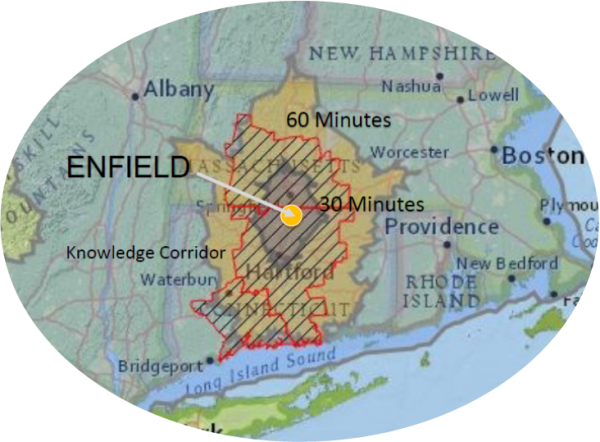
The bid by Enfield is perhaps the most ironic, as the Boston Globe pointed out in a front page article .  The central location being proposed is currently the Enfield Square Mall, which has seen its anchor stores – Macy’s, JC Penney’s and Sears – leave in recent years, followed by numerous smaller retailers.  The proposal is on the agenda of the next town Economic Development Commission, scheduled for Wednesday morning.  The Enfield proposal suggests Hartford, West Hartford, Windsor, Meriden and New Haven and Springfield as "potential satellite campuses" and stresses Enfield's place at the center of the Knowledge Corridor, which runs from Springfield to New Haven.

“It’s a scene repeating itself in dying suburban malls around the country,” the Globe reported, “a sweeping economic disruption known as the Amazon effect.”  Industry analysts have predicted that 20 percent of the 1,200 shopping malls in the U.S. will “meet their demise,” the Globe indicated.
Amazon.com has received 238 proposals from cities and regions across North America.  Amazon said Monday that 54 states, provinces, districts and territories in the United States, Canada and Mexico were represented in the bids. The number of applicants underscores the interest in the contest, which Amazon announced last month. The world’s largest online retailer said it would invest more than $5 billion and create up to 50,000 jobs for “Amazon HQ2”. The deadline for submitting proposals was last Thursday.

"There are no state boundaries for our region's workforce, company supply chains and students," Rick Sullivan, president and CEO of the Economic Development Council, wrote in a letter supporting Enfield.  The town is along the so-called "Knowledge Corridor," the economic region that includes Springfield as well as Hartford and New Haven, and follows the Interstate 91 corridor in Massachusetts and Connecticut.  The corridor is expected to benefit from the introduction of regular commuter rail service, being introduced next year; the Enfield proposal provides Amazon with a map of the new Hartford Line rail route.

The Enfield bid touts its proximity to higher education, Bradley International Airport and major highways, as well as arts and culture. Also highlighted are major businesses located in the community, including Lego, MassMutual, Brooks Brothers, and Eppendorf, according to published reports. The Enfield proposal opens with a stylized newsletter of the future, including facts about Enfield and the region, led by the headline “Internet Retail Giant Pumps Life Back into Dying Mall!”

"With a population of nearly 50,000, Enfield’s 33 square miles are at the center of the New England Knowledge Corridor, Enfield provides quick and easy access to several US Highways, airports and rail systems," the 12-page Enfield proposal explained.  "Tax Increment Financing (TIF) districts are being created in Enfield and surrounding towns to support new development and growth. Abatements and Regional Revenue Sharing are all available to sweeten the deal. Connecticut has the lowest corporate tax rate in the North East."


After having received more than a dozen potential bids, state economic development officials opted to promote Hartford and Stamford as its leading candidates to land the headquarters, developing a website to promote the two regions, under the headline “The Talent You Need.  The Lifestyle They Want.”  The submission noted that "if Connecticut were a country, we’d be the sixth most productive in the world—ahead of Germany, Japan and Hong Kong."

A letter of support jointly signed by the state’s seven-member Congressional delegation and included with the state’s submission did not indicate a preferred location in the state, advocating “full support of Connecticut as the home of your second headquarters.”  A similar letter was signed by legislative leaders of both political parties, along with the co-chairs of the state’s Commission on Economic Competitiveness.  That letter noted that “Connecticut has already made a major commitment to Amazon, with facilities in Windsor and Wallingford, and another planned for North Haven.”

The Hartford bid was supported by the Mayors of Hartford, East Hartford, and West Hartford, along with Chip Beckett of Glastonbury, Chair of the Capital Region Council of Governments.  A joint letter was included in the state’s overall package.  A similar letter supporting Stamford came from that city’s Mayor.

An additional letter of support for the state’s bid was signed by 57 business leaders from throughout the state, accompanied by another from nearly three dozen higher education leaders from public and private institutions.

It was, some have suggested, a show of unity that has been generally lacking during the four months that the state has operated without an approved state budget, the longest such period in the state’s history.

Some communities, most notably the joint proposal by the cities of Bridgeport and New Haven, along with their immediate suburban neighbors, didn’t make the state cut, but submitted proposals nonetheless.  The Enfield proposal touts the entire region, along the I-91 corridor.  Locations in Enfield, including the mall, are suggested, as are other communities north and south of the state line that could host various divisions of an Amazon headquarters, according to reports on the proposal.

Portions of artists renderings included in State of Connecticut proposal advocating for Stamford and Hartford.

Concerns Raised That U.S. Census Count Changes, Funding Cutbacks May Hurt Connecticut

It occurs once every decade – the U.S. Census aims to count everyone in the United States, and is the foundation upon which a plethora of funding and policy decisions are based for much of the decade that follows.  The next nationwide census, in 2020, is already raising red flags, here in Connecticut and across the country. The Connecticut Council for Philanthropy is encouraging local participation in a national webinar about the role that philanthropy in ensuring a fair and accurate count in the U.S. Census in 2020.  The webinar, on October 30, 1:00 – 2:00 pm, is one of the early efforts to raise awareness of potential implications for the census if Congress, in an effort to keep costs in check, makes fiscal decisions that turn out to be penny wise and pound foolish – potentially jeopardizing levels of federal aid to communities and states, including Connecticut, that will last a decade.

"If you underfund the Census, you get an undercount," says Kenneth Prewitt, who directed the bureau during the 2000 Census. "And if you don't count people, they are politically invisible, in effect," he said earlier this year in Time magazine.

Announced plans by the U.S. Census Bureau, that it will be “introducing significant innovations to conduct the 2020 Census,” is spurring concerns even as the planning process is being refined and funding and operational decisions are being made.  The Bureau is focusing on “four key innovation areas… with cost reductions in mind.”  Among them is “re-engineering address canvassing,” a critical first stage in the census counting process.

Policy and administrative decisions, such as the changes outlined in the latest Census Bureau plan, will carry significant implications for census accuracy and outcomes, point out webinar organizers the United Philanthropy Forum and Funders' Committee for Civic Participation (FCCP). It is imperative, the organizations emphasize, that philanthropy take action now to support a fair and accurate count.  Speakers on the webinar will include:

  • Terri Ann Lowenthal, Census Consultant with Funders' Committee for Civic Participation's Funders Census Initiative 2020
  • Debbie McKeon, Senior Vice President of Member Services, Council of Michigan Foundations
  • Daranee Petsod, President of Grantmakers Concerned with Immigrants and Refugees (GCIR)

Officials point out that “Data from the census drive key decisions made by government, business, nonprofits and philanthropy. Unfortunately, the Census has historically missed disproportionate numbers of people of color, immigrants, young children and low-income and rural households.”

In a commentary article earlier this month in CT Mirror, Aparna Nathan and Mark Abraham of New Haven-based DataHaven raised concerns not only about the impact on nonprofit organizations from a less-than-accurate census, but about the across-the-board dangers of a census that does not provide an accurate count – particularly for Connecticut.

The culprit: underfunding. 

In 2012, according to Nathan and Abraham, Congress told the Census Bureau to spend no more for the 2020 Census than they spent on the 2010 Census, and even encouraged them to spend less. Carrying out the same operation as in 2010 would cost a projected $17.8 billion overall, but the 2020 Census Operational Plan aims for $12.5 billion.  Already, a number of dry-runs and field tests have been postponed or cancelled outright, potentially undercutting plans for the census, now littler more than two years away.

“An underfunded 2020 Census is likely to systematically undercount some of the state’s more vulnerable populations and undermine efforts to create a more equitable, opportunity-rich state,” they wrote.  “Since population distributions are used to draw voting districts and determine the number of representatives each state or neighborhood gets in our legislative bodies, undercounting hard-to-count groups means that their vote may count less and their voice might not be heard at the state level or in Congress.”

The U.S. Census Bureau’s 2020 Census Operational Plan, dubbed “A New Design for the 21st Century,” increases reliance on technology to determine its count, considered to be a most cost-effective approach.  But others say technology has its limits, especially among certain populations, and overreliance can lead to an incomplete and inaccurate count.

The document itself acknowledges that possibility, noting that “As the Census Bureau continues to evaluate the 2020 Census operational design, an analysis of the impact on the quality of the census results is required to ensure that innovations designed to reduce cost do not have an unacceptable impact on quality.”

Sizeable immigrant populations throughout much of the state, and refugee populations in Hartford and New Haven, might find themselves questioning the confidentiality and importance of the census, especially in the current climate of fear and anti-immigrant rhetoric, pointed out Terri Ann Lowenthal, a consultant and former congressional staffer who directed the House’s census oversight subcommittee and now lives in Stamford, Connecticut.

Because individuals in urban and immigrant communities tend to respond at lower rates to census inquiries received by mail, the more costly personal visits be census officials are necessary to obtain more accurate population and demographic counts.  If those visits are reduced in order to cut costs, the accuracy of the census itself is likely to diminish, observers say.  Connecticut, which does not have independent counts of its entire population, depends heavily on data derived from the U.S. Census for a host of policy and funding decisions.

Fred Carstensen, Professor of Finance and Economics at the University of Connecticut and director of the Center for Economic Analysis at the school, commented recently that “In the face of its fiscal/budget crisis, an accurate census and vastly improved understanding of demographics is crucial. But in all likelihood, Connecticut will fly blind--and lose significant federal dollars.”

The National Committee for Responsive Philanthropy recently pointed out that "Counting every person in the United States is an extraordinarily complex endeavor – it is the nation’s largest peacetime mobilization of personnel and resources. Even with careful planning, a perfect count is virtually impossible: Some people are missed, some are double-counted, and some do not respond fully. But, because the accuracy of the census directly affects our nation’s ability to ensure equal representation and equal access to public and private resources, achieving a fair and accurate census must be regarded as one of the most significant civil rights and social justice priorities facing the country."


Traffic is for Women, Weather is for Men (Mostly) on Connecticut TV

Rachel Frank is an Emmy award-winning meteorologist, seen regularly throughout FOX61 evening newscasts.  Kaitlyn McGrath is a meteorologist for NBC Connecticut.  As women, they are the exception in Connecticut, where 16 men routinely provide the weather updates on Connecticut television stations. Traffic reporting, however, is a women’s domain in the state.  The news teams at all four television stations in the market – WFSB, WTNH, NBC and FOX - have women handling the traffic reporting responsibilities on their morning newscasts, and observers are hard-pressed to recall a man doing that job.

The latest shake-up of the weather reporting team at WTNH, NewsChannel 8, brought the disparity into sharper focus with half-page newspaper ads and television promos trumpeting the new all-male team of meteorologists, highlighted by the addition of veteran meteorologist Joe Furey, who moved to the station last month from FOX61.  Furey, named co-chief meteorologist, joins Sam Kantrow, Fred Campagna, Gil Simons and Kevin Arnone.

Also starkly absent from the meteorology and traffic reporting ranks in Connecticut – ethnic and racial diversity.

First, the traffic.  Morning newscast viewers see Rachel Lutzger on FOX, Nicole Nalepa on WFSB, Teresa Dufour on WTNH and Hanna Mordoh on NBC.

Nalepa wears many hats at channel 3, also serving as a health reporter and fill-in-anchor for the station.  Before joining the station, she was weekday morning anchor and reporter at WWLP-TV/22News in Springfield, MA, after having graduated Magna Cum Laude with a degree in Communications from Westfield State University. Mordoh earned a bachelor’s degree in Journalism and Criminal Justice from Indiana University and was a news reporter in Indiana and Kentucky before joining NBC Connecticut.

Lutzger also handles traffic reporting each morning for Kiss 95.7, Country 92.5, The River 105.9, WELI and KC101, and afternoons on The River 105.9. A native New Yorker, she first came to Connecticut to attend the University of Hartford. In addition to traffic reporting, Dufour is co-host for CT Style, a daily lifestyle program on WTNH.  She graduated from the University of Connecticut in 2001 with a bachelor’s degree in broadcast journalism, and handled traffic reporting for WFSB before moving over to WTNH.

Connecticut briefly lost its most visible female meteorologist when Frank, an honors graduate of Pennsylvania State University with a bachelor’s degree in meteorology and a native New Yorker, left the station briefly in 2014 for New York City’s WPIX.  She returned to Connecticut and FOX61 later that year.  McGrath’s most memorable career moments, according to the station’s website, were covering everything from severe thunderstorms and flooding, to life threatening heat and an EF2 tornado in Charleston, South Carolina. She earned her degree in Telecommunications/News Broadcasting at the University of Florida, and, earlier this year, a Certificate of Science in Geoscience; Broadcast Meteorology Concentration, from Mississippi State University.

At FOX, Frank is joined on-air by Matt Scott, Dan Amarante and Sam Sampieri. The NBC “First Alert” team includes Bob Maxon, Ryan Hanrahan, Darren Sweeney, and Josh Cingranelli, along with McGrath.  The full-time meteorologists at WFSB are Bruce DePrest, Mark Dixon, Mike Cameron and Scot Haney. At WFSB, the all-male ranks are occasionally joined by reporter Melissa Cole, who serves as a “fill-in meteorologist, lending a hand during major weather events,” according to the station’s website. She studied Meteorology at Villanova University, and initially joined WFSB as a weekend newscast meteorologist.

A national study published this month in the Bulletin of the American Meteorology Society, found that although “the overall percentage of females in the field increased and females were more represented in larger markets, females held fewer influential and desired positions in 2016 compared with previous studies. Females made up 8% of chief meteorologist positions and less than 11% of evening shifts, which was lower than numbers in previous studies.”

According to the American Meteorological Society (AMS), in 2005 about 20 percent of meteorologists nationally were women, up from 10 percent in 1995. In 2010, the Boston Globe reported that “for the first time, all five of the meteorologists on Boston’s early-morning and midday newscasts are women.”  Among them was Dylan Dreyer, now with NBC News and the network’s Today Show.  Commenting on a WeatherChannel program earlier this year with leading female meteorologists now working at national television networks, including ABC News Chief Meteorologist Ginger Zee, the program host observed in a blog post, “Check the numbers on female chief meteorologists around the nation. It’s pretty pathetic.”

In a 2015 article published by Medium, it was reported that an AMS membership survey of its 14,000 members indicated that 2 percent were African-American.

Photos:  Traffic reporters (above, clockwise)  Hanna Mordoh, Nicole Nalepa, Rachel Lutzger, and Teresa Dufour;  Weather reporting teams at NBC Connecticut, FOX61 and WFSB.

New Area Codes Becoming More Prevalent in Connecticut; 475 and 959 Grow in Usage

Do the numbers 475 and 959 sound familiar?  If they don’t yet, they likely will in the relatively near future. There was a time, long ago but not far away, when residents in the entire state of Connecticut shared one Numbering Plan Area, better known as an area code.  All across Connecticut, it was 203.  Then, after about 50 years, it became more complicated.

First, with advances in technology and the exponential growth of communications devices, the state was split into two area codes in 1995, with Fairfield and New Haven counties retaining 203, and the other six counties shifting to the new 860. 

But that quickly proved to be insufficient.  Within the past decade, two “overlay” area codes were added.  Beginning in December 2009, residents or businesses in the 203 area code could be assigned a 475 area code.  And telephone customers in the 860 area could be assigned the 959 area codes as of August, 2014.

Commonly known as an area code, an NPA is the first three digits of a 10-digit North American phone number. In areas that have run out of phone numbers and a new area code has been introduced, some – including Connecticut - have chosen to overlay the new area code over the same area as the old one, instead of splitting the area in half. This avoids anyone having to change area codes, but does require that everyone in that region dial all ten digits for each call.

According to the North American Numbering Plan Administration (NANPA), which has jurisdiction for assigning area codes (Numbering Plan Areas) in Connecticut and beyond, as of June 30, 2017 telephone carriers reported approximately 57,000 numbers have been assigned using the 959 area codes, and nearly ten times that number, 523,000, have been assigned the 475 area code in Fairfield and New Haven counties.  The numbers are assigned to carriers, who then dole them out to customers. 

One of them is the Odyssey Early Learning and Enrichment Program in Norwalk, assigned a 475 number.  The New Haven Public Schools Office of Choice & Enrollment also was provided a 475 number, in the midst of all the 203’s across the city.  In Bridgeport, St. Vincent’s Medical Center Federal Credit Union has introduced customers to their 475 area code phone number.  The Hartford Correction Center began using a 959 area codes in January, and the UConn School of Social Work received a 959 number when they relocated to Hartford this year.

So, don’t be surprised if a new neighbor or a local businesses shares a phone number with an unfamiliar prefix.  It’s the wave of the future, and it’s here now.

It is still possible for the “old” 203 and 860 prefixes to be assigned to new customers by the carriers.  NANPA reports that there remain 200 blocks of one thousand numbers that may still be provided to various carriers for them to assign to customers.

Of course as reliance on land lines continues to diminish and people tend to keep their cellular phone numbers as the relocate across the country, the connection between where a person lives and the telephone area code becomes less meaningful. But for land lines in Connecticut what was once one area code is now four.  At least for the immediate future.


Unhealthy Food Marketing Targets Hispanic Youth, UConn Researchers Find

Hispanic children and youth, particularly youth in Spanish-speaking households, visited food/beverage websites at higher rates than their non-Hispanic counterparts, despite fewer visits to the Internet overall, according to a research study published by University of Connecticut faculty members. “The frequency with which youth in Spanish-speaking households visited popular food and beverage websites compared with primarily English-speaking Hispanic youth raises further concerns due to the potential for these sites to reinforce preferences for an ‘‘American’’ diet among less acculturated youth, which could contribute to Hispanic youth’s worsening diet with greater acculturation,” Maia Hyary and Jennifer Harris point out in the inaugural issue of the journal Health Equity, published in September.

They stress that “Further research is needed to understand why Hispanic youth disproportionately visit food/beverage websites to help inform potential actions to reduce their exposure to unhealthy food marketing.”

The researchers warn that “given higher rates of obesity and diet-related diseases among Hispanic youth, food and beverage companies should not target marketing of unhealthy products to Hispanic youth online.”

Dr. Jennifer L. Harris is Director of Marketing Initiatives at the Rudd Center for Food Policy and Obesity and Associate Professor in Allied Health Sciences at University of Connecticut. She leads a multidisciplinary team of researchers who study food marketing to children, adolescents, and parents, and how it impacts their diets and health. Maia Hyary is a PhD student at the Heller School for Social Policy and Management at Brandeis University and a former Rudd Center Research Associate.

Food and beverage companies often target marketing for nutrient-poor products such as candy, sugary drinks, snack foods, and fast-food restaurants to Hispanic audiences, including youth, the researchers state.  They cite previous research that has documented disproportionate exposure to unhealthy food marketing by Hispanic youth in their communities and on TV, but theirs is the first examination of the phenomenon on the internet.

Sites that were relatively more popular with Hispanic youth than with non-Hispanic youth included ChuckeCheese.com, HappyMeal.com, the Lunchables website, FrostedFlakes.com, and two Spanish language websites (ComidaKraft.com and McDonald’sMeEncanta.com). Among Hispanic children (under 12 years), ChuckECheese.com, FrootLoops.com, HappyMeal.com, TacoBell.com, LuckyCharms.com, and SubwayKids.com were relatively more popular.

Health Equity is a new peer-reviewed open access journal that “meets the urgent need for authoritative information about health disparities and health equity among vulnerable populations,” according to the publication’s website, “with the goal of providing optimal outcomes and ultimately health equity for all.” The journal intends to provide coverage ranging from translational research to prevention, diagnosis, treatment, and management of disease and illness, in order to serve as a primary resource for organizations and individuals who serve these populations at the community, state, regional, tribal, and national levels.


 

PHOTO:  Dr. Jennifer L. Harris, Maia Hyary

State Energy Policy Needs Further Revisions, Environmental Advocates Say

Connecticut Fund for the Environment has formally submitted its comments on the state’s draft 2017 Comprehensive Energy Strategy to the Connecticut Department of Energy and Environmental Protection. The plan is intended to shape the state’s energy policies and investments for the next three years. “The draft energy strategy includes some important recommendations that will reduce dependence on outdated fossil fuels, landfill gas, and biomass, but it still doesn’t map out how the proposed policies will put Connecticut on a path to achieve the greenhouse gas reduction targets of the Global Warming Solutions Act,” said Claire Coleman, climate and energy attorney at CFE.

The final CES should do the following to sustain Connecticut efforts to combat climate change, CFE urged:

  • Incorporate a quantitative analysis of how its policies will achieve the emissions reductions necessary to meet Connecticut’s 2020 commitment under the Global Warming Solutions Act;
  • Go forward, not backward, on renewable energy by proposing a more ambitious annual increase to the renewable portfolio standard, with the minimum goal of powering 45 percent of Connecticut’s needs from renewable sources by 2030;
  • Recommend a full-scale shared solar program to allow access to renewable energy for the 80 percent of Connecticut residents who can’t install solar panels on their own roofs, and remove the proposed cap on behind the meter solar;
  • Bring Connecticut’s energy efficiency investment in line with neighboring states;
  • Create incentive and marketing programs to encourage consumers to switch to efficient heat pumps; and
  • Rapidly get more electric vehicles on the road by strengthening the CHEAPR rebate program, expanding charging infrastructure, and establishing a regional cap-and-trade program for fuels to reduce emissions.

    “Meeting these goals isn’t optional—it’s required under state law that’s been on the books now for almost a decade,” Coleman stressed. “State agencies and lawmakers need to get serious about rapidly ramping up renewables and energy efficiency, cutting emissions from cars and trucks, and clearly identifying how state policies will work together to meet the 2020 and 2050 targets. That’s what we’ll be looking for in the final plan.”

The Connecticut Electric Vehicle Coalition, of which CFE is a founding member, submitted its own comments last week. The coalition emphasized the urgency of more specific plans to get EVs on the road and meet the state’s commitments under the Zero Emissions Vehicle Memo of Understanding to get have 150,000 EVs on Connecticut roads by 2025.
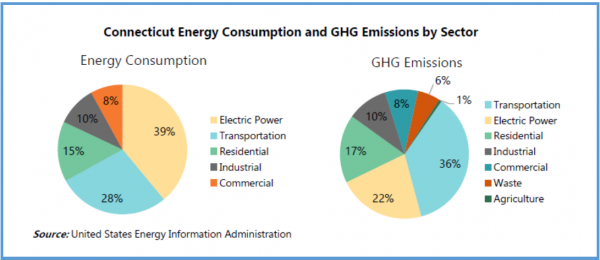
CFE, Consumers for Sensible Energy, RENEW Northeast, and Sierra Club also released an analysis by Synapse Energy Economics  which concluded that a 2.5 annual increase in Connecticut’s renewable energy growth would yield significant public health, economic, and climate benefits. Increasing the Connecticut RPS to 2.5% per year, the report indicated, would add an estimated 7,100 additional jobs to New England between 2021 and 2030, or about 710 jobs per year.

The Sierra Club noted that “even the administration's own analysis shows the draft energy strategy is not sufficient to protect the climate, and that more clean energy would create jobs, grow the economy, and improve public health.”

New Haven Chamber Recognizes Business Success Stories, Starting with "Juice"

The annual Greater New Haven Chamber of Commerce awards luncheon on Thursday, September 28  will celebrate the diverse accomplishments of members of the region’s business community – including an entrepreneurial business with the “juice” to grow from a home-based start-up in Wallingford to employ more than 120 people in New Haven in less than a decade. The company - FreshBev LLC - produces two primary lines of beverages - RIPE Craft Juice and RIPE Craft Bar Juices, bringing real fresh juice to the market, and connecting local farmers to consumers by using only ingredients that could be traced back to the grower and region.
“We don’t heat our juice, we don’t pasteurize it. It’s cold-pressed,” founder Michel Boissy told NewsChannel 8 earlier this year. “We use an amazing new technology called high-pressure processing, which does everything that pasteurization does minus the heat. So we’re not heating the juice, we’re not killing the color, flavor, aroma, nutritional profile and all of what fresh juice is.”

The company’s website explains that “In the fall of 2008, tired of being subjected to the big ol’ bottle of day glow “margarita” mix, childhood friends and founders Michel Boissy and Ryan Guimond came to the conclusion that they had no choice but to create the first line of legit, handcrafted bar juices. With Mike's experience in high end kitchens and behind the bar, coupled with Ryan’s picky palate and a shared love of a good cocktail, these drink mix mercenaries set forth to create the nation's first pure squeezed, cold pressed, Bar Juice™.

The results are making local history, and spreading.  RIPE Craft Juices are available nationally through Whole Foods and select regional grocery chains.

The Chamber’s business leadership event is highlighted by the presentation of the Community Leadership Award to an individual who has made an outstanding contribution to the Greater New Haven Community.   That award will go to longtime Quinnipiac University President John Lahey, who has announced his retirement.  The other awards to be presented by the Greater New Haven Chamber of Commerce include:

Small Business Achievement Award  Four Flours Baking Company

Legislative Leadership Award   First Selectman Mike Freda, Town of North Haven

Achievement in Manufacturing Award  Cowles & Company

Leadership in Healthcare Award  Cornell Scott-Hill Center

Community Partnership Award  Easter Seals Goodwill Industries

Developer Investment Award  Randy Salvatore, RMS Companies

Alumnus of the Leadership Center Award  Paul Bartosic, Harvard Pilgrim Health Care

Volunteer of the Year Award  Mary Grande, New Reach

The awards will be presented on September 28 at the Omni Hotel in New Haven.


https://youtu.be/X56KIS8TEd0