Students Excel in Winning Connecticut Science & Engineering Fair Recognition
/Students from across Connecticut won awards at the 70thConnecticut Science & Engineering Fair (CSEF) held this past weekend at Quinnipiac University. Students were recognized for their achievement and innovation in a half dozen categories, including physical science, life science, biotechnology, and engineering. Individual and team awards were presented, for grades 9-12 and grades 7-8. There was also an Urban School Challenge category.
The individual high school physical and life science first and second place winners, as well as the Alexion Biotechnology, CASE Urban School Challenge, and UTC Aerospace Engineering winners are packing their project boards to compete at the prestigious Intel International Science & Engineering Fair (Intel ISEF), to be held this week in Pittsburgh, PA.
Other CSEF winners will represent Connecticut and compete for cash and scholarships at other competitions, including the 2018 GENIUS Olympiad and the 2018 Broadcom MASTERS competition.
The Connecticut Science & Engineering Fair is a yearly, statewide science and engineering fair open to all students in grades 7-12 residing, or enrolled, in Connecticut and Fishers Island schools.
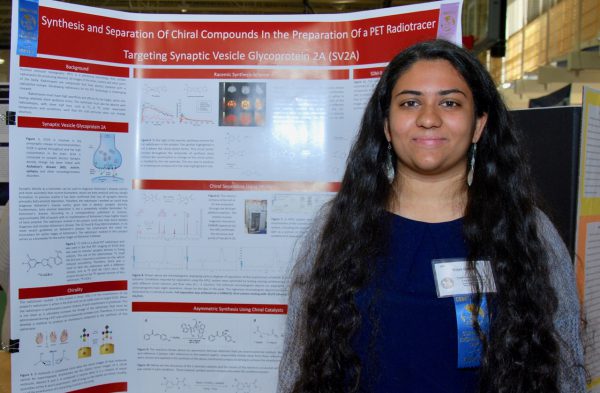 The primary objective of the fair is to attract young people to careers in mathematics, science, and engineering while developing critical thinking and public speaking skills. Through their participation in the fair, students are encouraged to pursue independent work using proper research methods.
The fair is supported by academic and industrial organizations through the state. The non-profit Connecticut Science & Engineering Fair is a volunteer organization fund that directs funds toward student awards, educational presentations, fair operations, and workshops.
Students from Bethany, Danbury, East Lyme, Greenwich, New Haven, West Hartford, Wilton, and Windsor earned top prizes at the 2018 event.
Individual winners in Grades 9-12 include:
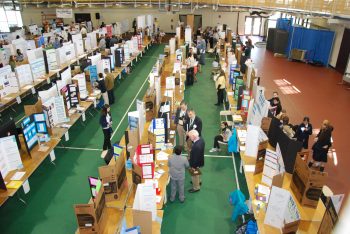
Physical Science – Maya Geradi, Wilbur Cross High School, New Haven
Life Science – Emily Philippides, Greenwich High School
Biotechnology – Shobhita Sundaram, Greenwich High School
Engineering – Keshav Vedula, CREC Academy of Aerospace & Engineering High School, Windsor
Individual winners at the middle school level include:
Physical Science - Khushi Parikh, Westside Middle School Academy, Danbury (Grade 8)
Varun Vadhera, Middlebrook School, Wilton (Grade 7)
Life Sciences - Grace Flynn, St. Timothy Middle School, West Hartford (Grade 8)
Athena Brown, Worthington Hooker Middle School, New Haven (Grade 7)
Biotechnology - Paloma Lenz, Westside Middle School Academy, Danbury
Engineering - Timothy Chen, Westside Middle School Academy, Danbury
See the full list of winners here.
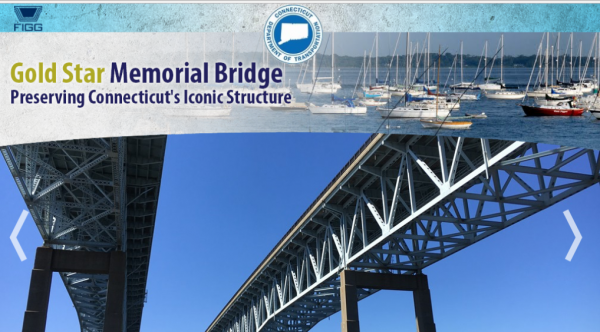 The Gold Star Memorial Bridge, described as “Connecticut’s most iconic structure,” is the largest bridge in the State of Connecticut. It is 6,000 feet long and over 150 feet tall at the center span. The bridge is actually a pair of steel truss bridges that span over the Thames River, between New London and Groton, according to the project website.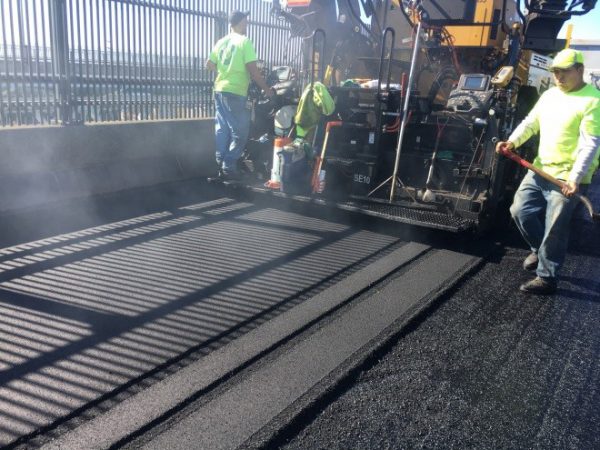
 “Repairs and maintenance of the bridge’s structural steel includes steel girder end repairs, bolt replacements, and bearing replacement and maintenance. Repairs to the substructure include concrete repairs and crack sealing,” the website explains.
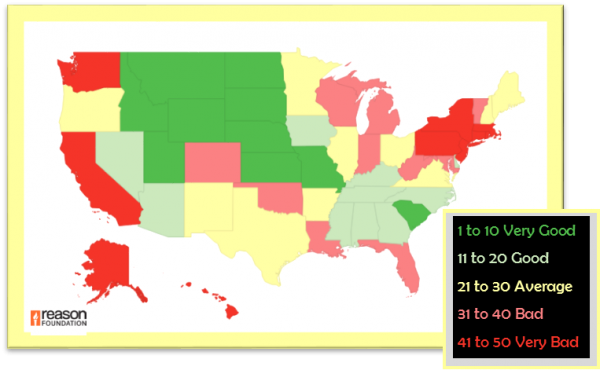 Reason Foundation’s Annual Highway Report ranks the performance of state highway systems in 11 categories, including spending per mile, pavement conditions, deficient bridges, traffic congestion, and fatality rates. At the bottom were New Jersey, Rhode Island, Alaska, Hawaii and Connecticut. Topping the list were North Dakota, Kansas, South Dakota, Nebraska, South Carolina and Montana. New York and Massachusetts were also in the bottom ten, ranked just above Connecticut.
 The report also considered costs related to state roads and bridges.

 “It is no secret that
 The key findings on the jobs benefits from investment in public transit are:

 The safest states cited in the study include South Dakota, North Dakota, West Virginia and Maine, with Vermont ranking as the safest at #51. The worst states were California, Florida, Nevada, Texas, New Mexico, New York, Arizona and Virginia.
 Michelle Hargrave, Deputy Director at the NBMAA, said, "The New Britain Museum of American Art is thrilled to partner with CRIS Radio in this endeavor to bring greater accessibility to the institution. The Museum is committed to being a welcoming, dynamic, distinguished, and educationally ambitious art museum, and we are very excited that this opportunity will open our galleries to a broader audience."